REVIEW · TOKYO
Authentic Kyudo Japanese Archery Experience in Tokyo
Book on Viator →Operated by beautiful day tours · Bookable on Viator
Kyudo is archery with a whole-body rhythm. In Tokyo, you get the traditional uniform, a bow sized to your height, and hands-on coaching that focuses on form as much as aim. Two things I really like: the small group feel (max 4) and the way you shoot in steps, not just point-and-release.
You’ll wear a kyudo dōgi and practice the stance and motion that make Japanese archery feel different from Western styles. The big trade-off to know up front: it’s structured and time-tight, so late arrivals won’t be allowed and there’s no flexibility for missed timing.
In This Review
- Key things to know before you try Kyudo in Tokyo
- Kyudo in Tokyo: what makes this style different
- From Tokyo Station to the training hall: how the session starts
- Traditional dōgi and equipment matching: you’ll be set up properly
- Learning the bow handling: the lesson part that actually matters
- Straw bale target practice: where technique meets reality
- The shooting range phase: coaching for improvement
- Small-group pacing: why 2 hours can feel longer
- About the instructor: patient teaching and step-by-step correction
- Photos, video limits, and how to preserve the memory
- Value check: is $125.50 worth it for 2 hours?
- Who should book this Kyudo class in Tokyo
- Should you book Authentic Kyudo in Tokyo?
- FAQ
- FAQ
- How long is the kyudo experience in Tokyo?
- Where is the meeting point?
- How much does it cost?
- What is the group size?
- Can I participate if I have no archery experience?
- Is there a minimum age?
- Are photos and videos allowed?
- What if I arrive late?
- What about the traditional uniform fit?
Key things to know before you try Kyudo in Tokyo
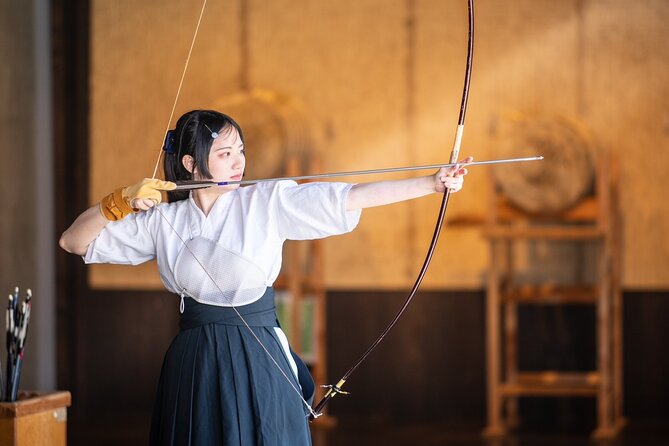
- Tokyo Station meets practical: you start near Tokyo Station (Marunouchi), then head to the training hall together
- Up to 4 people: the coaching stays personal enough that you can actually fix your form
- You’re sized up for your bow: you match with equipment for your height, not a one-size setup
- Straw bale to target range: you practice on straw first, then move to a shooting range with improvement tips
- No shooting photos or video: the facility restricts recording, so plan on guide support for memories
- Dōgi fit can be an issue: uniforms are designed for Japanese body types, and you might need regular clothing if it doesn’t fit
Kyudo in Tokyo: what makes this style different
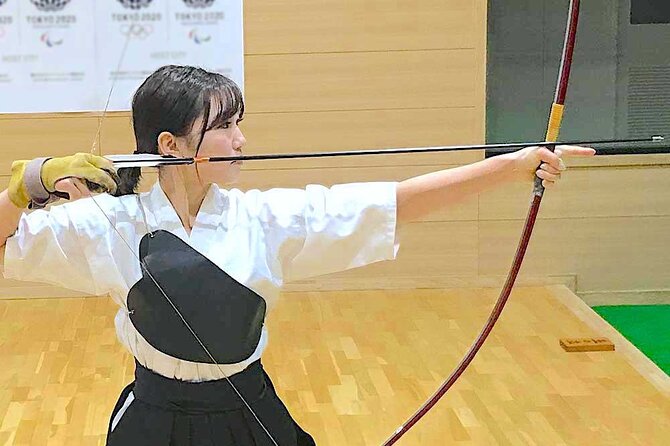
Kyudo isn’t just about hitting a target. It’s about the entire sequence: how you hold the bow, draw the string, raise into the stance, and release with controlled follow-through. In a lot of try-it archery classes, the lesson is basically aim and fire. Here, the emphasis is on getting the body motion right first, because that’s what creates accuracy.
That “whole sequence” approach is why many people find it surprisingly calming. Even when you miss (and you will at first), the practice is structured and repeatable, like learning a dance pattern with a very sharp prop. It also helps you understand why kyudo is often described as a mental discipline as much as a physical one.
The second big difference is safety and pacing. You’re not thrown into endless shooting right away. The session is built around getting your basics correct, then gradually letting you shoot more while the instructor watches and corrects.
You can also read our reviews of more tours and experiences in Tokyo.



From Tokyo Station to the training hall: how the session starts
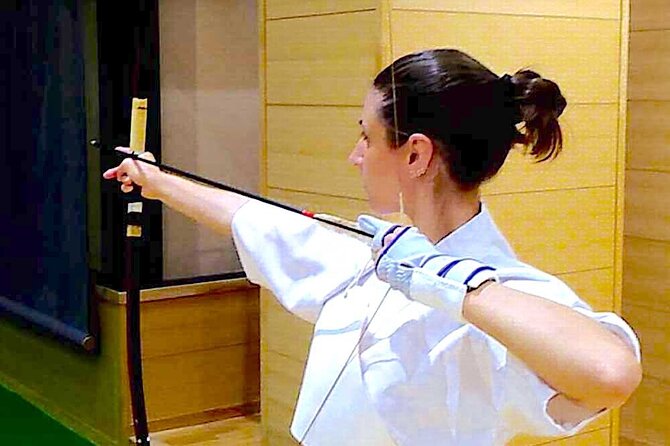
Your experience starts with a punctual meet near Tokyo Station (1 Chome-9 Marunouchi, Chiyoda City). This matters because the program departs just on time, and late arrivals aren’t allowed to participate (no refund). If you’re arriving by train, I’d give yourself extra buffer time and plan to show up early, not “right at the start.”
Once you’re with the instructor, you’ll head to the training hall and get dressed in the traditional kyudo uniform. Expect a short, guided process for wearing the dōgi and getting ready properly. Several descriptions also mention a walk from the meetup to a nearby recreation facility, so you should expect a little moving around in central Tokyo before you start shooting.
Also note the venue rule: if you want to enter the facility but not participate in kyudo, there’s an additional fee required in advance. The facility is strict about admission, so don’t assume you can just watch for free.
Traditional dōgi and equipment matching: you’ll be set up properly
Kyudo has a few “don’t wing it” details, and the equipment setup is one of them. You’ll select the proper bow and arrows based on your height, which instantly makes the class feel more legitimate. If you’ve ever tried archery with gear that doesn’t fit, you know the frustration: your draw feels wrong and your shot never quite lines up. Here, the sizing step helps you start from a better baseline.
The uniform itself adds another layer. It’s not just for looks. Clothing and fit influence your movement, especially when you’re learning a very specific stance and release. One caution: the dōgi is designed for Japanese body types. If you’re heavier (the note says over 150 kg), there’s a possibility the uniform won’t fit and you may need to participate in regular clothing. That isn’t a failure state. It’s simply a heads-up to avoid being surprised on arrival.
Learning the bow handling: the lesson part that actually matters
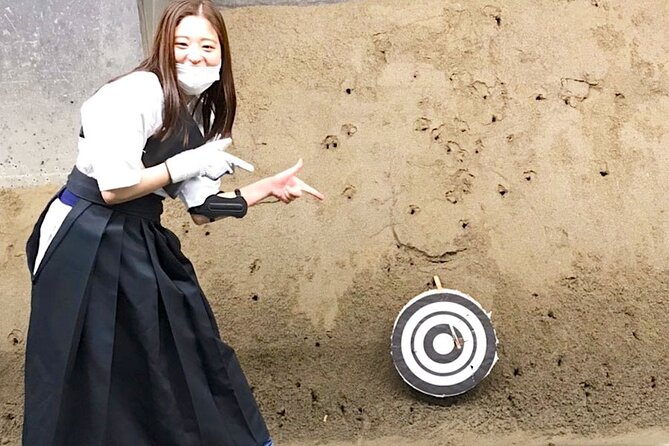
You’re taught how to handle the bow and arrows with instruction that’s focused on form. In many kyudo lessons, the “right way” isn’t obvious at first. The stance and sequence can look similar to other Asian archery styles from a distance, but the feel is distinct once you’re doing it.
Expect step-by-step guidance that likely includes demonstration and physical corrections, not just verbal explanation. Some instructors have limited English, and the teaching often relies on what you can copy with your body. That’s a good thing. Kyudo is easier to learn when you can see the shape and timing, then repeat it.
One detail I’d take seriously: kyudo isn’t point-and-shoot. You’ll learn that the bow rises through the sequence and the aiming happens as part of the full movement, not as a quick adjustment at the end. That’s why instructors keep returning to the “dance” of kyudo motion rather than only checking whether arrows hit.
Straw bale target practice: where technique meets reality
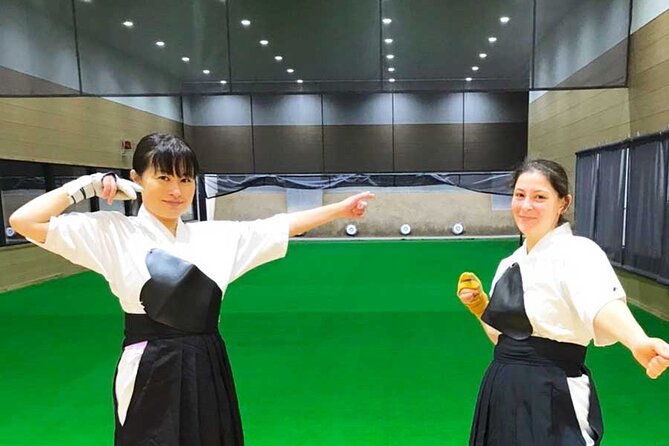
After the basics, you’ll practice shooting at a straw bale target. Straw bales are common because they make the feedback feel direct: you can see what happens when your release and follow-through line up, even if your first few shots don’t go where you hoped.
This part is also where you learn what kyudo wants from you. If your draw is too tense, your timing will be off. If your stance isn’t set, your release will wobble. If your follow-through collapses, accuracy suffers. The good news: you get personalized advice as you shoot. That means corrections aren’t generic. The instructor can spot what’s happening with your form in the moment.
From a “how it feels” perspective, this stage is often the most fun because it turns learning into action fast. The session stays lively, too. People describe the teaching as friendly and encouraging, with plenty of patience when you’re still figuring out the sequence.
And yes, bruises can happen. Several accounts mention the bow string catching an arm and causing bruises, and one suggestion that shows up is to ask about an arm guard if you’re prone to contact. If you care about comfort, this is a simple thing to bring up early.






The shooting range phase: coaching for improvement
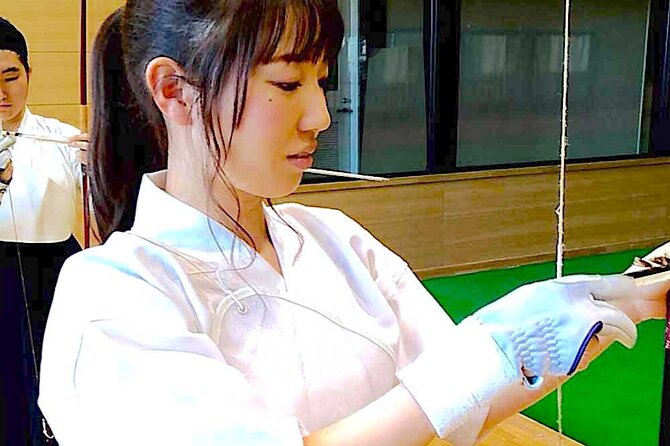
Once you’ve practiced on the straw bale, you move to the shooting range. This is where the class becomes more about refinement. You’ll get advice for improving technique while you keep shooting, so you’re not just changing scenery—you’re changing skill level.
At this stage, focus on what your instructor is correcting, even if your brain wants to chase “hit the target” right away. Kyudo accuracy often improves after your form stabilizes. The instructor’s job is to help your body repeat the correct sequence so the arrow goes where it should.
A few realistic expectations help here. Even after solid practice, many beginners won’t hit consistently at first. That’s normal. Kyudo demands more coordination than most casual archery try-outs. The point of the range segment is to give you enough reps and feedback to start making adjustments that actually stick.
Small-group pacing: why 2 hours can feel longer
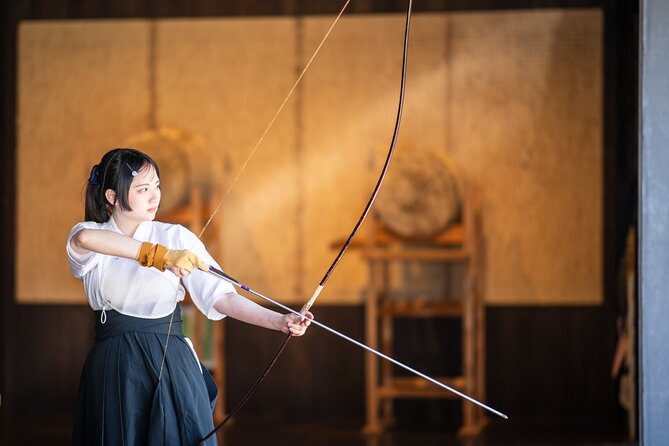
This experience runs about 2 hours and caps at 4 travelers, which changes everything. With that group size, your instructor can watch your stance and draw closely instead of hopping between people like a referee. It also means your class doesn’t feel rushed. You’re given time to practice, then time to revise based on what you learned.
Many people also describe the session as surprisingly relaxing—almost meditative—because kyudo asks you to slow down and control movement. Even if you’re not naturally calm, the structure does the work for you. You repeat steps, correct errors, and then repeat again.
The small group also helps with comfort in a cultural setting. You’re learning traditional archery in a shared space, but you’re not overwhelmed by a large crowd or a strict “line up and go” style.
About the instructor: patient teaching and step-by-step correction
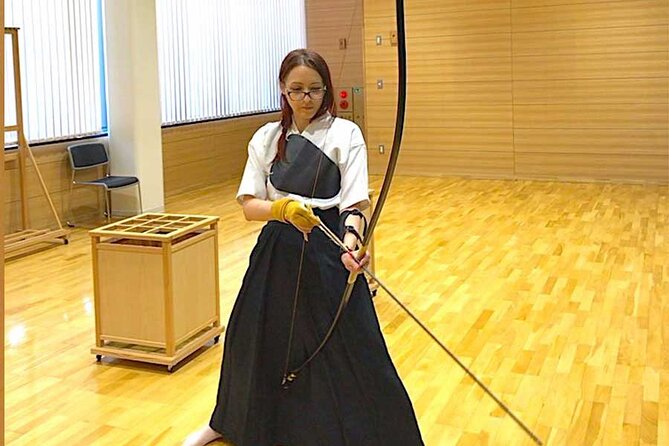
Instructors bring the skill and the teaching style. Some sessions have been led by instructors like Jun Sensei, who is described as thorough with explanations. Even when the language barrier exists, the teaching typically works because the lesson is built around demonstration and physical cues.
You’ll likely hear your instructor repeat the same ideas in different ways as you progress. That repetition isn’t annoying here. It’s how you build muscle memory for kyudo’s specific body mechanics.
If you like structured teaching, this is a good fit. If you hate being corrected, you might feel exposed. But kyudo is technical, so corrections are the whole point.
Photos, video limits, and how to preserve the memory
The facility restricts photography and video recording. That’s important because it changes how you remember your day. You won’t be filming your releases for social media.
Some people mention that the instructor takes photos and shares them afterward, which is a nice workaround if you want proof that you actually did this. Just don’t assume it’s guaranteed every time. The safer move is to ask the instructor on-site whether they’ll capture any photos you can get later.
Also, if you care about taking your own photos, check the rules carefully when you arrive. The restriction is stated clearly, and the facility expects you to follow the guide’s directions.
Value check: is $125.50 worth it for 2 hours?
At $125.50 per person for around 2 hours, the value comes from what you get included: a guided kyudo lesson, traditional dōgi outfit time, equipment matching by height, straw bale practice, and then coaching at the shooting range.
It’s not “cheap entertainment,” but it can be good value if you want the real technique part, not just the novelty of wearing a costume and firing a couple arrows. The max 4-person group also matters. You’re paying for access to attentive instruction, not just equipment.
If you only want a casual photo opportunity, you’d probably feel disappointed. But if you enjoy learning a craft and you like hands-on cultural activities, this kind of class can be a standout Tokyo experience.
Who should book this Kyudo class in Tokyo
This experience suits you if:
- you like hands-on cultural activities more than museum-style sightseeing
- you’re curious about Japanese martial arts and want to learn the mechanics
- you enjoy instruction and repetition to get technique right
- you’re traveling solo, as a couple, or with a small group since the class stays intimate
It may not suit you if:
- you want a flexible schedule or you’re likely to run late
- you’re sensitive to minor physical discomfort (string contact can happen, and bruises are possible)
- you need lots of personal video/photo time inside the facility, since recording is restricted
Should you book Authentic Kyudo in Tokyo?
I’d book it if you want one of the more authentic “do it with your hands” cultural experiences Tokyo offers. The combination of traditional uniform, bow sizing, straw bale shooting, and ongoing correction is what turns kyudo into more than a gimmick.
Before you go, do two practical things: (1) confirm the meeting spot clearly so you don’t waste time in Marunouchi, and (2) give yourself buffer time so you’re not in the late-arrival problem zone. If you’re over 150 kg, also be mentally ready that the dōgi might not fit and you may need regular clothing.
If you’re an archery fan, kyudo has a big draw: it looks elegant and it feels different, and you’ll walk away understanding the sequence, not just the target.
FAQ
FAQ
How long is the kyudo experience in Tokyo?
It lasts about 2 hours (approx.).
Where is the meeting point?
You meet near Tokyo Station at 1 Chome-9 Marunouchi, Chiyoda City, Tokyo 100-0005, Japan. The activity ends back at the same meeting point.
How much does it cost?
The price is $125.50 per person.
What is the group size?
The experience has a maximum of 4 travelers.
Can I participate if I have no archery experience?
Most travelers can participate, and the lesson is taught as a class where you learn kyudo handling and shooting steps.
Is there a minimum age?
Yes. Participants must be 18 years of age and over.
Are photos and videos allowed?
No. Photography and video recording are restricted inside the archery facility. Follow the guide’s instructions.
What if I arrive late?
The program departs on time. Late arrivals are not allowed to participate and there is no refund.
What about the traditional uniform fit?
The dōgi is designed for Japanese body types. If you’re larger than specified (over 150 kg), the uniform may not fit, and you may need to participate in regular clothing.