REVIEW · TOKYO
Tokyo: Mt. Fuji & Lake Kawaguchi Instagram Full Day Trip
Book on GetYourGuide →Operated by QingHe Travel · Bookable on GetYourGuide
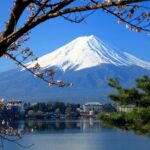
Fuji day trips are the quickest photo therapy. You’ll start in Tokyo and spend the day chasing iconic Mount Fuji views from the Chureito Pagoda viewpoint, then slow down at Oshino Hakkai with its eight spring-fed ponds.
I like that the day has built-in variety: a steep stair climb for the classic shot, then quieter water-and-food time in a slower village. The one real catch is that weather can wipe out visibility—clouds happen—so plan on enjoying the full day even if Fuji hides.
In This Review
- Key things to know before you go
- Why This Fuji and Lake Kawaguchi Day Trip Makes Sense From Tokyo
- Tokyo Station Meeting Point: Make It Easy on Yourself
- Arakurayama Sengen Park and Chureito Pagoda: The 397-Step Payoff
- Fujiyoshida’s Heavenly Town at Hikawa Clock Shop
- Oshino Hakkai: Eight Ponds, Spring Water, and Simple Food
- LAWSON Lake Kawaguchiko: The Fuji-Framed Convenience Store Moment
- Lake Kawaguchi Oishi Park vs. the Maple Corridor (Late Oct to Early Nov)
- Most of the year: Oishi Park
- In late October into early November: Maple Corridor
- When Fuji Is Cloudy: How to Keep the Day Worth It
- Duration, Route Flow, and What Your 10 Hours Really Feels Like
- Price and Value: What You’re Actually Paying For
- Who Should Book This Tour (and Who Might Want a Different Plan)
- Should You Book This Fuji and Lake Kawaguchi Trip?
- FAQ
- FAQ
- Where do I meet the guide in Tokyo?
- How long is the tour and when do I get back?
- What’s included in the price?
- Are entry tickets and meals included?
- How many steps do I climb at Arakurayama Sengen Park?
- What’s the stop at Hikawa Clock Shop for?
- What is Oshino Hakkai known for?
- Why does the Lake Kawaguchi part change by season?
- What should I bring, and what’s not allowed?
Key things to know before you go
- Chureito Pagoda photo payoff: a 397-step climb leads to the postcard angle.
- Oshino Hakkai pond time: eight mineral-water ponds and chances to try local snacks.
- Hikawa Clock Shop photo angle: a quick stop in the “Heavenly Town” area at the Fuji base.
- LAWSON Lake Kawaguchiko Fuji frame: a famous convenience-store sign for photos plus quick ice cream.
- Seasonal swap at Lake Kawaguchi: Oishi Park most of the year, Maple Corridor in late Oct into early Nov.
- Tour guide support: live English/Chinese guidance helps the day feel organized.
Why This Fuji and Lake Kawaguchi Day Trip Makes Sense From Tokyo
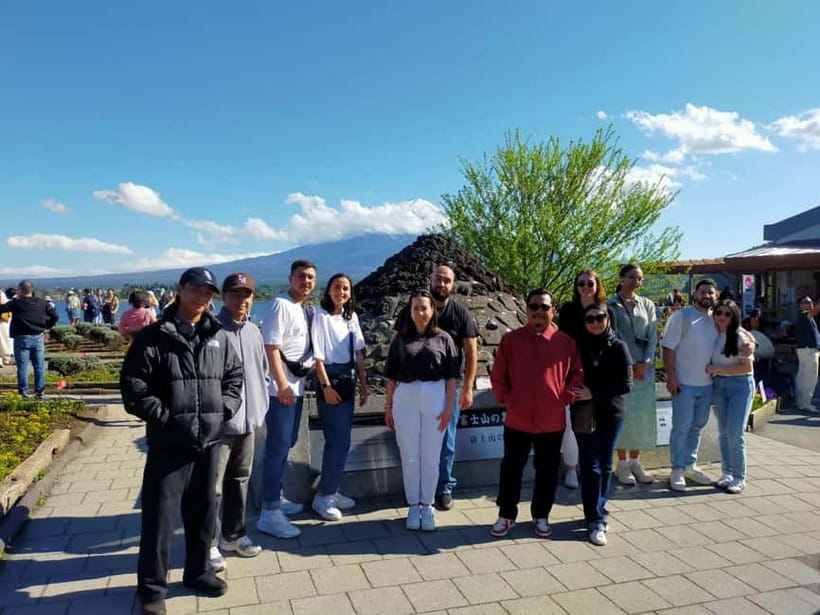
This is a classic “big sights in one day” route. You’re not just riding to a lake and hoping for the best. You get multiple Fuji viewpoints built into the schedule, which matters because Mount Fuji isn’t always visible from one angle at one moment.
The value is mostly in what’s included: roundtrip transportation and a live guide. For $61, you’re paying for the logistics that are hard if you go DIY—timing trains/buses, figuring out the order of stops, and getting to photo spots without burning your day. Add in the fact that the tour is about 10 hours with a guide in English or Chinese, and it’s a strong option for first-timers who want structure.
The day is also intentionally photo-forward. Even if you’re not chasing Instagram, the route hits the places people remember: Chureito Pagoda, the eight-pond scene at Oshino Hakkai, and the Lake Kawaguchi flower or maple season areas.
You can also read our reviews of more tours and experiences in Tokyo

Tokyo Station Meeting Point: Make It Easy on Yourself
Your starting point is Tokyo Station, Marunouchi North Exit. The operator sends a photo of the meeting spot plus the guide’s phone number by email the day before. That detail is more important than it sounds—Tokyo Station is huge, and “I’m here somewhere near the entrance” can turn into a time sink.
A few practical tips that help:
- Bring your charged smartphone so you can call the guide if needed.
- Have passport and cash ready for snacks and any entry fees you decide to pay.
- Avoid large luggage. Storage space on the vehicle is limited, so keep bags small.
The tour runs with different vehicle sizes (from a 10-seater up to larger buses). That usually means your ride is efficient and direct, but it also means you’ll be sharing tight space with others, so travel light.
Arakurayama Sengen Park and Chureito Pagoda: The 397-Step Payoff
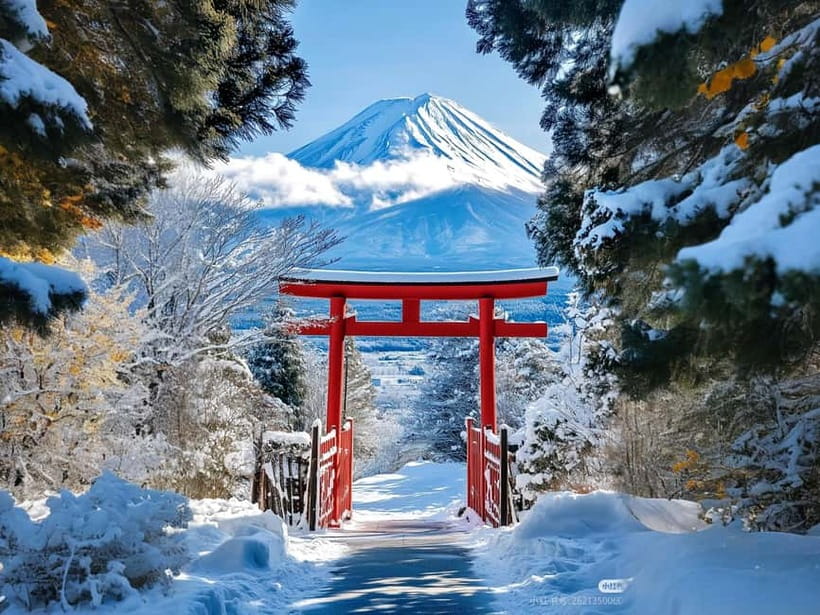
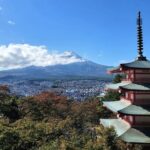
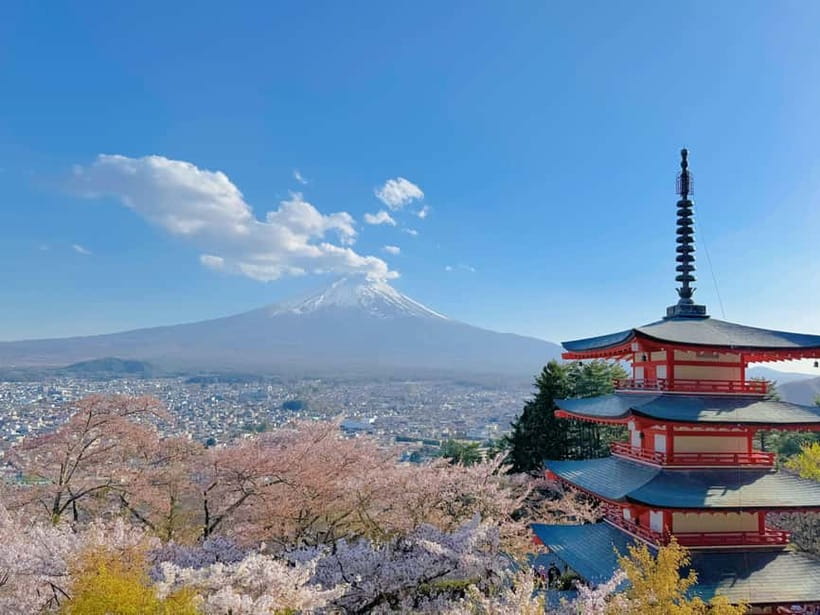
This is the heart of the “postcard Fuji” moment. You start at Arakurayama Sengen Park and climb 397 steps up to the Chureito Pagoda area. At the top, you’re positioned for one of the most recognizable views in Japan—Mount Fuji framed with the pagoda below.
What makes this stop work for your day:
- You get a guided context plus time to look around, not just a quick stop and go.
- The view changes with seasons: cherry blossoms in spring, green in summer, autumn colors in fall, and snow in winter. Even when the mountain is partly obscured, you still get the pagoda-and-season atmosphere.
The one “consideration” here is physical effort. 397 steps is not a marathon, but it’s enough that you should wear comfortable shoes and pace yourself. If your legs are sensitive, take it slow on the way up and let the group pass if you need extra breaks.
Fujiyoshida’s Heavenly Town at Hikawa Clock Shop
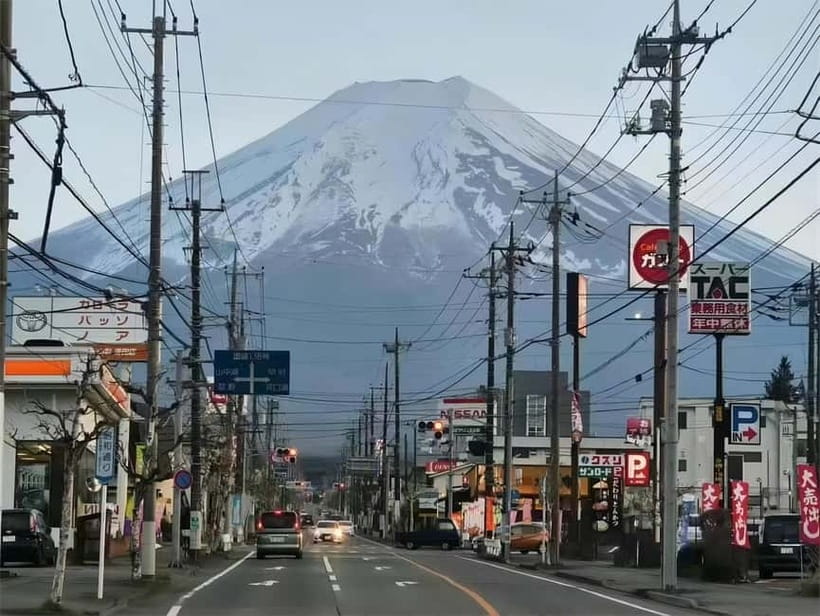
Next you head toward Fujiyoshida and stop at the Hikawa Clock Shop area. This is one of those small Japan spots that draws attention because of its photo alignment—people like the way you can position yourself for a “Mount Fuji lines up with the town” shot from the surrounding streets.
You’ll typically get around 20 minutes here. That’s short, but it’s usually enough to:
- take a few photos without feeling rushed,
- wander the streets at the base area, and
- enjoy the calm rhythm of a town that isn’t built for tour buses.
If you love street-level details, this stop is a good change of pace after the stair-climb. If you’re only looking for the biggest view, treat it like a quick detour: grab your photo, then move on.
Oshino Hakkai: Eight Ponds, Spring Water, and Simple Food
After the Fuji base-town photos, you’ll reach Oshino Hakkai, a quiet village known for eight ponds fed by Mount Fuji’s snowmelt. This is where the day slows down in a good way.
At Oshino Hakkai, your time is mostly about the water:
- The ponds are clear and reflective, so you’ll want to take your photos from a few angles.
- You can taste the spring water, which is one of those moments that feels small but very “Japan in real life,” not just sightseeing.
There’s also a food side here. The tour includes time for street-style bites, with local favorites mentioned such as tofu with pickled miso and kusamochi (a rice cake filled with sweet red bean paste). Since food isn’t included in the base price, bring some cash and decide what you want once you see what’s available.
A practical note: this stop is best if you like walking at a relaxed pace. You’ll likely stroll between pond viewpoints rather than sit in one place.
You can also read our reviews of more tours and experiences in Tokyo





LAWSON Lake Kawaguchiko: The Fuji-Framed Convenience Store Moment
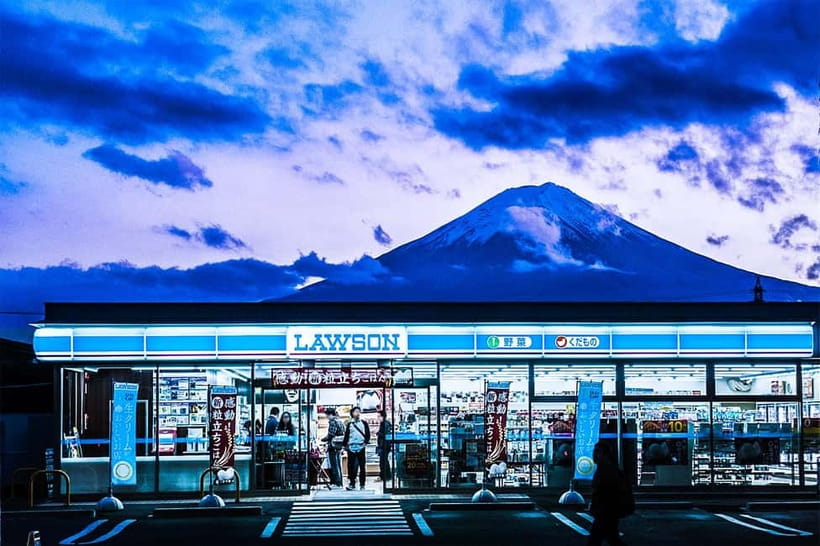
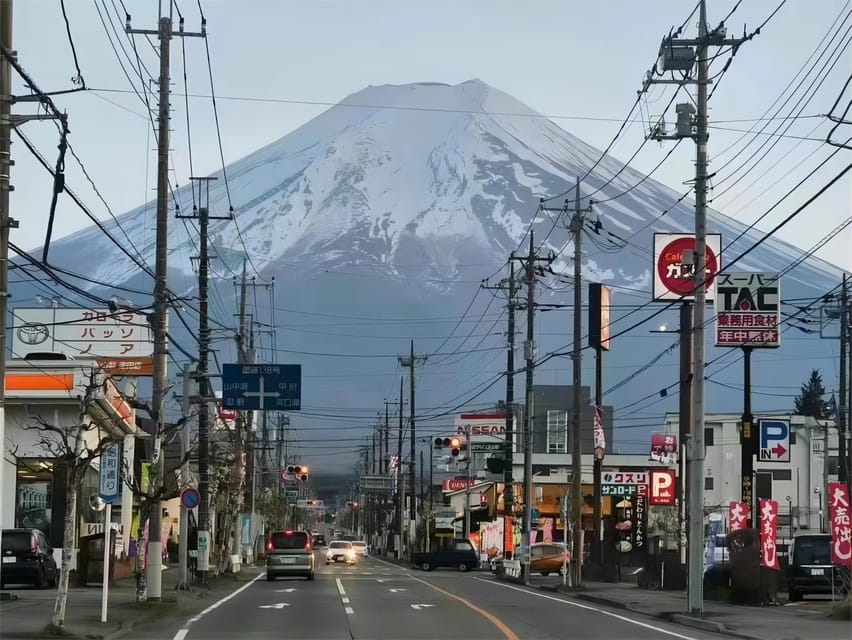
This brief stop is almost pure fun: a photo stop at LAWSON Lake Kawaguchiko Station where the store sign is famous for framing Mount Fuji in photos. It’s exactly the kind of place that makes sense only in Japan, where even a convenience store can become a scenic set.
You’ll have about 20 minutes. Plan to:
- take your photo quickly,
- check the view from nearby angles,
- grab a snack or ice cream if you want a sweet break.
Don’t count on this being empty. This is one of those “everyone knows it” spots, so expect other camera users. The trick is not fighting the crowd for the perfect shot—shoot your angle, step aside, and let the next person do the same.
Lake Kawaguchi Oishi Park vs. the Maple Corridor (Late Oct to Early Nov)
Your final big scenery stop is Lake Kawaguchi, and the centerpiece changes by season.
Most of the year: Oishi Park
Oishi Park is known for flower fields, including lavender, begonia, cosmos, and Japanese blood grass. If you’re traveling outside peak fall, this is the best choice because flowers keep the area visually interesting even when Fuji visibility isn’t perfect.
You’ll have about 50 minutes here, which is enough time to walk the main viewpoints and get your photos without turning it into a full hike day.
In late October into early November: Maple Corridor
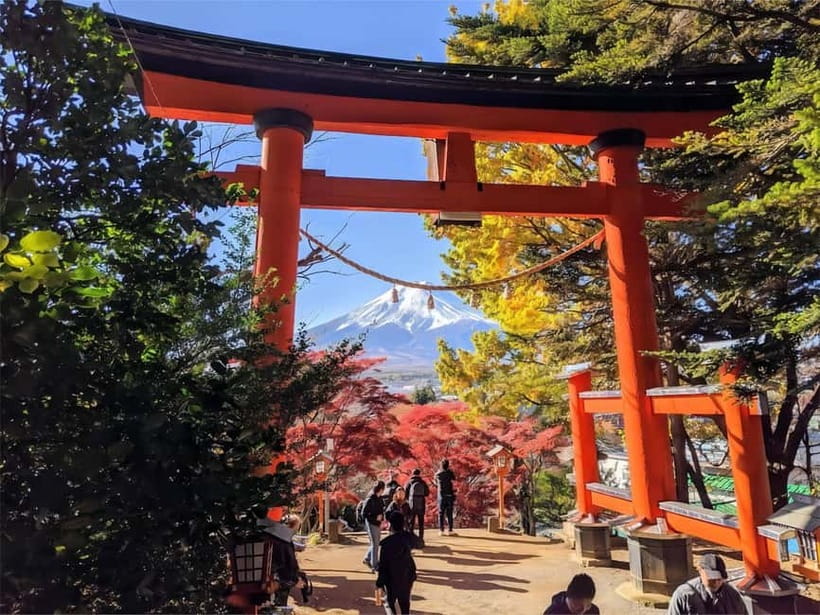
From about October 30 through November 20 (and in many cases into the late October to November window, depending on timing), the tour swaps to the Maple Corridor to catch autumn color. This is a “tunnel of color” kind of stroll, with great views of Mount Fuji when the sky cooperates.
Time on this section is shorter—around 30 minutes mentioned for that seasonal replacement. It’s still a strong photo moment, but you’ll want to move at a steady pace so you don’t fall behind the group.
When Fuji Is Cloudy: How to Keep the Day Worth It
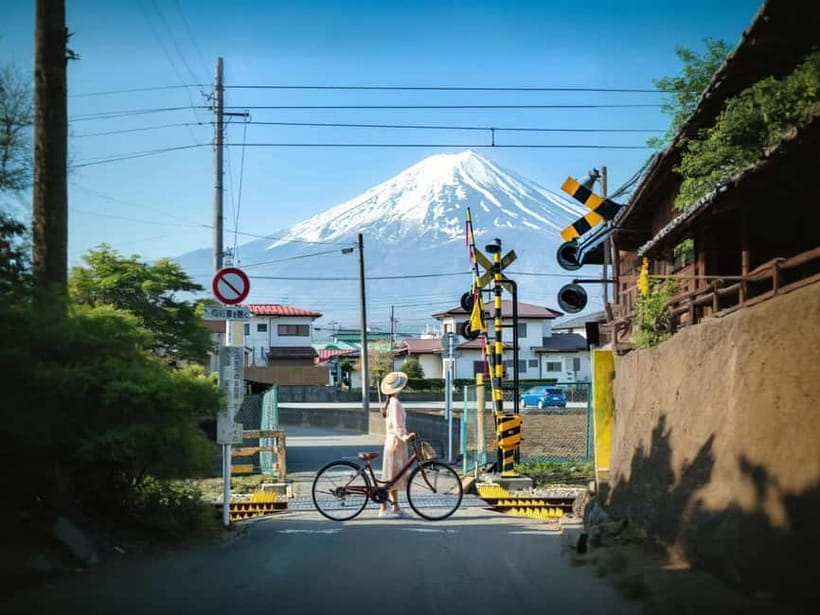
This tour lives and dies by visibility because it’s built around classic Fuji angles. On a clear day, everything clicks. On a cloudy day, you may not see the mountain at all from some viewpoints.
Here’s how to handle that reality:
- Treat each stop as more than a single “Fuji check.” The pagoda, ponds, towns, and seasonal flowers are still worth your time.
- Adjust your photo plan. Look for partial silhouettes, reflections in water, and seasonal colors—even without a full Fuji peak in the frame.
- Stay flexible about timing. The tour notes that departure time and the route can shift based on traffic and weather, so leaving margin in your head matters.
Your best “backup” mindset is to enjoy what you can see: the walk up to the pagoda, the reflections and spring water at Oshino Hakkai, and the seasonal parks by the lake.
Duration, Route Flow, and What Your 10 Hours Really Feels Like
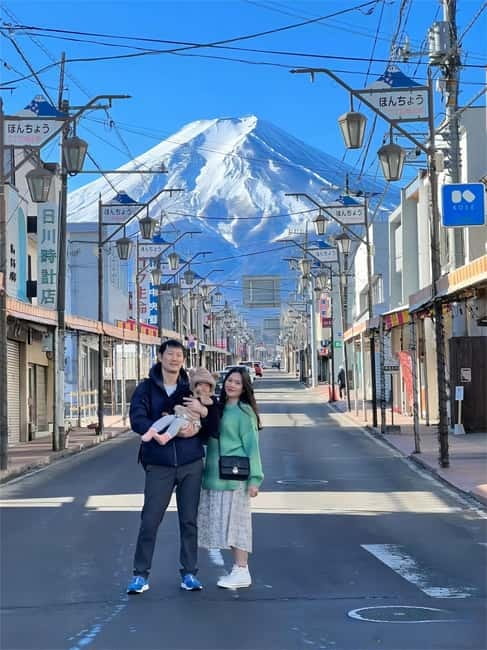
You’re out for about 10 hours. You’ll spend roughly 2.5 hours by bus/coach getting away from Tokyo and then another 2.5 hours returning. That travel time is part of the deal with Lake Kawaguchi day trips—there’s no magic shortcut.
The stop order is practical:
- Fuji viewpoint first (when energy is highest),
- clock shop for a quick photo angle,
- Oshino Hakkai to reset with water and food,
- a quick photo/sweets break at LAWSON,
- then the best seasonal park finish at Lake Kawaguchi.
The tour wraps around 16:30, with an estimated return to Tokyo 18:00–18:30 depending on traffic and weather.
If you’re prone to motion sickness, consider motion-minimizing strategies for the bus ride (seat near the front if possible, water, and avoid heavy reading).
Price and Value: What You’re Actually Paying For
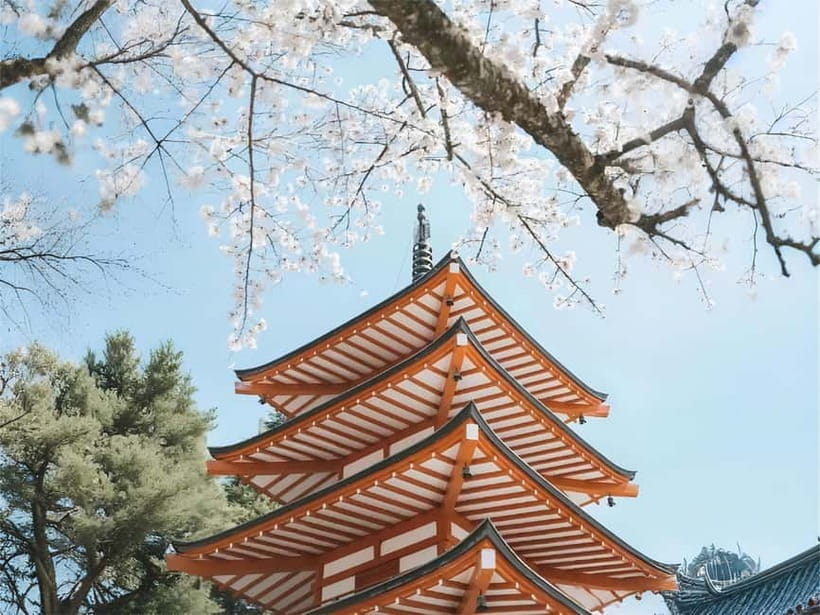
At $61 per person, this trip is priced like a guided transport + organized sight package. The key included items are:
- Roundtrip transportation in a vehicle ranging from small vans to larger buses.
- Tour guide with English or Chinese support.
What’s not included:
- Entry tickets (if you pay any, you’ll cover them separately).
- Food and drinks are not included in the base price.
That last part matters. Even though you’ll have breaks where you can sample snacks (and water tasting is part of the Oshino Hakkai experience), you should budget extra cash for what you eat and drink on your own. Bringing snacks and water is encouraged for your comfort, but note: you’re not allowed to eat food or drink in the vehicle. So snacks are for before/after the drive segments and during stops.
If you hate dealing with public transit logistics, the guide + transport is the value. If you love independence and have stamina to manage buses and transfers, you might DIY the route cheaper—but you’ll trade away the structured photo stops and guided context.
Who Should Book This Tour (and Who Might Want a Different Plan)
This tour is a strong match if:
- you’re in Tokyo and want Mount Fuji + Lake Kawaguchi without planning headaches,
- you’re interested in photo spots more than long free-form wandering,
- you want a guided day in English or Chinese.
It may not be ideal if:
- you don’t like stair climbs (the 397-step ascent is real),
- you want totally flexible timing with long free time at each spot,
- you’re traveling with lots of large luggage and expect easy storage.
For families, it can work well as long as kids can handle the walking portions. Children under 3 join for free without taking a seat, but make sure you inform the operator in advance if you’re traveling with a child in that age range.
Should You Book This Fuji and Lake Kawaguchi Trip?
I’d book this if you want a structured, photo-friendly day with real variety: Chureito Pagoda, the calm Oshino Hakkai ponds, a quick quirky LAWSON Fuji frame, and either Oishi Park flowers or the Maple Corridor depending on the season.
I’d hesitate only if you’re ultra-sensitive to the risk of clouds hiding Fuji or if you need long downtime at each stop. With Fuji, there are no guarantees. But even when the mountain is missing, the day still gives you places you can enjoy—and the guide helps keep the flow organized.
If you go, do one thing that pays off fast: arrive at the exact Tokyo Station meeting spot and keep your phone charged, so your morning starts calm instead of hunting.
FAQ
FAQ
Where do I meet the guide in Tokyo?
You meet at Tokyo Station, Marunouchi North Exit. The meeting point photo and the guide’s phone number are sent to you by email the day before.
How long is the tour and when do I get back?
The experience runs for about 10 hours. It wraps around 16:30, with an estimated return to Tokyo between 18:00 and 18:30, depending on traffic and weather.
What’s included in the price?
Your ticket includes roundtrip transportation (in a vehicle such as a Toyota Hiace or larger bus) and a tour guide.
Are entry tickets and meals included?
No. Entry tickets and food and drinks are not included. You’ll have breaks to buy snacks and refreshments on your own.
How many steps do I climb at Arakurayama Sengen Park?
You climb 397 steps to reach the Chureito Pagoda area.
What’s the stop at Hikawa Clock Shop for?
It’s a photo stop with free time around Fujiyoshida, including the “Heavenly Town” street area with scenic photo views as you move through.
What is Oshino Hakkai known for?
Oshino Hakkai is known for eight ponds of mineral-rich water fed by Mount Fuji snowmelt. You’ll also have time for spring water and local snacks.
Why does the Lake Kawaguchi part change by season?
From about October 30 through late October into early/mid November (timing varies by the seasonal window), the tour may visit the Maple Corridor instead of Oishi Park to match the best autumn colors.
What should I bring, and what’s not allowed?
Bring your passport, camera, snacks, water, cash, and a charged smartphone. Food and drinks are not allowed in the vehicle.