REVIEW · TOKYO
Tokyo Ikebana Wellness Art Experience near Shinjuku
Book on Viator →Operated by Ikebana Wellness Art Experience in Tokyo · Bookable on Viator
Ikebana in 90 minutes can be shockingly calming. This central Tokyo class pairs fresh flowers with a gentle, small-group setup (max 5), so you’re not lost in a crowd. Even if you’re sightseeing-mode, it’s a nice pocket of quiet craft time.
What I like most is how the lesson stays beginner-proof. No experience needed, and Ai-sensei walks you through the history and the practical steps, with English support in class. Then you get a real finish and a take-home arrangement you can enjoy in your hotel room.
One thing to consider: because you’ll leave with living flowers, your “success” depends a bit on how careful you are carrying and arranging them after the workshop. Plan a calm route back and don’t treat it like an airport transfer.
In This Review
- Key things to know before you go
- Your 90-minute Ikebana reset in central Tokyo
- Meeting Ai-sensei and learning the story behind the stems
- Making your own arrangement: the beginner-friendly flow
- Seasonal flowers and the “personality” of materials
- The Japanese-style setting and why it helps
- The take-home arrangement: enjoy it in your hotel room
- Value for money: is $52.71 worth it?
- Who this workshop suits best (and who might want to skip it)
- A realistic plan for fitting it into your Tokyo day
- Should you book this Ikebana workshop?
- FAQ
- Do I need prior experience with Ikebana?
- How long is the Ikebana wellness art experience?
- Where do I meet for the workshop?
- What time does the workshop start?
- How big is the group?
- Can I take my arrangement home?
- Is the lesson taught in English?
- What if I’m already in Japan and booking asks for passport or flight information?
- What’s the booking change or cancellation situation?
Key things to know before you go
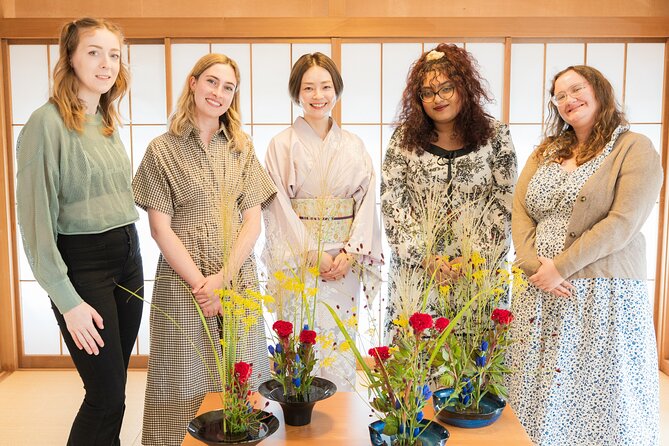
- Small group (up to 5): more hands-on attention, less waiting around.
- Ai-sensei’s step-by-step pace: clear guidance for first-timers.
- History + technique together: you’re not just placing stems randomly.
- Seasonal flower and branch feel: you learn how different materials change the look.
- You take your work home: it’s part souvenir, part personal display piece.
Your 90-minute Ikebana reset in central Tokyo
Ikebana has a way of grabbing your attention fast. One minute you’re in Tokyo, the next you’re holding stems, looking at angles, and trying to make space behave. This workshop is set up for exactly that: a quick switch from busy to focused, without needing prior experience.
The class runs about 1 hour 30 minutes and uses a mobile ticket, which keeps things simple. If your schedule is tight, this is a very “doable” activity. It also starts at 1:00 pm, so you can sleep in a little or do a morning museum run.
And since it’s near public transportation, you’re not committing to a long, complicated trek just to learn a flower art. The meeting point is in Nakano (Nakano City, 3-chōme 8, M Square), which is still quite manageable for people staying around Shinjuku.
You can also read our reviews of more tours and experiences in Tokyo.



Meeting Ai-sensei and learning the story behind the stems
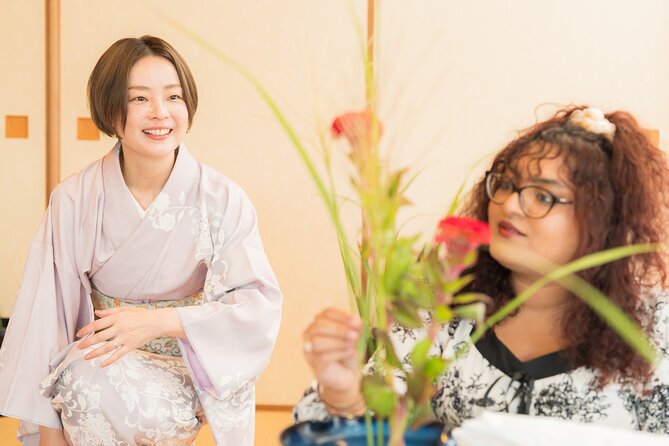
The experience begins with you getting oriented in a welcoming setting. There’s an introduction to Ikebana’s background, including its long cultural roots. You’ll also see photos of the instructor’s works, which matters more than it sounds. When you can compare what you’re making to real finished examples, your brain stops panicking.
From the way the lesson is described and reinforced in participant feedback, Ai-sensei doesn’t treat history like a lecture you’ll forget in five minutes. She connects the cultural background to what you’re doing with your hands. You’ll hear about the main styles and the basics behind flower arrangement, plus the practicalities like tools and containers (including what they’re for and why they matter).
That combination is a big deal for travelers. You don’t just get a pretty result. You also get a framework to understand why a “good-looking” arrangement is often about structure, space, and intent.
Making your own arrangement: the beginner-friendly flow
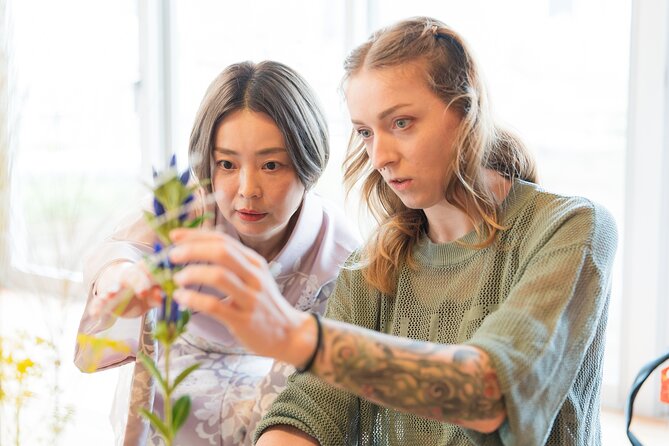
After the intro, the workshop shifts into the hands-on part. The vibe here is supportive, not intimidating. People repeatedly note that they were able to finish a satisfying arrangement even when they thought Ikebana would be too difficult.
Here’s the practical rhythm you can expect:
First, you’ll handle the materials and learn how to work with them properly. Participants highlight that tools, vase/container basics, and the basic method are explained in a way that’s easy to follow.
Then you’ll build your composition step by step. You start making choices about what to emphasize and how to balance the whole piece. One of the most repeated “aha” moments is that even with the same flowers, everyone’s work ends up looking different. That’s not luck. It’s the outcome of personal interpretation guided by simple rules.
Ai-sensei’s guidance also includes small but high-impact tips. Feedback mentions things like understanding the direction of branches, how to cut or handle stems, and how tiny adjustments can change the entire mood. For example, changing the height of a flower, removing or repositioning a leaf, or adjusting the branching angle can completely reshape the feel of the arrangement.
And yes, you’ll likely learn some technique around using scissors carefully. More than one participant mentioned being surprised by how manageable it felt once they were taught properly.
Seasonal flowers and the “personality” of materials
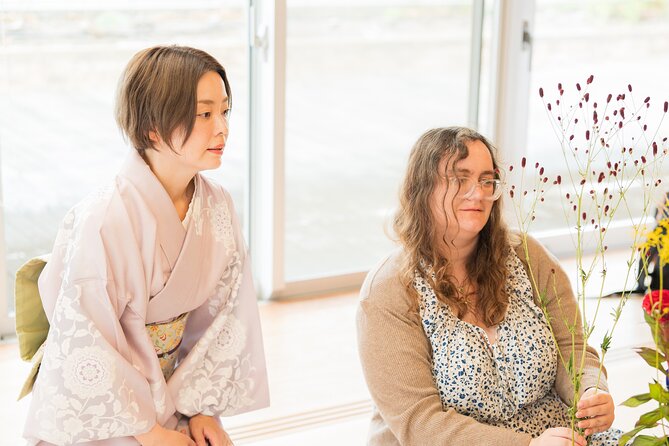
One of the most memorable themes in participant comments is how the flowers and branches feel alive in the room. People talk about touching fresh, seasonal flowers and branches while learning the cultural background, and they’re impressed that materials behave differently depending on their natural character.
This matters to you because it changes the learning experience. If you only follow steps mechanically, you miss the point of Ikebana. But in this workshop, you’re encouraged to notice how each flower’s form influences the arrangement.
You’ll also get a sense of how color and texture guide decisions. A participant specifically mentioned learning about the combination of colors and the overall approach. That’s a useful takeaway if you want to recreate the look at home later.
The Japanese-style setting and why it helps
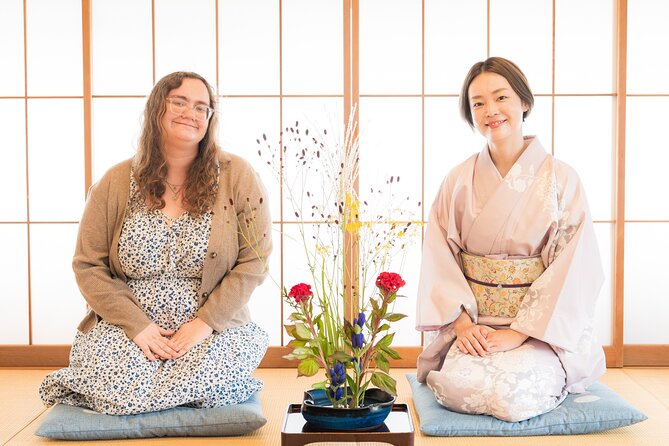
The venue is described as clean, comfortable, and bright, with a Japanese-style room feel. That sounds like atmosphere talk, but it has a practical effect: it supports the mindset of the lesson.
When the setting feels calm, you’re more likely to slow down enough to make good spacing decisions. Ikebana is partly about structure, but it’s also about restraint. A quiet room makes it easier to focus on what to leave out.
Several participants also mention strong convenience from the station and good access. So you get both: a place that feels traditional and a location that doesn’t eat your day.






The take-home arrangement: enjoy it in your hotel room
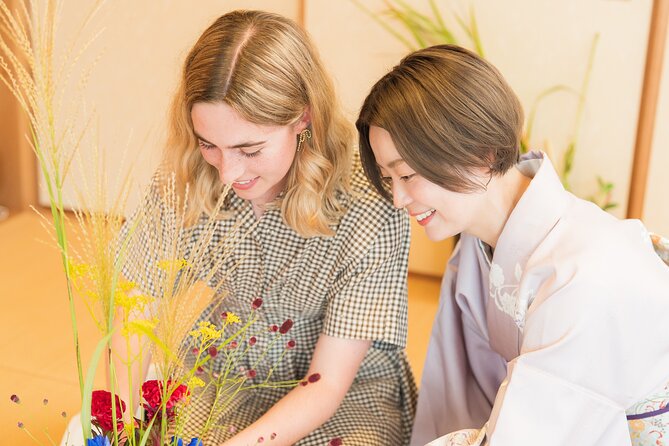
This is one of the best value parts of the experience. You get to take your arrangement home, not just a certificate or a photo.
Practical upside: you can enjoy it during your Tokyo stay. A lot of visitors are busy all day, then come back to a hotel room that feels temporary. A fresh arrangement turns it into a real personal space for a few days.
Practical note: handle your flowers like they’re fragile living art. Since you’ll be carrying fresh materials, your experience will feel smoother if you plan a calm trip back. Avoid cramming it into a bag with heavy items.
If you want an easy follow-up plan, set a simple spot in your room where you won’t knock it over. Put it somewhere stable and you’ll get more enjoyment out of the work you made.
Value for money: is $52.71 worth it?
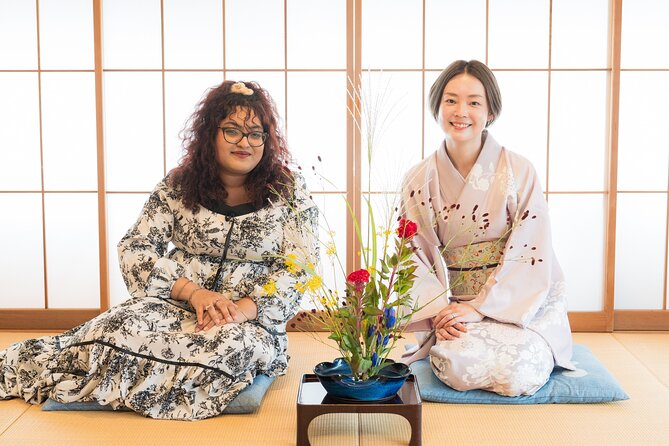
For $52.71 per person, you’re paying for a structured lesson, hands-on coaching, materials, and the chance to take the finished piece home. For a craft experience in Tokyo, this is a pretty direct deal: you’re not paying just for a lecture, and you’re not leaving empty-handed.
It’s also a value play because the class is capped at 5 travelers. Smaller groups mean you spend more time being guided and less time waiting your turn. In many workshops, that’s the difference between feeling confident at the end and wondering what went wrong.
One more value angle: you’re learning a skill you can repeat. Even if you never become a full-time flower artist, you’ll understand the basic logic behind how Ikebana shapes mood and balance. That kind of “usable knowledge” tends to stick longer than a one-off activity.
Who this workshop suits best (and who might want to skip it)
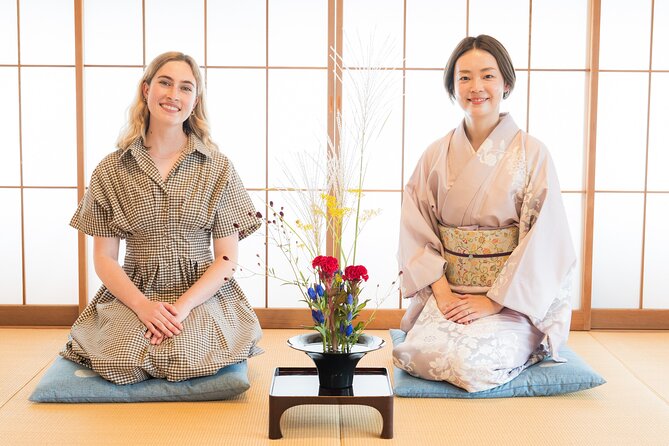
This Ikebana session fits best if you:
- Want a low-stress cultural activity with real hands-on time
- Like learning with your hands instead of just watching
- Enjoy the idea of taking something home that’s personal and seasonal
- Travel with family or friends and want a shared, calm experience
It may be less ideal if you:
- Prefer activities with lots of walking and sightseeing built in (this is focused craft time)
- Want something entirely passive or strictly performance-based
- Hate the idea of caring for fresh flowers right after class
A realistic plan for fitting it into your Tokyo day
Because the class starts at 1:00 pm and ends back at the meeting point, you can build the rest of your day around it easily.
A simple approach:
- Do something active before lunch (or a relaxed morning activity).
- Eat early enough that you’re not rushing.
- Arrive with time to settle in and start without stress.
- After the workshop, plan a slower route back so your finished arrangement stays safe.
Tokyo can be fast. This class is the pause you choose.
Should you book this Ikebana workshop?
I’d book it if you want a beginner-friendly craft lesson that’s actually structured, taught gently, and ends with something you can display. The combination of Ai-sensei’s guidance, the small-group format, and the fact that you take your arrangement home makes it feel worth your time, not just your money.
I’d also book it if you’re curious about Japanese aesthetics beyond photos. Ikebana gives you a way to understand concepts like balance and space using fresh materials, not just theory.
If you’re on the fence because you think it sounds too “artsy” or too complicated, don’t worry. This experience is built for first-timers. The whole point is that you can follow the rules, make choices, and still feel proud of your finished work.
FAQ
Do I need prior experience with Ikebana?
No. The workshop is designed for beginners, including first-timers and participants of all ages.
How long is the Ikebana wellness art experience?
It runs for about 1 hour 30 minutes.
Where do I meet for the workshop?
The meeting point is in Tokyo, Nakano City, at 3-chōme 8, M Square (164-0001). The activity ends back at the meeting point.
What time does the workshop start?
Start time is 1:00 pm.
How big is the group?
The maximum group size is 5 travelers.
Can I take my arrangement home?
Yes. You can bring your finished artwork with you.
Is the lesson taught in English?
Participants mention that Ai-sensei taught them in English and explained the steps clearly.
What if I’m already in Japan and booking asks for passport or flight information?
If you’re already staying in Japan, you can enter N/A for those fields.
What’s the booking change or cancellation situation?
This experience is non-refundable and cannot be changed for any reason. If you cancel, the amount paid is not refunded.