Tokyo in one day, minus the guessing. This full course tour strings together 10 major stops and a few street-level moments so you get Tokyo’s story and its everyday rhythm in about 7 hours. It’s built for people who want to see a lot without turning the trip into a white-knuckle transit scavenger hunt.
I especially like the local pace and the way the day is structured. You get a guided flow that hits Meiji Jingu, Shibuya (including Hachiko and the scramble crossing), Tsukiji, the Imperial Palace area, Marunouchi and Tokyo Station, Akihabara, and then ends in Asakusa with Senso-ji.
One possible drawback: it’s a walking day. If you’re the type who needs long sit-down breaks every hour, the schedule can feel fast, and comfortable shoes become non-negotiable.
In This Review
- Key moments that make this tour worth your time
- A One-Day Tokyo Route That Actually Feels Doable
- Getting Started at Yoyogi Station: Set Yourself Up for a Smooth Day
- Meiji Jingu Shrine and Harajuku: Two Tokyo Moods in 30 Minutes
- Shibuya: Hachiko, the Crossing, and Learning the Crowd Flow
- Tsukiji: Sushi First, Then Hongwanji Temple and the Market Area
- Imperial Palace Exterior and Marunouchi: Power, Order, and Big City Calm
- Akihabara: When Subculture Turns Into a Walkable World
- Asakusa and Senso-ji: The Old-Tokyo Finish Line
- Price, What You Pay For, and How to Keep Costs Under Control
- Who This Tour Suits Best (and Who Should Reconsider)
- Should You Book This Tokyo Full Course Tour?
- FAQ
- How long is the Tokyo full course tour?
- How much does the tour cost?
- Where does the tour start and end?
- What’s included in the price, and what isn’t?
- Do I need an IC card for transit?
- Is the tour canceled for bad weather?
Key moments that make this tour worth your time
- Local guide, real metro confidence: you’ll learn how to use the trains and subway so Tokyo stops feeling like a puzzle.
- Meiji Jingu to Shibuya in the same breath: you switch from serene shrine grounds to neon crowd energy fast, and it works.
- Tsukiji with context, not just a photo stop: sushi comes before you head to the Hongwanji temple and market area.
- Imperial Palace exterior + Marunouchi: you get the capital vibe without needing a complex plan.
- Tokyo Station to Akihabara: one day captures both polished business Tokyo and subculture shopping streets.
- Ends at Senso-ji and Asakusa Shrine: you finish in the most atmospheric old-Tokyo zone.
A One-Day Tokyo Route That Actually Feels Doable
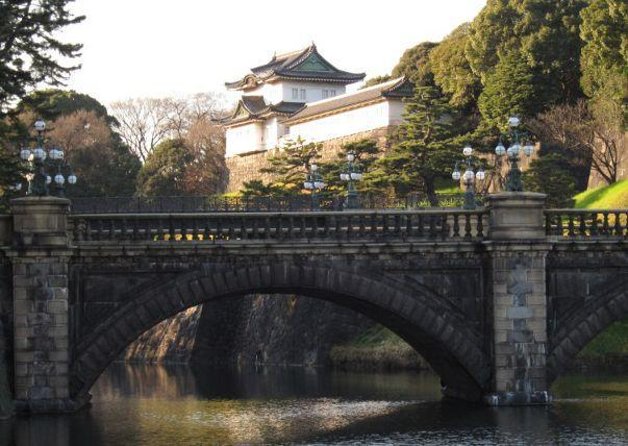
Tokyo has a way of overwhelming first-timers. Stations sprawl, lines change, and even many locals admit the logistics can be tricky. This tour helps you avoid that mental load by moving with an expert local guide who can thread you through crowded areas at the right times.
The big win here is focus. Instead of bouncing randomly, you follow a route that connects classic landmarks and real neighborhoods. You’re not just collecting postcard shots. You’re learning how Tokyo functions day-to-day—especially through the way people move, line up, and use public transit.
Price-wise, $78.18 for a 7-hour, guide-led day is reasonable, mainly because the guide’s job is hard. You’re paying for time, timing, and navigation support—things that are hard to replicate on your own in a single day. And note: admission at the stops is listed as free, which helps your value math.
You can also read our reviews of more tours and experiences in Tokyo.



Getting Started at Yoyogi Station: Set Yourself Up for a Smooth Day
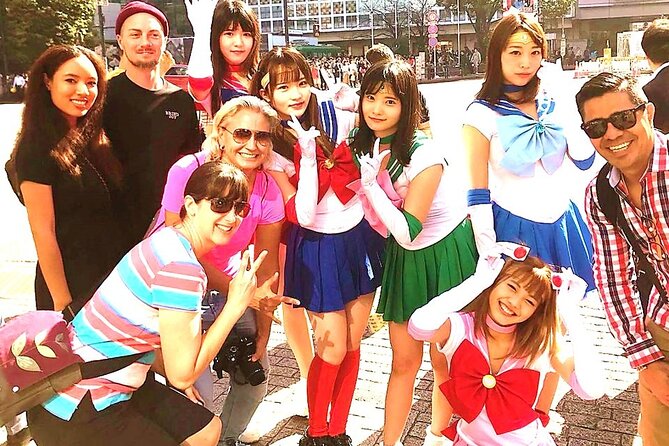
Your day begins at Yoyogi Station (Shibuya). The start time is 9:30 am, and the tour runs on time. If you’re even slightly late, you could be turned away—so build in buffer time like you mean it.
You’ll want to start thinking early about how you’ll stay comfortable. This is the kind of day where your shoes, your water plan, and your willingness to keep walking matter more than your camera gear. The tour is capped at up to 5 travelers, which usually makes it easier for the guide to manage pacing and keep the group together.
Before you go, prepare an IC card like SUICA or PASMO. Public transit runs smoother when you’re not digging around for coins and paper tickets. The tour expects you to handle transit payments yourself, so having that card ready is a small step that pays off big.
Meiji Jingu Shrine and Harajuku: Two Tokyo Moods in 30 Minutes
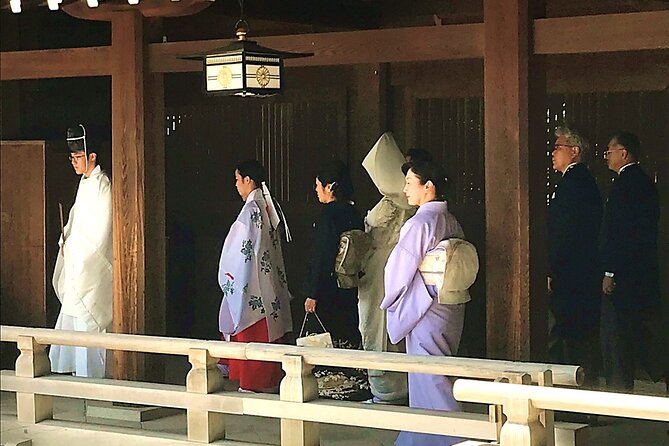
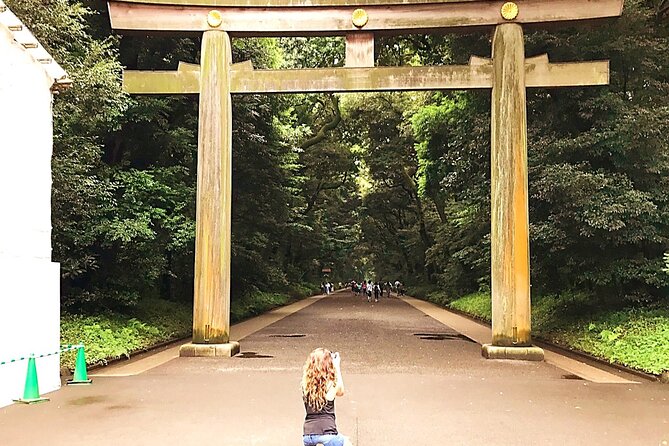
The first stop is Meiji Jingu Shrine, where you’ll spend about 30 minutes. This is your reset button. Tokyo’s noise fades fast once you step into the shrine grounds, and you’ll see why the setting feels like a pocket escape.
What I like about starting here is emotional timing. You begin calm, so later chaos in Shibuya feels like a contrast—not a collision. It also gives you cultural grounding early in the day, before you start moving through modern districts.
After that, you head toward Harajuku fashion street for about 30 minutes (not every stop is a formal ticketed attraction). Harajuku is where Tokyo turns up the volume: youth fashion, street style, and quick energy. Even if you don’t plan to buy anything, it’s useful as a snapshot of how Tokyo looks right now.
The practical tip: don’t treat these as separate worlds. Treat them as one city’s personality. You’ll notice how quickly Tokyo can shift from quiet tradition to street fashion.
Shibuya: Hachiko, the Crossing, and Learning the Crowd Flow
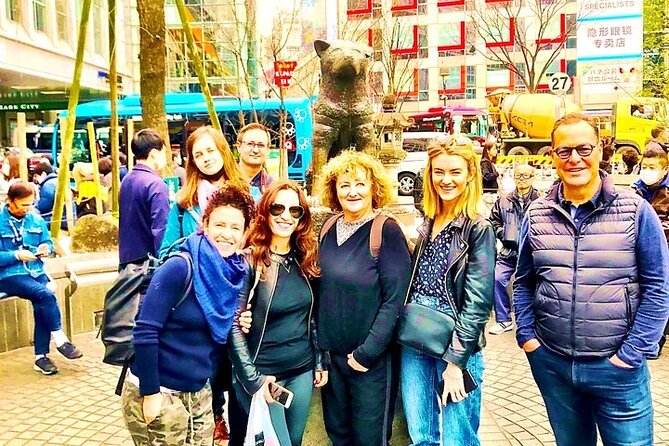
Next comes Hachiko near Shibuya, with about 30 minutes here. The famous dog statue is more than a landmark. It’s also a useful entry point into how Tokyo remembers loyalty and routine in everyday life.
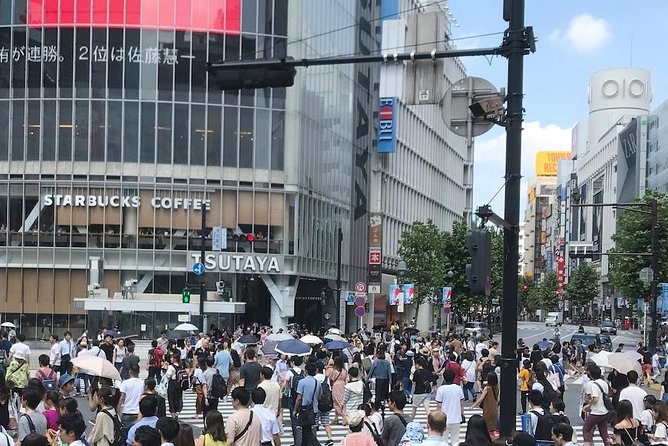
Then it’s on to Shibuya Scramble Crossing, again around 30 minutes. The crossing can feel chaotic if you don’t know how to move. The value of a guided day isn’t just seeing the crossing—it’s learning how to get through it without getting pulled into the wrong current.
One of the most consistent positives from this style of tour is that the guide helps you use the subway and trains so it feels easy. That’s especially important in Shibuya, where station flow can be confusing under pressure. With the guide handling the route logic, you can focus on walking smart and staying with the group.
If you hate crowds, aim for a mindset shift. You’re not stuck in them; you’re moving through them. Tokyo’s crowds are organized by design. You just need to learn the rhythm.
Tsukiji: Sushi First, Then Hongwanji Temple and the Market Area
Tsukiji is a highlight because it connects food culture with a place that actually works. You’ll stop at Tsukiji Hongwanji Temple for about 30 minutes. Before visiting the temple, the tour includes a meal option at a sushi restaurant (about $13 USD).
This is one of the more “real life” parts of the day. You’re not only sightseeing—you’re eating in the middle of Tokyo’s food geography. Still, keep expectations grounded. Lunch here is not an endless feast; it’s a practical stop that fits the schedule.
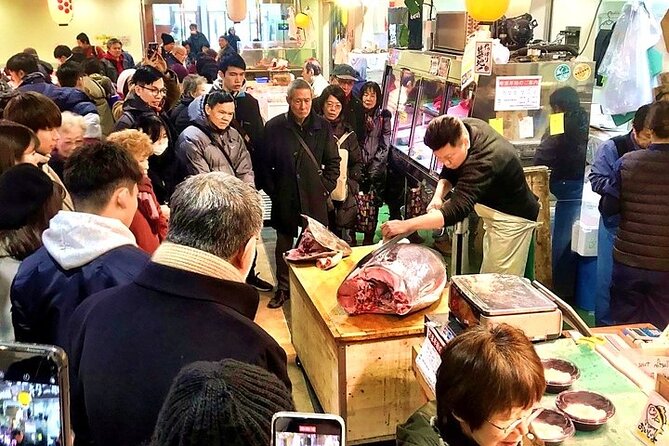
After that, you get Tsukiji traditional fish market time (about 30 minutes). This zone is intense. Even if you don’t understand every detail of fish names or the supply chain, you’ll feel the energy in the way people move and the way the place runs on schedule.
What to watch for: market time can be sensory. Busy alleys, strong smells near food, and a lot happening at once. If you have a sensitive stomach, pace yourself. Eat what feels safe and don’t assume you can sample everything.




Imperial Palace Exterior and Marunouchi: Power, Order, and Big City Calm
You’ll spend about 30 minutes at the Imperial Palace area, with time described as walking around the outside. This is the kind of stop that’s useful even if you don’t love palaces. It gives you context for Japan’s political and historical center without requiring a deep, separate planning project.
From there, it’s Marunouchi, the economy-focused district. Think business Tokyo: wider streets, major buildings, and a different tempo than neighborhood shopping areas. It’s a good contrast stop because it shows you how Tokyo functions when you’re not in tourist hotspots.
Then you’ll continue to Tokyo Station (Marunouchi Ekimae Hiroba) for about 30 minutes. Tokyo Station is one of those places you can appreciate even if you never ride every line through it. It’s an iconic hub and a useful navigation anchor for future days in the city.
If you’re trying to build a Tokyo “mental map,” this part of the day helps. After Meiji, Shibuya, and Tsukiji, you get a clearer sense of where the city’s different layers sit.
Akihabara: When Subculture Turns Into a Walkable World
Akihabara is your jump into Japanese subculture street time—about 30 minutes. You won’t get every shop in one visit, and that’s the point. This stop is a sampler. It shows you the vibe so you can decide what to explore later if you want.
Even with limited time, Akihabara is fun because it’s visually specific. You’ll see how Japanese pop culture shows up in retail, signage, and the way streets are organized around niche interests.
One smart way to enjoy this stop is to treat it like window shopping homework. Notice what pulls you in—retro games, collectibles, electronics, character goods. Then if you return on your own, you’ll shop with a plan, not random wandering.
If you get tired near the end of the day, this is a good place to slow down a bit. The shops are dense, so you can choose quick breaks without needing to travel far.
Asakusa and Senso-ji: The Old-Tokyo Finish Line
The last major cultural stops are Senso-ji Temple and Asakusa Shrine, with about 30 minutes at each. This is where the day turns atmospheric. Senso-ji is described as the oldest Buddhist temple in Tokyo and one of the most popular tourist areas in Japan—so yes, you’ll see crowds, but it’s a worthwhile kind of chaos.
You end at Asakusa Station (as your tour end point). That matters because it helps your legs at the close of the day. You’re not finished in the middle of nowhere—you’re finishing in a district that’s easy to continue exploring, with transit access.
This ending also pays off emotionally. After a day that includes modern Tokyo icons and a food-market whirlwind, old Tokyo feels like closure. You walk away with a clearer sense of Tokyo’s continuity—how traditions still sit right next to the city’s fast changes.
Price, What You Pay For, and How to Keep Costs Under Control
At $78.18 per person for roughly 7 hours, this tour sits in the “good value” category for first-timers. The guide adds cost, but also saves you time and confusion. In a city like Tokyo, time saved is money saved because you avoid wrong turns, wasted station transfers, and dead-end sightseeing plans.
That said, two major things are not included:
- Transportation expenses (that’s why your IC card prep matters)
- Food and beverage expenses
Lunch includes a sushi restaurant option around $13 USD, but that still means your budget needs to account for it. Bring cash ready, since the tour recommends having it on hand.
My advice: plan a simple budget for transit top-ups and snacks. Don’t try to solve food at the last second while you’re also trying to stay with the group. If you feel hungry, you’ll enjoy the day more when you eat proactively.
Who This Tour Suits Best (and Who Should Reconsider)
This tour is a strong fit if you’re new to Tokyo and want a high-quality overview without building a complex itinerary. It’s also good for people who like structure: a clear route, a guide who explains culture, and a day that moves forward without long downtime.
I’d also say it suits anyone who wants help with transit. One of the standout themes from real-world experience with this kind of tour is learning to use trains and subway so it feels easy after you leave.
The main caution is physical pace. The tour notes moderate physical fitness, and multiple comments stress that it’s a lot of time on your feet. If you know you tire easily, bring your best walking stamina plan and consider whether 7 hours of movement fits your style.
Should You Book This Tokyo Full Course Tour?
Yes, if you want the classic Tokyo hits plus real neighborhood texture in one day. The biggest reason is the guide-led flow: you get cultural context, help with subway navigation, and a route that makes sense from morning to afternoon to evening.
No, if you want a slow sightseeing day with lots of long sit-down time. This tour is built for momentum, not for lingering. If you’re very sensitive to crowds or you need frequent rest stops, you’ll probably feel rushed.
If you book, do three things and you’ll enjoy it more: get your SUICA/PASMO ready, wear comfortable shoes, and keep your expectations aligned with a busy but rewarding day.
FAQ
How long is the Tokyo full course tour?
It lasts about 7 hours.
How much does the tour cost?
The price is listed at $78.18 per person.
Where does the tour start and end?
It starts at Yoyogi Station in Shibuya at 9:30 am, and it ends at Asakusa Station in Taito City.
What’s included in the price, and what isn’t?
The tour fee includes the tour cost and consumption tax. Transportation expenses and food and beverage expenses are not included.
Do I need an IC card for transit?
Yes. The tour recommends preparing a transportation IC card such as SUICA or PASMO in advance.
Is the tour canceled for bad weather?
This program requires good weather. If it’s canceled due to poor weather, you’ll be offered a different date or a full refund.