REVIEW · TOKYO
Tokyo, Edo Castle & East Garden of the Imperial Palace Tour
Book on Viator →Operated by gotcha · Bookable on Viator
A good Tokyo morning doesn’t have to be loud. This Imperial Palace East Garden tour gives you a calm, green change of pace while you learn how the imperial grounds connect to Japan’s past. You also get a simple structure for seeing one of the city’s most important sites without feeling lost.
I especially like two things: the walk itself, with garden views and the old bridge area that feel wonderfully quiet, and the way the guide brings the imperial story to life with clear explanations and real context. One possible drawback to plan for: you do not go inside the Imperial Palace, and the East Garden is closed on Mondays and Fridays.
In This Review
- Key highlights I think you’ll care about
- Meeting at Wadakura Fountain: where the tour starts and why it matters
- The East Garden walk: gardens, an old bridge, and quiet photo stops
- Seasonal note
- What you’ll learn: imperial family context you can remember
- If you care about good English and Q&A
- The Imperial Palace access rules: what you can and cannot enter
- Baggage inspection and the knife souvenir rule (real talk)
- The Edo Castle angle: how this fits older Tokyo
- Price and value: is $43.11 a good deal for this?
- Pacing, photos, and how to enjoy it without stress
- Comfort tips that pay off
- Who this tour is best for (and who might want something else)
- Should you book the Tokyo Imperial Palace East Garden tour?
- FAQ
- Is the Inner Palace included?
- Can I visit the East Garden on Mondays or Fridays?
- How long is the tour?
- What’s included in the price?
- Where does the tour start?
- Is the tour a big group?
- Is there free cancellation?
Key highlights I think you’ll care about
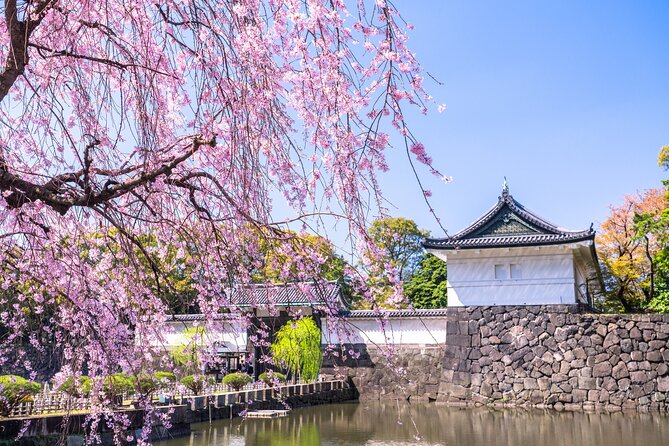
- East Garden atmosphere: gardens and paths that feel like a breather from Tokyo street life
- Old bridge + historic sights: you’ll focus on key features without sprinting through checkpoints
- Guides who answer questions: guides like Masahito have a reputation for being kind and very detailed
- A first-timer-friendly pace: about 2 hours, with time to look and take photos
- Important limits: the tour doesn’t include the Inner Palace, and there’s a baggage inspection at the grounds
Meeting at Wadakura Fountain: where the tour starts and why it matters
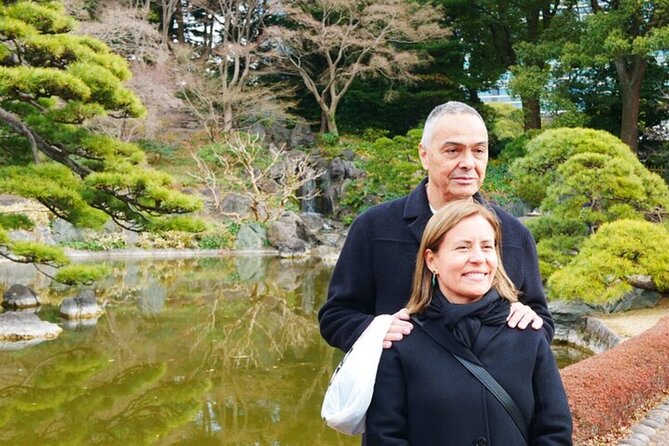
Your tour begins at Wadakura Fountain National Park (3-1 Kōkyogaien, Chiyoda City). This is a smart choice because it’s a very clear anchor point near the Imperial Palace area. If you’re arriving from elsewhere in Tokyo, you’ll likely find public transportation gets you close, and from there you can focus on the walk instead of playing navigation games.
Group size is capped at 50 travelers, so it won’t feel like you’re swallowed by a huge crowd. Still, you should show up a few minutes early. The Imperial Palace grounds are tightly managed, and that matters for the start of your experience.
You can also read our reviews of more tours and experiences in Tokyo.



The East Garden walk: gardens, an old bridge, and quiet photo stops
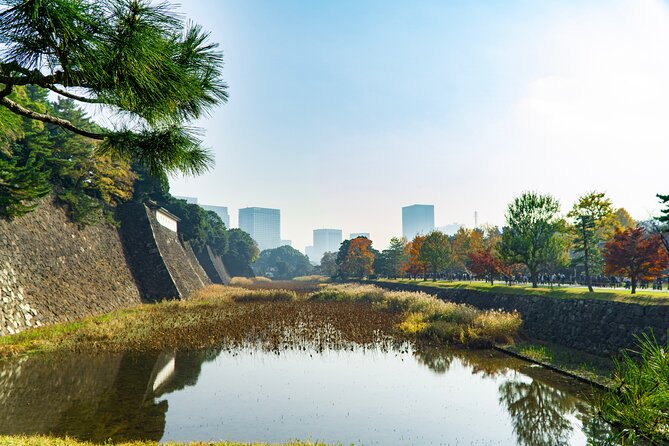
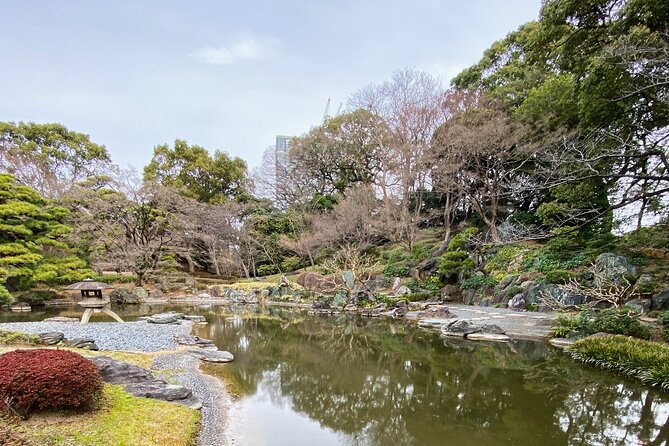
This is a walking tour that centers on the East Garden and the surrounding grounds. Expect a route that mixes landscaped areas with historic structures, so you’re not stuck looking at only one type of scenery. One review specifically calls out the garden’s beauty and an old bridge, and that’s exactly the vibe you should plan for: gentle, scenic, and easy on the legs.
The East Garden is also the kind of place where your eyes slow down. In a city where you can easily fill every minute with train rides and shopping streets, this feels like a reset. You’ll have time to stop, look around, and let the setting do some of the work.
Seasonal note
The schedule doesn’t mention seasonality, but you can assume the gardens look different throughout the year. Since the tour is about walking the grounds, you’ll get the best results if you bring patience for weather and a camera you’re willing to actually use.
What you’ll learn: imperial family context you can remember
A big part of the appeal is the historical explanation. The tour is designed around the idea of following in the footsteps of successive emperors and understanding how the imperial story fits into modern Tokyo.
I like this approach because it gives meaning to what you see. Instead of just reading signs and moving on, you get an adult conversation with a guide about how the palace area developed and why it matters. One review mentions Masahito delivering an in-depth account from origins to the present day, and that kind of continuity is what helps the whole place click.
You’ll also learn about Japan’s royal family and the historical buildings you pass. The goal is not to cram dates into your brain. It’s to help you connect the physical setting to the long timeline behind it.
If you care about good English and Q&A
From the reviews, the tour guides are praised for speaking English well and answering questions. That’s a practical advantage. You can ask what something means and get a real answer, not a vague shrug.






The Imperial Palace access rules: what you can and cannot enter
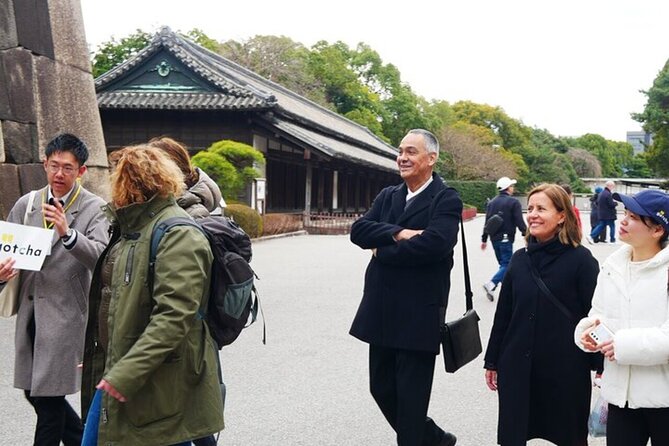
Here’s the key limit you need to know: you cannot enter the Inner Palace. The tour focuses on walking around the Imperial Palace grounds and the East Garden area, but it’s not an inside-the-rooms experience.
Also, the East Garden is closed on Mondays and Fridays. If your Japan trip lands on one of those days, you’ll need to plan around it with either a different day or a different tour that matches your schedule.
And yes, there’s a management process when you reach the grounds: baggage inspection happens once you enter. That means you should pack with one thought in mind: speed. Bring what you need, keep your bag simple, and assume you might have to wait a bit.
Baggage inspection and the knife souvenir rule (real talk)
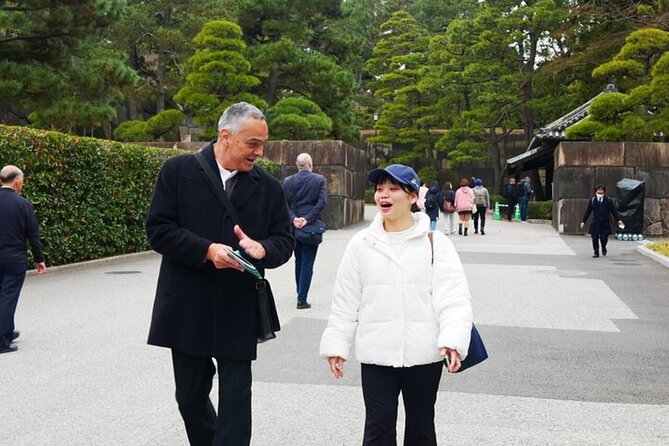
This is one of those details that can ruin your day if you ignore it, so treat it like the important “don’t forget” item it is.
Upon entering the Imperial Palace grounds, visitors are subject to baggage inspection. The tour guidance also adds a specific warning: if you plan to buy Japanese knives or other items that could be used as weapons (for example, from places like Tsukiji or Asakusa), you should leave them in a coin locker or similar before you meet.
I’m glad they say this clearly. It’s not the kind of rule you want to find out the hard way on the day. If you’re shopping for anything long, sharp, or heavy-duty, adjust your plan so the purchase happens after the tour.
The Edo Castle angle: how this fits older Tokyo
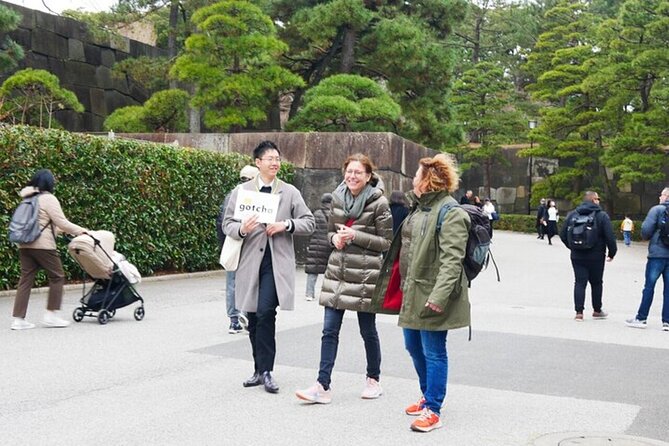
The tour name includes Edo Castle, but the route you actually experience here is centered on the Imperial Palace East Garden walking area. The best way to think about it is: you’re in the heart of a site that sits at the crossroads of Japan’s historical eras.
Even when you’re just outside in the garden paths and near historic-looking structures, the guide’s job is to connect what you’re seeing to the big story: successive eras, the imperial family, and the way the grounds became part of what Tokyo is today. If you’re building an itinerary that includes Edo-era themes, this tour helps you do it without feeling like you need a textbook in your pocket.
Price and value: is $43.11 a good deal for this?
At $43.11 per person, this isn’t a budget-tour price, but it’s also not priced like a high-end private experience. The value depends on what you want from your time.
You’re getting:
- a tour guide (the main value driver here),
- the experience runs about 2 hours,
- and the admission ticket for the experience is free.
That last piece matters. Even if you weren’t paying separately for entry, you’re paying for guided interpretation and timing. A guided walk through a managed historical site is often worth it because you avoid the common problem: wandering around without understanding what each stop is and why it matters.
If you want a chill afternoon that still feels meaningful, this price can make sense. If you prefer to self-guide with a phone app and just wander, then you might feel the cost more sharply. For many first-timers, though, a guide who explains the imperial context is exactly what turns the grounds into a story you remember.
Pacing, photos, and how to enjoy it without stress
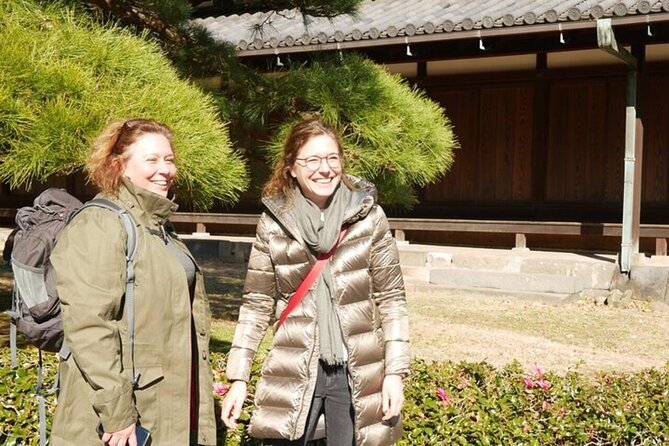
This is a 2-hour walking tour, and that’s a sweet spot. Long enough for a proper introduction and a few key stops, short enough that you won’t be exhausted before the rest of your Tokyo day.
From one review, I also like the practical touch: guides took pictures for the group at different sites. Even if that’s not guaranteed every time, it’s a reasonable expectation that the guide will help with photo moments at key points, because the tour is built around viewing specific features.
Comfort tips that pay off
Bring:
- shoes you can walk in for 2 hours,
- a small bag you won’t mind handling during baggage inspection,
- and water if you’re visiting on a warm day.
Also, keep your expectations realistic: this is not an inside-the-palace show. Your satisfaction will come from the grounds, the explanations, and the calmer mood.
Who this tour is best for (and who might want something else)
This tour suits you if:
- you want a less intense Tokyo experience than typical museum marathons,
- you’re a first-timer who likes an organized route and clear context,
- you enjoy history but want it explained in a way that stays friendly and understandable,
- you prefer a walking pace that gives you time to look.
You might think twice if:
- you’re specifically chasing an inside-the-palace experience (this tour does not go there),
- you can only travel on Mondays or Fridays, because the East Garden is closed those days,
- you want a fast hit of Edo-era sites without focusing on the imperial grounds.
Should you book the Tokyo Imperial Palace East Garden tour?
I’d book it if you want a guided, calm, historically grounded Tokyo stop that doesn’t eat your whole day. The strengths are clear: the scenery is genuinely peaceful, and the guide-led explanation helps you understand what you’re seeing rather than just passing it.
I would hesitate only if your schedule hits a closure day or if you’re hoping for access to the Inner Palace. If those aren’t issues, this is a strong way to add depth to your trip with manageable time and a guide who’s been praised for clear, kind answers.
FAQ
Is the Inner Palace included?
No. This tour does not allow entry to the Inner Palace.
Can I visit the East Garden on Mondays or Fridays?
No. The East Garden is closed on Mondays and Fridays.
How long is the tour?
The tour runs about 2 hours.
What’s included in the price?
You get a tour guide, and the admission ticket for this experience is free.
Where does the tour start?
The meeting point is Wadakura Fountain National Park (3-1 Kōkyogaien, Chiyoda City, Tokyo 100-0002, Japan).
Is the tour a big group?
It has a maximum of 50 travelers.
Is there free cancellation?
Yes. You can cancel up to 24 hours in advance for a full refund.