REVIEW · TOKYO
Tokyo: E-scooter Experience in Shibuya with Iconic Photos
Book on Viator →Operated by NEON NEON TOKYO · Bookable on Viator
Neon Shibuya, one scooter ride away. In about two hours with NEON NEON TOKYO, you glide past Shibuya Crossing, Meiji Shrine, and the tree-lined Gaien, with glowing vests built for great night shots and real, street-level Tokyo energy. Electric power keeps it simple and eco-friendly, while the pace stays beginner-friendly.
I love two things most: the quick tutorial and practice time that helps if you’ve never ridden an e-scooter before, and the fact that you’ll get photos during the tour sent to you at the end. I also like that the guide keeps things moving while still making room for your pictures.
One consideration: at $52.02 for a roughly two-hour ride, this is a photo-and-streets experience, not a long, slow cultural deep dive. Also, it depends on good weather, so plan for a different date or a refund if conditions are poor.
In This Review
- Key things to know before you ride
- A two-hour Shibuya neon ride with photo stops that actually make sense
- Price and what you really get for $52.02
- Meeting at NEON NEON TOKYO: the start matters for first-timers
- Safety that feels more like comfort (and better photos)
- Stop 1: Shibuya Crossing for the iconic photo moment
- Stop 2: Meiji Shrine gate—quiet, solemn, and a good reset
- Stop 3: Meijijingu Gaien tree-lined photo run (and ginkgo in fall)
- What the scooter ride adds (beyond just being transportation)
- The guide makes or breaks the experience
- Timing: why the “short stops” structure works in Tokyo
- Who this e-scooter tour is best for
- Should you book this Shibuya e-scooter photo ride?
- FAQ
- How long is the e-scooter experience in Shibuya?
- How much does it cost?
- What’s included in the price?
- Where do I meet the guide?
- Is there an admission fee for the stops?
- What speed will the scooter go?
- Is the tour refunded if weather is bad?
Key things to know before you ride
- Shibuya Crossing photo stop to catch the most famous city chaos from a guided viewpoint
- Meiji Shrine gate moment for a calmer, more solemn pause from the neon crowd
- Meijijingu Gaien tree-lined shots that get especially scenic in fall with yellow ginkgo
- Beginner-friendly start with a quick tutorial and time to practice first
- Guide-shot photos included, delivered after the tour
- Small group size (max 7) for easier pacing and more checking-in from your guide
A two-hour Shibuya neon ride with photo stops that actually make sense
This isn’t a “stand and stare” tour. You move. You roll. You get the feeling of Tokyo as motion—especially around Shibuya, where the light, signage, and foot traffic all feel like they’re part of the same show.
What makes the timing work is the focus: three short stops, each with a specific visual target. You’re not trapped in one place for long. You get a quick Shibuya Crossing moment, then you shift gears toward the peaceful contrast of Meiji Shrine and the green, tree-lined Gaien area. That mix is a big part of why this tour feels fun instead of exhausting.
The e-scooters are limited to up to 20 km/h, which matters for comfort. You’re not dealing with high speed thrills; you’re dealing with steering, staying smooth, and taking pictures at the right moments.
You can also read our reviews of more photography tours in Tokyo



Price and what you really get for $52.02
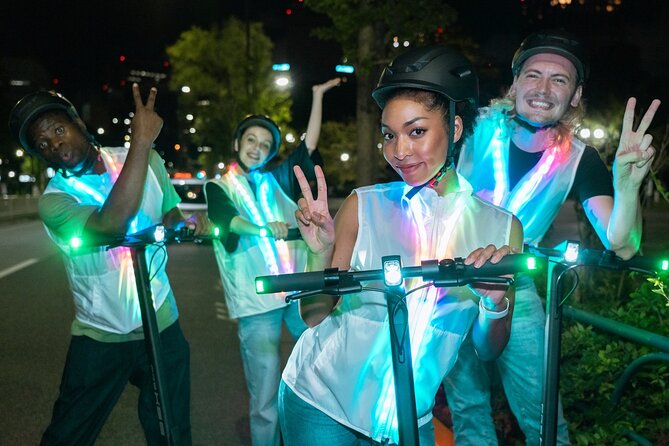
At $52.02 per person for about two hours, the value comes from what’s included with the ride itself:
- a 2-hour local guide
- e-scooter rental
- photos during the tour, delivered later
When scooter rental is bundled into the tour price, you avoid the usual “what’s actually included?” guessing game. You also get someone pacing the experience, which is a big deal in Shibuya, where the city is loud, bright, and busy even when you’re not trying.
If your goal is neon photos, quick sightseeing highlights, and an easy route through the city without planning every turn, this price is easier to justify. If you’re hoping for a longer, museum-style day, you’ll likely want a different kind of tour.
Meeting at NEON NEON TOKYO: the start matters for first-timers
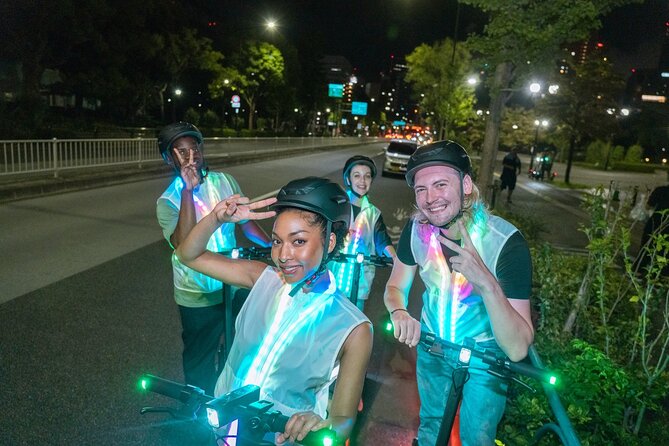
Your tour begins at NEON NEON TOKYO in Minato City (Mita). The activity ends back at the meeting point, so you don’t have to worry about figuring out how to get home after the ride.
The tour uses a mobile ticket, which is convenient if you’re already juggling transit cards, phones, and reservations. It also helps that the meeting point is described as near public transportation, so it fits naturally into a day of exploring.
The most practical part, though, is how the ride gets started. In the kind of experience you want here, your guide doesn’t just hand you a scooter and wish you luck. The emphasis is on a quick tutorial and time to practice first, which is exactly what helps your confidence before you’re surrounded by Tokyo street traffic and neon signage.
Safety that feels more like comfort (and better photos)
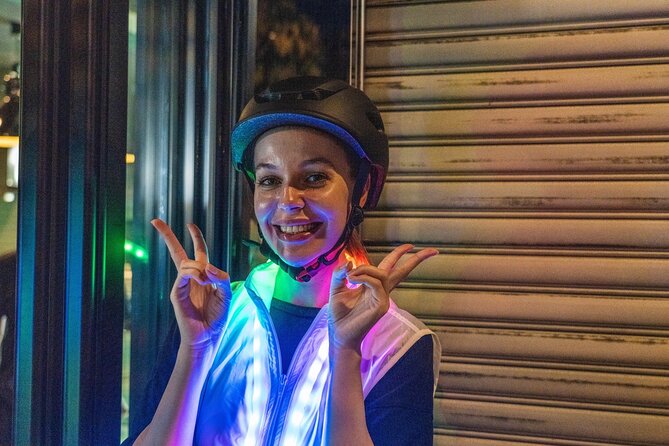
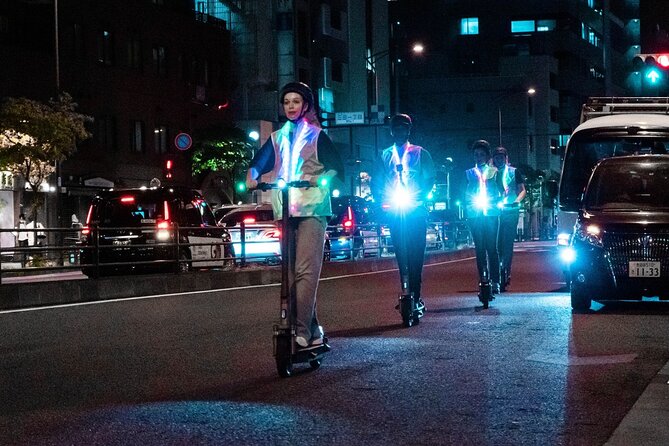
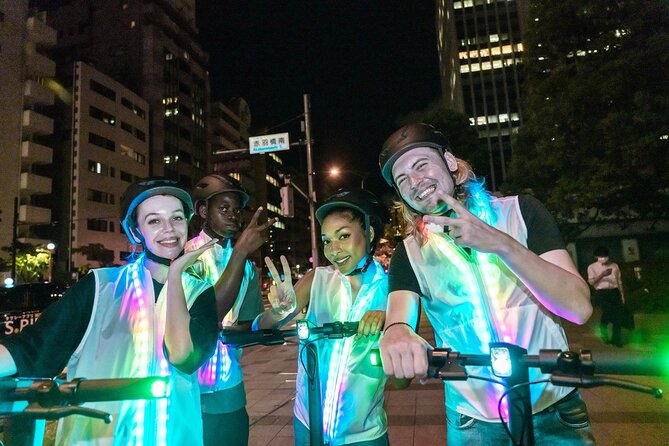
Safety isn’t just a checkbox here. You ride with glowing safety vests, and that does two jobs at once: it helps you stay visible to others, and it also makes the photos look more “Tokyo night” instead of random snapshots.
The guide also keeps checking in so the group stays together and nobody gets left behind. That’s important in a small group setting, because even one person moving slowly can turn a fun ride into a stressful one. Here, the approach is to help you keep up and still get your pictures.
The small group limit (maximum 7 people) is another quiet advantage. It makes the route feel less chaotic. It also makes it more realistic to stop for photos without holding everyone hostage.
Stop 1: Shibuya Crossing for the iconic photo moment
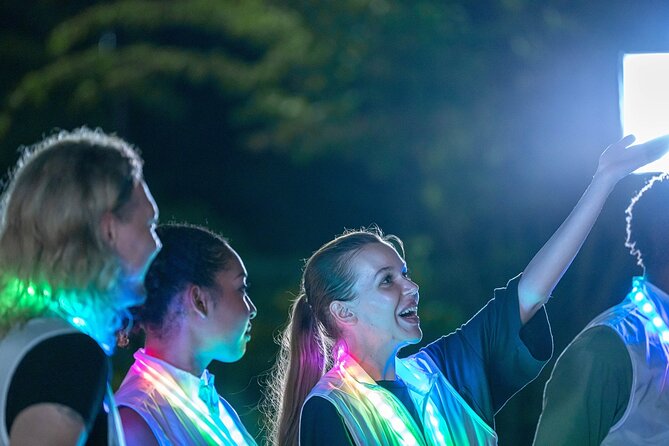
Shibuya Crossing is where Tokyo turns into a live video game. Even if you’ve seen it in photos, being there in person hits differently: the movement, the crowds, the lights, and the constant flow.
You get a focused Shibuya Crossing photo stop with a short time window (around 5 minutes). That’s enough for the classic shot you came for, without letting the stop drag while the crowd grows or the light changes.
A smart way to think about this part: your scooter puts you closer to the action than a bus tour ever could. The goal isn’t to spend forever in the densest crowd. The goal is to catch the moment, then roll on—so you still get the contrast stops afterward.
You can also read our reviews of more tours and experiences in Tokyo

Stop 2: Meiji Shrine gate—quiet, solemn, and a good reset
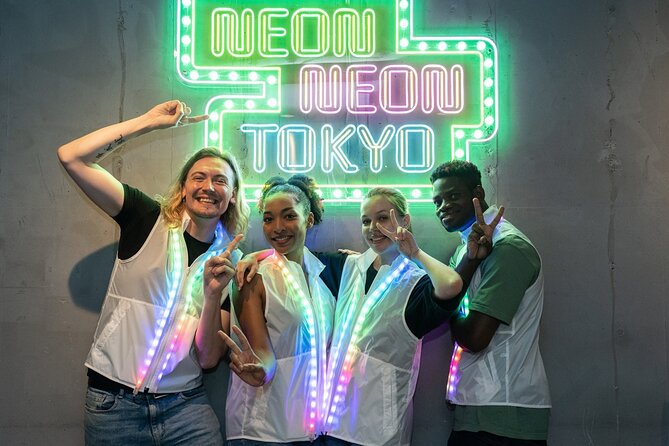
Right after Shibuya, the Meiji Shrine stop feels like someone turned the volume down. You take a picture at the shrine’s gate and soak in the more solemn atmosphere.
This is where the route earns its “adventure and discovery” promise. You get the neon city energy first. Then you get a structured pause that helps your brain reset. For many people, that contrast is the difference between a ride that feels like frantic sightseeing and one that feels like an actual experience.
The time at the shrine gate is also short (about 5 minutes), which keeps the tour moving and helps you avoid the common problem of turning a great stop into a rushed photo scramble.
Stop 3: Meijijingu Gaien tree-lined photo run (and ginkgo in fall)
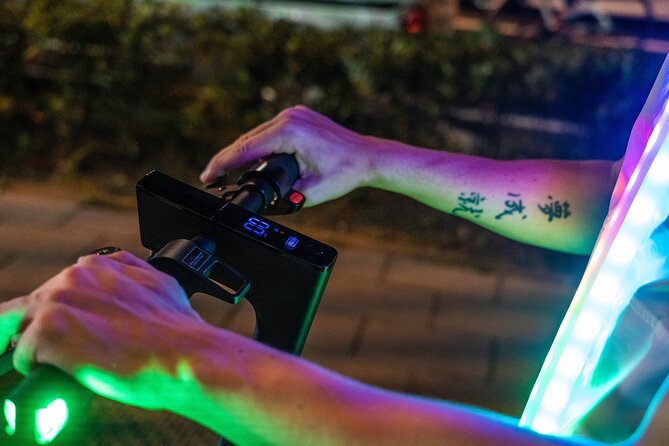
Next comes Meijijingu Gaien, focused on visuals along the street—lots of trees planted in a line that frames the ride and the photos. The timing here can matter seasonally.
In fall, you can catch yellow ginkgo color, which the tour specifically calls out as especially scenic and photogenic. Even if you’re not traveling in fall, the tree-lined feel is still a strong counterpoint to Shibuya’s hard edges and heavy signage.
You’ll get about 5 minutes here as well, so think of it as a quick walk-and-shoot moment at the right spot, while the rest of the ride keeps you moving through different “Tokyo moods.”
What the scooter ride adds (beyond just being transportation)
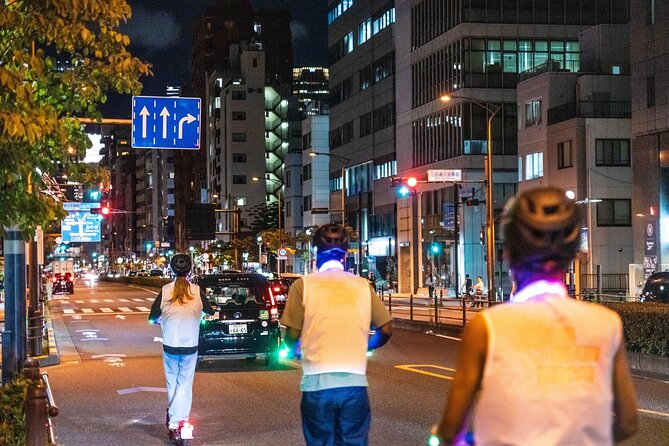
Walking Shibuya and the surrounding areas is possible, but it’s not the same. The e-scooter changes how the city feels.
For one, you watch neon-lit surroundings glide by. That motion makes the streets look more connected—less like separate sights and more like one continuous scene. It also keeps your legs from turning into noodles if you’ve been walking around all day.
Also, the e-scooter speed limit (up to 20 km/h) keeps things controlled. You’re free to enjoy the view without feeling like you need to white-knuckle it the whole time. If you’re nervous about riding at first, the tutorial and practice time helps a lot.
The guide makes or breaks the experience
This is the part I’d pay the most attention to when choosing this tour style. In an area like Shibuya, being comfortable matters, and comfort is tied to your guide’s pacing.
The best versions of this kind of tour are the ones where the guide:
- slows down when you need it
- pays attention to the group pace
- makes room for photos without turning the whole ride into stop-and-go confusion
That’s the pattern you want here: helpful guidance, friendly energy, and the kind of check-ins that keep your ride smooth even if you’re brand new to scooters.
One extra detail worth noting: the guide approach can include additional photo opportunities beyond the main highlights, depending on what’s possible during the ride. In other words, the focus isn’t only on hitting checkpoints—it’s on getting you the shots you actually came for, without rushing anyone.
Timing: why the “short stops” structure works in Tokyo
A lot of Tokyo tours try to cram too much into too little time. This one handles it better by making the stops specific and brief.
- You get a clear photo mission at each key location.
- You spend most of the time riding, which is where the city-energy experience happens.
- You still get peaceful contrast, not just neon for the whole ride.
That’s also why it’s roughly two hours. You end while you’re still fresh, not when you’re done. If you still want to explore afterward, you’ll have energy to do it.
Who this e-scooter tour is best for
This fits best if you:
- want iconic Shibuya photos without planning a route
- like city-night energy and photo stops
- are curious about trying an e-scooter with a guide close by
- prefer small group pacing (max 7)
It may be less ideal if you want:
- a long, quiet, in-depth cultural itinerary
- lots of time at each location for extended exploring
If you’re traveling with a mixed comfort level about scooters, this tour structure is still promising because the guide is set up to help people keep up, not to leave anyone behind.
Should you book this Shibuya e-scooter photo ride?
Book it if you want a fun, efficient way to see Shibuya Crossing and then balance it with calmer, greener stops near Meiji Shrine and Gaien—while getting scooter guidance and photos handled for you.
Skip it if you’re after a slow, deep cultural day with long stops, or if you know you’re going to struggle with even basic scooter riding despite the tutorial and practice time.
One last tip for deciding: check the weather before you commit. Since the experience requires good weather, this is the kind of tour where a clean plan matters more than wishful thinking.
If your goal is neon photos plus smooth scooter sightseeing, this is a strong fit.
FAQ
How long is the e-scooter experience in Shibuya?
The tour is about 2 hours.
How much does it cost?
It costs $52.02 per person.
What’s included in the price?
You get a 2-hour local guide, e-scooter rental, and photos taken during the tour sent to you at the end.
Where do I meet the guide?
You’ll meet at NEON NEON TOKYO, 4-chōme-1-4 Mita, Minato City, Tokyo 108-0073, Japan.
Is there an admission fee for the stops?
The stops mentioned are listed as admission ticket free.
What speed will the scooter go?
The e-scooters are up to 20 km/h.
Is the tour refunded if weather is bad?
Yes. This experience requires good weather. If it’s canceled due to poor weather, you’ll be offered a different date or a full refund.