REVIEW · TOKYO
Train in Samurai Swordsmanship and Defeat the Demon in Tokyo
Book on Viator →Operated by INTERNATIONAL GOSHIN-BUDO ASSOCIATION · Bookable on Viator
Sword training in Tokyo with a story edge.
This experience mixes Sengoku-era technique basics with an English-friendly, character-driven tale about Hyakki Yakō and an Oni returning to the modern world. What I like most is that it is not a spectator show: you learn the real structure behind samurai sword work. You also get English-friendly guidance plus practical discipline elements like posture, breathing, etiquette, strikes, and blocks, then apply it in a dramatic finale.
I also like the ending ritual: you leave with a scroll-style certificate with your name and the techniques you practiced, plus a commemorative photo and a matcha-sweets finish. One possible drawback: because you are participating (with uniform rental and armor for the lessons), it is better suited to people comfortable moving and following instructions for the full ~2 hours.
In This Review
- Key Highlights You Should Know Before You Go
- Samurai Sword Training Meets Tokyo’s Oni Legend
- The Four Chapters: What Happens During the 2 Hours
- Prologue: Hyakki Yakō and the Challenge You’re Here For
- Training: Etiquette, Breathing, Posture, Strikes, Blocks
- Battle: The Oni Confrontation as a Real Skill Test
- Recognition: Your Scroll, Photo, and Tea
- Uniform Rental, Armor Moments, and How Hands-On It Really Is
- English Instruction and Bushido Context That Doesn’t Feel Like Homework
- The Oni Battle: A Themed Fight With a Focus-First Message
- Matcha, Japanese Sweets, and the Photo Moment That Makes It Stick
- Price and Value: Why $84.70 Can Be a Fair Deal
- Practical Tips for Tokyo: How to Plan Around This Session
- Should You Book This Oni Sword Session?
- FAQ
- What is the duration of the Tokyo samurai sword training experience?
- How much does it cost per person?
- Is the experience offered in English?
- How many people are in the group?
- What is included with the tour?
- Do I need to bring food or drinks?
- Where do I meet for the tour?
- Can I cancel for a full refund?
Key Highlights You Should Know Before You Go
- Four chapters of the story: Prologue → Training → Battle → Recognition
- Small group size (max 6) for more attention during techniques
- Uniform rental and armor moments that make it feel real, not staged
- Learn offensive and defensive techniques, then combine them in the Oni confrontation
- English guide focused on Bushido, sword skills, and samurai history
- Personal scroll with your name plus matcha and Japanese sweets at the end
Samurai Sword Training Meets Tokyo’s Oni Legend
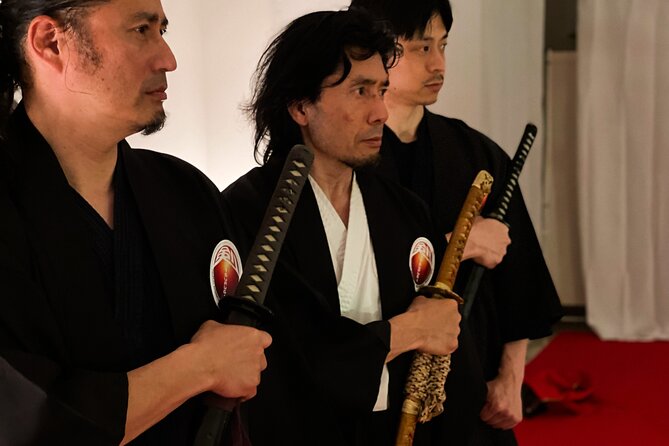
In Tokyo, you can find plenty of sword-themed activities. This one feels different because it treats swordsmanship as a practice of mind and body, not just costumed drama. The story framework is built around Japan’s night-parade folklore: Hyakki Yakō, the Night Parade of a Hundred Demons, and the Oni, a demon tied to darkness and fear.
The tour’s tone is very clear from the start: you’re not meant to sit back and watch. You learn how to stand, how to breathe, how to strike and block, and how to keep your focus. And then you use those basics to confront the Oni in a symbolic clash, presented as a battle against the darkness that lives inside fear, doubt, and weakness.
You can also read our reviews of more tours and experiences in Tokyo.



The Four Chapters: What Happens During the 2 Hours
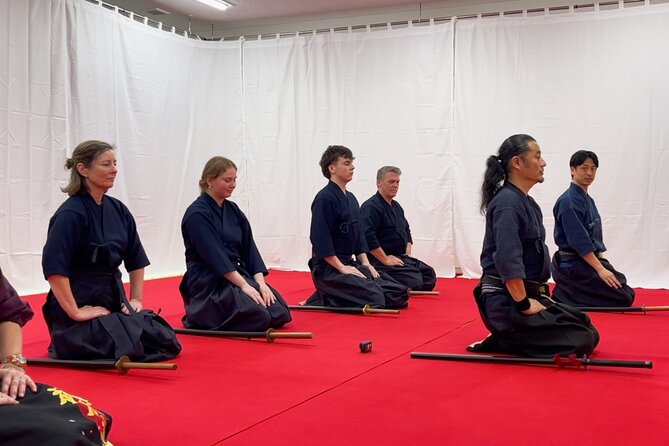
The flow is designed like a short quest, with clear stages. You’ll move through four chapters that keep the practice structured while still feeling like a story.
Prologue: Hyakki Yakō and the Challenge You’re Here For
The Prologue sets the mood using the idea of Oni returning and the idea that the Demon reflects what’s inside you. You’ll get context on the “trial” concept, and you’ll understand the role you play: you join the tsurugi samurai squad as the person chosen for this test. This isn’t just background. It’s meant to frame why you train the way you train: calm mind first, then technique.
Training: Etiquette, Breathing, Posture, Strikes, Blocks
During Training, you work on fundamentals that show up across many martial traditions, but here they’re explained with an explicitly samurai lens. The guide covers Bushido and samurai history alongside practical technique coaching.
Expect to practice:
- Etiquette and posture (how you hold yourself)
- Breathing and focus (how to control your mind and movement)
- Strikes and blocks (offensive and defensive basics)
There’s also a live sword demonstration by the instructor, which matters. Even if you’ve handled a prop sword before, watching the instructor’s pacing and form helps you avoid guessing.
Battle: The Oni Confrontation as a Real Skill Test
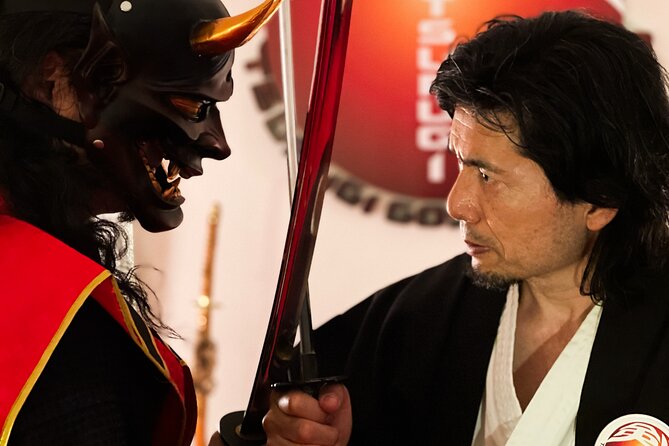
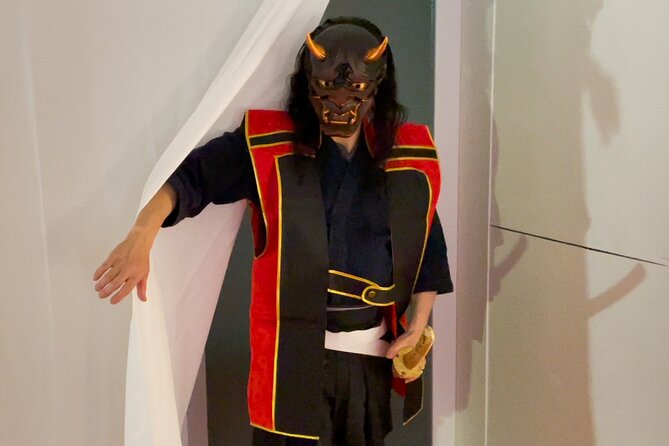
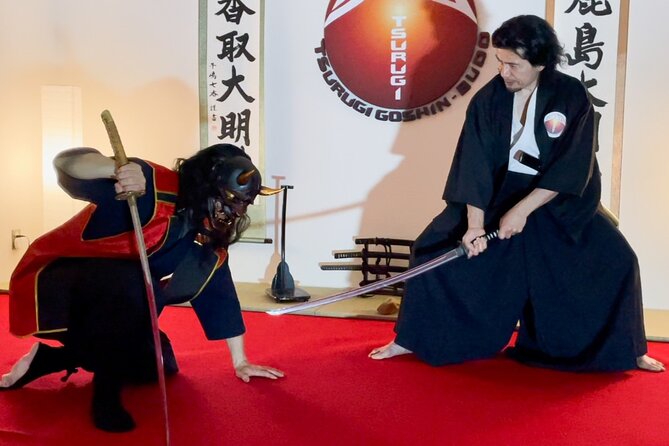
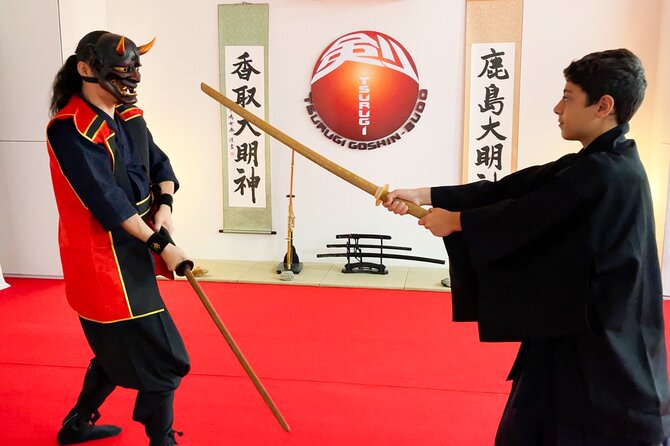
Then comes the finale. The Demon (Oni) confrontation is symbolic, but it still functions like a practical test of what you learned. The idea is that you face inner darkness through courage, and you apply both offensive and defensive techniques to defeat it.
Based on what this experience emphasizes, the “battle” portion is less about brute strength and more about control, timing, and decision-making under a themed scenario. You’ll practice combining what you learned, not just repeating one isolated move.






Recognition: Your Scroll, Photo, and Tea
Recognition is where the program turns into a keepsake. You receive a personalized certificate (scroll) with your name and the techniques you gained. You also get a commemorative photo with samurai and an authentic matcha tea service with Japanese sweets.
It’s a nice way to end: you get something tangible that says you completed a structured training session, not just a one-time experience.
Uniform Rental, Armor Moments, and How Hands-On It Really Is
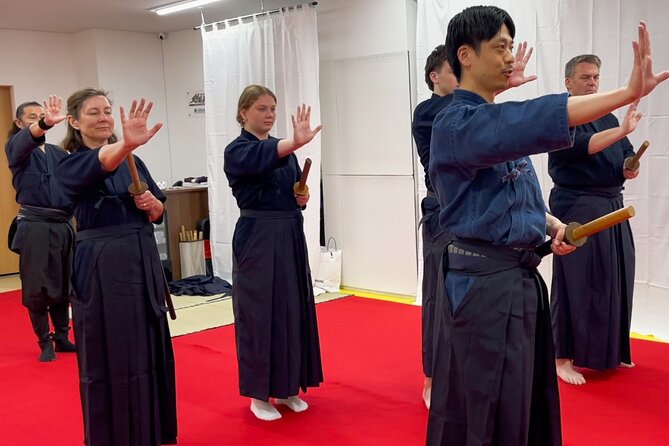
You don’t just get a lecture. You get outfitted. Samurai uniform rental is included during the lessons, and you’ll wear armor for the experience and photos. That matters because it changes how seriously your body takes the training. Even if you know it’s reenactment-inspired, the uniform and armor help lock you into the mindset of posture and presence.
The experience also includes toilets in the building, which sounds like a small detail, but it keeps the session comfortable. The tour runs about 2 hours, and you’ll want your energy to stay up from start to finish.
Also, the group limit is max 6. That tends to improve pacing. In a larger class, you can spend a lot of time waiting. Here, the small group size supports more direct guidance as you practice strikes, blocks, and transitions.
English Instruction and Bushido Context That Doesn’t Feel Like Homework
This is fully in English, with an English guide covering:
- Sword skills
- Bushido
- Samurai history
The best part of mixing context with technique is that it helps you understand why you’re doing something, not only how. For example, “breathing and focus” isn’t random. It connects to the idea that technique comes from mental steadiness. Likewise, etiquette and posture aren’t only traditional flair; they’re part of how you avoid sloppy movement and keep your form consistent.
If you’re traveling solo, this structure can feel especially reassuring. You’re not hunting for clues or decoding language. The program is built to carry you through the story, the training, and the finale in a way that makes sense.
The Oni Battle: A Themed Fight With a Focus-First Message
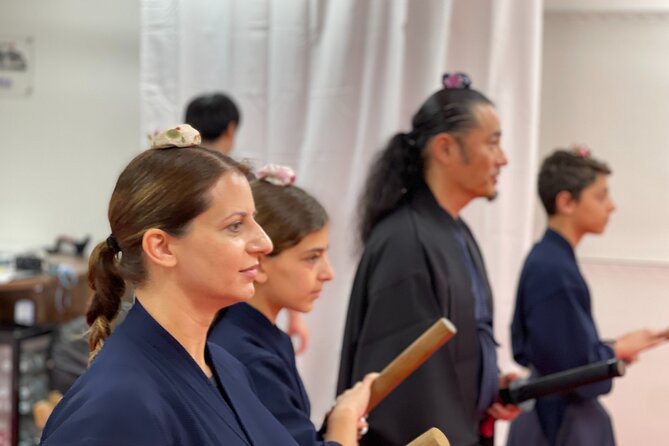
The Oni theme is more than folklore cosplay. The story explicitly frames the Demon as a reflection of fear and weakness within. That means the “battle” is presented as courage practice, not just physical sparring.
Here’s how you can think about it as a visitor:
- You’re given a scenario.
- You train fundamentals.
- You combine them while staying calm and focused.
- You finish by symbolically defeating the inner darkness.
So even if the Oni scene sounds dramatic, the instruction emphasis stays grounded in control, breathing, and structured technique. The outcome is mental as well as physical: you walk away with a clear sense of what you learned and a sense of accomplishment from completing a full arc.
Matcha, Japanese Sweets, and the Photo Moment That Makes It Stick
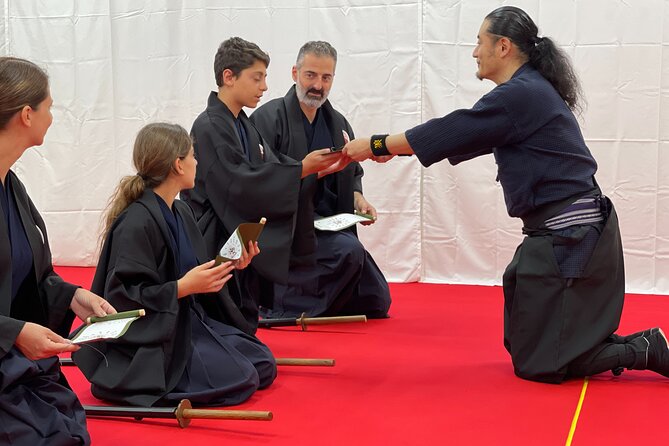
A lot of activities end right after the main event. This one adds a traditional-style finish: authentic matcha tea and Japanese sweets. It’s a small ritual that helps the whole thing feel more “Japanese” than a generic workshop.
Then there’s the commemorative photo with samurai. If you’re the type who likes souvenirs that aren’t just a shopping receipt, this is a practical one. And it comes paired with the personalized scroll certificate, which you can keep as a memory of skills—not just an outfit shot.
Price and Value: Why $84.70 Can Be a Fair Deal
At $84.70 per person, you’re paying for more than a short activity. The value shows up in five places that matter in real travel time:
- You get a structured 2-hour session, not a quick photo stop.
- Uniform rental and armor are included, which often costs extra in similar “experience” formats.
- Instruction is in English, including Bushido and samurai history, plus live demonstration.
- You receive a personalized scroll certificate with your name, which turns the experience into a keepsake.
- The group is capped at 6, which can mean more attention during technique practice.
One reason it books about 29 days in advance on average is likely because it fills up for people who want an authentic-feeling, hands-on activity that also works for families and couples. If you’re trying to balance “Tokyo culture” with something memorable and active, the pricing looks reasonable for what’s included.
Practical Tips for Tokyo: How to Plan Around This Session
This takes place in Tokyo and starts at a specific building address in Chiyoda City, Kōjimachi (the meeting point is 国際護身武道連盟). The activity ends back at the meeting point, which helps you plan the rest of your day without extra wandering.
It’s near public transportation. That’s ideal because the tour doesn’t include air-conditioned vehicle service or private transportation. So you’ll want to arrange your own transit into the area.
A couple more practical notes:
- You’ll use a mobile ticket, so have your phone ready.
- Wear comfortable clothing for mobility since you’ll get into a uniform and armor for part of the training and photo moments.
- This is best for people willing to follow instructions closely and participate fully, especially during the Training and Battle portions.
If you’re traveling with kids or mixing generations, the experience is described as family-ready and English-friendly. Still, the main activity is hands-on sword technique practice, so choose it with the energy level of your group in mind.
Should You Book This Oni Sword Session?
Yes, if you want a hands-on samurai training experience that blends technique with story, in English, for a small group. I’d especially recommend it for couples and families who want a shared activity with a real skill component and an ending keepsake (your name on the scroll plus matcha and a photo).
Skip it only if you’re looking for a passive cultural show. This one is built for participation. It’s also not framed as a quick, low-effort attraction. Give it your full attention for the full ~2 hours and you’ll get more out of it.
If you like the idea of learning fundamentals—posture, breathing, strikes, blocks—while being guided through a structured Oni confrontation, this is a strong value for your time in Tokyo.
FAQ
What is the duration of the Tokyo samurai sword training experience?
It’s about 2 hours.
How much does it cost per person?
The price is $84.70 per person.
Is the experience offered in English?
Yes. There is an English guide on sword skills, Bushido, and samurai history.
How many people are in the group?
The experience has a maximum of 6 travelers.
What is included with the tour?
Included items are samurai uniform rental during lessons, a live sword demonstration, toilets in the building, an English guide, a personalized certificate (scroll) with your name and techniques, authentic matcha tea and Japanese sweets, and a commemorative photo with samurai.
Do I need to bring food or drinks?
No. Authentic matcha tea and Japanese sweets are provided.
Where do I meet for the tour?
The meeting point is 国際護身武道連盟, 4-chōme21 MK麹町ビル, Chiyoda City, Kōjimachi, Tokyo 102-0083. The tour ends back at the meeting point.
Can I cancel for a full refund?
Yes. Free cancellation is available up to 24 hours in advance of the experience start time for a full refund.