REVIEW · TOKYO
Tokyo: Asakusa Walking Tour -Sumida River to Senso-ji Temple
Book on Viator →Operated by gotcha · Bookable on Viator
A great first taste of Asakusa. This tour strings together two of the area’s biggest hits—Sumida River views and Senso-ji—without making you play logistics roulette. You get a short cruise looking toward landmarks like Tokyo Skytree and Kaminarimon Gate, then a guided walk through Asakusa’s temple core.
I especially like that it’s built for your time. In about 90 minutes, you cover a river perspective and a temple-and-shopping-street experience, with a guide handling the flow. I also like the personal feel: it runs as a small-group tour (max 10), so questions and photo stops don’t feel rushed.
One thing to consider: it depends on good weather. Since the Sumida River portion is part of the experience, you may be offered a different date or refund if conditions are poor.
In This Review
- Key highlights worth planning around
- Two Tokyo hits in 90 minutes: Sumida River to Senso-ji
- Starting point at Kuramae 2-chōme and why that matters
- The Sumida River cruise: Skytree views without the museum-line feeling
- Crossing into Asakusa: Kaminarimon and Nakamise-dori at walking pace
- Senso-ji guided walk: etiquette, rituals, and what to do with your hands
- Fortune telling at Senso-ji: included, and easy to plan around
- Timing: how the 1 hour 30 minutes actually feels
- Small group size and the chance to ask real questions
- Price and value: $43 for two guided blocks and included fortune telling
- What to expect at the end: getting back from Asakusa Station
- Who this tour fits best (and who might not)
- Should you book the Tokyo Asakusa walking tour with Sumida River cruise?
- FAQ
- How long is the tour?
- What is the price per person?
- Is fortune telling included?
- How many people are in the group?
- Where does the tour start and end?
- Is this tour near public transportation?
- What happens if the weather is poor?
Key highlights worth planning around
- Two attractions, one tight plan: a river cruise plus a guided Senso-ji visit in about 90 minutes.
- Fortune telling is included at Senso-ji, so you can skip the guesswork.
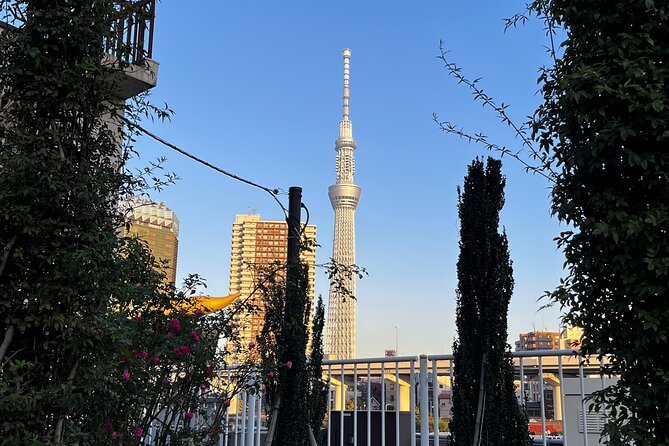
- Big landmark views from the water, including Tokyo Skytree and Kaminarimon Gate.
- Small-group feel with a max of 10 people, making it easier to ask questions.
- You finish where you want to be: at Asakusa Station, with help from your guide on getting home.
Two Tokyo hits in 90 minutes: Sumida River to Senso-ji
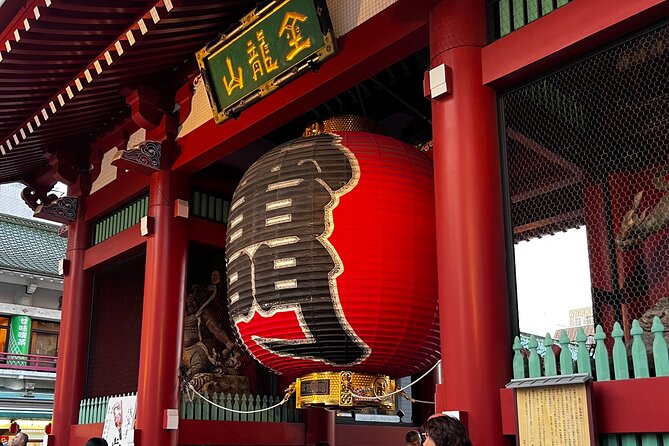
Tokyo can swallow an entire day if you’re chasing one photo location at a time. This tour is different because it stacks experiences with minimal backtracking. You start on the Sumida River for a scenic look at Asakusa and central sights, then pivot into the temple complex that makes the neighborhood famous.
At a glance, it’s a simple combo. In practice, the pairing works because it gives you two ways to read the city. The river portion is visual and relaxing, while the Senso-ji portion is cultural and hands-on, right down to the rituals and etiquette.
There’s also real value in the structure: admission tickets for the cruise and the guided temple stop are included, and you keep the itinerary tight without negotiating routes, transfers, and crowded walking chains on your own.
You can also read our reviews of more walking tours in Tokyo


Starting point at Kuramae 2-chōme and why that matters
The meet-up is at the Kuramae 2-chōme Police box (2-chōme-15-8 Kuramae, Taito City). That’s not an abstract address. It’s a clear, local landmark, which reduces the stress of arriving and trying to guess where the group is forming.
Why does this matter? Because Asakusa can be busy, and first-day Tokyo nerves are real. When the starting point is easy to spot, you can spend your energy on the experience instead of the hunt.
You’ll also appreciate that the tour is near public transportation. That makes it easier to match with your day plan—whether you’re staying in the area or coming in for a temple-focused morning.
The Sumida River cruise: Skytree views without the museum-line feeling
The first stop is a 30-minute cruise along the Sumida River. You’ll get views of major sights, including Tokyo Skytree and Kaminarimon Gate, while your group stays in motion but in a relaxed way.
I like the cruise timing because it’s long enough to feel like a break. It’s not one of those quick “stand on the deck for five minutes and leave” moments. At the same time, it’s short enough that you don’t lose your momentum before the temple portion.
A cruise also changes how you experience Tokyo. From the water, the skyline and landmark geometry look different—less like a grid you’re walking through, more like a layered set of scenes. You’ll also be in a better position to recognize where places fit in the city.
One more practical bonus: the review highlights mention learning context while cruising, including Edo-period background. If you get a guide like Nori, who was praised for explaining the Edo period, you’ll come away with a clearer sense of why Asakusa looks the way it does.
Crossing into Asakusa: Kaminarimon and Nakamise-dori at walking pace
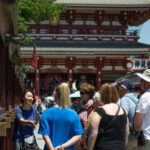
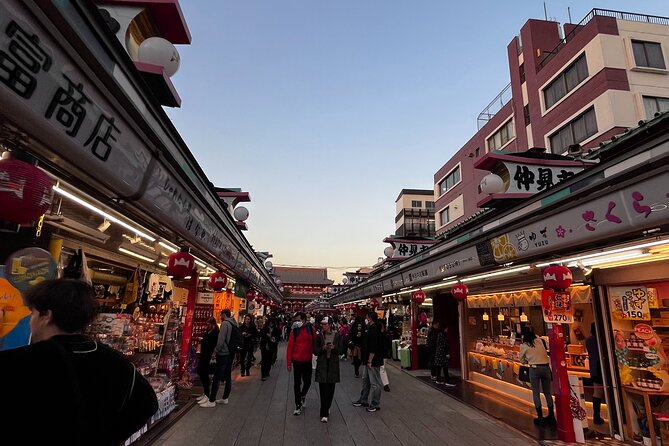
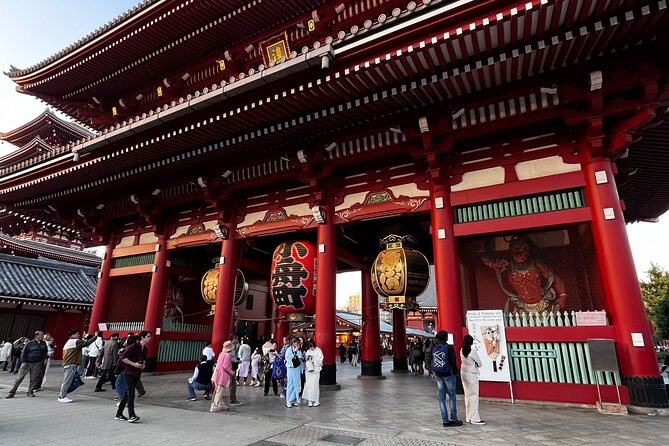
After the river, you shift to Asakusa’s temple district. The guided portion focuses on the iconic Kaminarimon Gate and the shopping street called Nakamise-dori, then continues on to the main temple hall area.
This is where the tour becomes more than sightseeing. Your guide’s job is to turn a crowded landmark zone into something you understand. You’re not just walking through photos; you’re learning what you’re seeing and how to behave in a religious space.
Nakamise-dori is a key reason to do this with a guide, even if you plan to shop on your own. You’ll get an orientation for what’s where and what’s worth your time. Plus, a small group helps you keep your walking flow, especially when the street gets full.
The other big win here is pacing. The itinerary includes about an hour for the Senso-ji experience, and the small-group format helps you stop for photos and questions without feeling like you’re dragging behind.
Senso-ji guided walk: etiquette, rituals, and what to do with your hands

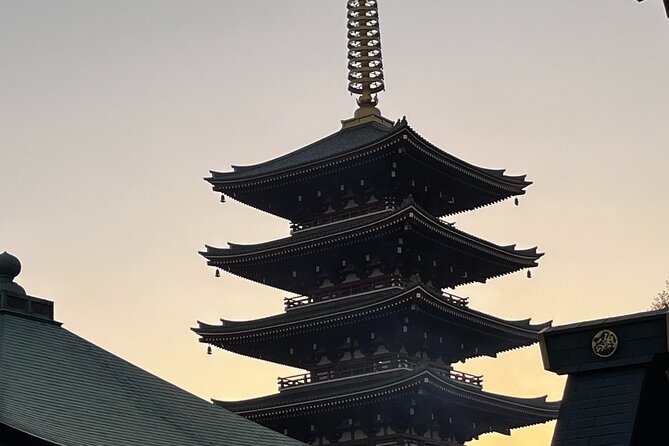
At Senso-ji, the tour is a guided visit of the complex. You’ll see the Kaminarimon Gate, pass through the Nakamise-dori area, and get oriented to the temple’s main hall.
The cultural payoff is in the details. In Japan, the flow of shrine and temple etiquette matters, but it’s hard to learn from a sign in the middle of a crowd. A guide helps you interpret what you’re supposed to do and why, so you don’t feel like you’re winging it.
The review feedback also points to strong guide personalities. Naoko was praised as smart, funny, and informative, with an engaging style that made the experience feel personalized. That’s the kind of guiding that changes your day: you get time to explore, ask questions, and take pictures without the group losing cohesion.
If you’re the type who likes understanding context before you go full “wander mode,” this guided structure is a big plus.






Fortune telling at Senso-ji: included, and easy to plan around
One standout part of the tour is that fortune telling at Senso-ji is included in the price. That matters because it removes a common travel headache: figuring out where to do it, how it works, and whether you’re missing a step.
Fortune telling also adds a satisfying activity layer. Instead of only observing traditions from the outside, you get to participate in a ritual moment that’s part of everyday temple culture.
Because it’s built into the guided schedule, you’re not left trying to squeeze it in between your own photo stops. You can treat it as part of the overall flow of the visit.
Timing: how the 1 hour 30 minutes actually feels
The tour runs about 1 hour 30 minutes total (approx.). The split is 30 minutes for the Sumida River cruise and 1 hour for the Senso-ji guided portion.
That’s a smart allocation for first-timers. The river keeps you energized and gives you broad views without draining energy. Then the temple walk gives you enough time to see the main highlights while still asking questions and taking pictures.
It’s also a good fit for day-one orientation. The review notes describe this as a strong way to understand etiquette at shrines and temples while getting a feel for Asakusa’s layout. If you plan to return later to shop more deeply or explore side streets, doing this early can make your second visit faster and more enjoyable.
Small group size and the chance to ask real questions
This is capped at 10 travelers, and that’s not a trivia detail. It affects your entire experience.
In a small group, the guide can slow down when people have questions. Photo stops are more practical because you’re not negotiating space with a large crowd of strangers moving as one body. It’s also easier to get specific help if something doesn’t make sense—like how to behave at the temple or what to look for while walking.
The guide names mentioned in the feedback—Nori and Naoko—are also a good sign. Both were singled out for being engaging, personable, and able to answer questions in a way that made the walk feel tailored rather than scripted.
Price and value: $43 for two guided blocks and included fortune telling
At $43 per person, this tour lands in the “worth it if you like guidance” category. You’re paying for two organized pieces: the cruise experience and the guided Senso-ji visit, plus fortune telling included.
Where the value really shows is in stress reduction. Tokyo isn’t hard, but Asakusa can be confusing if you’re trying to coordinate river timing plus temple routes plus etiquette. This gives you a plan you can follow without spending your day decoding it.
Also, admission for both portions is handled as part of the experience. You’re not juggling optional adds and separate tickets at the last second.
If you already know you want a guided temple visit and you’re interested in the river views, the price looks reasonable. If you prefer complete DIY exploring and don’t care about interpretation, you might find it pricier than self-guided wandering. But for most first-timers, the structure earns its keep.
What to expect at the end: getting back from Asakusa Station
The tour ends at Asakusa Station (Asakusa 1-chōme-1-3). That’s a smart finish point because it’s one of the easiest places to rejoin the rest of Tokyo.
You’ll also have a guide who can help you figure out how to get home. That’s one of those small details that saves time and keeps you from spiraling into station confusion right after you’ve been walking.
Because you finish at a major transit hub, it’s easier to connect to dinner plans, shopping stops, or a next neighborhood without guessing how long it’ll take.
Who this tour fits best (and who might not)
This tour is a strong match if you want a mix of culture, religion, and city views without spending half a day coordinating. If you like learning etiquette and meaning behind what you’re seeing, you’ll feel the difference immediately.
It’s also great for anyone who wants a “starter loop” for Asakusa. You’ll see the big icons, understand what matters, and then you can return on your own with better instincts.
If you’re the kind of traveler who doesn’t enjoy guided time and prefers long, free-form wandering, you might feel slightly constrained by the schedule. The total duration is short, but it’s still a structured walk and you’ll be following the guide’s pace.
Finally, if you’re sensitive to weather changes, plan around the fact that the experience requires good weather. A cloudy or rainy day might still be okay for walking, but the cruise piece is the one that decides whether you continue as planned.
Should you book the Tokyo Asakusa walking tour with Sumida River cruise?
I’d book it if you want an efficient, guided way to see Asakusa’s core without missing the points that make it meaningful. The combination of a Sumida River cruise with landmark views, a Senso-ji guided visit, and included fortune telling is a practical way to turn 90 minutes into real context.
I’d skip it only if you’re confident you’ll enjoy DIY exploring more than guided etiquette, and you’re comfortable figuring out everything on your own. For most visitors, the small group size, included fortune telling, and end-at-Asakusa-Station convenience make this an easy win.
FAQ
How long is the tour?
The tour is approximately 1 hour 30 minutes, with about 30 minutes for the Sumida River cruise and about 1 hour for the Senso-ji guided visit.
What is the price per person?
The price is $43.00 per person.
Is fortune telling included?
Yes. Fortune telling at Senso-ji is included in the price.
How many people are in the group?
The tour has a maximum of 10 travelers.
Where does the tour start and end?
It starts at the Kuramae 2-chōme Police box and ends at Asakusa Station (Asakusa 1-chōme-1-3).
Is this tour near public transportation?
Yes. The tour is described as being near public transportation.
What happens if the weather is poor?
The experience requires good weather. If it’s canceled due to poor weather, you’ll be offered a different date or a full refund.