REVIEW · TOKYO
This is Asakusa! A Tour Includes the All Must-Sees!
Book on Viator →Operated by OTOMO Travel Guide · Bookable on Viator
Asakusa is loud; a guide makes sense of it. This private tour is built for order in a neighborhood that moves fast, pairing Tokyo’s oldest temple area with Kappabashi kitchenware shopping and a finish near Tokyo Skytree. I love how private time keeps your group from getting swallowed by crowds, and I love the way your guide turns landmarks into stories you can actually use while walking.
You’ll get 6 hours 30 minutes of “see it, understand it, keep moving” pacing, and you’re covered on the basics like history, culture, and where to go next. One possible drawback: the meeting point can be confusing if you don’t confirm the exact subway station details before you show up, so double-check how you’ll find your guide.
In This Review
- Key Things I’d Bet on in This Asakusa Tour
- Asakusa With Fewer Headaches: Private Time in a Crowded Pocket of Tokyo
- Price and Time: What You’re Really Paying for at $137.29
- Meeting at Asakusa Station and Finishing at Oshiage: One-Way Day Planning
- Stop 1: Asakusa Culture Tourist Information Center Observation Terrace
- Stop 2: Senso-ji Temple’s Lantern-Filled Entrance (Free and Iconic)
- Stop 3: Asakusa Shrine and the Festival Connection (Sanja Matsuri)
- Stop 4: Asakusa Nishi-sandō Shopping Street (Festival-Themed Street Energy)
- Stop 5: Hoppy Street for Casual Food and Drink Atmosphere
- Stop 6: Kappabashi Street (Kappabashi Dogugai) for Knives and Table Tools
- Stop 7: Gonpachi Soba Lunch Near Azumabashi Bridge (Not Included)
- Stop 8: Tokyo Skytree for Views and Modern Tokyo (Admission Not Included)
- Stop 9: Tokyo Solamachi Adjacent to Skytree (Free to Walk Through)
- The Real Magic: How the Guide Changes Your Day
- What to Expect Walking the Route (So You’re Not Caught Off Guard)
- Who This Tour Best Fits
- Should You Book This Asakusa Tour?
- FAQ
- How long is the Asakusa tour?
- Is this tour private?
- What is included in the price?
- What costs are not included?
- Where does the tour start and end?
- Are any main stops free to enter?
Key Things I’d Bet on in This Asakusa Tour
- Private-only pacing: your group moves together, no queue-jumping chaos, just smoother navigation.
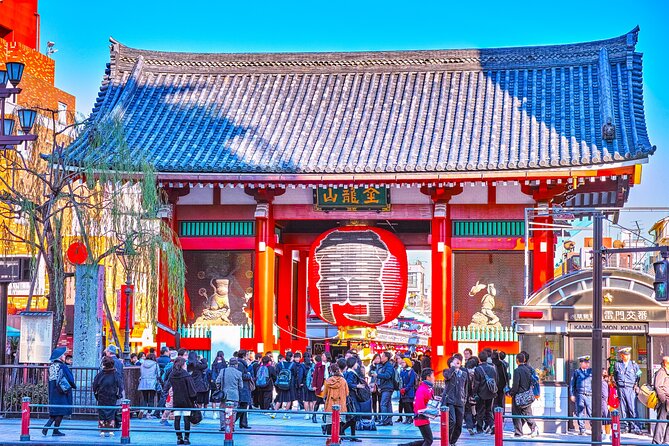
- Senso-ji and the red-lantern moment: a classic Asakusa stop that’s still free to enter.
- Kappabashi kitchenware focus: a practical shopping lane for knives and table tools, with time to look.
- Sumida River views built in: Gonpachi’s big windows make the meal feel like more than just lunch.
- Skytree area finish (Oshiage): you wrap up near a major landmark and shopping hub.
Asakusa With Fewer Headaches: Private Time in a Crowded Pocket of Tokyo
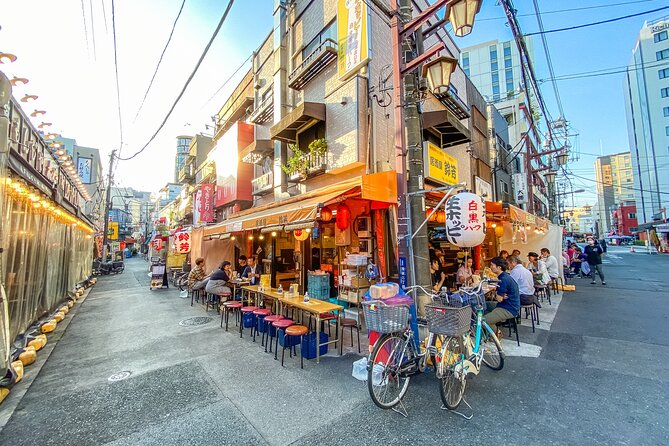
Asakusa can feel like sensory overload in the best way: temple bells, snack smells, souvenir rows, and shoulder-to-shoulder walking. The main value of this experience is that it’s private for your party, so you’re not trying to translate signs, fight foot traffic, and guess the next turn at the same time.
I also like that it’s not just sightseeing boxes. Your guide is there for context and for practical choices—how long to linger, what to prioritize, and what’s worth your attention when you’re squeezing this into one day.
You can also read our reviews of more tours and experiences in Tokyo.



Price and Time: What You’re Really Paying for at $137.29
At $137.29 per person for about 6.5 hours, you’re paying mostly for one thing: a guide who manages your flow. That’s what you can’t easily replicate with a quick station-to-station plan, especially in Asakusa where crowds can seriously slow you down.
You should budget extra. The tour’s estimated on-the-day costs are 4,880 JPY per person, broken down as Transportation (180 JPY), Admission Fees (3,400 JPY), and Meal costs (1,200 JPY), plus an optional experience around 100 JPY. Some key stops are free, like Senso-ji and several shopping streets, but Tokyo Skytree admission and lunch are not included.
If you want value, think in terms of time saved and decisions made for you. If you’re comfortable doing the heavy lifting yourself, you could DIY. If you want a guided, low-stress route that still lets you browse, the price starts to look fair.
Meeting at Asakusa Station and Finishing at Oshiage: One-Way Day Planning
This tour starts at Asakusa Station (Asakusa Sta. 1-chōme-1-3, Taito City) and finishes at Oshiage Station near Skytree (Oshiage Sta., 1-chōme-1-65, Sumida City). That one-way structure is helpful if you’re already planning to spend the late afternoon around Skytree or if your hotel is elsewhere in the Sumida area.
One heads-up from real-world experience: don’t assume the meeting point address alone will make it obvious which subway station entrance to use. A miscommunication happened when a hotel directed a taxi to the wrong station, and the fix was ultimately more patience plus confirming the correct station details. When you book, make sure you know exactly where your guide will be waiting.
Stop 1: Asakusa Culture Tourist Information Center Observation Terrace
You begin at the Asakusa Culture Tourist Information Center for a short stop (about 15 minutes). It’s not just a place to pick up pamphlets. The big perk is the observation terrace on the top floor, with a view over Asakusa that helps you understand the layout before you start walking.
This is a smart opener. From that elevated perspective, you can recognize the direction of the main temple area, the shape of surrounding streets, and where the shopping lanes lead. When you hit the crowd later, you’ll feel like you have a map in your head.
Stop 2: Senso-ji Temple’s Lantern-Filled Entrance (Free and Iconic)
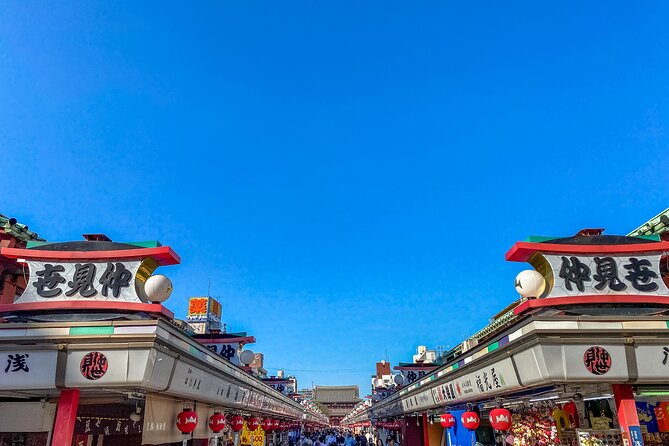
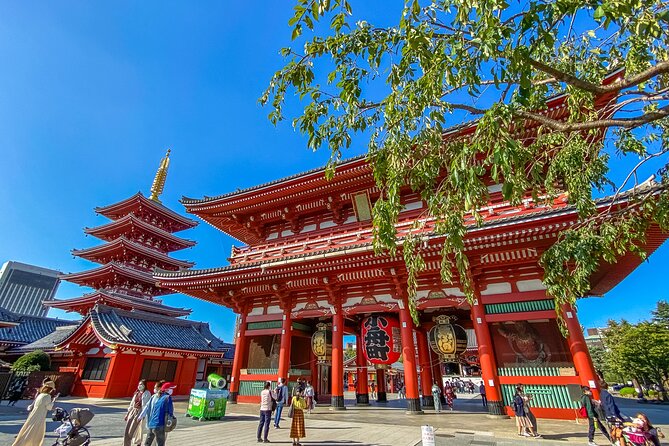
Next is Senso-ji Temple (about 1 hour). It’s Tokyo’s oldest temple, famous for the large red lanterns that basically define Asakusa’s photo identity. You’ll see the red temple buildings up close, and the entry is free.
What I like here is how the guide helps you slow down just enough to notice what’s going on. Even if you’ve seen Senso-ji in pictures, the real experience hits differently when you know what you’re looking at—architecture details, temple atmosphere, and why this area matters historically.
Potential drawback: it can be busy. The route is designed to get you there efficiently and keep your group moving, but you should still expect crowd flow.






Stop 3: Asakusa Shrine and the Festival Connection (Sanja Matsuri)
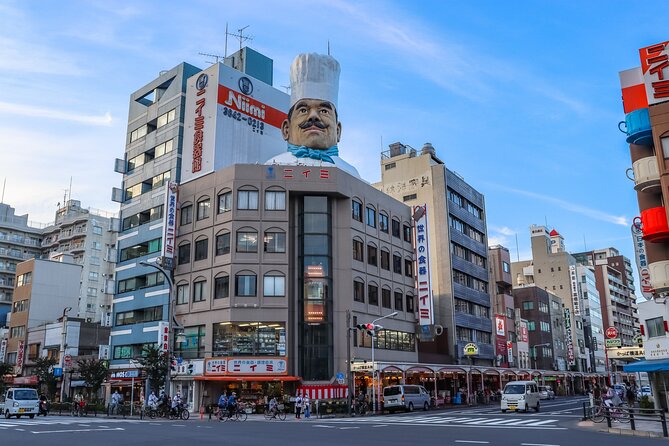
After Senso-ji, you’ll head to Asakusa Shrine (about 15 minutes). The big cultural link here is Sanja Matsuri, described as one of the three major Japanese festivals in Tokyo. Your guide also helps explain the difference between shrines and temples—so you’re not just ticking off places, you’re learning how Japan labels religious sites.
This stop is short, but it gives context. In Japan, festivals often start with specific religious structures, and this is where that connection becomes easier to understand while you’re still in the neighborhood.
Stop 4: Asakusa Nishi-sandō Shopping Street (Festival-Themed Street Energy)
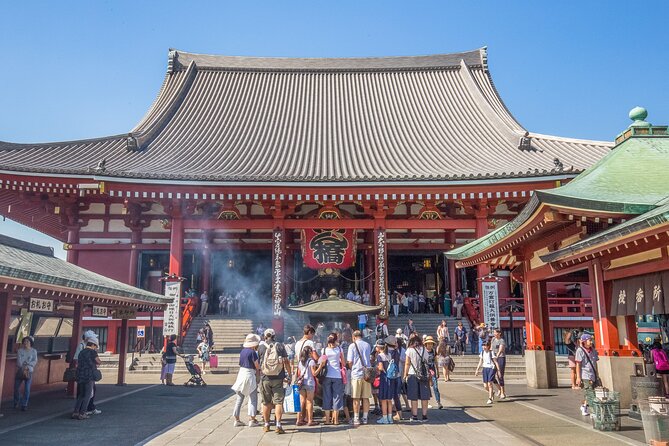
Then it’s a walk along Asakusa Nishi-sandō Shopping Street (about 15 minutes). It’s lined with festival-themed decorations and shops, which makes it a good place to experience the street level side of Asakusa without committing to a long shopping session.
I like this stop because it turns your eyes outward: what people actually buy, what vendors focus on, and how tourism and local tradition sit side by side.
Stop 5: Hoppy Street for Casual Food and Drink Atmosphere
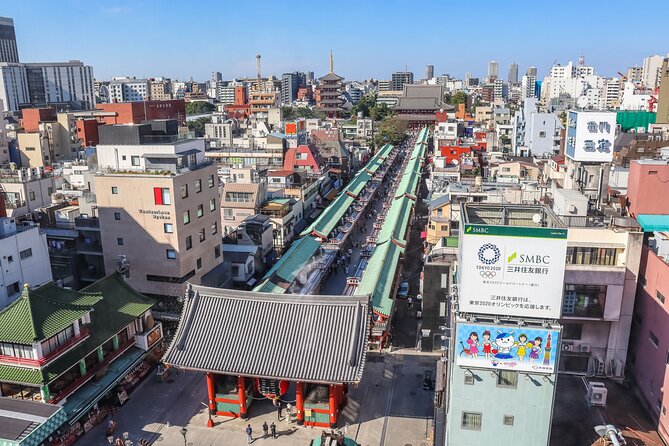
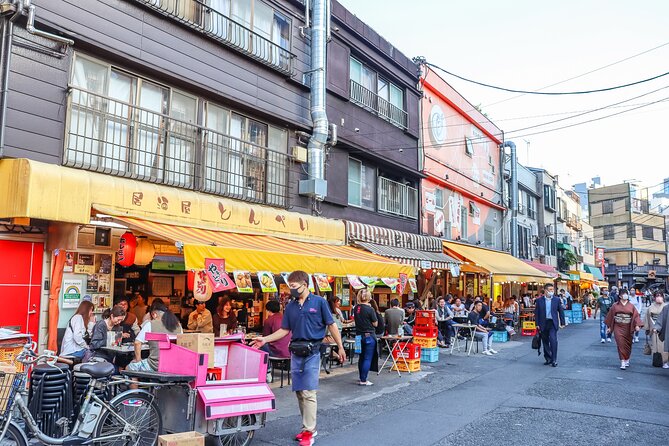
You continue to Hoppy Street (about 5 minutes)—short, but flavorful. This street is known for restaurants, outdoor tables, and reasonably priced drinks, and it’s popular with locals too.
Even if you don’t plan a full sit-down here, it’s a useful palette cleanser between temple areas and kitchenware shopping. It’s the kind of street where you can quickly pick up the mood of the neighborhood.
Stop 6: Kappabashi Street (Kappabashi Dogugai) for Knives and Table Tools
Now comes the shopping lane: Kappabashi Street (Kappabashi Dogugai) for about 30 minutes. This is where Asakusa gets practical. Specialty shops sell knives, tableware, and kitchen tools, including options that serious cooks might care about.
This is one of the stops I’d say you shouldn’t rush, because the real value is comparison. A guide helps you navigate quickly, but you’ll still want time to look at materials, shapes, and what each shop is actually known for.
One detail that stood out in guide feedback: some guides help you with the process of choosing and even purchasing items like knives. If you’re a first-time shopper, that kind of assistance can save you from second-guessing later.
Stop 7: Gonpachi Soba Lunch Near Azumabashi Bridge (Not Included)
Next is Gonpachi (about 50 minutes), a handmade soba restaurant at the foot of Azumabashi Bridge. The standout here is the setting: large windows let you see the Sumida River and you can even spot Sky Tree from inside.
Admission is not included for lunch, so expect meal costs as part of that estimated 1,200 JPY guide estimate. Even with the extra cost, I think this stop is worth it because the meal is paired with a scenic moment you can’t replicate just by walking around.
If you’re sensitive to crowds at restaurants, this is where timing matters. The tour’s group flow usually keeps things smooth, but you’ll still be sharing dining space in a popular area.
Stop 8: Tokyo Skytree for Views and Modern Tokyo (Admission Not Included)
After lunch, you head to Tokyo Skytree for about 1 hour 10 minutes. Skytree is a landmark at 634 meters, described as the tallest building in Japan and opened in 2012. Around the tower, you’ll find a mall, an aquarium, and office buildings.
The important practical detail: Skytree admission is not included, so this is one of the big line items to plan for. Your time here is still meaningful without the most expensive ticket level, because the surrounding complex and the overall atmosphere make it feel like a destination, not just a viewpoint.
The value of keeping Skytree in the second half is simple: you’ve already learned Asakusa’s “old Tokyo” side, then you shift to the “new skyline” angle.
Stop 9: Tokyo Solamachi Adjacent to Skytree (Free to Walk Through)
To wrap up, you visit Tokyo Solamachi (about 30 minutes), a commercial complex adjacent to Skytree. It’s based on the idea of a new downtown style and includes shopping and entertainment areas.
This portion tends to feel like a flexible landing. If you’re shopping, it’s a good place to cool down your feet and pick up snacks or souvenirs near the end of the tour.
The Real Magic: How the Guide Changes Your Day
This tour lives or dies on the guide experience. The reviews backing this up name specific guides like Haruo, Macky, Walt, and Sayaka. The common thread is not just facts—it’s how your guide handles pacing, communication, and your questions in real time.
In particular, I like that guides are described as friendly and helpful, and that some were praised for strong English. Sayaka was even noted for polite service and flawless English, with the added human touch that she tries to fulfill requests. Macky and Walt were both highlighted for planning a day that worked for the group and for sharing enough context to make Buddhism and history feel connected, not like random trivia.
If you book, treat your guide like an on-the-spot translator for how daily life works in Japan: what you’re seeing, why it’s arranged that way, and how locals think about it.
What to Expect Walking the Route (So You’re Not Caught Off Guard)
This is a walking-heavy day built around multiple distinct areas: temple grounds, shopping streets, and then Skytree’s massive complex zone. You’ll be out for 6.5 hours, with short transitions between stops. Wear shoes you can stand in without bargaining with your feet.
Also remember that weather can alter the plan. The tour notes that if weather is bad, transportation, destinations, and routes may change. Temporary closures can also trigger alternative spots. The key point: you still get a structured day, but don’t treat it like a rigid script.
Who This Tour Best Fits
This tour is a great match if you want:
- A private guided day that prevents decision fatigue in a crowded neighborhood.
- Big icons plus practical shopping time in the same route.
- A finish near Skytree so you can keep exploring afterward without backtracking.
It’s also good for groups who want to stay together and ask questions without worrying they’re holding everyone up.
If you already know Tokyo well, enjoy navigating crowds solo, and plan your own museum/temple logic, you might not need a private guide. But if you’d rather spend energy enjoying rather than figuring, this is the easier path.
Should You Book This Asakusa Tour?
I’d book this if you want the best parts of Asakusa—Senso-ji, Asakusa Shrine, the shopping streets, and Kappabashi—paired with a modern finish at Skytree, all without wrestling the logistics. The price is mostly paying for guidance and smoother navigation, and the structure matters when crowds are thick.
Just do two things before you go: confirm the exact meeting station instructions so you don’t lose time at the start, and plan for extra out-of-pocket costs—especially Skytree admission and your meal. If you handle those two points, you’ll likely walk away with a day that feels organized, not rushed, and genuinely makes Asakusa click.
FAQ
How long is the Asakusa tour?
It runs for about 6 hours 30 minutes.
Is this tour private?
Yes. It’s private for your party only.
What is included in the price?
You get a tour guide, a private tour experience, and the necessary expenses for the guide during the tour.
What costs are not included?
The tour notes estimated additional costs of 4,880 JPY per person, including transportation (180 JPY), admission fees (3,400 JPY), and meal costs (1,200 JPY). Optional experience costs are listed at about 100 JPY per person.
Where does the tour start and end?
It starts near Asakusa Station (Asakusa Sta. 1-chōme-1-3, Taito City) and ends at Oshiage Station near Skytree (Oshiage Sta., 1-chōme-1-65, Sumida City).
Are any main stops free to enter?
Several stops are listed with free admission, including the Asakusa Culture Tourist Information Center, Senso-ji Temple, Asakusa Shrine, Asakusa Nishi-sandō Shopping Street, Hoppy Street, Kappabashi Street, and Tokyo Solamachi. Tokyo Skytree and the Gonpachi meal are not included.