REVIEW · TOKYO
Sumida Riverside Walk:Garden&Temple Ritual(4 Meeting Points)
Book on GetYourGuide →Operated by Hiro travel · Bookable on GetYourGuide
Tokyo can be quiet in the morning. This 3-hour small-group walk threads the serene seasonal beauty of Kiyosumi Garden into a calm riverside rhythm along the Sumida River. The pacing feels intentionally unhurried, with a guide who helps you notice what most people speed past.
I especially like how the day connects nature and everyday Tokyo life. You’ll get a guided look inside Fukagawa Fudōdō, where faith isn’t a museum piece, and you experience a traditional goma fire ritual as part of the visit.
One consideration: you’ll want to be on time. If you’re more than 10 minutes late, the group may leave without you, and the walking adds up during the garden, river path, and temple time.
In This Review
- Key things you’ll enjoy on this Sumida riverside walk
- A calmer side of Tokyo: garden peace to river quiet to living ritual
- Picking your meeting point: Shibuya, Shinjuku, Asakusa, or Nissan Crossing
- Kiyosumi Garden: seasonal plants and the design you’re meant to notice
- Along the Sumida River: a reflective walk with views, boats, and city stillness
- Naritasan Fukagawa Fudōdō and the goma fire ritual: living practice, not just architecture
- Price and group size: why $48 can be good value here
- What the timing really feels like across the 3 hours
- Who this tour is best for
- Should you book Sumida Riverside Walk and temple ritual with Hiro?
- FAQ
- How long is the tour?
- What is the price per person?
- Is the tour offered in English?
- How many people are in the group?
- Where can I meet the guide?
- Does the price include entry tickets and transit?
- What if I’m late to the meeting point?
- Is it suitable for babies?
Key things you’ll enjoy on this Sumida riverside walk

- Four smart meeting points so you can start near Shibuya, Shinjuku, Asakusa, or Nissan Crossing
- Kiyosumi Garden in 40 minutes with focus on seasonal plants and garden design details
- A 40-minute Sumida River stroll that trades rush-hour Tokyo for boats, water views, and quiet streets
- Fukagawa Fudōdō with live ritual energy plus explanation of what the beliefs and practices mean
- A small group capped at 4 that keeps the conversation going instead of fading into noise
- English guide from Tokyo (Hiro) who brings context and clarity to what you’re seeing
A calmer side of Tokyo: garden peace to river quiet to living ritual

This tour is built around one simple idea: Tokyo isn’t only neon and train transfers. It can also be slow, spiritual, and green, especially early in the day. The route works because it shifts scenes in a natural order: curated garden calm first, then open-air river breathing room, then a temple where people still come for practice.
You’ll feel the difference right away at Kiyosumi Garden. Gardens here are made to be experienced step-by-step, not consumed like a checklist. And once you move onto the Sumida riverside path, the pace stays gentle, with water views and the steady motion of boats breaking up the city grid.
The highlight for me is the handoff from scenery to belief. Fukagawa Fudōdō gives you more than photo ops; it’s a place where ritual is part of the day’s rhythm. That matters because Tokyo can feel abstract if you only see buildings. Here you get a real sense of what local faith looks and sounds like in practice.
You can also read our reviews of more walking tours in Tokyo


Picking your meeting point: Shibuya, Shinjuku, Asakusa, or Nissan Crossing

You start with one of four convenient locations, depending on what’s easiest for you. You can meet your guide at Shibuya Tsutaya, UNIQLO Shinjuku West, Asakusa Culture Tourist Information Center, or Nissan Crossing. If you’re juggling multiple plans in Tokyo, this flexibility is genuinely useful. Fewer detours means you spend your energy on the tour, not on figuring out where to begin.
From your meeting spot, you travel together by train to the first destination. That’s a good setup for two reasons. First, you don’t have to navigate transit before you’ve even started your day. Second, it keeps the tour feeling cohesive rather than like a self-guided loop with an expensive guide attached.
Quick practical note: the tour can depart if you’re more than 10 minutes late. Set a buffer, especially if your first stop is on the edge of a busy station.
Kiyosumi Garden: seasonal plants and the design you’re meant to notice

Kiyosumi Garden is your first focused stop, with about 40 minutes of guided time inside. This is the part of the tour that sets expectations. The garden isn’t presented as a one-time “see it and move on” attraction. It’s treated as an evolving experience, where seasonal plants and careful layout help you slow down.
Your guide will share historical background and also point out details that many visitors miss. That’s where the value of having a local, Tokyo-born guide shows up. Even if you’ve seen other Japanese gardens before, context changes the way you read the space. You start noticing sightlines, balance in how elements are arranged, and the logic of where pathways lead your eyes.
In terms of what you’ll actually do here: you’ll wander with the guide, pause when something matters, and get enough time to feel unhurried. Forty minutes is short enough that you won’t freeze in place waiting for a bus. It’s also long enough that you can look around without the pressure of catching up.
Possible drawback: if you’re the kind of traveler who loves long, independent museum-like browsing, 40 minutes may feel a bit tight. But if you like being guided through what’s most meaningful, this timing is a sweet spot.
Along the Sumida River: a reflective walk with views, boats, and city stillness

After the garden, you shift to a 40-minute guided walk along the Sumida River. This is where the day becomes less formal and more sensory. You’ll be outside, moving at a comfortable walking pace, and your attention naturally goes to water views and passing boats.
I like this stretch because it’s a contrast section. You’re still in Tokyo, but the river acts like a volume knob. The city becomes quieter in your peripheral vision, and you get those calm, steady moments that make the rest of the tour land better. It’s also a practical break: you’re not stuck inside buildings, and you get to reset before the temple.
Your guide will frame what you’re seeing, so it doesn’t become a blank stroll. Even if the riverfront looks simple at first glance, the area’s relationship to daily life is part of what you’re learning. You’re not just photographing; you’re reading the scene.
One thing to consider: this portion is still walking time. The route is gentle, but you should wear comfortable shoes and plan for normal outdoor walking. If you’re sensitive to temperature or weather, dress in layers so you don’t feel stuck adjusting yourself mid-walk.
Naritasan Fukagawa Fudōdō and the goma fire ritual: living practice, not just architecture

Your final stop is the temple experience at Naritasan Fukagawa Fudōdō, guided for about 45 minutes. The tour presents it as an active center of spiritual life, not only a scenic building. The temple is described as having a history of over 400 years, which gives the visit weight beyond a quick sightseeing stop.
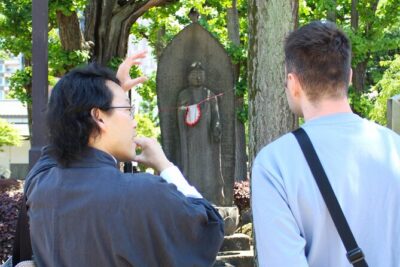
Here’s what makes this part special: you’ll hear accessible explanations of the beliefs and practices, whether you’re spiritual or just curious. That’s important because temple visits can feel confusing if you only know the visual surface. The guide helps translate what people are doing and why it matters.
And then there’s the ritual itself: you’ll experience a traditional goma fire ritual at Fukagawa Fudōdō. A ritual like this isn’t about aesthetics for outsiders. It has purpose, and the atmosphere reflects that. Even if you don’t follow the tradition personally, you’ll likely appreciate the seriousness and focus of the people participating.
Timing-wise, 45 minutes is long enough to absorb the setting and pay attention to what’s happening. It’s short enough that you don’t lose your way in the details. You’ll leave with a clearer sense of how this temple fits into local rhythm, not just where it sits on a map.
Possible drawback: if you prefer purely secular sightseeing, the ritual and spiritual explanations may be more than you want. But if you’re open-minded, this is the most meaningful payoff of the entire tour.






Price and group size: why $48 can be good value here
The price is $48 per person for a 3-hour tour. That sounds straightforward, but the value comes from what’s included and how the day is structured.
You’re not just paying for a walking route. Admission fees for Kiyosumi Garden and Fukagawa Fudōdō are included, and you also get a train ticket to the first destination. On top of that, you have a live English guide through the whole experience.
Now add the small-group setup: limited to 4 participants. That’s a big deal when you’re doing two guided interpretation stops (garden and temple) plus a narrative walk by the river. In a larger group, questions get swallowed and explanations get generic. In a group this size, you can actually follow the thread of the tour instead of just hearing snippets between photos.
Is it worth it? For me, it’s worth it when you want context and you don’t want to spend your Tokyo morning assembling the route, paying admissions, and then trying to interpret what you see alone. If you love fully self-guided travel, you might be able to replicate the route. But you’d still be paying indirectly for time, navigation, and figuring out what to notice. Here, Hiro’s guidance does that work for you.
One more note from the experience quality: the guide’s performance is a standout. In the available feedback, people specifically praise Hiro as an excellent tour guide, and they call the overall experience wonderful. That lines up with what this format depends on: the guide’s ability to make garden design and temple practice understandable.
What the timing really feels like across the 3 hours
The tour’s core components add up to:
- 40 minutes at Kiyosumi Garden
- 40 minutes along the Sumida River
- 45 minutes at Fukagawa Fudōdō
That’s about 2 hours 5 minutes of guided on-site time, plus the travel together by train between stops and time to gather at the meeting point. The structure is efficient, but not frantic. You’re not doing a marathon circuit. You’re doing a focused arc designed to be memorable in one short outing.
If you like to plan your days with breathing room, this is a good choice. It takes only a portion of your morning, so you can still eat, wander nearby, or take on another Tokyo neighborhood after. If your schedule is tight, this also helps: the 3-hour duration is clear and the sequence of stops is simple.
Who this tour is best for
This experience fits travelers who want Tokyo in layers: nature, street-level calm, and spiritual practice. You’ll like it most if you enjoy guided interpretation and you’re curious about how daily life connects to places of faith and seasonal gardens.
It’s also ideal if you value a small group. When the cap is 4 participants, the tour tends to feel more like a conversation with local context than a script read over a loudspeaker.
It may be less suitable if:
- you want a totally self-paced, open-ended outing
- you don’t enjoy any ritual elements
- you’re traveling with very young infants (it’s not suitable for babies under 1 year)
Should you book Sumida Riverside Walk and temple ritual with Hiro?

I’d book this if you want a morning that feels different from the usual Tokyo highlights. The combination of Kiyosumi Garden, a relaxed Sumida River walk, and the Fukagawa Fudōdō goma fire ritual is the kind of itinerary that creates real variety in a short time. And at $48, you’re paying for guided value plus admissions, not just a pointer to where to stand.
I’d think twice if your priority is only iconic big-ticket sights or if you’re strongly uninterested in religious practice. Also, be honest about timing: you’ll need to show up early enough that you’re not flirting with that 10-minute departure window.
If your travel style is curious, respectful, and you like to learn as you go, this is the kind of tour that leaves you with more than photos. You leave with a clearer sense of what calm, tradition, and daily Tokyo rhythm can look like in one morning.
FAQ
How long is the tour?
The tour lasts 3 hours.
What is the price per person?
The price is $48 per person.
Is the tour offered in English?
Yes, the live guide speaks English.
How many people are in the group?
It’s a small group limited to 4 participants.
Where can I meet the guide?
You can choose from four meeting points: Shibuya Tsutaya, UNIQLO Shinjuku West, Asakusa Culture Tourist Information Center, or Nissan Crossing.
Does the price include entry tickets and transit?
Yes. Admission fees for Kiyosumi Garden and Fukagawa Fudōdō are included, and there’s also a train ticket to the first destination. You travel together with the guide by train to the first stop.
What if I’m late to the meeting point?
Please arrive before the meeting time. If you are more than 10 minutes late, the tour may depart without you.
Is it suitable for babies?
It is not suitable for babies under 1 year.