REVIEW · TOKYO
Samurai Sword Training and Katazome Dyeing Experience in Tokyo
Book on Viator →Operated by 染の里おちあい 二葉苑 · Bookable on Viator
If Japanese culture had two thumbs-up, this would be one. You’ll learn katazome dyeing and then practice basic samurai-style techniques in a real dojo setting, all in one compact, well-paced Tokyo outing. I especially liked how the instructors explained the cultural meaning behind what you’re doing, not just the steps, and how the group stays small enough for real attention. The one thing to consider is that the sword part is taught with toy swords and in a short training block, so it’s more about the basics than deep, hours-long martial skill.
This experience runs about 2 hours and starts at 10:00 am in Shinjuku (Kamiochiai area). You’ll begin at 染の里おちあい (Somenosato Ochiai), make a dyed fabric headband from a tenugui, then take a short walk to the dojo for a guided sword demonstration and hands-on practice. Expect a calm, traditional rhythm: hands at the workbench, then hands on the sword shapes—same lesson, two very different worlds.
In This Review
- Key points before you go
- Katazome dyeing at 染の里おちあい: patterns, process, and your own headband
- Crossing from craft to dojo: what really happens during the sword session
- Why Edo Komon and samurai sword basics fit together so well
- The itinerary flow: timing that doesn’t waste your morning
- Value and price: what $97.73 buys you in real learning time
- Practical tips for your 10:00 am start in Shinjuku (Kamiochiai)
- Who should book this, and who might feel it’s not for them
- Should you book this Samurai sword and katazome headband experience?
- FAQ
- How long is the Samurai Sword Training and Katazome Dyeing experience?
- What does the tour cost?
- Where do we meet?
- Where does the tour end?
- How big is the group?
- What happens during the katazome dyeing part?
- What happens during the sword training part?
- Is there free cancellation?
- Is a mobile ticket used?
Key points before you go
- Two workshops, one schedule: katazome dyeing at 染の里おちあい, then samurai basics at 武蔵国無外会.
- You create something you can use: you dye a tenugui and wrap it into a headband before you leave.
- Edo Komon gets explained in context: you learn how patterns connect to samurai kamishimo styling.
- Small group size (max 8): it’s set up for more personal coaching, not a lecture line.
- Toy-sword training keeps it beginner-friendly: you practice defensive actions safely and learn the fundamentals.
- Shoes off at the dojo: plan on switching from street mode to indoor mode fast.
Katazome dyeing at 染の里おちあい: patterns, process, and your own headband
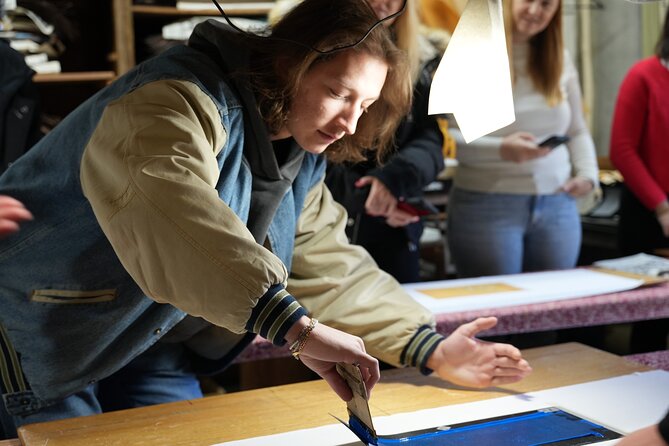
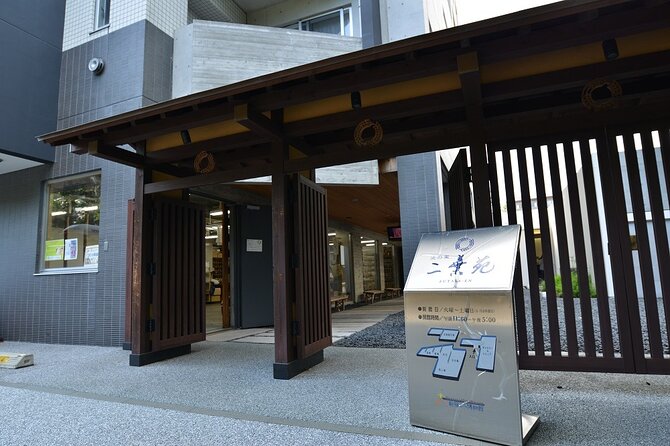
Your day starts at 染の里おちあい (Somenosato Ochiai), a craft-focused space tied to stencil dyeing. Before you touch anything, you get an intro to Edo Komon patterns and how they connect to samurai clothing—specifically samurai kamishimo styling. That short context matters. It helps the craft feel like culture, not just pretty fabric.
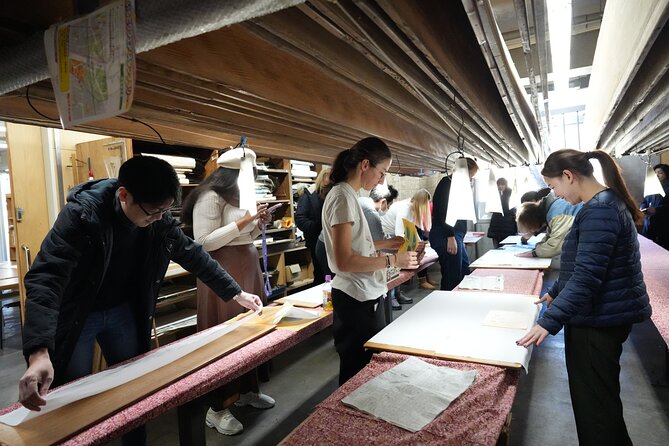
Next comes the main hands-on portion: tenugui dyeing. You’ll spend about 40 minutes learning how the stencil-dye approach works, with instruction and hands-on time from the artisans at the workshop. Tenugui is the classic Japanese cotton hand towel, and here it’s treated like a canvas for patterning—worked carefully so the design shows through the dye process.
What I like most is that the time isn’t random. You’re given enough structure to follow along, and you still get real repetition with your own hands. That’s the difference between watching a demo and actually learning the method. You’re not just collecting photos. You’re leaving with a tangible result.
Then you move into the part that turns craft into a souvenir you’ll actually wear. You’ll wrap your dyed tenugui into a headband and depart the workshop area. This is practical and fun. It also forces you to think about scale and how the finished cloth will look on a head, not only on a table.
One small “save your energy” tip: after the dyeing segment, you’ll transition quickly. The flow is purposeful—intro, hands-on craft, then straight into the dojo. Wear clothing that makes changing modes easy. And if you’re the type who likes to tie everything perfectly, take a second to loosen up. You’re working in workshop conditions where the goal is process, not perfection.
You can also read our reviews of more tours and experiences in Tokyo.



Crossing from craft to dojo: what really happens during the sword session
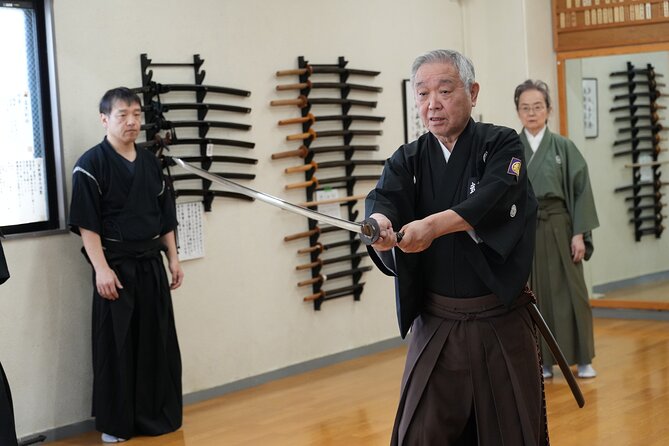
After your headband moment, it’s a brief walk and then you step into the dojo space. You’ll take off your shoes—so keep that in mind when you choose footwear for a morning start. Once you’re inside, the sword lesson follows a simple progression designed for beginners.
First, you watch a real sword demonstration for about 15 minutes. This isn’t there to overwhelm you. It sets the visual standard for what you’re aiming to understand. The motions look controlled, and you’ll likely notice how economy of movement is part of the lesson.
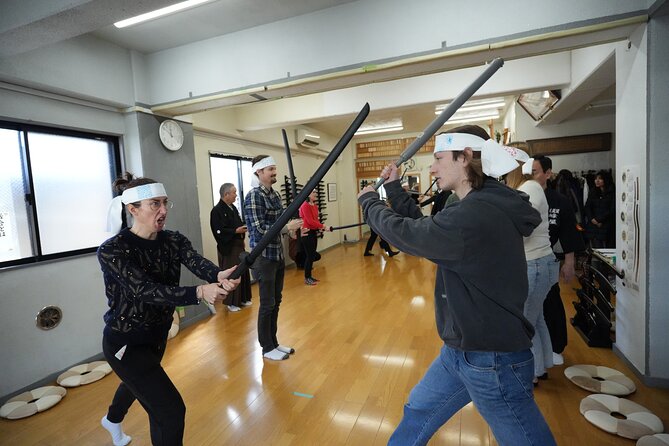
Then comes the explanation phase with a twist: you work through defensive actions using toy swords. That’s an important detail. It signals that the training is structured around safety and learning. For the next 15 minutes, you’ll get guidance on what defensive actions look like, and how to think about the basics without taking unnecessary risks.
Finally, you start training yourself for about 30 minutes. This is where you stop being a spectator and become a student. The structure is friendly for first-timers: demo, explanation, then a practice block where your body can catch up with what your eyes learned.
One consideration: because the training is about fundamentals and safety, you shouldn’t expect long, high-intensity practice like you’d see in a dedicated kendo or iaido class. Instead, you’ll leave with a clearer sense of posture, defensive ideas, and how the dojo lesson is taught. Think of it as a guided entry into a way of moving—less like a certification, more like a strong introduction.
Why Edo Komon and samurai sword basics fit together so well
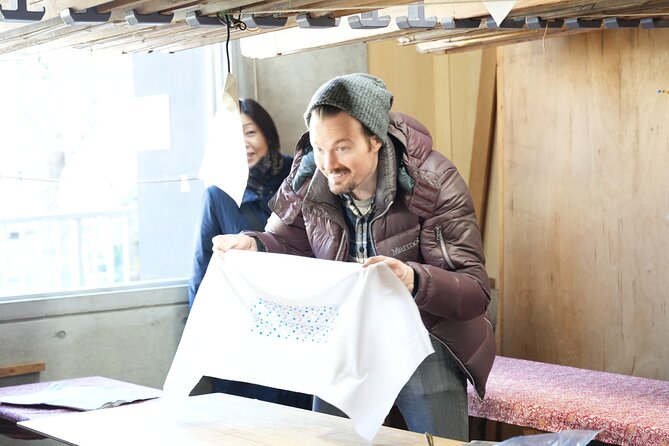
On paper, dyeing and sword training sound like two separate hobbies. In practice, they connect more than you’d expect. Katazome stencil dyeing is about pattern discipline: repeated placements, careful control of dye flow, and patience with layers. The dojo side has a similar theme. Defensive technique relies on timing, body positioning, and controlled movement rather than brute force.
In this tour, you get the connective tissue in the form of explanations. The workshop ties Edo Komon patterns to samurai clothing motifs (camishimo context), and the dojo teachers translate technique into simple defensive actions you can start practicing right away. That pairing is what makes this experience feel like one coherent lesson about Japanese discipline, not two disconnected stops.
Also, the small-group format makes it easier to learn. With a maximum group size of 8, you’re less likely to be lost behind a crowd. If you want clarity—why a step matters, or how to position your hands—this format gives you a better chance to ask and get a straight answer.
I also appreciate the “why plus how” teaching style. The cloth instructors and dojo teachers focus on cultural significance alongside the technical aspects. That’s a big deal for crafts and martial arts. You’ll get to understand not only what to do, but why people cared enough to build entire traditions around it.
The itinerary flow: timing that doesn’t waste your morning
This experience is built around a tight schedule that still feels unhurried. The total time is about 2 hours, with a clear split: roughly an hour at the katazome workshop and about an hour at the dojo.
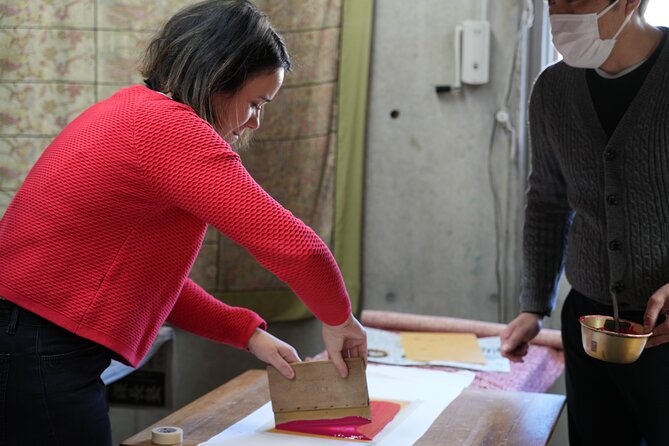
At 染の里おちあい, the flow goes like this:
- You start with an intro to the patterns and samurai clothing context (about 10 minutes).
- Then you get your hands busy with tenugui dyeing (about 40 minutes).
- You wrap your dyed cloth into a headband (about 10 minutes).
- You depart, then transition to the dojo with a short walk.
At 武蔵国無外会, the sword flow is similarly structured:
- Sword demonstration (about 15 minutes).
- Defensive action explanations with toy swords (about 15 minutes).
- Your own training time (about 30 minutes).
The practical benefit of this setup is that you’ll finish with a clear sense of accomplishment. You’ll have created something during the first segment and practiced something during the second. That beats experiences that “start late, run long, and end with confusion.”
Another practical note: the tour starts at 10:00 am. If you’re staying in central Tokyo, give yourself buffer time to arrive a few minutes early. This is the kind of class where being rushed can make you self-conscious, and nobody needs that before you’re handling stencil dye and toy swords.
Value and price: what $97.73 buys you in real learning time
At $97.73 per person, the biggest value is that you’re paying for two instructor-led experiences in one small-group session. In other words, you’re not only getting a craft activity or a martial arts demo. You’re getting a dyeing lesson that ends with a made-by-you artifact, plus a dojo session that ends with guided personal practice.
You also get teaching time in two different styles:
- Craft teaching with artisans, built around steps you perform with your hands.
- Dojo teaching with demonstrations and toy-sword defensive action coaching.
Both parts are time-boxed, which means you’re unlikely to spend the whole morning sitting or watching. The hands-on parts are the point, and the schedule reflects that.
If you’re the type who wants a memorable Tokyo experience that isn’t just walking and photos, this pricing makes sense. You’ll leave with a headband, and you’ll have learned how the dojo introduces defensive technique to beginners. That’s more useful than souvenirs that just sit in a drawer.






Practical tips for your 10:00 am start in Shinjuku (Kamiochiai)
You meet at 染の里おちあい at:
2-chōme-3-6 Kamiochiai, Shinjuku City, Tokyo 161-0034, Japan
The experience disbands at the dojo, ending at:
武蔵国無外会, 2-chōme-4-6 Kamiochiai, Shinjuku City, Tokyo 161-0034, Japan
Because the end point is a different building (though still in the same Kamiochiai area), it helps to plan for an easy route from there afterward. The tour ends after the dojo training, so decide whether you want to continue exploring Shinjuku afterward or head back toward your hotel.
A couple practical things to remember:
- You’ll use a mobile ticket, so keep it accessible on your phone.
- You’ll be taking shoes off at the dojo. Wear footwear that’s quick to remove and comfortable to put on again.
- The day is short (about 2 hours), so eat a proper breakfast or plan a snack before. You don’t want your attention split by hunger during a hands-on craft.
Also, since the group maxes at 8, the pace is likely adjusted to the group size. That’s good for learning, but it also means you should arrive on time. Being late can throw the flow off for everyone.
Who should book this, and who might feel it’s not for them
This tour suits you if you want:
- Hands-on cultural learning, not just a viewing experience.
- A concrete craft outcome—your dyed tenugui turned into a wearable headband.
- A beginner-friendly introduction to samurai-style movement ideas in a dojo setting.
- Personalized attention in a small-group setting.
It might be less ideal if:
- You’re expecting intense, advanced sword training like you’d get from a long-term martial arts program.
- You dislike activities that involve guided practice with toy equipment rather than live steel.
The good news: it’s designed for most people who can participate, and the toy-sword setup is part of why. You’re not being thrown into something extreme. You’re learning the basics in a structured way.
Should you book this Samurai sword and katazome headband experience?
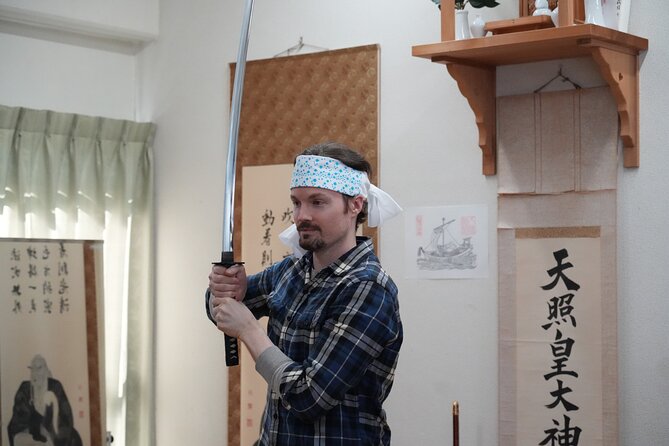
I’d book it if you like experiences where you leave with both meaning and a physical result. The katazome side teaches you how Edo Komon patterns connect to samurai clothing context, and the dojo side translates that disciplined world into defensive technique practice you can actually try. That combo is rare.
I’d skip it only if you strongly prefer one category—either martial arts only or crafts only—or if you want a long training session. This is a tight two-hour sampler that favors understanding and first practice, not long-form development.
If you want a Tokyo morning that feels like you got past the surface, this is a strong pick. You’ll make something you can wear, and you’ll walk out with a new respect for how Japanese craft discipline and martial discipline can share the same mindset.
FAQ
How long is the Samurai Sword Training and Katazome Dyeing experience?
It runs for about 2 hours.
What does the tour cost?
The price is $97.73 per person.
Where do we meet?
You meet at 染の里おちあい (Somenosato Ochiai), 2-chōme-3-6 Kamiochiai, Shinjuku City, Tokyo 161-0034, Japan.
Where does the tour end?
The tour disbands at the dojo at 武蔵国無外会, 2-chōme-4-6 Kamiochiai, Shinjuku City, Tokyo 161-0034, Japan.
How big is the group?
The tour has a maximum of 8 travelers.
What happens during the katazome dyeing part?
You get an introduction to Edo Komon patterns used in samurai kamishimo, then a tenugui dyeing experience with hands-on instruction, and you wrap your dyed tenugui into a headband.
What happens during the sword training part?
You watch a real sword demonstration, learn about defensive actions with toy swords, and then start sword training.
Is there free cancellation?
Yes. You can cancel up to 24 hours in advance for a full refund.
Is a mobile ticket used?
Yes, the tour includes a mobile ticket.