REVIEW · TOKYO
Private Tour Kamakura Yokohama Day Trip English speaking driver
Book on Viator →Operated by Ohayo Trip · Bookable on Viator
Temples and seaside, with zero train stress.
This private Kamakura and Yokohama day trip uses an English-speaking driver to connect two classic coastal cities in one smooth 10-hour outing, from Zen stops to waterfront breaks.
I love how the Kamakura side stacks the main sights in a sensible order, so you can go from the bamboo-garden calm of Hōkoku-ji to the big, jaw-dropping scale of the Great Buddha at Kōtoku-in without backtracking. I also like that Yokohama isn’t just a quick photo stop, with time in Chinatown and a proper traditional garden at Sankei-en.
One thing to plan for: temple and garden admissions aren’t included, and the total comes out to about 1100 JPY per person. Add that to your day budget and you’ll be totally fine.
In This Review
- Key highlights you’ll actually feel on the day
- Why this Kamakura and Yokohama day trip works so well
- The real value of an English-speaking driver (and why private matters)
- Kamakura temple day: bamboo calm to the big Kannon
- Hōkoku-ji (the bamboo temple)
- Hase-dera (Hase Kannon)
- Timing tip for both temple stops
- Kōtoku-in and Tsurugaoka Hachimangu: the “main icons” phase
- Kōtoku-in (Great Buddha of Kamakura)
- Tsurugaoka Hachimangu Shrine
- Komachidori for snacks and souvenirs, plus Yuigahama seaside photos
- Kamakura Komachidori
- Kamakura Seaside Park (Yuigahama area)
- Yokohama: Chinatown at 160 years old and Sankei-en’s garden calm
- Yokohama Chinatown
- Sankei-en Gardens
- Price and admissions: what you’re paying for, and how to budget smartly
- Who this day trip fits best (and who should look elsewhere)
- My booking advice: should you book this Kamakura and Yokohama tour?
- FAQ
- FAQ
- How long is the Kamakura and Yokohama private tour?
- How many people can be in one group?
- Is the driver English speaking?
- Does the tour include pickup?
- Are temple and garden admission tickets included?
- What stops are included during the day?
- Is this a private tour?
- Can I cancel and get a full refund?
Key highlights you’ll actually feel on the day
- Private pacing with pickup so you’re not wrestling routes or train connections for 10 hours
- Hōkoku-ji bamboo garden (the so-called bamboo temple) as a quiet reset button
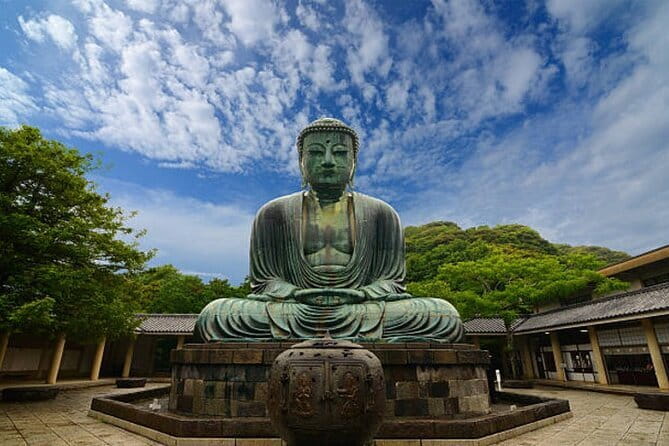
- Great Buddha at Kōtoku-in for maximum wow with minimal effort
- Tsurugaoka Hachimangu Shrine plus its ponds tied to the Taira and Minamoto clans
- Yokohama Chinatown with enough time to snack and wander, not just glance
- Sankei-en Garden for a traditional garden pause after city walking
Why this Kamakura and Yokohama day trip works so well
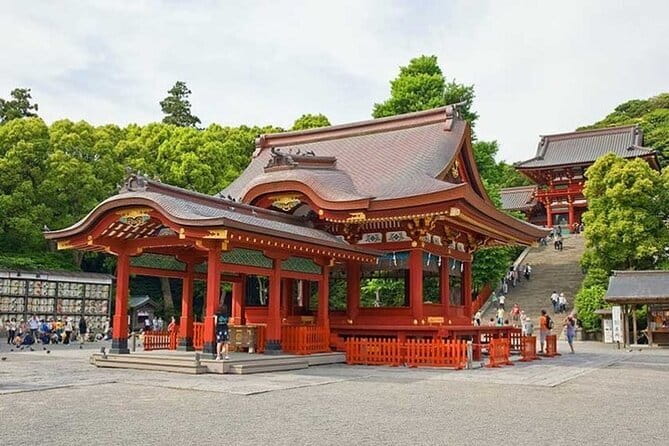
If you’ve only got one day out of Tokyo, this route is built for results. Kamakura gives you the temple-and-shrine core of Japan’s old religious life. Yokohama then switches gears to a port city feel, with Chinatown and a turn toward slower garden walking. Put together, it’s the kind of day that feels packed, but not chaotic.
What makes it especially practical is the “grouping” effect. Kamakura’s top sights are close enough that a driver can string them into a single sightseeing rhythm. That matters because Kamakura can be busy, and you don’t want your day consumed by figuring out where to go next.
I also like the mix of experiences. You get classic religious landmarks (bamboo temple, Kannon statue, the Great Buddha, a major shrine), plus human-scale strolling (Komachidori shopping street), then a seaside moment near Yuigahama. After that, Yokohama gives you food-and-street energy in Chinatown and a calmer, landscaped reset at Sankei-en.
There’s a very real “less effort, more seeing” value here. Instead of planning transit between each neighborhood, you’re just showing up at each stop and doing what you came to do.
You can also read our reviews of more private tours in Tokyo

The real value of an English-speaking driver (and why private matters)
A private tour sounds like a luxury word, but in this case it’s more like a time-saving tool. You’re paying for a driver who handles the logistics—getting you from Kamakura to Yokohama, managing the day’s flow, and keeping you moving at a pace that fits a 10-hour schedule.
The tour is built around private transportation in an air-conditioned vehicle, which helps a lot in summer or any time when walking in the heat starts to feel like a side quest. And because it’s private, you’re not watching the clock around strangers or waiting for a slower group member to catch up.
From the kinds of guide service described for this tour, you’ll likely appreciate two practical skills. First, the driver tends to communicate clearly about what’s coming and when, so you can plan your photos and restroom breaks. Second, the driver seems to adjust to what you care about, which is useful when you’re deciding whether to linger at a garden view or speed up a shopping street pass.
Also, you should know you’re not doing this in the dark. You’ll have a mobile ticket, and pickup is offered. That means less stress once you’re in Japan and more time staying present at the sights.
Kamakura temple day: bamboo calm to the big Kannon
Kamakura’s first stops are where the tone of the day really sets.
Hōkoku-ji (the bamboo temple)
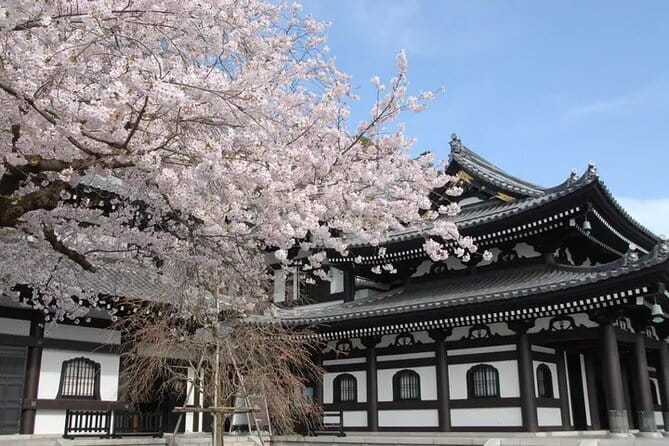
You’ll start at Hōkoku-ji, an older Zen temple in the Kenchō-ji school of Rinzai Buddhism. It’s famous for its bamboo garden, which is why the temple is often called the Bamboo Temple. If you’ve had enough city noise, this is the kind of place where your brain actually slows down.
What I like about starting here is contrast. You’re coming from Tokyo energy, then you step into a bamboo-filled atmosphere that feels more reflective than frantic. The temple’s main image includes a statue of Gautama Buddha, called Shaka Nyorai, in a sacred hall. Even if you don’t read every sign, you’ll notice the layout and the sense of ceremony.
Admissions for Hōkoku-ji aren’t included, so budget time and money accordingly.
Practical note: bamboo gardens are great for photos, but you’ll get better results if you move slowly rather than trying to take everything at once.
Hase-dera (Hase Kannon)
Next comes Hase-dera, also known as the Hase-kannon. This temple is known for housing a massive wooden statue of Kannon, the bodhisattva associated with compassion. It’s the kind of landmark that makes the architecture feel intentional: you go there to see the main statue and experience the space built around it.
You’ll spend about 2 hours here, which is a good amount of time for a temple like this. It gives you a chance to look around without feeling rushed, and it also helps you recover from the first walking phase.
As with Hōkoku-ji, admissions aren’t included.
You can also read our reviews of more tours and experiences in Tokyo



Timing tip for both temple stops
Kamakura temples can involve stairs, paths, and uneven ground. If you like comfortable walking shoes, this is one of those days to choose them over anything trendy. You’ll be happier when you stop for photos because your feet won’t be negotiating with the day.
Kōtoku-in and Tsurugaoka Hachimangu: the “main icons” phase
After the temple mood set by bamboo and Kannon, the tour heads into the classic Kamakura highlights: the Great Buddha and a major shrine.
Kōtoku-in (Great Buddha of Kamakura)
Kōtoku-in is the home of the Great Buddha of Kamakura. This is a Buddhist temple connected with the Jōdo-shū sect, and its mountain name is Taiizan. The common temple name is Shōjōsen-ji, which is handy to know if you’re reading signs or maps.
This stop is only about 1 hour, but that’s exactly the right amount of time for the Great Buddha experience. You’ll look up at the scale, walk the grounds, and take in the surrounding temple space. The wow factor is visual and immediate, so you don’t need half a day to get the payoff.
Tsurugaoka Hachimangu Shrine
Then you shift to Tsurugaoka Hachimangu Shrine, one of Kamakura’s cultural centers and an important venue for major festivals. This shrine also includes two museums, which you may or may not prioritize depending on your interests. Even without museums, the shrine’s setting matters.
Two ponds represent the Taira and Minamoto clans. That’s a small detail, but it’s the kind of place-based context that makes your visit feel more grounded. You’re not just seeing a pretty shrine; you’re seeing symbols tied to Japanese history and lineage.
This stop is about 1 hour.
How to enjoy it: keep an eye on the ponds and pathways. Many people focus only on the main structures and miss the way the landscape supports the story.
Komachidori for snacks and souvenirs, plus Yuigahama seaside photos
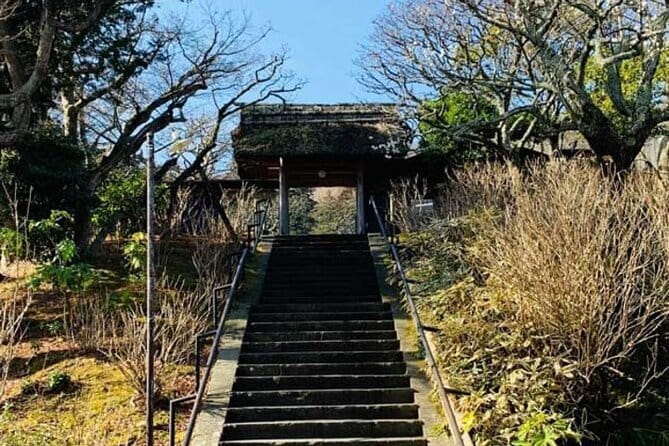
Now the tour moves from sacred to street and sea.
Kamakura Komachidori
Komachidori is a busy pedestrian walkway packed with apparel, gift and souvenir shops, and places to eat and buy sweets. It’s a good place to grab something small, like a snack or a cold drink, without committing to a full sit-down meal.
You’ll spend about 1 hour here. That’s enough time to walk, browse, and pick up a couple items without feeling like you turned your day into a shopping spree.
Kamakura Seaside Park (Yuigahama area)
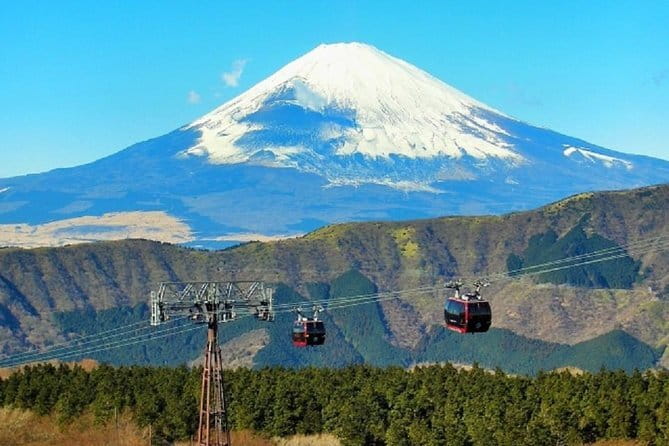
Finally, you get a seaside photo break at the Yuigahama area of Kamakura Seaside Park. The big selling point is the view possibility: you can take photos with the beach in front and Mt. Fuji across the ocean.
This is free time in the sense that there’s no listed admission fee for this stop. You’ll have about 1 hour. Use it to breathe, stretch, and reset before the Yokohama portion of the day.
Heads-up for photos: a clear view of Mt. Fuji isn’t guaranteed from every day or every angle. Even if it’s not visible, you’ll still get a pleasant coastal pause.
Yokohama: Chinatown at 160 years old and Sankei-en’s garden calm
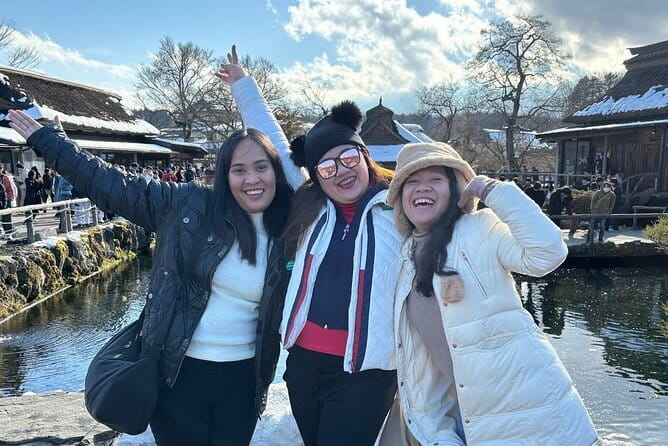
Once you reach Yokohama, the feel changes fast. This part of the day is more about wander time and atmosphere.
Yokohama Chinatown
Yokohama Chinatown is about 160 years old. Today, the population is estimated around 3,000 to 4,000, and most of the residents are from Guangzhou. The point here isn’t that you need a history lesson before eating. The point is that this is a real long-running neighborhood, not a theme park.
You’ll have about 2 hours. That’s a great window for snack-hopping, people-watching, and choosing a sit-down meal if you find something that fits your tastes.
Admissions are free for this stop.
One practical thing: if you have specific dietary needs, plan your lunch with care. Food around Chinatown ranges widely, but it can still be tricky depending on what you avoid.
Sankei-en Gardens
Then comes Sankei-en in Yokohama. It’s a traditional Japanese-style garden that opened in 1906. The garden was designed and built by Tomitaro Hara, known by the pseudonym Sankei Hara, who was a silk trader.
This is where the day slows down again. After temples and shopping, a garden is a nice mental change: you’re walking slower, looking more, and letting the scene come to you.
This stop is about 1 hour, and admissions aren’t included.
If you like gardens, architecture, and that quiet feeling of shaded paths, this is a strong final chapter.
Price and admissions: what you’re paying for, and how to budget smartly
At $399 per group (up to 6 people), the pricing can look high if you’re thinking per person right away. But the tour is private, includes the air-conditioned vehicle, and covers fuel, tolls, and taxes. So you’re paying for transportation plus a driver’s time for a full 10-hour circuit that would be annoying to piece together on your own.
Here’s the most helpful way to think about the money:
- If you travel as a small group, the per-person cost drops fast.
- If you’re traveling as a solo person, this can be harder to justify because you’re effectively paying for the whole vehicle.
Then there’s admissions. You’ll pay for Hokoku-ji, Hase-dera, Kōtoku-in, Tsurugaoka Hachimangu, and Sankei-en. The estimate is about 1100 JPY per person. That means your total day cost isn’t just the $399. It’s the $399 plus about 1100 JPY per person for the attractions.
Why this matters: admissions are part of what makes a temple or garden visit complete. If you show up expecting everything included, you’ll feel surprised. If you budget for it, it’s a straightforward add-on.
Who this day trip fits best (and who should look elsewhere)
This tour is ideal if you want the big Kamakura sights plus a real Yokohama change of pace, without turning your day into a transit puzzle.
You’ll be especially happy with this if:
- You’re traveling with family or friends and want one shared plan that stays efficient
- You prefer comfort after a long day of walking
- You care about both cultural landmarks and food-and-stroll neighborhoods
It may be less ideal if you:
- Hate structured schedules and want complete freedom to roam without time constraints
- Want to do lots of extra stops beyond what’s planned
Also, because the tour is private and English-speaking, it tends to work well for visitors who want explanations while they see the sights. Guides mentioned in the experience notes include names like Sunny and Vicky, and the service style described focuses on clear communication and being flexible with interests.
My booking advice: should you book this Kamakura and Yokohama tour?
Book it if you want a day that hits the highlights in two cities with minimal hassle. This is the kind of tour that earns its value through logistics: private transport, pickup, an air-conditioned ride, and a route designed so you’re not spending your limited time figuring out transit.
If admissions are a dealbreaker for you, or if you want to build your own totally customized itinerary from scratch, you might prefer independent travel. But if you want the best balance of classic sights, photo moments, and comfortable pacing, this one is a strong choice.
You’ll also feel good about booking when you know the service style leans practical. Clear communication, on-time pickup/drop-off, and a driver who can adjust to what you care about can make a big difference on a long day.
FAQ
FAQ
How long is the Kamakura and Yokohama private tour?
The tour duration is about 10 hours.
How many people can be in one group?
The price is for a group of up to 6 people.
Is the driver English speaking?
Yes. The tour is described as having an English-speaking driver.
Does the tour include pickup?
Yes, pickup is offered.
Are temple and garden admission tickets included?
No. Entry/admission fees for Hōkoku-ji, Hase-dera, Kōtoku-in, Tsurugaoka Hachimangu Shrine, and Sankei-en are not included. The listed admission fee is about 1100 JPY per person.
What stops are included during the day?
The day includes Hōkoku-ji, Hase-dera, Kōtoku-in (Great Buddha of Kamakura), Tsurugaoka Hachimangu Shrine, Kamakura Komachidori, Yokohama Chinatown, Sankei-en Gardens, and the Kamakura Seaside Park (Yuigahama area).
Is this a private tour?
Yes. It’s private, and only your group participates.
Can I cancel and get a full refund?
Yes. There is free cancellation, and you can cancel up to 24 hours in advance for a full refund.