REVIEW · TOKYO
Learn to Make Home Style Tempura Udon and Gyoza
Book on Viator →Operated by byFood · Bookable on Viator
Udon dough, then crisp tempura, in one lesson. This hands-on, private class with Emi in Tokyo is a practical way to learn Japanese comfort food rather than just ordering it. I like that you are not watching from the sidelines; you’re kneading dough, folding dumplings, and frying tempura with real guidance from Emi.
My second favorite part is the takeaway: you get an English recipe booklet to recreate everything at home, plus you drink barley tea as you cook. The main drawback to plan around is that a single male participant cannot join on their own, and the studio can fill up quickly during busy spring and autumn seasons.
In This Review
- Key Highlights You’ll Actually Use
- Nerima Station Studio: the Calm Start Before You Cook
- Knead Udon Dough and Prep the Base Like a Real Kitchen
- Tempura Practice: Why Crispness Is Mostly About Technique
- Gyoza Folding and Filling Choices You Pick at Booking
- Barley Tea Breaks and the Sit-Down Meal That Makes It Worth It
- Price and Timing: Does $95.23 Deliver Real Value?
- Private Class Logistics That Matter (Without the Fuss)
- Who This Tokyo Cooking Class Is Perfect For
- Should You Book Learn to Make Home Style Tempura Udon and Gyoza?
- FAQ
- FAQ
- How long is the cooking class in Tokyo?
- What dishes will I learn to make?
- What’s included in the price?
- Can I choose my gyoza filling?
- Are vegetarian or pescetarian diets accommodated?
- Is this a private class or shared with other groups?
- Do I need to get myself to the meeting point?
Key Highlights You’ll Actually Use
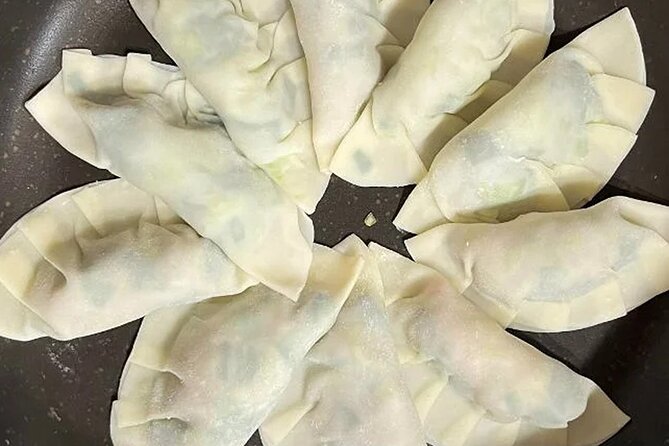
- Private coaching with Emi: clear demonstrations and step-by-step reasons behind each move.
- Udon from scratch: hand-kneading and learning how the dough should feel.
- Tempura frying skills: practical tips for crisp results you can repeat at home.
- Gyoza filling choice at booking: minced pork, minced pork and shrimp, or vegetables only.
- Barley tea while you cook: simple, calming hydration during active prep.
- You eat what you make: the class ends with a shared meal at the table.
Nerima Station Studio: the Calm Start Before You Cook
The class starts near Nerima Station, at a cozy studio you reach by public transportation. You’ll meet your host there, then jump straight into cooking rather than spending the first hour on theory. Expect a friendly setup geared toward doing, not just listening.
Because it’s a private experience, the pace is tailored to your group. That matters for cooking classes, since a few minutes waiting can throw off timing in frying and dumpling prep. It also means you can ask questions when you actually need them, like when the tempura batter looks too thick or the dough feels too sticky.
If you’re the kind of traveler who likes tangible souvenirs, this is one of those classes. Your takeaway is not just photos—it’s a skill set you can use the next time you want a real Japanese meal, not a takeout version.
You can also read our reviews of more tours and experiences in Tokyo.



Knead Udon Dough and Prep the Base Like a Real Kitchen
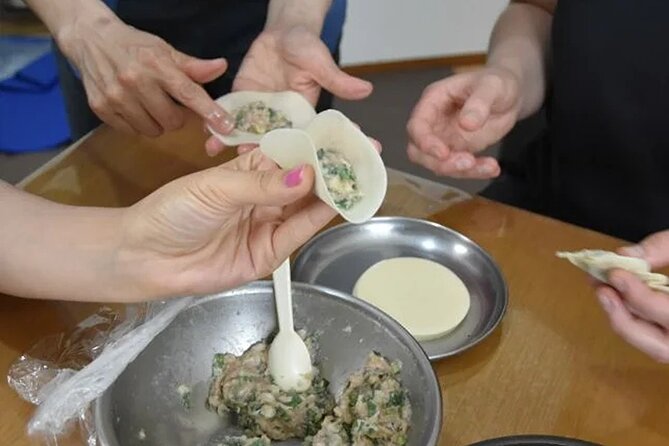
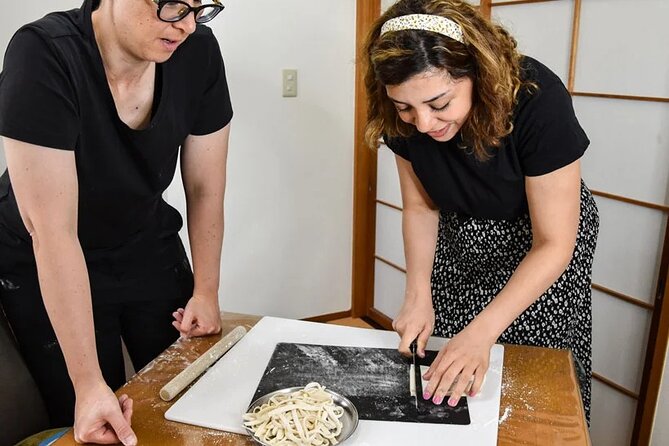
You’ll learn to make udon noodles and build the supporting flavors, including dashi. This is where the class earns its value: udon is simple in concept, but the texture depends on technique and timing. Hand-kneading is the fastest way to understand what the dough is supposed to do.
You’ll also practice what “good” looks like, not just what to do. In cooking, that difference is huge. When someone explains the reason behind a step—like what you’re aiming for in the dough’s consistency—you stop guessing and you start controlling results.
Even if you’ve never made noodles before, this part is approachable because you’re not expected to be a pro. You’re given ingredients and tools, then guided through the workflow so you can focus on feel and small adjustments rather than struggling to figure out the basics.
Tempura Practice: Why Crispness Is Mostly About Technique
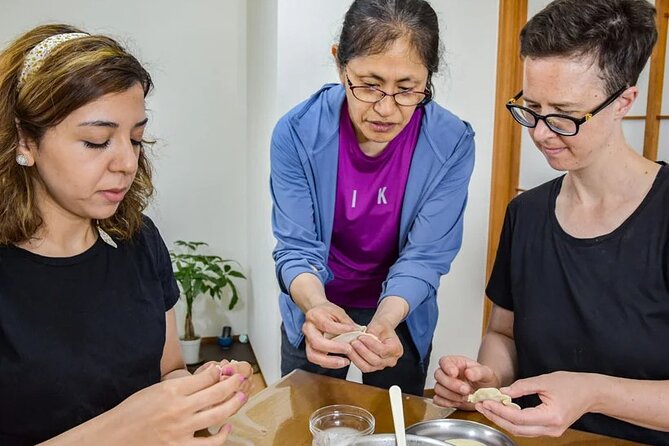
Next comes tempura, and yes, it can be tricky if you’ve only had it from restaurants. The class focuses on how to fry to get that crisp, light bite. You learn what to watch for during cooking so the batter doesn’t turn soggy or heavy.
Tempura success is less about magic and more about process: heat control, batter behavior, and timing. That’s why instructor-led guidance helps so much. When someone points out what you should be noticing—before you make the same mistake twice—you learn faster.
This segment is also a nice break from noodle work. Frying tempura brings a different kind of attention: you’re watching color and sound, and you’re keeping things moving. If your travel style is hands-on and you enjoy small challenges, you’ll probably find this portion the most fun.
Gyoza Folding and Filling Choices You Pick at Booking
Gyoza is the final major dish, and it’s where customization becomes part of the experience. At booking, you choose your filling preference: A) minced pork, B) minced pork and shrimp, or C) vegetables only. That choice changes the flavor and the way the dumplings feel during assembly, so your class results won’t be generic.
You’ll learn how to fill and fold them. The folding is more than aesthetics; it helps keep the filling where it belongs while they cook. Even if your first few aren’t perfect, the goal is that you leave knowing the method, not just making dumplings once and hoping for the best.
If you’re traveling with someone with different preferences, this booking option is also helpful. You can plan around what you actually want to eat, including going vegetarian with the vegetables-only choice. And if you have dietary restrictions, the class can accommodate vegetarian and pescetarian needs if you inform them in advance.
Barley Tea Breaks and the Sit-Down Meal That Makes It Worth It
Cooking is active, so the class includes barley tea to hydrate while you work. It’s a small detail, but I like that it keeps the session comfortable. When you’re kneading, frying, and folding close together, hydration matters more than you think.
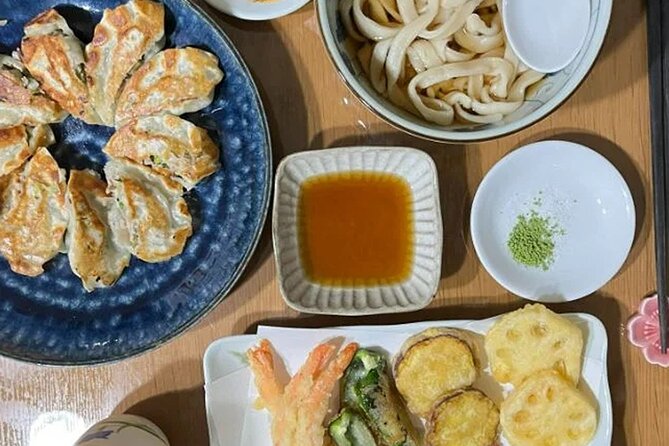
Then you get the best part: you sit down and dine on what you made. That shared meal is more than included food—it’s how you learn. You can taste the noodle texture, check whether the tempura stayed crisp, and evaluate how your gyoza turned out, all while the techniques are still fresh in your head.
The class also gives you an English recipe booklet to take home. For me, that’s what converts the experience from entertainment into a lasting skill. You’ll be able to repeat the dishes with fewer guesswork moments—especially for steps you might forget after your trip.






Price and Timing: Does $95.23 Deliver Real Value?
At $95.23 per person for about 2.5 hours, the cost is less about “watching a meal” and more about paying for instruction, ingredients, tools, and a full meal. You also get take-home materials, which usually costs extra when you book regular food tours.
What you’re buying here is time with an instructor and a kitchen workflow that’s hard to recreate alone at home. Making udon, tempura, and gyoza in one session is efficient. You also get feedback while you cook, which is the difference between cooking as a hobby and cooking as a skill.
A practical note: the average booking lead time is around 81 days, so schedules can tighten. If you’re traveling during busy spring or autumn seasons, plan ahead because the studio fills up. And if you’re booking for a group of three or more, it’s smart to reserve 2–3 months in advance to improve your odds.
Private Class Logistics That Matter (Without the Fuss)
This is a private tour/activity, meaning only your group participates. That’s ideal if you want a calmer pace and more direct attention. It’s also helpful for families, since parents and kids can move together without worrying about other groups’ schedules.
You’ll use a mobile ticket, and the meeting point is near Nerima Station. Transportation to and from the studio isn’t included, so you’ll want to factor in local transit time.
For smooth communication, you’re asked to provide a WhatsApp registered number when booking. Also, there’s a note about Japan’s legal drinking age being 20~. Since the class includes barley tea, you likely won’t be dealing with alcohol here, but it’s still good to know why that note exists.
One more consideration: a single male participant can’t take part on their own. If you’re traveling solo, you’ll want to check whether your group setup qualifies, or consider a different cooking format.
Who This Tokyo Cooking Class Is Perfect For
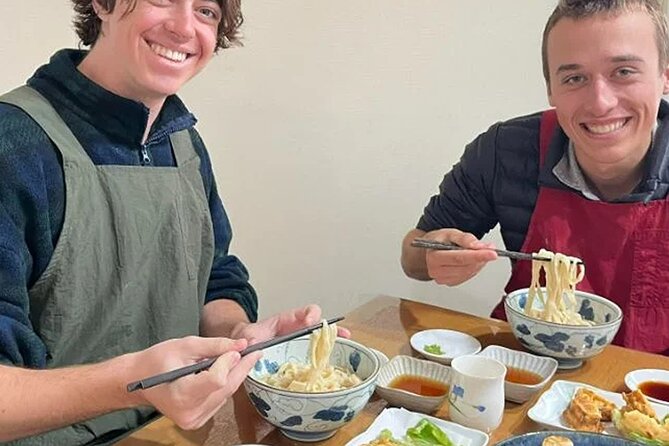
This experience suits you if you want more than a meal and you like learning in a hands-on format. If you enjoy cooking, or you’ve cooked at home but want Japanese results with better technique, this class gives you a clear path.
It’s also a great match for travelers who like tangible takeaways. The recipe booklet in English plus the skills for udon, tempura, and gyoza makes it easy to turn one good day in Tokyo into repeat dinners back home.
If you’re traveling with dietary preferences, the class can accommodate vegetarian and pescetarian needs when you tell them in advance. And since gyoza filling is a choice you make ahead of time, you can tailor your dumplings to what your group actually wants to eat.
Should You Book Learn to Make Home Style Tempura Udon and Gyoza?
Book it if you want a skill-based cooking lesson that ends with food you made yourself. The combination of udon, tempura, and gyoza in one private session is efficient, and the instructor-led coaching is the kind of help that makes the results more consistent.
Don’t book it if you’re a solo male traveler and you need a single-person option. Also, if you’re traveling at a peak season and you wait too long to plan, you may struggle to find availability.
FAQ
FAQ
How long is the cooking class in Tokyo?
The class is about 2 hours 30 minutes.
What dishes will I learn to make?
You’ll learn to make tempura udon and gyoza, including udon noodles, dashi, tempura frying, and gyoza folding with your chosen filling.
What’s included in the price?
The class includes all ingredients and tools, barley tea, and a meal of udon with tempura and gyoza, plus an English recipe booklet.
Can I choose my gyoza filling?
Yes. You select one option when booking: A) minced pork, B) minced pork and shrimp, or C) vegetables only.
Are vegetarian or pescetarian diets accommodated?
Yes. The class can accommodate vegetarian and pescetarian dietary requirements if you inform the host in advance.
Is this a private class or shared with other groups?
It’s a private tour/activity, so only your group participates.
Do I need to get myself to the meeting point?
Transportation to and from the location is not included. The class meets near Nerima Station, and it ends back at the meeting point.