REVIEW · TOKYO
Karate Experience with the Shotokan Karate-do Instructor
Book on GetYourGuide →Operated by MY Travel Consulting Inc. · Bookable on GetYourGuide
Shotokan karate hits different when it starts at SKIF Headquarters in Japan. I like that this 90-minute class blends hands-on training with a real look at how Japanese martial arts work, not just a demo.
What I really like is the chance to learn the fundamentals directly from a top-level Shotokan instructor and to try standout activities like board breaking. The one thing to plan around is timing: if you arrive late, the session can’t be extended.
In This Review
- Quick highlights you’ll feel right away
- Why the Shotokan Setting at SKIF HQ Matters
- Getting There: Kugahara Station, a 2-Minute Walk, and Arrival Rules
- What the 90 Minutes Looks Like (Step by Step)
- Training Content: Strikes, Kicks, Kata, and Promise Kumite
- Board Breaking: The Moment People Remember
- Instructor Quality: World-Championship Credentials, English Coaching, Small Group Size
- Uniforms, What to Bring, and What You Can Skip
- Price and Value: Why $220 for 90 Minutes Can Still Make Sense
- Who Should Book This Shotokan Karate Session (And Who Might Not)
- The Practical Stuff: Timing, Questions, and Getting the Most Out of It
- Should You Book This Shotokan Karate Experience?
- FAQ
- How long is the karate experience?
- Where is it located?
- Is the instruction in English?
- How many people are in the group?
- Are uniforms included?
- What should I bring with me?
- Is bottled water included?
- What happens if I arrive late?
Quick highlights you’ll feel right away
- Train at SKIF HQ where world-class instructors teach and demonstrate
- Learn the basics with English instruction, built for beginners and adjusted for experience
- Practice kata and promise kumite (pre-arranged sparring) so you can progress safely
- Try board splitting plus watch a strong instructor demonstration
- Small group (max 10) keeps the coaching direct and the questions flowing
Why the Shotokan Setting at SKIF HQ Matters
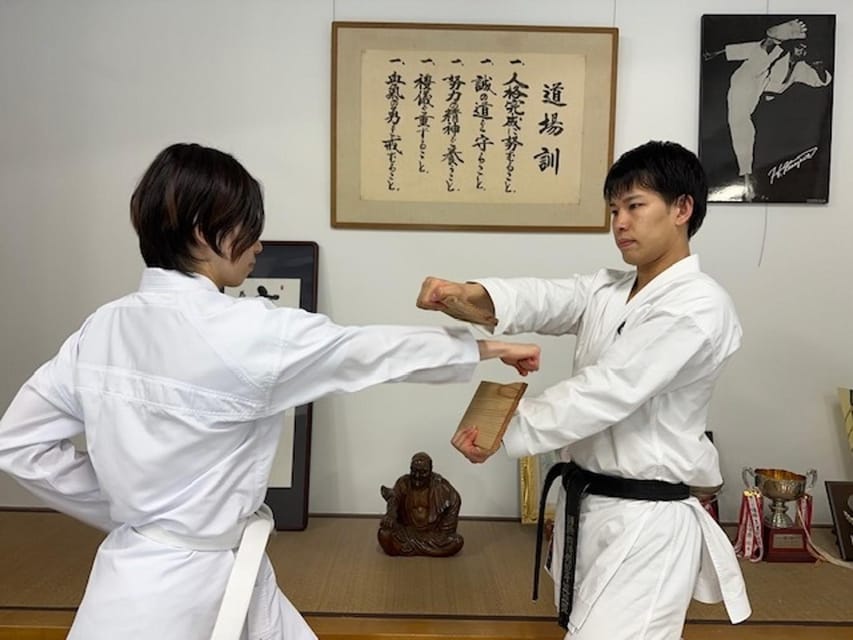
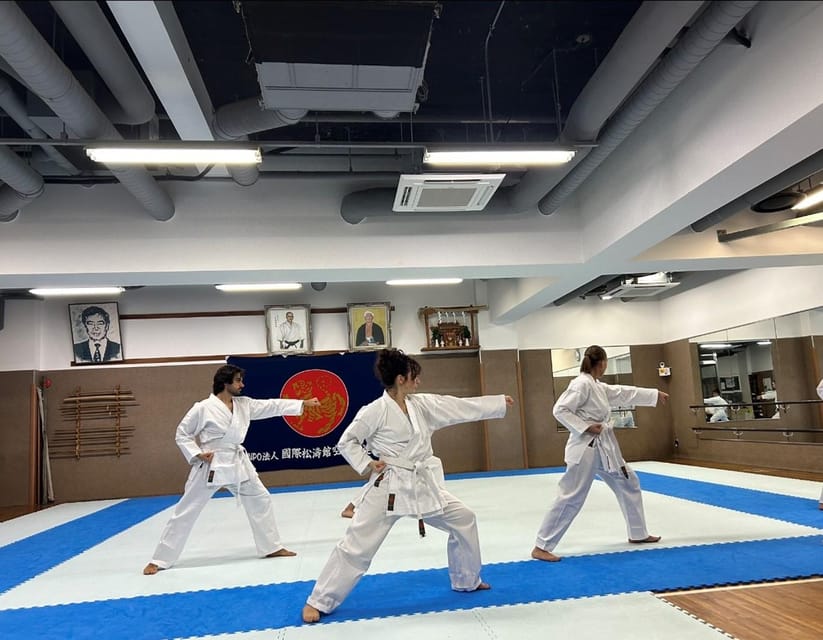
This experience is special for one big reason: it’s not a one-off activity in a random gym. You go to the SKIF Headquarters dojo, connected to the Shotokan Karate-do International Federation (SKIF), an organization known for its long-standing competitive and training tradition.
That matters because you feel the difference in how the class is run. The structure is clear, the warm-up and technique cues are deliberate, and the teaching tone is more like coaching than entertainment. If you like real training culture, this scratches that itch fast.
You can also read our reviews of more tours and experiences in Tokyo.



Getting There: Kugahara Station, a 2-Minute Walk, and Arrival Rules
Your meeting point is a 2-minute walk from Tokyu Ikegami Line Kugahara Station. If you’re unsure, contact the organizer in advance so they can pick you up at the station. That’s a small detail, but it can save you stress, especially if you’re navigating Tokyo transit for the first time.
Two timing rules matter here. First, the class is only 90 minutes, and if you arrive late, it can’t be stretched. Second, you should arrive at least 10 minutes early so you can get settled, change into your rented uniform, and start on time.
If you’re the type who likes to move fast and read signs later, this is still manageable. Just don’t cut it close.
What the 90 Minutes Looks Like (Step by Step)
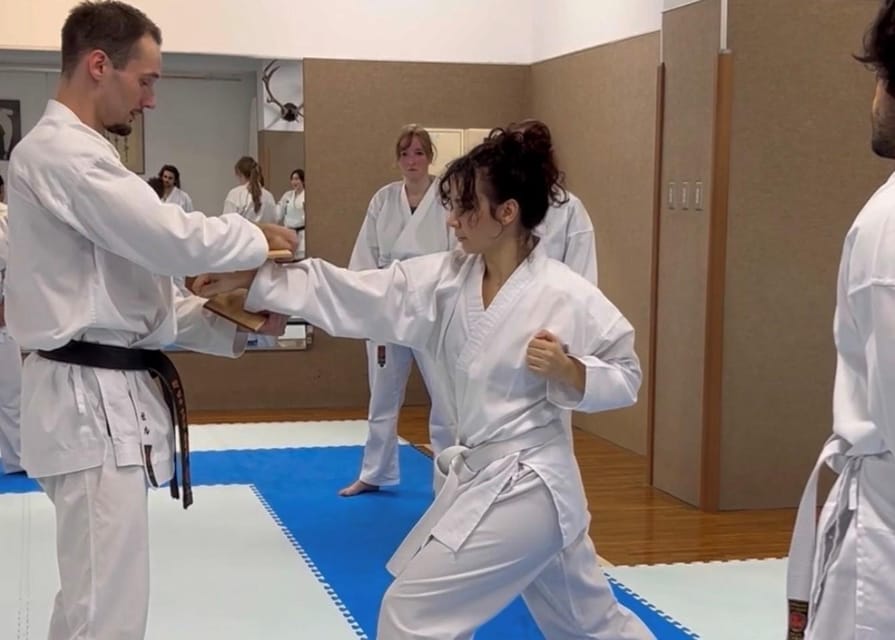
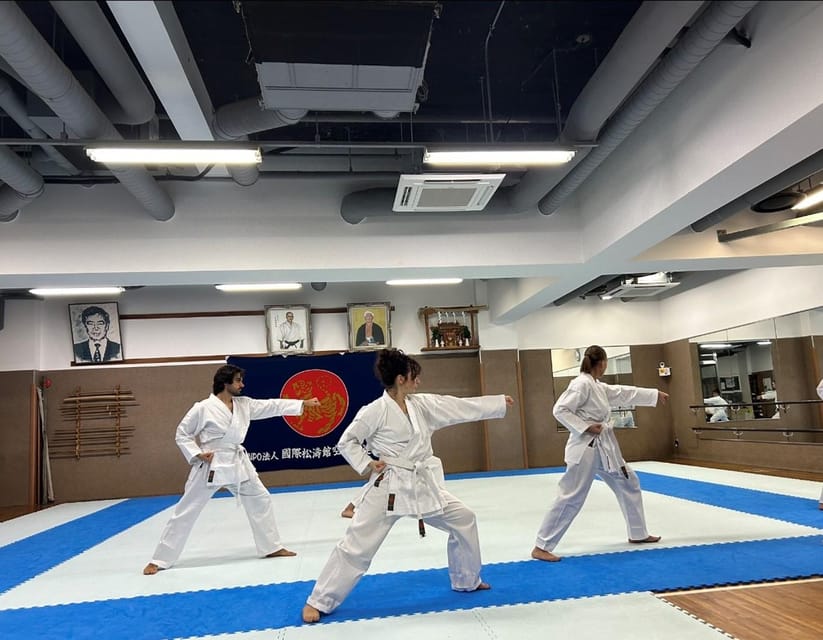
The session is designed as a tight training block: start with context, then go straight into technique, then finish with a safe confidence builder and some instructor flair.
Here’s the flow you can expect in plain terms:
1) Welcome and a short karate background
You’ll start with an introduction to the history and philosophy of karate. This is brief, but it helps you understand why the movements are taught the way they are—control, respect, and accuracy, not just speed.
2) Fundamental technique training
Next comes hands-on practice with core striking and kicking basics. You’ll work on clean form and timing, with coaching focused on what you can do right away.
3) Kata practice (forms)
You’ll then train kata, the set patterns that function like moving drills. Even if you’ve never studied kata before, you’ll learn why kata is more than choreography: it helps you build balance, stance stability, and repeatable technique.
4) Promise kumite (pre-arranged sparring)
After kata, you’ll do promise kumite, meaning pre-arranged sparring. This is a smart choice for a mixed group because it teaches rhythm and distance without the unpredictability of free sparring.
5) Board splitting try-out and a demonstration
You’ll also have a chance to try board breaking, plus observe a powerful instructor demonstration.
6) Friendly exchange and photos
The class ends with a friendly exchange and a photo opportunity. It’s not a sales pitch; it’s the classic training-day close: connect, thank your instructor, and head out with new respect for the discipline.
Training Content: Strikes, Kicks, Kata, and Promise Kumite
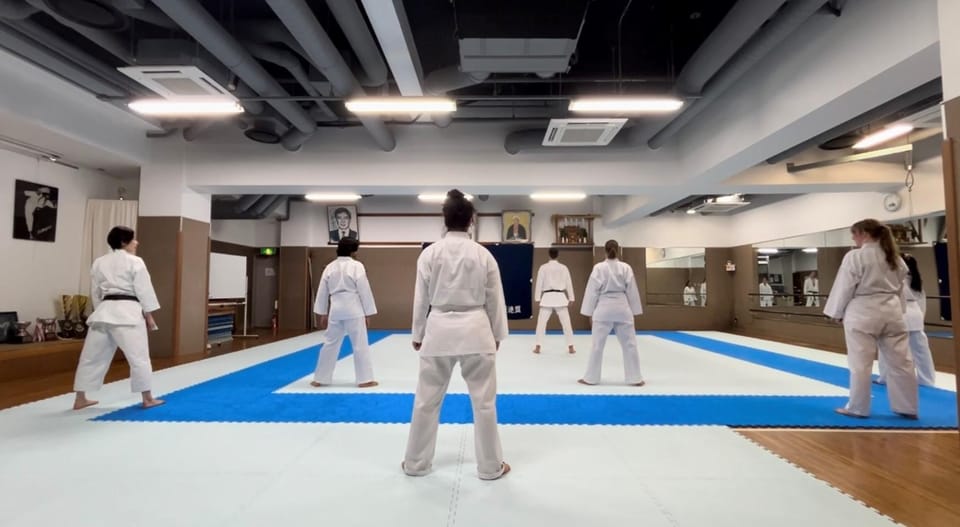
Let’s talk about what you actually practice, and what it means for your skill level.
Striking and kicking basics
This is where you’ll get immediate feedback. In Shotokan, the details matter—stance, hip alignment, and impact control. Even as a beginner, you can learn how to generate power without throwing your body around wildly.
If you already know karate, you’ll likely appreciate the chance to polish fundamentals. In at least one English-led session, the instructor (Paul) adjusted the lesson based on prior experience and leaned into the more traditional side of karate—especially around techniques and Japanese terms.
Kata (forms)
Kata is a highlight for a lot of people because it turns technique into something you can repeat and measure. It also gives you a shared language in the dojo: once you know the pattern, you understand what you’re being corrected on.
If you’re new, you might find kata feels like homework at first. The difference here is that it’s taught as part of your training arc, not as a random performance.
Promise kumite (pre-arranged sparring)
Promise kumite helps you understand distance and timing without the stress of reacting to a live opponent. You learn how movements connect: entry, technique, and controlled outcome.
For beginners, this is huge. It’s safer. It’s clearer. And it stops the session from turning into chaos.
Board Breaking: The Moment People Remember
The board breaking portion is included, and it’s easy to see why. It’s visual. It’s dramatic. And it forces you to focus on fundamentals—stance, alignment, and commitment.
You’re not just watching. You get a try at board splitting/breaking. That changes the whole energy of the class. Even if you don’t break perfectly the first time, you’ll likely understand how the technique mechanics connect to the result.
Right after that, you’ll observe a powerful instructor demonstration. The point isn’t shock value. It’s to show what the dojo is aiming for: controlled power, not careless force.






Instructor Quality: World-Championship Credentials, English Coaching, Small Group Size
You’ll train with one of several top-level instructors, each with tournament achievements that include SKIF World Championships and All Japan Karate Championships in kumite and kata. That’s not just trivia. It usually translates into better coaching—people who’ve competed still teach with clarity because they’ve learned what actually works under pressure.
English instruction is available, which is a big deal if you want to understand the meaning behind the moves. One of the standout themes from the experience is that instructors explain techniques and Japanese terms in a way that makes sense, not just a quick gloss.
And because it’s limited to 10 participants, you get time for questions. In a bigger class, you might feel like you’re being processed. Here, you’re more likely to get correction that matches your level.
Uniforms, What to Bring, and What You Can Skip
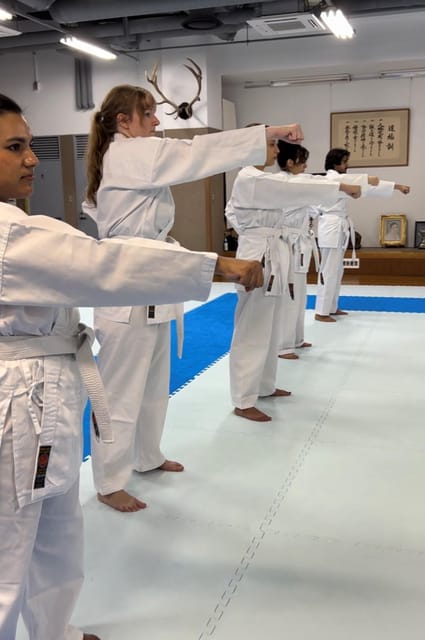
Uniforms are available for rental, which makes this easier if you’re traveling light. Still, you’ll want to show up prepared.
Bring:
- Towel
- Drinks
What’s not included:
- Bottled water
- Towel (so plan to bring one)
Also keep in mind what’s not allowed:
- Smoking
- Food and alcohol/drugs
- Electric wheelchairs and non-folding wheelchairs
If you’re coming from sightseeing, this is a good moment to switch gears. Wear something you can move in later, and don’t forget your towel—your future self will be glad.
Price and Value: Why $220 for 90 Minutes Can Still Make Sense
This costs $220 per person for 90 minutes, with a small group and included training components. On paper, it’s not cheap. But value here comes from access and structure.
You’re paying for:
- Instruction tied to SKIF and taught at SKIF Headquarters
- A coaching experience led by a high-achieving Shotokan instructor
- Hands-on practice across striking, kicking, kata, and promise kumite
- Included board-breaking try-out
- Uniform rental and structured training time
If you’re the kind of traveler who likes “see it” activities, you might feel disappointed. This is more of a do-and-learn class. If you show up willing to work your body and your attention, you’re likely to feel the value quickly.
If your goal is only a photo op, you may want to adjust expectations. The class is training first, posing second.
Who Should Book This Shotokan Karate Session (And Who Might Not)
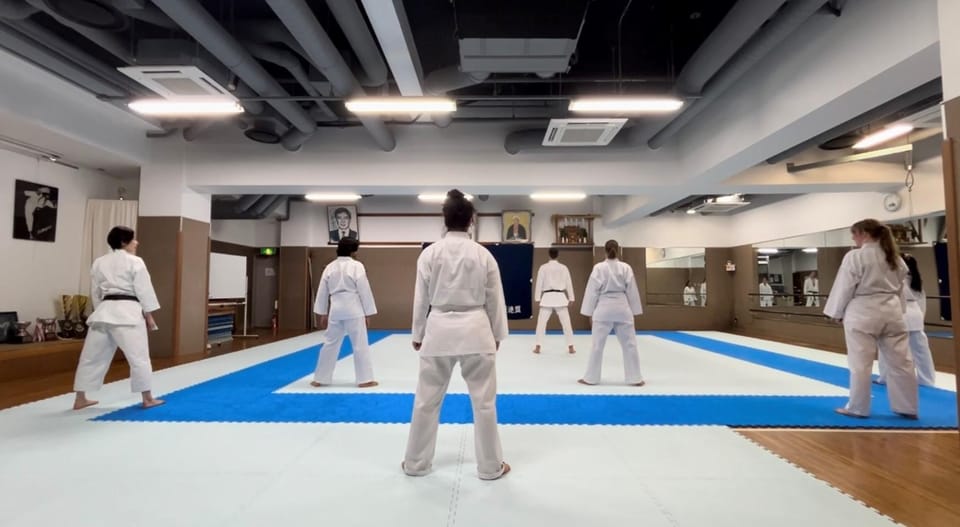
This works best for you if you:
- Want an authentic martial arts experience in Japan, not just a quick attraction
- Like classes where you can ask questions (English instruction helps a lot)
- Enjoy structured practice: basics, kata, then pre-arranged sparring
- Want a memorable activity like board breaking that isn’t just watched from the sidelines
It’s less ideal if you:
- Need a class that can stretch in time if you’re running behind
- Are bringing kids under 7, since it’s not suitable for children under that age
And if you already practice karate, you can get more out of it. The experience can be adjusted, but you need to let the team know in advance what style you practice and what kind of training you want. That’s the difference between a generic intro and a session that actually matches your goals.
The Practical Stuff: Timing, Questions, and Getting the Most Out of It
If I were advising you before you go, I’d focus on three things.
1) Show up early
Arrive at least 10 minutes before start. This avoids the biggest frustration: the session can’t be extended for late arrivals.
2) Bring your basics
Towel and drinks are on your list. Uniform rental takes care of the rest.
3) If you’re experienced, communicate
Tell them your style and what you want to focus on. Instructors can make the program feel more satisfying when they know where you’re coming from.
Also, come with questions ready. The coaching style here supports explanations, including Japanese terms. You’ll probably leave with vocabulary you can actually use next time you train.
Should You Book This Shotokan Karate Experience?
Book it if you want a real Shotokan training session in Japan, led from SKIF Headquarters, with a class structure that goes beyond watching and actually teaches you something. The combination of fundamentals (strikes, kicks), forms (kata), practical rhythm (promise kumite), and the hands-on standout (board breaking) gives you a well-rounded 90 minutes.
Skip or reconsider if you’re looking for a casual, flexible activity that can run long if plans slip. Also, if you’re traveling with a child under 7, this isn’t the right fit.
If you like disciplined experiences and you’re comfortable learning through doing, this is one of those Japan activities that feels both culturally meaningful and genuinely fun.
FAQ
How long is the karate experience?
The session lasts 90 minutes.
Where is it located?
It’s located a 2-minute walk from Tokyu Ikegami Line Kugahara Station. If you’re unsure how to get there, contact the organizer in advance for pickup at the station.
Is the instruction in English?
Yes. The instructor provides English instruction.
How many people are in the group?
The group is small, limited to 10 participants.
Are uniforms included?
Yes. Uniforms are available for rental.
What should I bring with me?
You should bring a towel and drinks.
Is bottled water included?
No. Bottled water is not included.
What happens if I arrive late?
If you arrive late, the experience cannot be extended. You should arrive at least 10 minutes before the starting time.