REVIEW · TOKYO
Japan’s Best Mount Fuji Tour
Book on Viator →Operated by FawSha Travels · Bookable on Viator
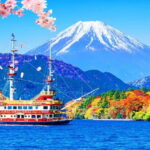
Mount Fuji in spring feels like a postcard come to life. This Japan’s Best Mount Fuji Tour plans a full day from Shinjuku to classic viewpoints around Fujiyoshida and Lake Kawaguchi, timed to enjoy seasonal cherry blossom vibes when skies cooperate. You’ll also get included entry at key stops and a guided route built for a first-time Fuji day.
I like two things right away: the itinerary is packed but not chaotic, with dedicated time at each place, and the guide-style culture explanations can make the day feel more meaningful than just photo stops. I also appreciate that the tour is capped at a small group size per booking, so it’s easier to hear the plan and actually enjoy the views.
One big consideration: there’s no guarantee Mount Fuji will be visible. In fact, one past departure had the peak totally hidden, so pack for disappointment and plan to enjoy the day even if you don’t get the dramatic view.
In This Review
- Key highlights you should know before you go
- Meeting at Kogakuin University Shinjuku: Find the bus without stress
- Arakurayama Sengen Park: the Fuji panorama stop you’ll plan around
- Fujiyoshida Honcho Street: a real walk, not just a bus drop
- The Mount Fuji viewpoint stop: enjoy it even when it’s invisible
- Oishi Park on Lake Kawaguchi: seasonal Fuji and flower time (April–June)
- Saiko Iyashi no Sato Nenba: the healing village time you’ll slow down for
- Back to Shinjuku by 6 pm: timing, guide help, and cash rules
- Price and value: how $77 really works for this Mount Fuji day
- Who this tour suits best (and who should skip it)
- Should you book this Mount Fuji tour?
- FAQ
- FAQ
- What time does the tour start and when do we return?
- How long is the Japan’s Best Mount Fuji Tour?
- Is lunch included?
- What’s included in the tour price?
- Do I need cash?
- How many people are on the tour?
- Is this tour refundable or changeable?
Key highlights you should know before you go
- Small group feel (max 8 per booking), with a join-in setup that can still bring other guests on board.
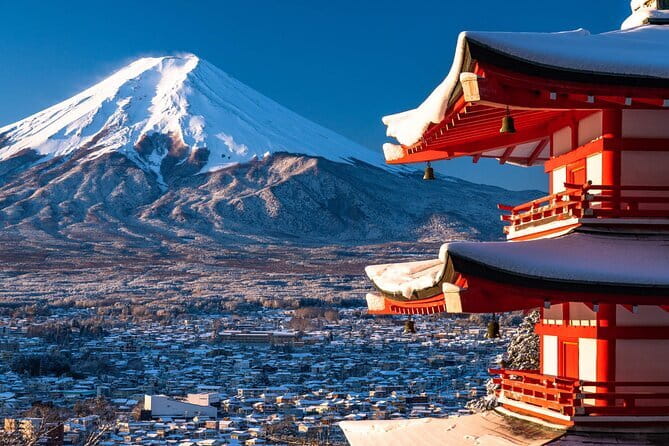
- Arakurayama Sengen Park gives you the city panorama angle with Mount Fuji in the frame when conditions are good.
- Fujiyoshida Honcho Street is the flexible walking time, with lunch break built in.
- Oishi Park is seasonal (April–June departures only), so don’t assume it’s always on the schedule.
- Saiko Iyashi no Sato Nenba is included and designed for a slower, nostalgic “healing village” moment.
- Bring yen for cash-only spots, since many places around Mount Fuji don’t take cards.
Meeting at Kogakuin University Shinjuku: Find the bus without stress
The day starts at Kogakuin University Shinjuku Campus (1-chōme-24-2 Nishishinjuku). You’re told to arrive early—at least 10 minutes before the 8:20 meeting time—because the group leaves on time. This is one of those tours where being late doesn’t just slow you down; it can throw the whole pickup rhythm off.
Finding it is doable. From Shinjuku Station’s West Exit (Central West Exit, underground), you walk toward the Chuo-dori Underpass and the Tokyo Metropolitan Government Building area. Once you pop back to street level, it’s about a 1–2 minute walk toward the Tokyo Metropolitan Government Building, and you’ll see Kogakuin University close by—Keio Plaza Hotel is across the street, which makes a handy landmark.
A practical note: it’s a join-in tour, so even though each booking is capped at 8 travelers, other groups may be on the same bus. That’s normal for this style of tour. The upside is you get the route planning and tickets without the hassle of organizing everything solo.
Also, wear shoes you can walk in. The schedule mentions some hiking/walking time, and these Fuji viewpoints are not “sit down and wait” stops.
You can also read our reviews of more tours and experiences in Tokyo.



Arakurayama Sengen Park: the Fuji panorama stop you’ll plan around
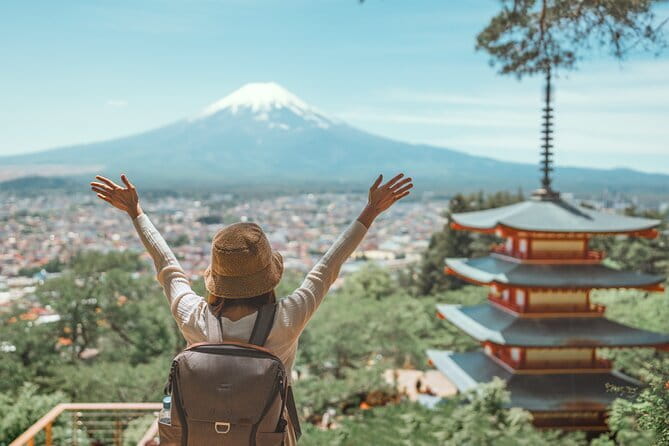
Your first big sightseeing move is Arakurayama Sengen Park. Pickup happens in front of Kogakuin University Shinjuku Campus (departing around 8:30 am), then you head for the park with a panoramic view of the city and—when the sky allows—it puts Mount Fuji into the scene.
This stop runs about 1 hour, and the admission ticket is included. That hour matters because it’s usually when you’re deciding what you can physically do: quick scenic lookouts, a bit more walking for better angles, or just taking your time with photos.
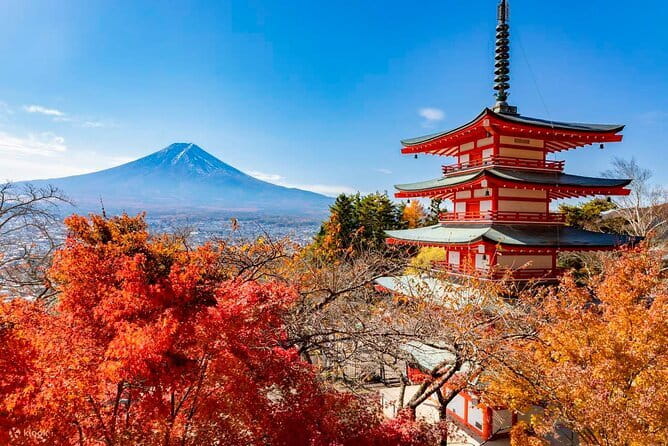
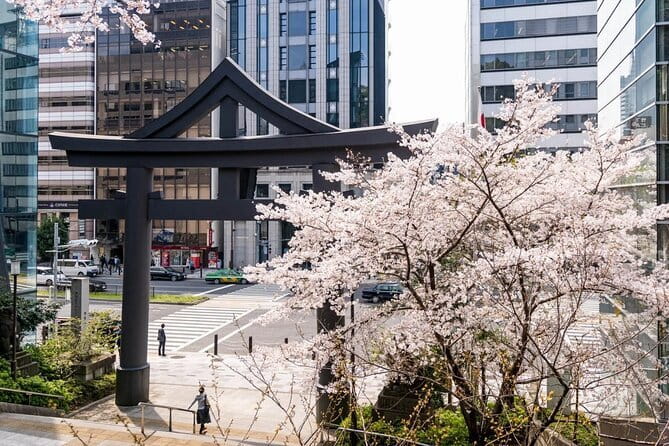
Why this stop is worth your energy: it’s one of the clearest ways to understand how Fuji sits in relation to the city and surrounding areas. Even when Fuji is only partially visible, the park viewpoint still gives you a sense of scale. And in spring, the timing can line up with cherry blossom atmosphere, which adds a softer, more festive feeling to what could otherwise be a purely “big mountain” moment.
The tradeoff? It’s popular. Expect crowds depending on the day, and don’t assume you’ll have perfect silence or empty stairways for your shots.
Fujiyoshida Honcho Street: a real walk, not just a bus drop
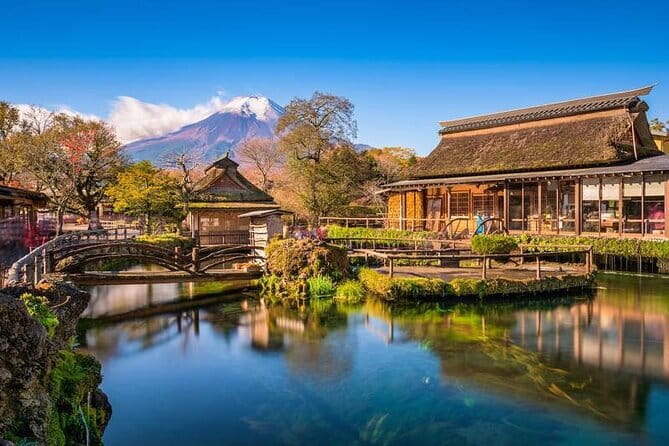
After Arakurayama Sengen Park, you’ll reach Fujiyoshida and get time to stroll around Honcho Street. This is your most casual, street-level moment—think wandering, browsing, and letting the day breathe.
You’ll have about 90 minutes for lunch, but meals aren’t included. That means you’re choosing your own food, and you can adapt based on what looks good and what’s easiest to get into. Since the tour notes that many places accept cash, I’d treat yen as your default currency plan here.
This is also a good time to reset your body. You’ll be on a bus most of the day, so use this break for a slower walk, a bathroom stop, and grabbing snacks before you’re back on the bus.
One more detail that makes a difference: the tour says eating and drinking—including snacks—and talking loudly are prohibited on the bus (as a COVID-19 prevention measure). So if you want something to snack on, do it during your street time, not during transit.
The Mount Fuji viewpoint stop: enjoy it even when it’s invisible
Next comes the dedicated Mount Fuji stop (about 30 minutes, admission ticket free). This is the quick-hit moment where the tour aims for maximum payoff per minute.
Here’s the honest planning mindset: you’re traveling to see Mount Fuji, but visibility depends on weather and cloud cover. On a past departure, Mount Fuji was completely invisible—yet the day still worked because the other stops delivered scenery, views, and a cultural pace.
So what should you do? Treat those 30 minutes like a flexible window, not a single guaranteed viewing event. If the clouds open, move quickly to the best angle. If they don’t, shift focus to the surroundings—the lake-area towns, the seasonal atmosphere, and the walking views from each stop. A short stop can still feel satisfying if you keep expectations realistic.
Also, spring can swing between chilly and comfortable. Layer up. You’ll be outside long enough to feel it.
Oishi Park on Lake Kawaguchi: seasonal Fuji and flower time (April–June)
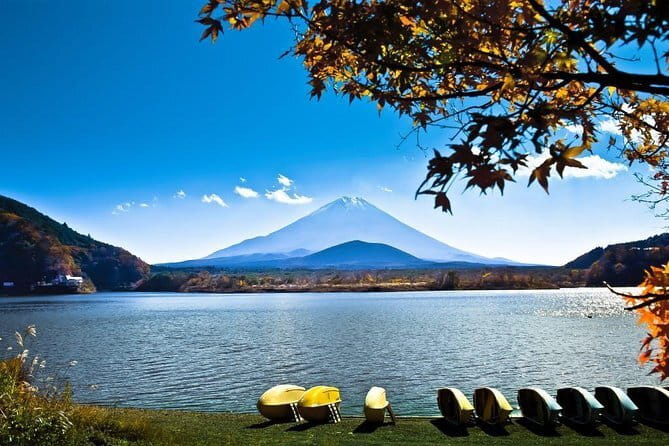
For departures from April to June, you may get Oishi Park by Lake Kawaguchi, overlooking the lake with Mount Fuji and seasonal flowers (the timing is listed around 40 minutes for the area, and the stop itself runs about 1 hour). The key phrase here is seasonal: Oishi Park is labeled as stopover only for departures from April to June.
Admission is included. That’s a nice value boost because you’re paying for transportation anyway, and this stop adds a scenic payoff that’s directly linked to classic Fuji postcard views—lake reflections, fresh-season colors, and wide angles.
The practical part: this stop is a photo magnet. Bring patience. If you’re chasing a specific angle, give yourself a few minutes to find it, then stop fighting for the perfect spot and enjoy the view you can get.
If you’re traveling outside April–June, don’t count on Oishi Park being part of your day. Your itinerary might still deliver other lakeside atmosphere, but this specific park stop is seasonal in the schedule.





Saiko Iyashi no Sato Nenba: the healing village time you’ll slow down for
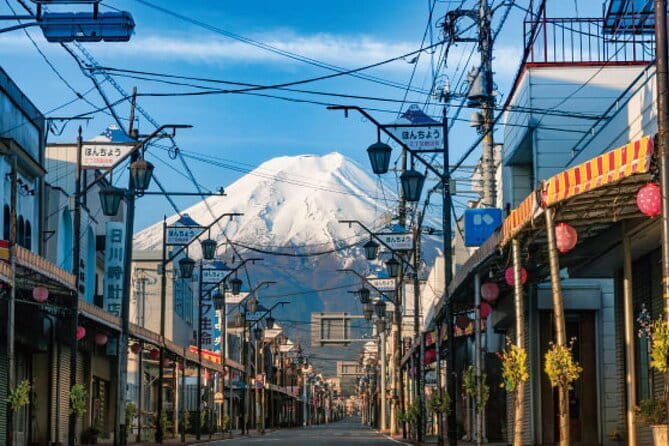
Next is Saiko Iyashi no Sato Nenba, often described as a healing village (about 1 hour, admission included). This is your cultural and slower pace stop—less about chasing angles and more about soaking up nostalgic scenery.
I like this kind of stop on a day trip because it balances the high-energy viewpoint schedule. After parks and city panoramas, Nenba gives you permission to slow down and observe at walking pace. It also tends to be easier on your feet than a long hike, which matters on a day where you already started in central Tokyo.
What to expect: the tour frames it as nostalgic, healing-village scenery. So plan to take your time walking through and reading the vibe rather than sprinting for photos.
If your group includes anyone who gets tired of viewpoint crowds, this is often the stop where everyone regroups and resets their energy.
Back to Shinjuku by 6 pm: timing, guide help, and cash rules
You’ll return to Shinjuku Station, with a scheduled arrival around 6:00 pm. The tour ends back at the meeting point area, so it’s a true “day-trip loop,” not a one-way drop.
On the ground, the day runs like this: meet on time, move efficiently between stops, and keep your belongings organized for quick exits from the bus. The tour also warns that schedules can shift due to traffic, road conditions, and driver working-hour rules effective from April 1, which can reduce intermediate stop time during congestion.
That’s why being prompt at each stop matters. Not because someone will scold you, but because the guide and driver are working within tight road schedules. One key detail that’s been praised before: the guide approach can be helpful and clear, with strong English and culture context. On some departures, the guide has been Sam, and he’s been noted for polite guidance and in-depth Japanese culture explanations that are easy to follow.
Also: if Mount Fuji or other stops get shortened due to conditions, you’ll still have the structure of the day. But don’t plan your own separate dinner reservations immediately at Shinjuku. Leave buffer time.
Finally, cash: the tour specifically notes many spots accept cash only. That’s not a small inconvenience—plan for it. Withdraw yen in advance so you’re not rushing for an ATM when your best viewing moment is happening.
Price and value: how $77 really works for this Mount Fuji day
At $77 per person, this isn’t an “only gas-money” tour. It includes transportation, parking fees, toll fees, consumption tax, and entry for at least Saiko Iyashi no Sato Nenba. Admission is also listed as included at Arakurayama Sengen Park, and Oishi Park includes admission when it’s on the schedule (April–June).
The value logic is simple: a Mount Fuji-area day from Tokyo is time-expensive to organize, and viewpoint routes are harder to stitch together without a car. You’re paying for that routing, plus the ticketed entries that would cost time (and sometimes hassle) if you tried to DIY everything.
Meals aren’t included, so your biggest variable cost is lunch. That’s good for flexibility. If you’d rather eat at a casual spot you pick, you’ll like this setup. If you want a guaranteed meal included, you’ll need to plan it yourself.
Given the time commitment—about 7 to 8 hours—this price makes sense if you want a guided plan, ticketed stops, and zero navigation stress.
Who this tour suits best (and who should skip it)
This tour is a strong fit if:
- You’re short on time in Tokyo and want a structured Mount Fuji day trip without renting anything.
- You enjoy a mix of viewpoints and walking streets, like Fujiyoshida Honcho Street.
- You want a culture-and-scene day, including Saiko Iyashi no Sato Nenba rather than only staring at mountains.
- You travel with a moderate fitness level and can handle some walking and mild hiking elements.
You might want to choose differently if:
- You need a guaranteed Mount Fuji photo. Visibility can change fast, and one departure had Fuji completely hidden.
- You dislike crowds around popular viewpoints.
- You’re the type who regularly runs late. This tour is built on on-time departures.
Should you book this Mount Fuji tour?
If you’re dreaming of a classic Mount Fuji itinerary from Tokyo, this is one of the more practical ways to do it in a single day. The combination of Arakurayama Sengen Park, the Fujiyoshida stroll, and the included cultural stop at Saiko Iyashi no Sato Nenba gives you more than just a single viewpoint chase.
Book it if you can handle variable weather, you’ll arrive on time, and you’re ready to bring yen and comfortable shoes. Skip or rethink if you’re only satisfied with a perfect Mount Fuji sky photo, because the day’s success depends partly on clouds and timing.
FAQ
FAQ
What time does the tour start and when do we return?
The meeting time is 8:20 am at Kogakuin University Shinjuku Campus, and the tour departs around 8:30 am. The scheduled arrival back at Shinjuku Station is 6:00 pm, and the tour ends back at the meeting point.
How long is the Japan’s Best Mount Fuji Tour?
It runs about 7 to 8 hours total (approx.), depending on traffic and conditions.
Is lunch included?
No. Lunch is not included, and you’ll have about 90 minutes in Fujiyoshida for lunch.
What’s included in the tour price?
Transportation (from the meeting point), parking fees, toll fees, consumption tax, and the Saiko Iyashi no Sato Nenba entrance fee are included. Admission is also included at Arakurayama Sengen Park, and Oishi Park admission is included when that stop is part of your departure.
Do I need cash?
Yes. Many spots around Mount Fuji only accept cash, so it’s smart to carry enough yen.
How many people are on the tour?
There’s a maximum of 8 travelers per individual booking. It’s a join-in tour, so other guests from different bookings may also be on board.
Is this tour refundable or changeable?
No. It’s non-refundable and cannot be changed for any reason.