REVIEW · TOKYO
Calligraphy Experience at Tokyo Ginza and Tsukiji Area
Book on Viator →Operated by Hanabusa_calligraphy · Bookable on Viator
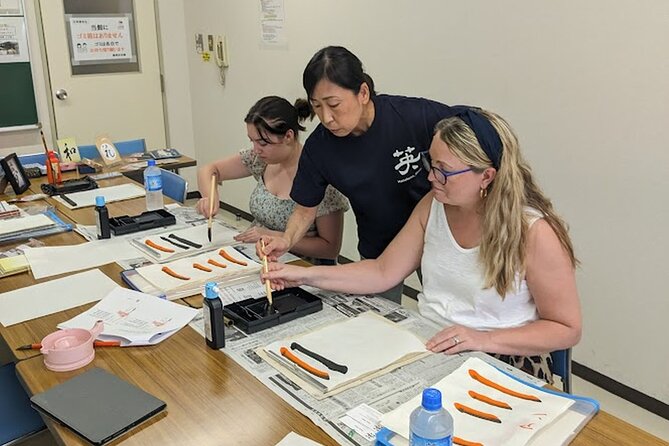
Learning Japanese calligraphy in Tokyo feels oddly calming. In a private lesson near Tsukiji and Ginza, you learn brush control step by step, then write a word you choose and take the finished piece home. It is hands-on, practical, and you get lots of room to ask questions without the pressure of a mixed group.
I especially like two things: the take-home calligraphy you can display right away, and the fact that instruction comes from a pro teacher authorized by the Japan Educational Calligraphy Federation. The only real consideration is logistics: private transportation is not included, so you’ll want to plan how to get to the Tsukiji meeting point yourself.
In This Review
- Key Highlights You’ll Actually Use
- Why Ginza and Tsukiji Pair Perfectly With Calligraphy
- Getting There at 3-chōme-15-1 Tsukiji (and Staying Sane)
- The 90-Minute Private Lesson: What You’ll Do With the Brush
- Step 1: Basic pattern writing
- Step 2: A challenge to write a difficult character
- Step 3: Choose your favorite Japanese word(s)
- Who Teaches It and Why It Matters
- Your Supplies: What’s Included (and Why You Don’t Need to Shop)
- Take-Home Calligraphy: Turning a Class Into a Souvenir
- Adding Ginza Shopping and Tsukiji Food Without Making the Day Complicated
- Price and Value: What $51.24 Buys You
- Who This Private Calligraphy Workshop Fits Best
- Quick FAQ for Planning Your Tokyo Calligraphy Day
- FAQ
- How long is the calligraphy experience?
- Is this a private class?
- Where does the experience start and end?
- What is included in the lesson?
- What is not included?
- Do I get to take my calligraphy home?
- Is it easy to reach by public transportation?
- Will I get confirmation after booking?
- Do most people be able to participate?
- Is there free cancellation?
- Should You Book This Calligraphy Class Near Ginza and Tsukiji?
Key Highlights You’ll Actually Use
- Private class format where only your group participates, so you can ask questions freely
- Pro instruction from an authorized calligraphy professional (with an assistant who helps with the basics)
- A structured 90-minute progression from patterns to a tougher character and then your chosen word
- All tools provided including brush, ink, paper, and an ink-stone style setup
- A flexible outcome because you finish with calligraphy for a word(s) you pick
- Easy pairing with local time for Ginza shopping and dinner in the Tsukiji food area
Why Ginza and Tsukiji Pair Perfectly With Calligraphy
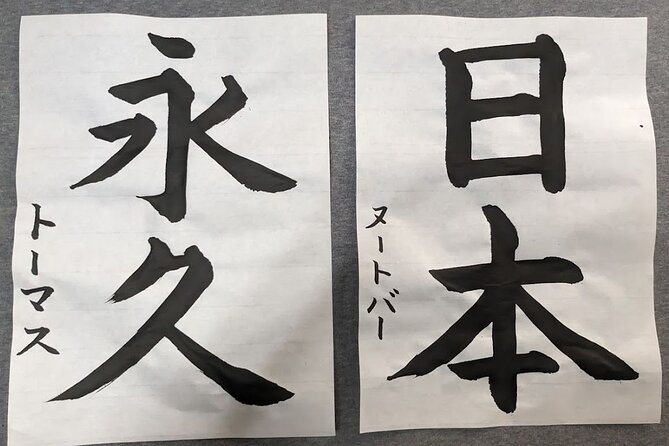
Tokyo lessons can be either street-tour busy or museum-quiet. This one is neither. You start with something deeply Japanese and tactile: ink, brush, paper, and the discipline of making each stroke count. Then the experience naturally connects to two neighborhoods that are easy to enjoy even if you only have a short window.
Ginza is handy because it is close and it makes it simple to add shopping before or after your class. Tsukiji is handy because it gives you a built-in reason to eat well nearby. In other words, your calligraphy work does not float in isolation. You leave with something personal, and you can keep the day going with food and browsing.
The class itself is also a good match for real travel brains. You are not trying to decode a workbook. You follow a sequence that starts easy on purpose, then adds challenge, then lands on a word that feels meaningful to you. That matters because calligraphy is slow by nature. If you get lost early, it can feel frustrating. Here, the structure helps you keep moving.
One more thing I like: this is a private class. That means the lesson adapts to you, not the other way around. If your hand cramps, you are not stuck watching the clock while everyone else finishes. If you want to ask why something works, you can.
You can also read our reviews of more tours and experiences in Tokyo.



Getting There at 3-chōme-15-1 Tsukiji (and Staying Sane)
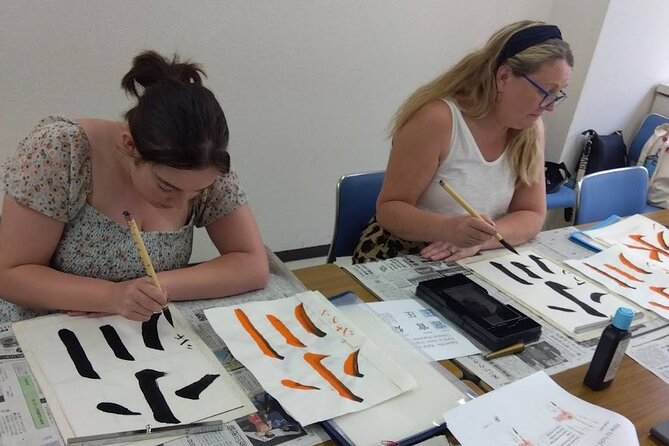
The meeting point is 3-chōme-15-1 Tsukiji, Chuo City, Tokyo 104-0045, Japan, and the experience ends back at the meeting point. That round-trip setup is a travel gift. You do not need to worry about a long transfer at the end after you have been using your hands for 90 minutes.
The information you do get is reassuring: it is near public transportation and most travelers can participate. Also, the experience is described as basically no risk, which is a nice way of saying you are not doing anything dangerous with hot wax, heavy machinery, or sharp tools that require a safety course. Still, treat it like a brush-ink activity: take your time, wear sleeves that you do not mind getting close to ink stains, and plan for a normal human level of mess.
Bring your own timing strategy. Tsukiji area streets can be busy depending on the time of day. So aim to arrive a bit early, especially if you are navigating from a station. A calligraphy lesson is best when you are not rushing in.
Also note that the tour uses a mobile ticket. That reduces paper fuss, which is always good when you already have a wallet full of transit cards.
The 90-Minute Private Lesson: What You’ll Do With the Brush
The workshop runs about 1 hour 30 minutes. Private means your time is not shared. You get a tutor who can watch your strokes and correct your hand position as you go.
The lesson moves in three clear steps:
Step 1: Basic pattern writing
This is where you build control. You start with basic patterns instead of jumping straight into an impressive character. That is not “practice for practice’s sake.” It is how you learn to handle the brush and ink so the later strokes feel possible.
If you have never done brush writing, you will learn quickly that calligraphy is not just about shape. It is about pressure, direction, and timing in the movement. Starting with patterns prevents you from trying to force beauty too early.
Step 2: A challenge to write a difficult character
Next, the lesson levels up with a character that is harder. This is a smart move for travelers because it gives your brain a win and a problem at the same time. You are learning, but you are not stuck in a never-ending “beginner forever” stage.
The presence of an assistant helps here. In the past classes, Kenji-san has been described as a kind, funny facilitator who supports during the basics, which is exactly what you want when you are learning a new tool.




Step 3: Choose your favorite Japanese word(s)
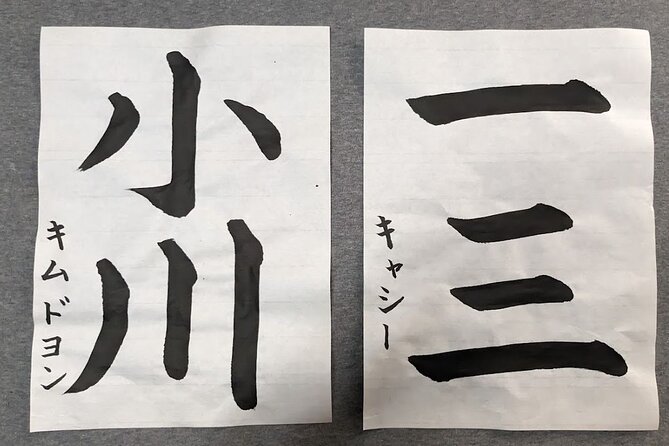
Then you pick the word(s) you want to write. That part is what turns the lesson from a simple activity into a keepsake. You are not guessing which character is easiest for a tourist. You choose something personal, and the teacher helps you get it onto paper correctly enough to feel proud of it later.
You also get cultural context tied to the writing system. One class experience specifically mentioned learning about kanji, hiragana, and katakana, which is a helpful way to make the strokes feel connected to real Japanese writing rather than just pretty symbols.
Who Teaches It and Why It Matters
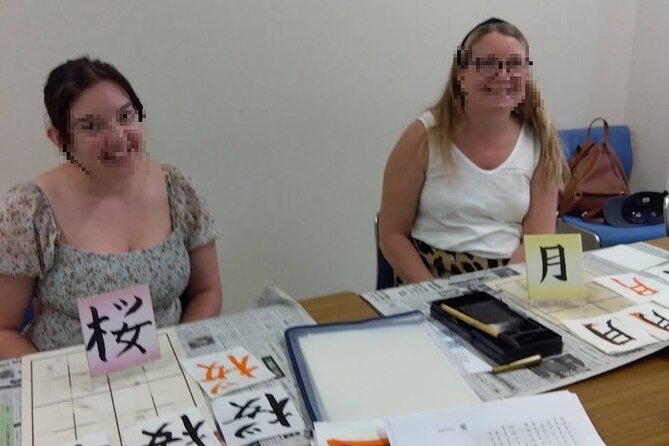
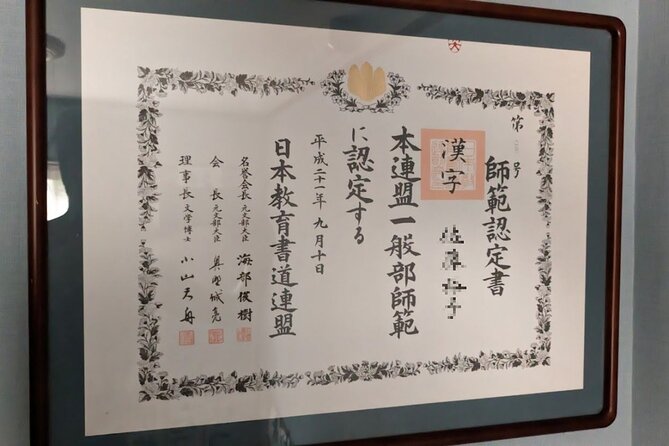
This experience is taught by an instructor authorized by the Japan Educational Calligraphy Federation and described as a professional calligraphy writer. That is not marketing fluff. For calligraphy, authorization and real writing practice matter because the difference between good and mediocre strokes often comes from technique you cannot guess.
Based on what people have experienced in prior sessions, the teacher is often named Yuko-sensei (sometimes written as Yuki-sensei) and there is an assistant named Kenji-san. Across the feedback, the teaching style is consistent: patient instruction, step-by-step guidance, and a clear willingness to answer questions.
That patience comes up again and again in the way people describe the class. It is especially important if you are bringing kids, teens, or anyone who gets nervous trying art. A private setting makes that easier because the tutor can slow down without holding anyone else back.
Another helpful detail: photos are taken and shared. You cannot always rely on your own shaky phone camera to capture calligraphy brushwork and ink texture well. Having documentation after the class is a practical add-on because your final pieces are meant to be kept.
Your Supplies: What’s Included (and Why You Don’t Need to Shop)
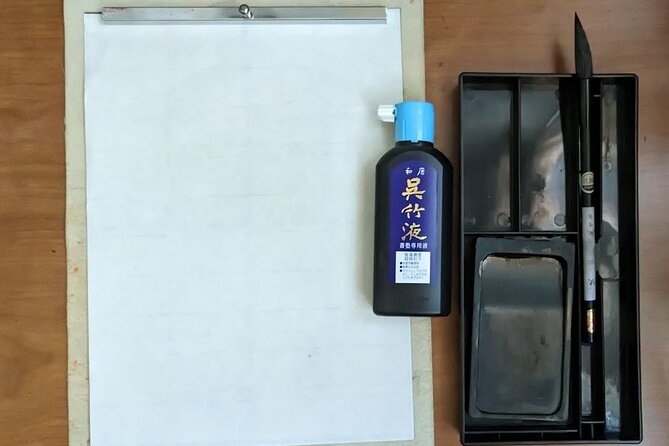
Included tools: brush, ink, paper, and a paper-stone style setup. That means you do not need to hunt for supplies in Tokyo before class, which can be a time sink if you are already doing too much sightseeing.
It also removes a common travel worry: beginners often overthink materials. With calligraphy, the brush and ink behave differently than a pen. If you try to buy your own gear without guidance, you might end up with supplies that are fine for writing but not right for calligraphy practice.
So the value here is simple: you show up, you learn, and the instructor has you working with appropriate tools for the strokes you are trying to make. That lets you focus on learning instead of shopping.
Take-Home Calligraphy: Turning a Class Into a Souvenir
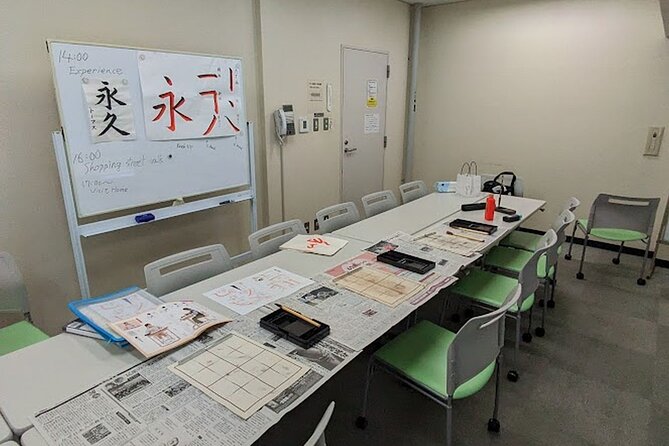
At the end, you take your creations for display at home. This is one of the biggest reasons the class gets strong satisfaction. A lot of “activities” produce something you fold, photograph, and forget. Calligraphy is different. Your piece has character and texture, and it is genuinely meant to be kept.
The structure helps you make that happen. Since you start with patterns, then write a challenging character, then finish with your chosen word(s), the final result feels earned. It is not random. It reflects your effort and the tutoring you received.
Practical tip: when you handle your finished work, treat it like paper art, not like a typical craft sheet. Let it settle as instructed by your tutor, then store it flat so the ink and paper stay looking their best.
Adding Ginza Shopping and Tsukiji Food Without Making the Day Complicated
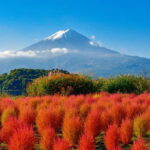
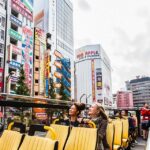
One of the clever parts of this experience is that it does not ask you to choose between “culture” and “fun.” The plan suggests heading out for shopping in Ginza nearby, and then enjoying dinner after your class at the nearby Tsukiji food street.
You can think of it as a rhythm:
- morning or midday workshop that gives you a calm focus
- then a change of pace to shopping streets
- then dinner where the area is known for eating
This is particularly useful for short stays. If you have only a limited number of hours in central Tokyo, you want activities that create momentum, not logistical headaches.
Also, calligraphy plus food is just a good cultural pairing. The act of writing connects you to language and writing systems, and then your dinner connects you to everyday Japanese life. You are not just collecting sights. You are collecting experiences that make the culture feel usable.
Price and Value: What $51.24 Buys You
The price is $51.24 per person for about 1 hour 30 minutes, with a mobile ticket. It is also often booked about 34 days in advance, which tells me people tend to plan this like a real appointment rather than a last-minute add-on.
Is it cheap? No. But in private lessons, “cheap” is rarely the point. What you are paying for is:
- private instruction with room for questions
- a structured sequence that gets you to a finished product
- professional teaching credentials
- all supplies included
- take-home artwork, plus photos taken during the session
If you compare it to group classes, the math usually tilts toward private value because your time is yours. You spend 90 minutes learning and refining strokes instead of waiting your turn. And you leave with something you can display, not just watch.
The “basically no risk” note also matters in value terms. Art workshops often come with uncertainty about what you will actually end up with. Here, the outcome is clear: you make calligraphy for your chosen word(s) and take it home.
Who This Private Calligraphy Workshop Fits Best
This is a strong fit if you want a hands-on Tokyo experience that is not trapped inside a museum timeline. It is also a great option if you like learning things with your hands rather than just sightseeing with your feet.
It tends to work well for:
- first-timers who want structure and patience
- families who want something shareable (private means the teacher can adjust)
- anyone who wants a meaningful souvenir tied to your own chosen word
If you are the type who wants a long, guided walking tour with multiple stops and lots of external viewing time, you might find this too focused. This is about writing. The neighborhoods around it are for before and after, not for a big sightseeing itinerary.
Also, if you hate being judged by your own shaky penmanship, take a breath. The class is designed to start with basics and step up gradually. You are not expected to come in already fluent in brush strokes.
Quick FAQ for Planning Your Tokyo Calligraphy Day
FAQ
How long is the calligraphy experience?
It lasts about 1 hour 30 minutes.
Is this a private class?
Yes. It is a private tour/activity, and only your group participates.
Where does the experience start and end?
It starts at 3-chōme-15-1 Tsukiji, Chuo City, Tokyo 104-0045, Japan, and ends back at the meeting point.
What is included in the lesson?
Tools are prepared, including brush, ink, paper, and a paper stone (and similar materials).
What is not included?
Private transportation and personal travel insurance are not included.
Do I get to take my calligraphy home?
Yes. You will take away your creations for display at home.
Is it easy to reach by public transportation?
Yes. The meeting point is near public transportation.
Will I get confirmation after booking?
Confirmation will be received at time of booking.
Do most people be able to participate?
Most travelers can participate.
Is there free cancellation?
Yes. Free cancellation is available up to 24 hours before the experience start time for a full refund.
Should You Book This Calligraphy Class Near Ginza and Tsukiji?
If you want one Tokyo activity that feels personal, creative, and genuinely Japanese, this is an easy yes. The private format, pro instruction, and clear step-by-step progression mean you are not just observing. You make something you can display at home.
Book it especially if you like souvenirs that are not mass-produced and you want to learn a real skill with a teacher who can explain as you go. Plan your transit so you arrive calmly, then let the brushwork do its thing. You will walk out with a word you chose, written in ink, with technique you can feel in your hand.