A tour of knives and tableware sounds niche, until you see how serious Japan gets. This one sticks to Asakusa Kappabashi, where you can learn what makes tools and dishes genuinely Japanese, not just pretty in a shop window. I like that the walk is built for shopping-smart curiosity, so you leave knowing what you’re looking at.
Two things I really love: first, the knife craftsmanship lesson connects today’s honyaki steel work back to samurai-era forging traditions. Second, you get help tracking down practical souvenirs that are strongly tied to this neighborhood’s specialty stores, including tableware options that are essentially only found here.
One drawback to consider: you’ll have to decide how much you want to spend on purchases, because the tour itself is cheap at $19, but the shops are very good at getting your attention.
In This Review
- Key things worth your attention
- Why Kappabashi is the shortcut to real kitchen gear
- Meeting Hirose-san at Wawaramachi: fast start, focused walk
- The knife story: honyaki and why water-hardened steel is rare
- Dengama: where the tour teaches you to notice details
- Majimaya: learning the logic behind Japanese products
- TSUCHI-YA ガラスの器と工芸: glassware and crafted table pieces
- Hashitou and Iidaya: practical options for serious kitchen shoppers
- つば屋庖丁店 | CUTLERY TSUBAYA: the knife moment you’ll remember
- Ganso Shokuhin Sample-ya Kappabashi Showroom: why food samples are a cultural obsession
- MUSASHI JAPAN 合羽橋店 Knife & Sake Shop: knives, plus the fun pairing
- Price and value: what $19 buys you on this kitchen-street walk
- Who should book, and who might not love it
- Final call: should you book Hidden Tokyo Kitchen Street?
- FAQ
- FAQ
- Where is the meeting point?
- How long is the experience?
- What is included in the price?
- What is not included?
- Can I choose a language?
- Is it a private group?
- How much does it cost?
- Is free cancellation available?
Key things worth your attention
- Samurai-to-kitchen craft: Honing techniques passed down through Japanese knife making, explained in plain language.
- Rare water-hardened knives: You’ll hear why this style is so hard to make well.
- Handle-able quality: You’re guided toward knives and goods you can actually examine, not just stare at.
- Food samples and ironware culture: Expect more than knives, including showy-but-useful tableware items.
- Efficient local route: The guide keeps the walking tight, including during hot weather days.
- Guide personality matters: Hirose-san’s local Asakusa perspective turns “shopping” into stories and confidence.
Why Kappabashi is the shortcut to real kitchen gear
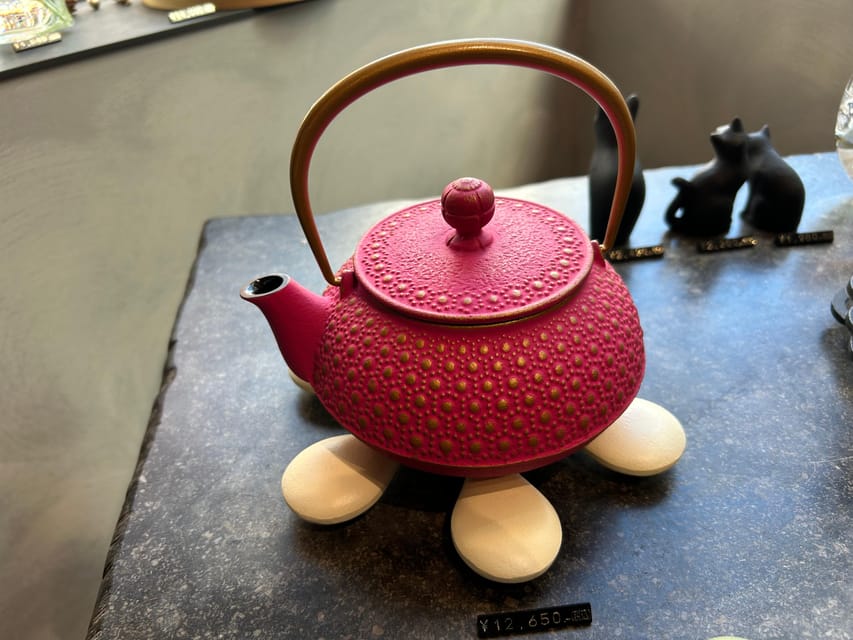
Kappabashi is where Japan treats everyday eating like an art project. The streets are lined with shops that obsess over the stuff you use twice a day, every day—knives, chopsticks, pots and pans, plating pieces, and the kinds of tools that make cooking feel smoother.
What makes this walk especially useful is the way it turns browsing into learning. You’re not just shopping. You’re getting a guided path through places that specialize in different niches, so you can compare what you see and understand why one item costs more, looks different, or feels better in-hand.
And yes, it’s also a strong souvenir zone. If you’re the type who likes gifts that are actually useful (not just decorative fridge magnets), you’ll get that here. The tour focuses on Japanese-made products and on tableware that you can buy as souvenirs from shops that are strongly associated with Asakusa Kappabashi.
You can also read our reviews of more guided tours in Tokyo

Meeting Hirose-san at Wawaramachi: fast start, focused walk
Your tour meets at Wawaramachi metro station, exit 3, and the guide carries a GetYourGuide sign. The listed meeting point coordinates put you right where you can quickly connect to the area without burning time.
This is a private group walking experience, set for about 2 hours. That matters because two hours is long enough to see multiple specialty shops, but short enough that you don’t feel trapped in a lecture.
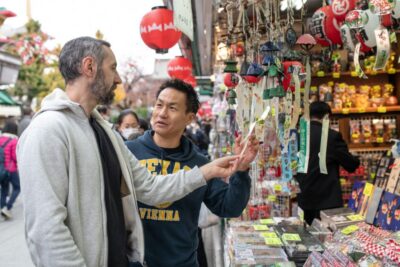
Languages include Japanese, English, and German, which is a big deal if you want questions answered clearly. The guide here is 廣瀬和雄 (often referred to as Hirose-san). The vibe from the tour experience is friendly and patient, with the guide taking time and adjusting to the day’s conditions—heat included.
Practical tip: wear comfortable shoes. This isn’t a sit-and-watch museum route. You’ll be walking shop to shop and stopping often to look at materials, shapes, and details.
The knife story: honyaki and why water-hardened steel is rare
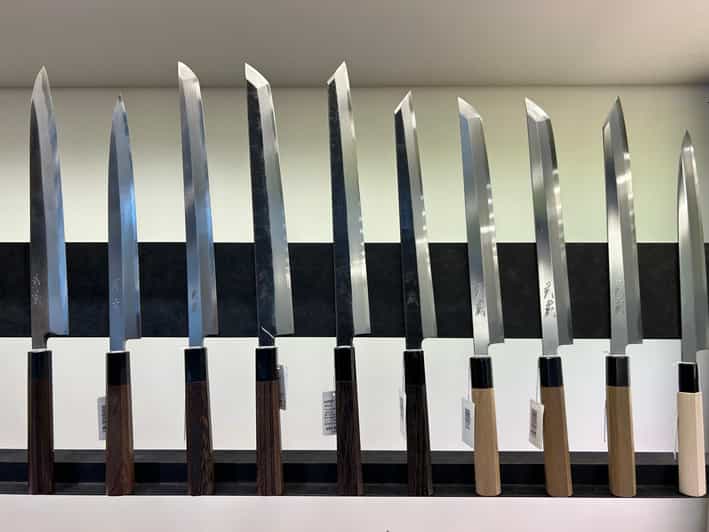
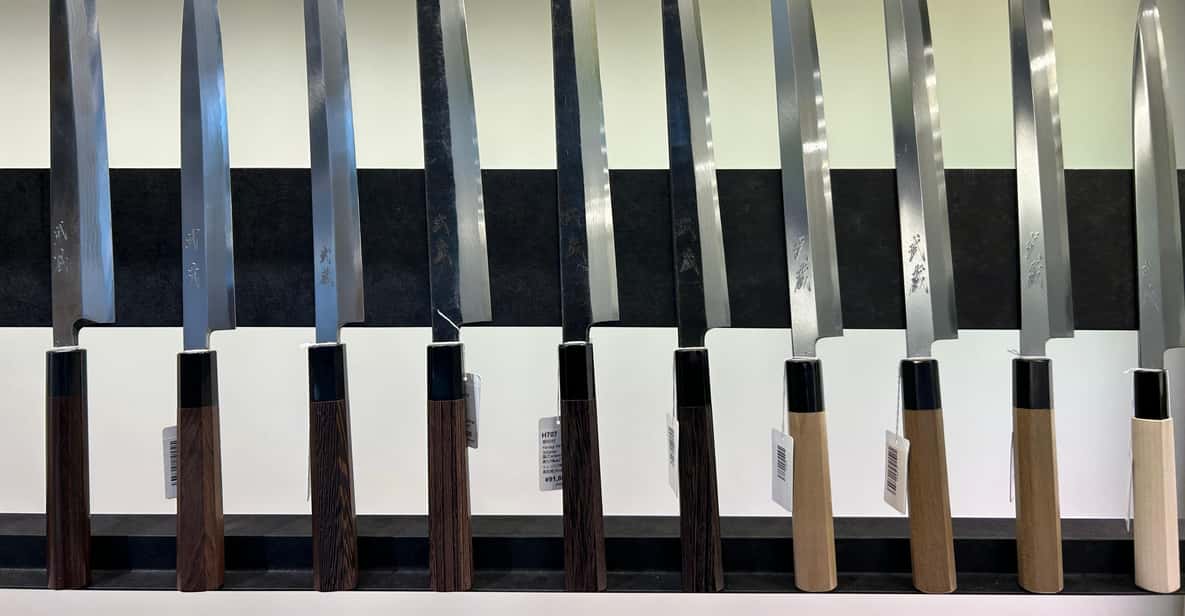
The centerpiece theme is Japanese knives, and not just in the generic sense. The tour explains honyaki—knives made by punching a single piece of steel out of a block, echoing the hon-forging idea used in traditional swordmaking. That wordy explanation becomes simple when you’re actually standing in a knife shop and seeing the results.
From there, the tour highlights a specific style that’s described as extremely rare: water-hardened knives, made with advanced techniques. This is the part where the craft feels real, not marketing talk. You’ll hear why the process is so demanding and what makes it worth paying attention to.
Why you should care: the differences aren’t only about price. They’re about the feel, the edge behavior, and the intention behind the tool. Even if you don’t plan to buy a blade, you’ll start spotting quality cues—like how the steel is treated and how the workmanship looks and feels when you pick up a knife.
Dengama: where the tour teaches you to notice details
The first shop stop is Dengama. This is where the tour’s “look closer” approach kicks in. You’ll see kitchen goods and tableware presented in a way that makes you realize how many categories exist beyond the obvious.
The value here is guidance. Instead of wandering and guessing what matters, you’re shown what to look for. It also helps you avoid impulse buys, because the tour frames what’s special about the items in front of you.
If you’re shopping for gifts, this early stop helps you learn how to identify pieces that are truly tied to Japanese kitchen culture rather than mass-produced souvenirs.
Majimaya: learning the logic behind Japanese products
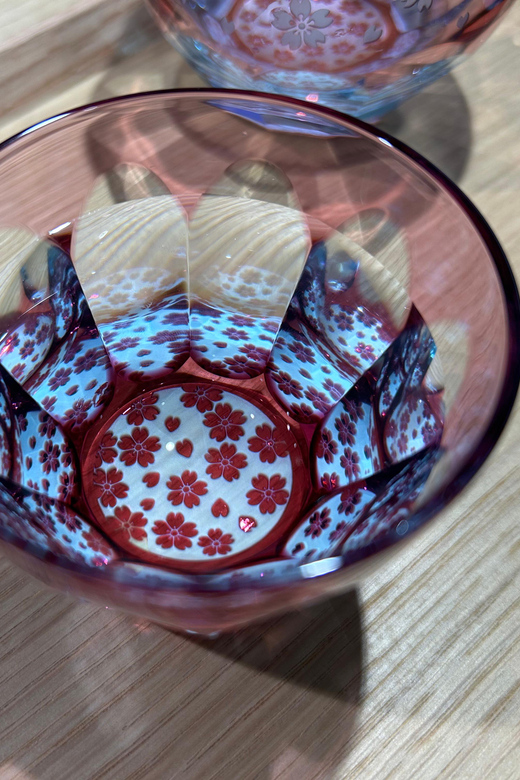
Next up is Majimaya. This stop continues the education angle—how Japanese products are designed around practical use, materials, and craft tradition. The tour keeps pointing out the “why” behind different goods, which makes your later shopping decisions easier.
A nice side effect: once you understand the logic at one store, you can compare across the route. That’s where a guided walk saves you money. You’re less likely to buy something that looks right but doesn’t match your actual needs.






TSUCHI-YA ガラスの器と工芸: glassware and crafted table pieces
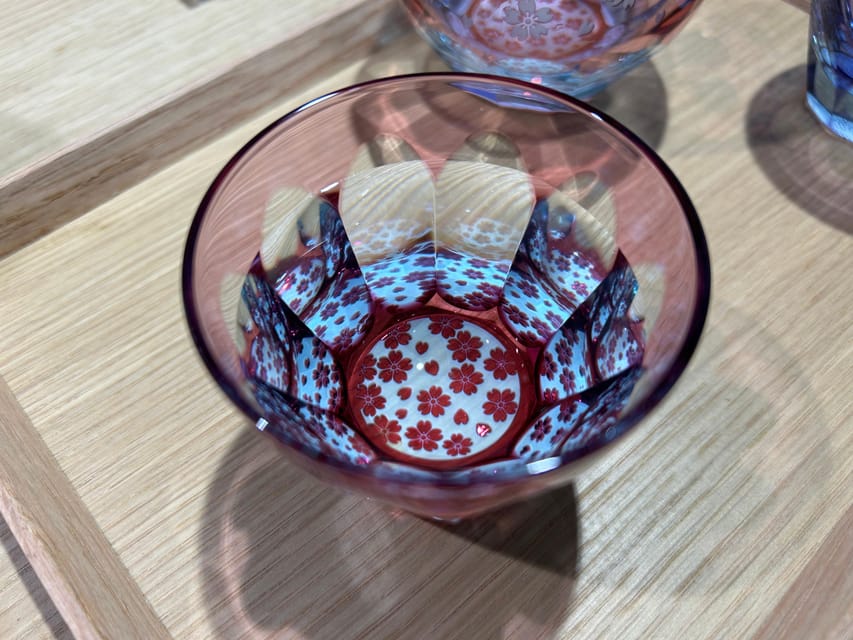
Then you head to TSUCHI-YA ガラスの器と工芸. Here the focus shifts beyond knives, which is important. A kitchen tour that only teaches blades would be too narrow, and this one balances things out with glass tableware and craft objects.
If your goal is dining aesthetics—plating, serving, and the feel of a table setting—this is the kind of stop that can turn you into a more deliberate shopper. You start thinking in terms of how items will work at home: weight, shape, and how glassware looks under everyday lighting.
The drawback: if you only came for knives, you might feel tempted to rush. Don’t. Even one careful look at the crafted tableware category can sharpen your souvenir taste.
Hashitou and Iidaya: practical options for serious kitchen shoppers
The next stops, Hashitou and Iidaya, keep widening the range. You’ll see more specialized kitchen tools and tableware options, and the tour style here is to help you connect what you see to what the products are actually used for.
This is also where a guide earns their fee. In a place like Kappabashi, the “best” shop depends on what you want. The guide’s job is to point you toward the right corner for your goals—whether that’s utensils, tableware, or something visually unique you can’t get anywhere else.
Think of these stops as pattern recognition. By the time you hit the knife stores later, you’ll have trained your eyes.
つば屋庖丁店 | CUTLERY TSUBAYA: the knife moment you’ll remember
The tour then arrives at つば屋庖丁店 | CUTLERY TSUBAYA, one of the key experiences. This is where the craft focus turns intense.
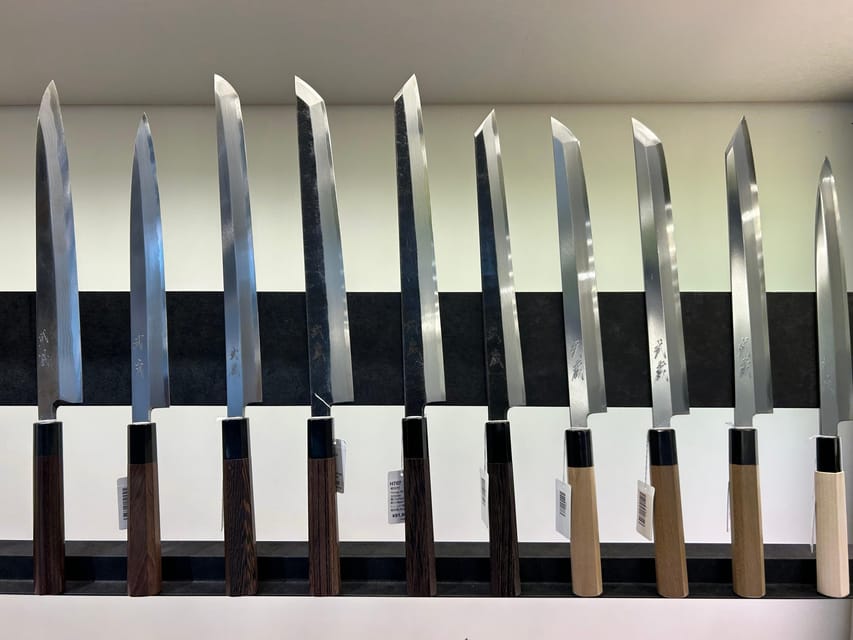
Expect the knife-making story tied directly to materials and process. The information provided emphasizes that the sword techniques passed down to modern knives are part of why these tools are special. You’ll also get attention on honyaki concepts and the idea of single-piece steel creation, explained through what the shop sells.
The highlight described for this style is the chance to see the sophisticated beauty up close. The way it’s framed matters: the goal isn’t just to admire from a distance. It’s to handle the workmanship and understand why it makes people smile when they pick it up—because the object feels like a craft project, not a commodity.
If you’re shopping: this is where you’ll want to slow down and ask yourself what you actually cook with. A great knife is personal. Even if you don’t buy one, you’ll leave with a much better sense of what quality looks like.
Ganso Shokuhin Sample-ya Kappabashi Showroom: why food samples are a cultural obsession
Next is Ganso Shokuhin Sample-ya Kappabashi Showroom. This is the “wow” detour that keeps the tour from becoming a single-theme blade crawl.
Food samples in Japan aren’t just decoration. They’re part of how restaurants present food to customers, and the tour connects that cultural role to the shop’s specialty. You’ll see craftsmanship aimed at making dishes look real, which is exactly why this belongs in a kitchen-stuff tour.
You might not think of food samples as kitchen gear, but they fit the bigger theme: Japan’s attention to presentation and detail in everyday eating.
If you’re a souvenir shopper, this stop also gives you a fun option that’s visually memorable. If you’re a foodie, it gives you a way to understand restaurant culture beyond menus.
MUSASHI JAPAN 合羽橋店 Knife & Sake Shop: knives, plus the fun pairing
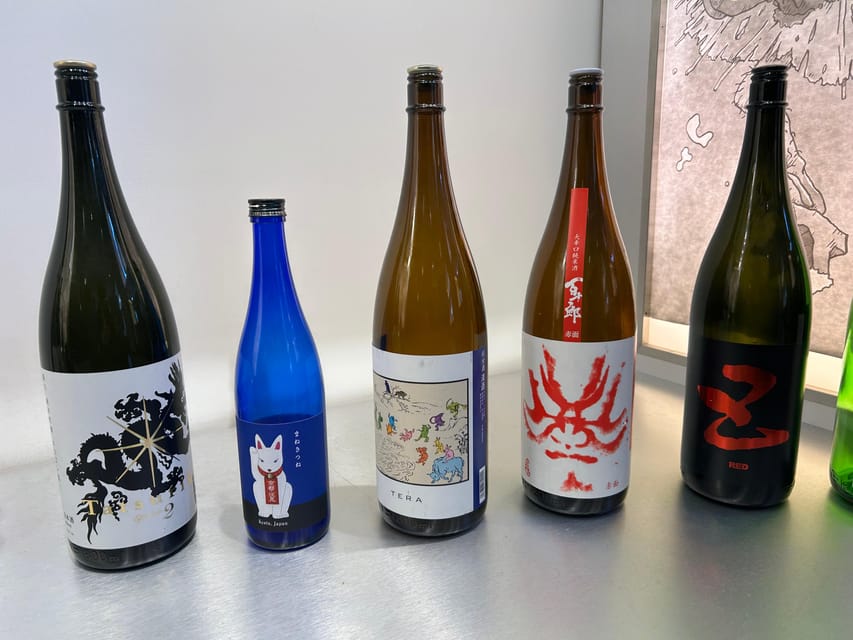
Finally you reach MUSASHI JAPAN 合羽橋店 Knife & Sake Shop. This place brings the tour’s knife energy together with a broader “kitchen and hospitality” mindset. You’ll still be in the knife zone, but the store theme leans playful, including a sake shop angle.
This is a good last stop because it often gives souvenir shoppers options for gifts beyond just utensils. You get one more chance to find something Japanese-made that matches the vibe you want to bring home.
Also, by the end of a route like this, you’ll usually have learned enough to shop faster. That’s where a guided walk pays off—you already know what you’re looking for, so you spend your time deciding, not guessing.
Price and value: what $19 buys you on this kitchen-street walk
At $19 per person for 2 hours, the math is simple: you’re paying for time saved and confusion reduced. The tour includes a tour guide and the walking tour, but shopping costs are on you.
So the value isn’t that you’ll get expensive items bundled in. The value is that the guide helps you:
- Find quality in the right places without wasting hours wandering
- Understand what makes specific Japanese products special, especially knives and tableware
- Shop efficiently even when the day is hot and you’d rather be moving
- Make smarter souvenir choices, including tableware that’s strongly associated with Asakusa Kappabashi
In other words, the low price is because the guide is the product. And based on the praised parts of the experience, that guide factor matters a lot—Hirose-san is described as kind, patient, and willing to take time, with local Asakusa stories (including Sanja Matsuri) that make the stops feel alive, not transactional.
Who should book, and who might not love it
This tour is a great fit if you:
- Love food, cooking, or the “how stuff is made” side of culture
- Want Japanese kitchen souvenirs that are practical, not generic
- Are curious about knives but don’t want to feel lost in technical jargon
- Like guided shopping where you get context and comparison
It can also work well for families. One of the strongest notes from the experience is that it’s considered good for kids, likely because the stops are visual and varied—knives, glassware, and food samples.
You might skip it if you:
- Only want big sightseeing landmarks and don’t care about kitchen goods
- Hate shopping environments entirely
- Are determined not to handle or evaluate items at all (this walk is built around looking closely)
Final call: should you book Hidden Tokyo Kitchen Street?
If you want a Tokyo experience that feels local and practical, I think this is an easy yes. The “Hidden Tokyo” part isn’t a marketing fog. It’s the reality that Kappabashi rewards people who know where to look—and a guide like Hirose-san makes that learning efficient.
Book it if you’re the type who likes buying one good, useful souvenir instead of ten random ones. It’s also a smart pick if you like questions. The guide’s style is described as taking time, and you’ll get restaurant and activity tips too—one standout was a recommended soba stop that was considered excellent.
Skip it only if knives, tableware, and food-sample culture leave you cold. Otherwise, you’ll come away with better taste and a stronger appreciation for Japanese craftsmanship.
FAQ
FAQ
Where is the meeting point?
Meet at Wawaramachi metro station, exit 3. The guide will have a sign stating GetYourGuide.
How long is the experience?
It lasts about 2 hours.
What is included in the price?
The tour guide and the walking tour are included.
What is not included?
Shopping costs at each stores are not included, and transportation expenses are self-pay.
Can I choose a language?
Yes. The live tour guide offers Japanese, English, and German.
Is it a private group?
Yes, it’s listed as a private group.
How much does it cost?
The price is $19 per person.
Is free cancellation available?
Yes, free cancellation is available up to 24 hours in advance for a full refund.