REVIEW · TOKYO
From the Imperial Palace to Odaiba : Time travel to Tokyo
Book on Viator →Operated by Matteo Leone · Bookable on Viator
Tokyo moves like a living story.
This private tour strings together four very different chapters of the city, from Edo-era castle grounds in the Imperial Palace East Gardens to futuristic Odaiba. I especially like the way the route doesn’t just list sights—it links architecture and city planning across centuries, so each stop makes the next one easier to understand. Another big plus is the guide, Matteo Leone, who keeps the day moving and answers your questions in real depth. One consideration: you’ll do a fair bit of walking, so this isn’t the best fit if you have reduced mobility or need stroller/walker support.
I also like that it’s private and focused. Only your group goes along, and you get a guide’s eye for what matters, whether it’s the European-style facade outside Tokyo Central Railway Station or the calm geometry of Tokyo International Forum. You’ll still want to plan for public transport costs and your own meals, since those aren’t included, even though admission at the main stops is free.
In This Review
- Key highlights to look for
- From Edo Castle grounds to modern Tokyo: what this tour is really about
- Imperial Palace East Gardens: where Edo Castle still leaves fingerprints
- Tokyo Central Railway Station: red brick, big transitions, and real city life
- Tokyo International Forum: glass-and-steel modernity at a slower pace
- Odaiba: the artificial island where Tokyo shows its future-friendly face
- Price and value: what $91.21 buys (and what it doesn’t)
- How the 6 to 8 hours will likely feel in real life
- Why this tour is ideal for first-timers (and good even if you’ve been before)
- Who should book this tour
- Should you book this tour?
- FAQ
- FAQ
- What is the duration of this tour?
- How much does the tour cost?
- Where does the tour start and where does it end?
- Is hotel pickup included?
- Do I need to pay admission fees at each stop?
- What about public transportation costs?
- Is the tour private?
- What’s included in the tour price?
- Do I get a mobile ticket?
- What kind of fitness level is required?
- Can I cancel for a full refund?
Key highlights to look for
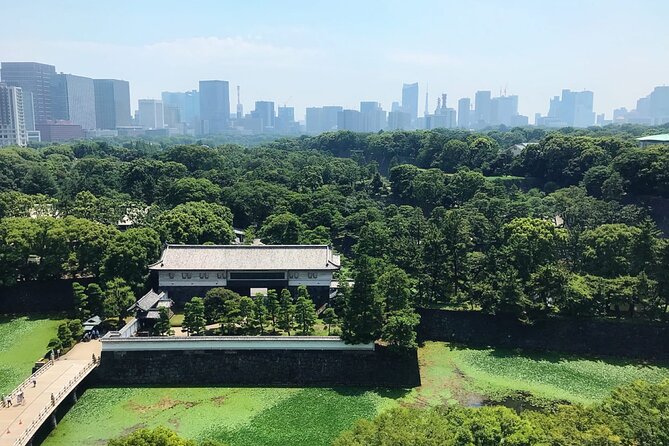
- A history-to-future route that connects Edo Castle ruins to today’s Tokyo Bay skyline
- Matteo Leone’s on-the-ground guidance, with lots of history and culture questions answered
- Free entry at every main stop, so you’re not racing between ticket lines
- Real contrast in Tokyo styles: red brick station, modern glass forum, and Odaiba’s island architecture
- Hotel pickup when you’re centrally located, plus help with getting transport squared away
- Private group flow, so you can ask questions without juggling a crowd
From Edo Castle grounds to modern Tokyo: what this tour is really about
Tokyo can feel like a bucket of neighborhoods you’re supposed to sample. This tour gives you a cleaner thread: how the city changes, and how it keeps older DNA under newer buildings. You don’t just see places—you learn how they relate.
The day moves through four stops that act like time markers. The Imperial Palace East Gardens remind you that Tokyo started as a stronghold. Tokyo Central Railway Station shows how the capital embraced outside design ideas while staying a working rail hub. Tokyo International Forum is a quieter pause in a modern, glass-and-steel mood. Then Odaiba shifts you to the next phase: engineered waterfront, wide open spaces, and the kind of Tokyo you often see in media and weekend outings.
And yes, it helps that the main stops have free admission. When you don’t pay for tickets at each place, you spend your time looking instead of budgeting.
You can also read our reviews of more tours and experiences in Tokyo.



Imperial Palace East Gardens: where Edo Castle still leaves fingerprints
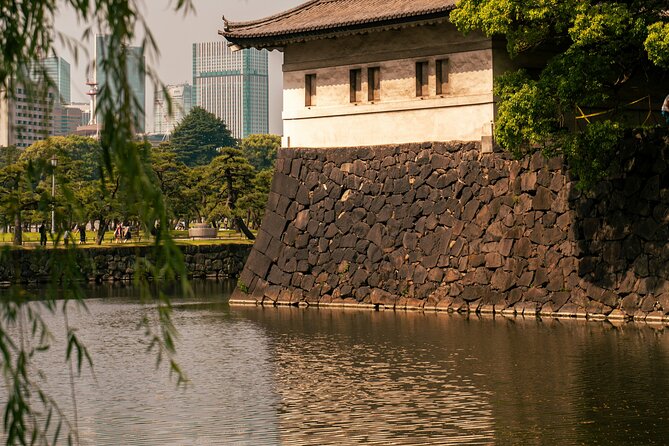
Start in the East Gardens of the Imperial Palace, walking through a space tied to Edo Castle ruins. Even if you’ve only seen Edo-era history in photos, this is one of those places where scale and location do a lot of teaching.
This is the kind of stop that works best with a guide’s narration. You can read about Edo Castle, but on the ground, you can better picture the decision-making behind castle placement, the logic of defenses, and how that layout shaped later Tokyo growth. The gardens are calm, and the walk is paced—about 1 hour 30 minutes—so it doesn’t feel like a sprint through a “must-see.”
What I like here is the baseline effect. Once you see this area as a former shogun stronghold, later architecture and city organization in Tokyo start making more sense.
Practical tip: wear comfortable shoes. Even in a garden setting, Tokyo walking adds up over a full day.
Tokyo Central Railway Station: red brick, big transitions, and real city life
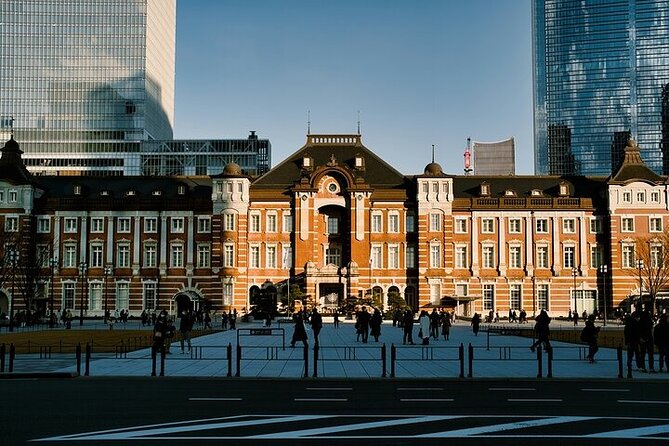
Next comes Tokyo Central Railway Station—also known for its red brick facade with a European feel. This stop is short enough to keep energy up (about 1 hour), but it’s powerful because it’s not just a landmark. It’s a functioning nerve center.
Here’s the lesson: Tokyo didn’t reinvent everything from scratch. It blended influences, then kept growing on the same core infrastructure. A red brick frontage can feel “Old World,” but it sits right inside the system that moves millions. That contrast is the point.
This is also an easy stop for your camera. The station facade gives you a strong visual anchor, and it helps you recognize how Tokyo stacks eras side by side without needing to label them.
One possible drawback of this kind of stop: stations are busy. The good news is that the tour’s structure gives you time to observe without feeling trapped in the rush.
Tokyo International Forum: glass-and-steel modernity at a slower pace
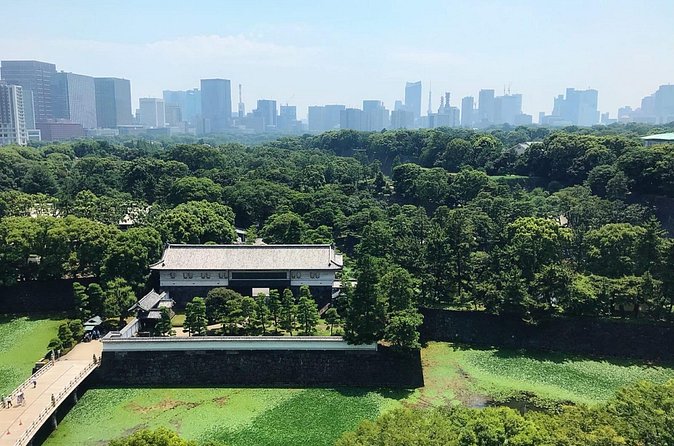
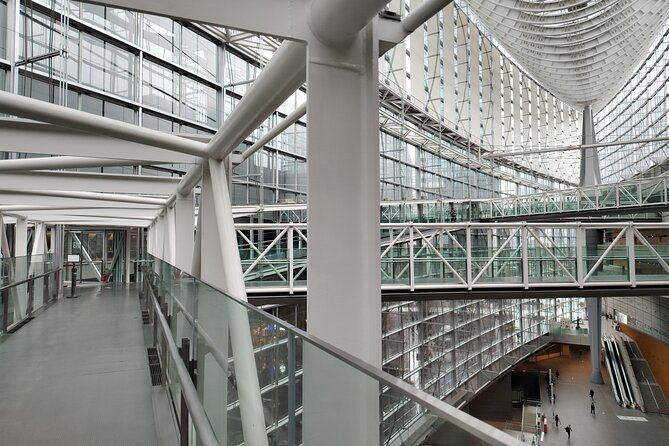
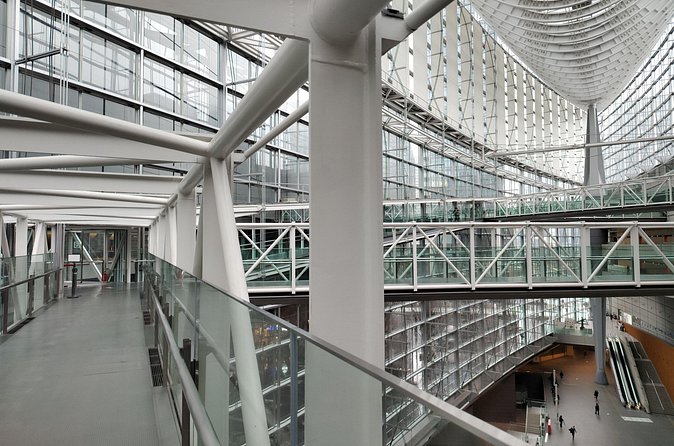
After the busy momentum of a major station, Tokyo International Forum feels like a breather. Expect a modern glass and steel building with a distinctive shape, and a spacious, calmer atmosphere to pause for about 1 hour.
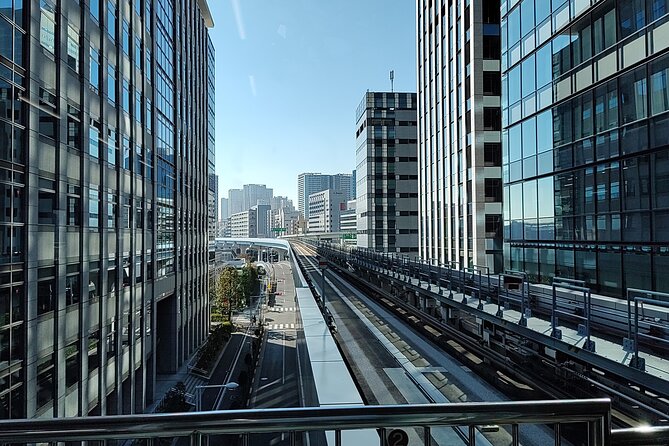
This stop matters because it changes your perspective on “modern Tokyo.” Instead of just chasing neon districts, you get a planned civic space designed for culture and public events. You’re not only looking at a building—you’re seeing how modern Japan creates architectural identity in the center of the city.
If you like architecture, this is one of the more satisfying legs. You can look at the structure and imagine how it would shape foot traffic, sight lines, and daily routines around it.
Tip: use this hour to reset. Grab water, stretch your legs, and then you’ll be ready for Odaiba’s waterfront mood.
Odaiba: the artificial island where Tokyo shows its future-friendly face
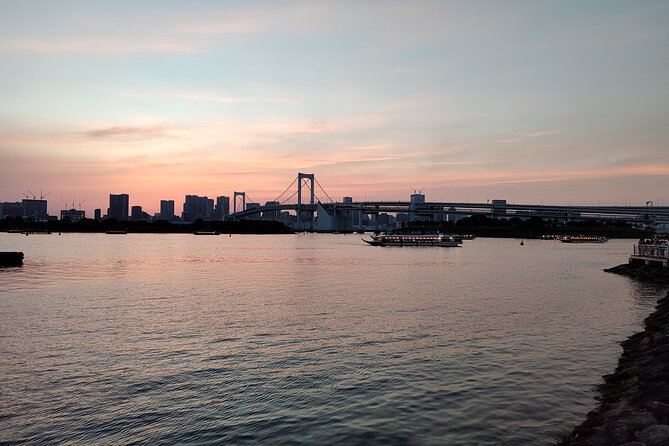
Then the tour lands in Odaiba, an artificial island in Tokyo Bay. You’ll get around 2 hours here, which is the right length to do two things: take in the views and actually relax a bit.
Odaiba’s appeal is the mix. You get panoramic water views and open spaces, plus modern architecture that feels less “traditional Japan” and more designed for strolling, shopping, and weekend outings. It also gives you a different sense of scale—Tokyo Bay can make even familiar city lines feel bigger and stranger.
This is a great ending point because it’s not just another photo stop. It’s where the tour’s time-travel idea feels most obvious: from Edo-era grounds to European-influenced station design to modern civic architecture, and finally to a reclaimed, planned waterfront district.
Practical tip: Tokyo Bay weather can change how the experience feels. Even on a mild day, bring a layer you can adjust.




Price and value: what $91.21 buys (and what it doesn’t)
At $91.21 per person, the value comes from the combination of guidance and covered basics. You’re getting:
- a guide for the day
- hotel pickup if you’re centrally located
- help purchasing transport and any attraction tickets if needed
- a mobile ticket
- free admission at the main included stops
What’s not included is the part that often surprises first-timers: public transportation (listed at ¥1,500 per person), plus meals and personal expenses. So you should budget for transit and food on your own.
Still, it’s usually a fair setup for a guided day. You’re not paying for multiple attractions, and you’re paying for interpretation. The best value shows up when you want more than a checklist—when you want a story that helps Tokyo feel less random.
How the 6 to 8 hours will likely feel in real life
This experience runs about 6 to 8 hours. Because it’s a private tour for your group, you don’t have the stress of matching someone else’s pace. The route is designed for walking and observation rather than constant hopping.
That said, it’s not an “only sit and look” itinerary. You should expect moderate walking, and the tour notes it’s not recommended for people with reduced mobility or mobility difficulties. If you need help getting around, you’ll want to check what your group can handle before booking.
A good way to prepare:
- wear comfortable, supportive shoes
- plan to bring water
- keep your transit budget in mind (¥1,500 per person is the stated figure)
- have your phone ready for the mobile ticket
And because the meeting point is Starbucks Coffee at Kokyo Gaien Wadakura Fountain Park (3-1 Kōkyogaien, Chiyoda City), arriving a little early helps you start relaxed instead of rushed.
Why this tour is ideal for first-timers (and good even if you’ve been before)
If it’s your first trip to Tokyo, this tour gives you orientation without relying on the usual big-name nightlife stops. It teaches you how the city works through physical anchors: palace grounds, a main station, a major civic building, and a waterfront district.
If you’ve visited Tokyo before and only skimmed areas like Shibuya, Shinjuku, and Harajuku, this route can help you go deeper. The focus stays on city identity—how spaces influence behavior—rather than just shopping and street vibes.
From the way Matteo guides, the day also feels discussion-friendly. You’re not stuck with one-way storytelling. If you’re curious about Japanese history or culture, the guide’s role is to connect the dots between what you’re seeing and why it developed that way.
That’s the difference between “sightseeing” and understanding.
Who should book this tour
This experience is a strong match if you:
- want a first-day plan that explains Tokyo, not just shows it
- like architecture and city design as much as landmarks
- prefer a private pace with time for questions
- want to see both classic Tokyo (Edo-era context) and modern Tokyo (Forum and Odaiba)
It’s less ideal if you:
- need a low-walking experience
- require stroller/walker-friendly routes (the tour isn’t recommended for reduced mobility)
- want a meal included experience (meals aren’t part of the package)
Should you book this tour?
If you want Tokyo to feel like a connected story, book it. This is the kind of guided walk that turns a list of places into cause-and-effect: where the city came from, how it changed, and what that change looks like when you stand in front of real buildings.
If your goal is purely ticking off famous neighborhoods, you might find this calmer and more “thinking-focused” than expected. But if you’re after better orientation, practical context, and a day that feels well-structured from palace grounds to Odaiba’s waterfront, it’s an easy yes.
FAQ
FAQ
What is the duration of this tour?
The tour lasts about 6 to 8 hours.
How much does the tour cost?
The price is $91.21 per person.
Where does the tour start and where does it end?
It starts at Starbucks Coffee – Kokyo Gaien Wadakura Fountain Park in Chiyoda, Tokyo, and ends in Odaiba, Tokyo.
Is hotel pickup included?
Hotel pickup is offered if your hotel is centrally located.
Do I need to pay admission fees at each stop?
The main stops listed for the tour have free admission.
What about public transportation costs?
Public transportation is not included, and the listed cost is ¥1,500.00 per person.
Is the tour private?
Yes. It’s a private tour/activity, meaning only your group participates.
What’s included in the tour price?
Included are the guide service, hotel pickup if centrally located, and assistance with purchasing transport and tickets for transport or attractions if required.
Do I get a mobile ticket?
Yes, the tour includes a mobile ticket.
What kind of fitness level is required?
It’s designed for travelers with a moderate physical fitness level, and it isn’t recommended for reduced mobility or mobility difficulties.
Can I cancel for a full refund?
Yes. You can cancel up to 24 hours in advance for a full refund. If you cancel less than 24 hours before the start time, the amount paid isn’t refunded.