REVIEW · TOKYO
Asakusa: Culture exploring bar visits after history tour
Book on Viator →Operated by Arumachi · Bookable on Viator
Asakusa night plans start with a temple. This tour strings together classic sights like Kaminarimon and Sensoji with an easy, guided pace, so you get the story without the guesswork. Then it flips from sightseeing mode to small-group izakaya mode, which is exactly when Asakusa feels most alive.
I also like that the food part is real: you stop at three authentic izakayas and get snacks plus drinks at each one. You’re not doing a rushed drive-by meal. It’s set up like a full dinner—typically 3–4 drinks and 3–4 dishes total—so you can taste your way through neighborhoods without constantly pulling out cash.
One possible drawback: it’s about 4 hours of walking and standing, starting at 3:00 pm, and you’ll be in a bar-and-street-food rhythm that may feel like a lot if you prefer quiet, slow sightseeing. If alcohol isn’t your thing, plan to manage your pace and choose lighter items during the drink stops.
In This Review
- Quick hits before you go
- Why Asakusa history plus izakayas is a smart combo
- Meeting at Burger King Azumabashi: the start that keeps things simple
- From Sumida Park to Senso-ji: the story behind the stones
- Nakamise, Hozomon, and the gate-to-gate rhythm
- Escaping into Rokku: Demboin-dori’s entertainment-era feel
- Hoppy Street izakayas: how the neighborhood eats after 5
- Kamiya Bar (since 1880): why the second stop feels special
- The sake-focused finale: learning without making it a lecture
- Price and value: what you’re really paying for
- What kind of traveler will love this most?
- How the guide style affects the whole experience
- Should you book this Asakusa culture exploring bar visits tour?
- FAQ
- What is the duration of the tour?
- What is included in the tour?
- How many izakayas will we visit?
- Where does the tour start and end?
- What time does the tour start?
- Is hotel pickup or drop-off included?
- Is this tour suitable for people with mobility limitations?
- Do I need to pay for entry tickets at the sightseeing stops?
- What happens if the weather is bad?
- How does cancellation work?
Quick hits before you go
- Max 8 people means you actually hear your guide and don’t get lost in the crowd
- Three izakaya stops with included snacks and drinks (enough for a full dinner meal)
- Landmarks in a logical loop: Sumida Park → Kaminarimon → Hozomon → Senso-ji → nearby shrine
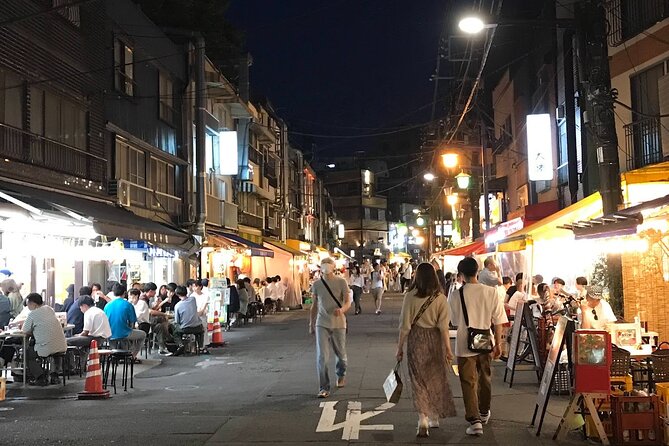
- Hoppy Street at night: an ~80-meter strip known for lantern-lit izakayas and outdoor seating
- Kamiya Bar from 1880 adds a historical flavor to the bar scene, not just food
- A sake-focused finish where the guide explains why sake developed in Japan and ingredient basics
Why Asakusa history plus izakayas is a smart combo
Asakusa can be a little intense on your own. You get the big sights—then you’re stuck figuring out where to eat and what to order when it’s getting late. This kind of combined tour fixes that by doing the culture first, when daylight helps you actually see what you’re standing in front of, and then shifting into food and drinks when the district starts warming up.
I like that the tour doesn’t treat the bar stops like an afterthought. The landmarks come with context, and then the izakayas feel like the natural next chapter of the neighborhood. That flow matters because Asakusa isn’t just postcard temples—it’s also streets, habits, and local hangout energy.
You can also read our reviews of more historical tours in Tokyo

Meeting at Burger King Azumabashi: the start that keeps things simple
The tour meets at Burger King Asakusa Azumabashi, in the Kaminarimon area (Taito City), and it also ends back at the meeting point. That round-trip setup is practical: you don’t have to figure out transportation after you’ve eaten and had drinks.
Starting at 3:00 pm is also a sweet spot. You catch the major temple-area sights while there’s still daylight, then you roll into the izakaya streets as the evening sets in. If you’ve ever tried to do Asakusa at dusk and ended up walking in circles, you’ll appreciate having a route that already makes sense.
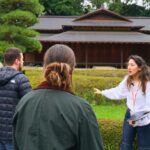
Because the group is up to 8 travelers, you’re not fighting for space the whole time. It’s still a busy area, but your guide can keep the pace human.
From Sumida Park to Senso-ji: the story behind the stones
The tour kicks off at Sumida Park, and it sets a historical frame fast. You learn that this river connects to the story of Senso-ji, with the idea traced back around 1,400 years. Even if you’ve been to Tokyo before, this kind of origin detail changes how you look at the landscape. The river stops feeling like scenery and starts feeling like part of the timeline.
Next comes the Asakusa Culture Tourist Information Center. You’ll see the area from a building that’s designed by a well-known Japanese architect, and you get a preview of the tour route from a higher viewpoint. That matters more than you’d think, because Asakusa’s streets can bend and loop. A quick orientation from above helps you mentally file what you’re seeing as you walk.
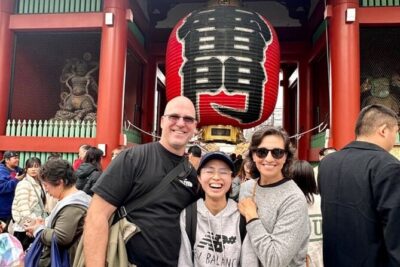
Then you step into the iconic entrance experience at Kaminarimon (Thunder Gate). The giant red lantern is the headline, but the real payoff is what it represents: it’s described as the entrance to the world of a Buddhist temple and a Shinto shrine. That blend is one of Asakusa’s big themes, and the guide points it out in a way that clicks.
Nakamise, Hozomon, and the gate-to-gate rhythm
From Kaminarimon you head into Nakamise Shopping Street, the approach toward Senso-ji. This is one of those places where the crowd can make it easy to miss details. On this tour, you’re not just walking through; you’re understanding the street’s role as an entry ritual, and how it contrasts with what you might imagine about solemn temple space.
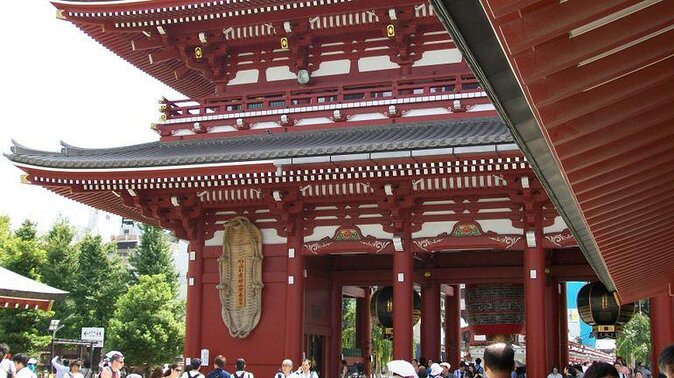
After that you reach Hozomon (Treasure-House Gate), the inner of two main entrances leading to Senso-ji. The gate is described as a two-story structure, and it’s a great moment to slow down. Gates like this aren’t just decoration—they’re a way to shape your movement from outside noise into sacred focus.
And then you arrive at Senso-ji Temple, Tokyo’s oldest temple and a core sightseeing stop. The guide leads you through what you’re looking at, starting from the same Kaminarimon entrance approach. The benefit here is simple: instead of standing in the middle of Senso-ji with a thousand other people, you have a path and a story line.
Right beside the temple grounds you’ll also visit Asakusa Shrine, a Shinto shrine. The interesting part is that it sits next to a Buddhist temple, and the guide addresses that odd-but-real coexistence. If you’ve ever wondered how religion can share space in Japan without feeling like a conflict, this is a practical example you can see with your own eyes.
Escaping into Rokku: Demboin-dori’s entertainment-era feel
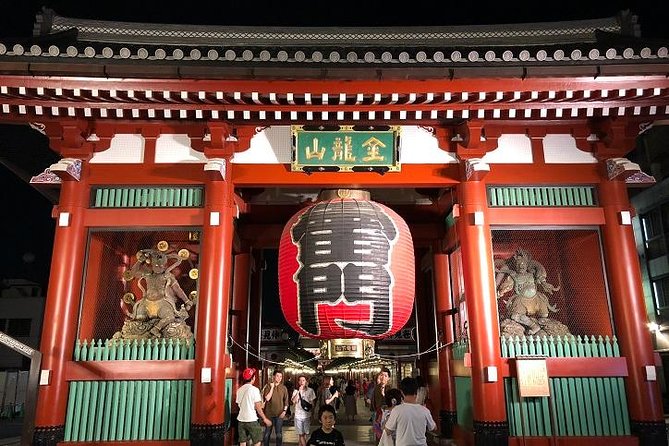
After the temple sequence, the tour shifts away from the big monuments and into Asakusa Demboin-dori in the Rokku area, which is described as a traditional entertainment district. It’s still active, but the vibe feels different from the main temple approach.
This stretch is where the tour starts to feel less like a checklist and more like a lived-in neighborhood walk. The tour description notes a movement through the Meiji period into the present day, with stops along the way. Even if you’re not a history superfan, you’ll feel the change in street character—more everyday texture, less formal ceremony.
And then you’re ready for the transition to food streets.
You can also read our reviews of more drinking tours in Tokyo


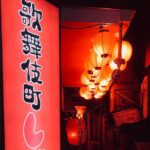
Hoppy Street izakayas: how the neighborhood eats after 5
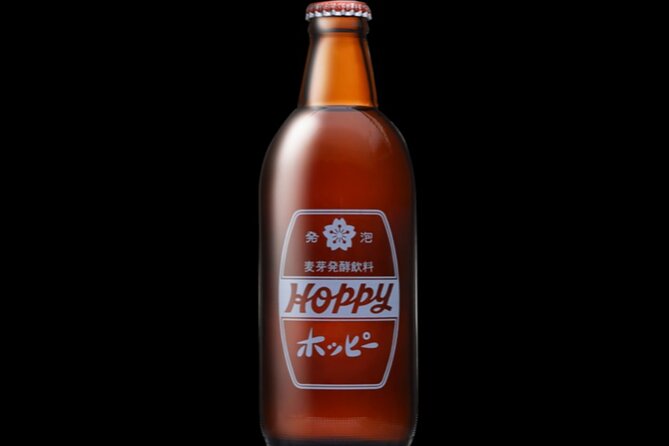
The first izakaya stop is to Hoppy Street, an about 80-meter lane lined with izakayas. The standout detail here is the setting: lanterns and outdoor street-side seating. It’s the kind of place where you can tell you’re not in a tourist-only zone, because the layout is made for regulars and street atmosphere.
Because snacks and drinks are included, you don’t need to worry about translating menus before you even get moving. Your guide helps keep the rhythm smooth, and your job is basically to show up hungry and curious. This is also where the group format helps—small groups tend to order and share more easily than solo wandering.
A small consideration: street-side seating can mean you’re standing more than you’d like. Wear shoes you can stay comfortable in. This is a walking tour, not a sit-everywhere kind of day.
Kamiya Bar (since 1880): why the second stop feels special
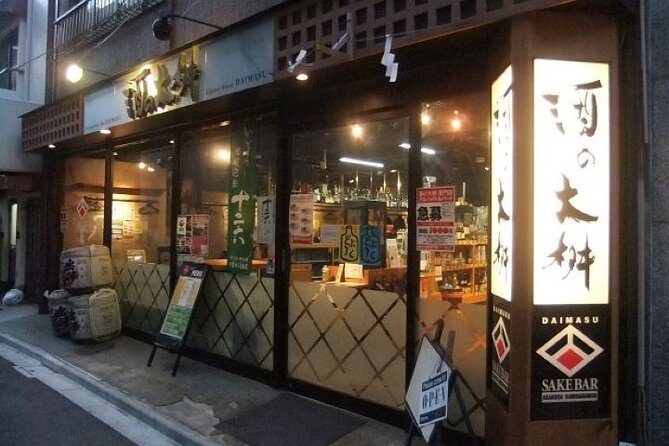
Next up is Kamiya Bar, described as almost legendary because it was established in 1880 and is known as the oldest Western-style bar in Japan. That’s a fun detail because it adds contrast. You’re in an East-meets-West story that fits Tokyo so well: a Western-style drinking spot tucked into a neighborhood famous for older Japanese traditions.
The tour’s framing makes this stop more than just a change of location. It becomes a way to talk about how Tokyo’s social life has layered influences over time. You’re still doing the same core activity—eating and drinking—but the context is different, and that helps you taste the moment with more awareness.
One practical note: older, historic bars can be cozy. So if you’re sensitive to tight spaces, plan to take it slow when you arrive and let your group find the best place to settle.
The sake-focused finale: learning without making it a lecture
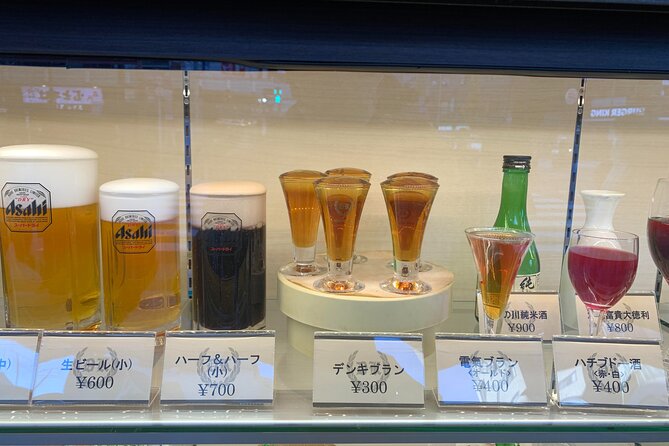
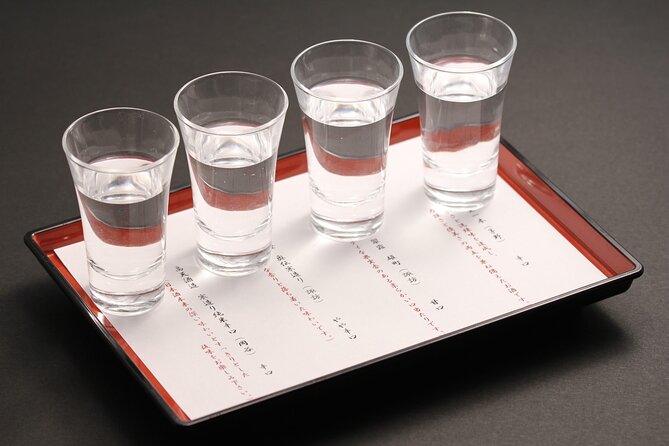
The last izakaya stop focuses on sake, with the guide helping explain key factors. The tour description highlights two specific themes: why sake developed in Japan and which ingredients play a key role.
This is where the tour earns its value. Sake can feel intimidating if you only know it as something you order once and forget. With a guide-led explanation, you get a framework for what you’re actually tasting. Even a short primer changes how you talk about flavors afterward, and it helps you order more confidently if you come back to Asakusa later.
Because snacks and drinks are included, you’re not just learning by theory. You’re learning by tasting in the exact environment where those choices matter.
Price and value: what you’re really paying for
At $156.07 per person for about 4 hours, this tour can look pricey at first glance—until you break down what’s included. You’re paying for:
- a guided walking route through major Asakusa landmarks,
- three separate izakaya visits,
- and included snacks plus 3–4 drinks and 3–4 dishes in total.
Many Tokyo food experiences cost a lot once you add up multiple stops, especially if you’re trying to book them yourself. Here, the structure is already planned: you don’t waste time hunting for places that fit your budget, and you don’t have to worry about timing each meal on your own.
It also helps that the group is capped at 8 travelers. That size matters because you get more interaction, and it’s easier for the guide to keep you moving at a pace that makes sense for a short, 4-hour window.
One more value point: the tour also notes group discounts. That can help if you’re traveling with friends and want a shared plan that still keeps the small-group feel.
If you want Asakusa in one compact afternoon, with food included and minimal navigation stress, the price starts making sense.
What kind of traveler will love this most?
I think this tour is a strong match if you:
- want a first-timer Asakusa experience with a built-in route,
- like learning through walking and stories, not museum-only time,
- want to eat local without trying to decode everything alone,
- and enjoy a guide who keeps things conversational while you sample different places.
It’s also a good choice for people who don’t want a full night out. You get the bar experience, but it’s contained in a 4-hour schedule and stays anchored to sightseeing.
If you’re someone who hates crowds, this might still work, but you’ll want good expectations. Asakusa’s central streets can be busy, and you’ll be in the mix. Comfortable shoes are not optional.
How the guide style affects the whole experience
In the short reviews, the guide quality shows up again and again: friendly, engaging, and able to turn history into something you actually want to talk about. That matters because the difference between a standard sightseeing walk and a great one is often the conversation.
Also, the walking format keeps it from feeling like you’re stuck inside a restaurant for most of the time. You move between sights, then you taste at the right moments. That pacing is part of why the experience feels complete.
Should you book this Asakusa culture exploring bar visits tour?
Book it if you want history and food in one smooth afternoon, with a small group and included drinks and snacks. It’s one of those plans that lowers the mental workload: you don’t need to design an itinerary, handle route decisions, or figure out where to go for a proper dinner.
Skip it if you want a slow, quiet temple day with minimal drinking. Even though the bar portion is part of the concept, the tour is still built around izakayas and snack-and-drink stops.
My practical advice: choose this when you want Asakusa to feel like a neighborhood you understand, not just a list of sights you crossed off.
FAQ
What is the duration of the tour?
The tour runs about 4 hours.
What is included in the tour?
You get a walking tour of Asakusa with a local guide, plus snacks and drinks at three izakayas, typically totaling 3–4 drinks and 3–4 dishes.
How many izakayas will we visit?
You’ll visit three izakayas: one at Hoppy Street, one at Kamiya Bar, and a final sake-focused stop.
Where does the tour start and end?
It starts at Burger King Asakusa Azumabashi and ends back at the same meeting point.
What time does the tour start?
The start time is 3:00 pm.
Is hotel pickup or drop-off included?
No, hotel pickup or drop-off is not included.
Is this tour suitable for people with mobility limitations?
The tour says most travelers can participate. Service animals are allowed.
Do I need to pay for entry tickets at the sightseeing stops?
The described admission for the main sightseeing stops (like Sumida Park, Kaminarimon, Hozomon, and Senso-ji Temple) is free.
What happens if the weather is bad?
The tour requires good weather. If it’s canceled due to poor weather, you’ll be offered a different date or a full refund.
How does cancellation work?
Free cancellation is available up to 24 hours before the experience start time for a full refund.

![[Seasonal Limited] Mt. Fuji 5th Station &Hot Spring Day Tour - Your day on the road: pickup, drive time, and what to expect from the guide](https://e.thetokyoexplorer.com/wp-content/uploads/seasonal-limited-mt-fuji-5th-station-hot-spring-day-tour-400x225.jpg)