REVIEW · TOKYO
:Tokyo,Shibuya /Meiji Shrine tour in KIMONO/English-friendly
Book on GetYourGuide →Operated by SHIBUI · Bookable on GetYourGuide
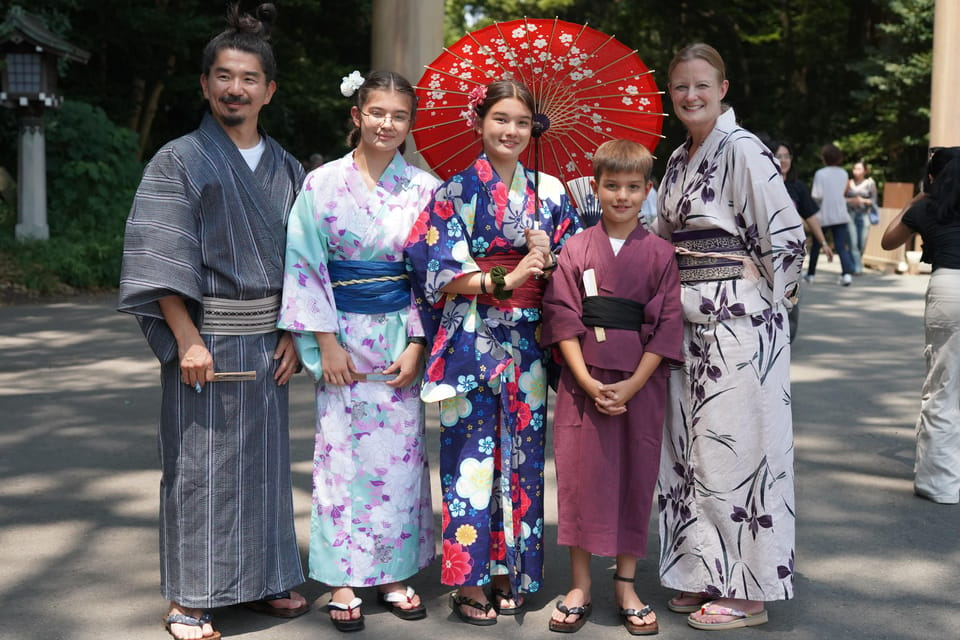
A kimono walk under trees feels like Tokyo magic. You’ll get an included kimono rental with lots of choices, plus an English-friendly Shinto-focused walk that helps the place make sense. I love that it’s designed for real photos, not just standing around.
The experience works because it’s timed well: you follow your guide through six key shrine spots, then you’re given real free exploration time to look around at your own pace. The location also helps—starting in Harajuku means the whole day feels easy to build.
One possible drawback: this is a tight, 3-hour format. If you want to linger for everything, you’ll likely want extra time, especially since optional museum and inner garden entry fees aren’t included.
In This Review
- Key things that make this tour worth your time
- Why Meiji Shrine in kimono changes how you see it
- Harajuku meet-up: choosing your kimono at SHIBUI
- The 6 guided Meiji Shrine stops (and what you’ll actually do there)
- Photo time and free wandering: making the most of your 1.5 hours
- Price and value: what $137 buys you (and what it doesn’t)
- Location perks: easy access from Harajuku and Shibuya-side plans
- Who should book this kimono and Meiji Shrine tour
- Quick practical tips so your day runs smoothly
- Should you book this Meiji Shrine tour in kimono?
- FAQ
- How long is the Meiji Shrine tour?
- What language is the guide?
- How large is the group?
- What’s included with the kimono rental?
- Is hair styling included?
- Are Meiji Jingu Museum and Inner Garden tickets included?
- Is food and drink included?
- Is free cancellation available?
Key things that make this tour worth your time
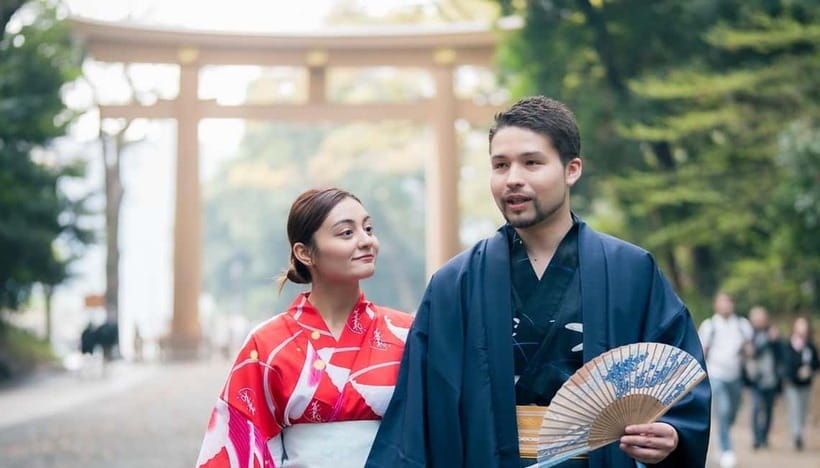
- Kimono is included, and you can pick from formal kimono and casual yukata options for all ages
- Staff help you get photo-ready at Meiji Shrine’s best angles, plus you can also capture video
- Six must-see Meiji Shrine areas get guided attention so you know where to go and what you’re seeing
- Near Harajuku and Takeshita Street, so it’s easy to pair with other neighborhood plans
- Optional museum and inner garden let you expand your visit if you want more depth and don’t mind extra ticket cost
Why Meiji Shrine in kimono changes how you see it

Meiji Shrine is one of those places where the setting does half the storytelling. When you add a kimono, the whole visit feels more intentional—like you’re stepping into a slower rhythm on purpose.
I like that the tour doesn’t treat the shrine like a quick photo backdrop. You’ll walk the major areas with guidance, so you’re not guessing what matters most or where the best views tend to be. And because it’s English-friendly, the cultural context lands without the usual language friction.
You can also read our reviews of more tours and experiences in Tokyo.



Harajuku meet-up: choosing your kimono at SHIBUI
The tour starts at Harajuku Kimono SHIBUI (gathering point: Jingumae Room 413, Cope Anex). Plan to go to Room 413 on the 4th floor of an apartment building, not street level—this detail matters when you’re trying to find the right door.
Once you’re in, your biggest early win is the freedom to choose. The kimono rental is included, and you can select from a diverse collection of kimono and yukata, suitable for all ages. They also include helpful extras: you can choose suitable slippers, bags, or accessories with no added charge.
Hair styling is optional. If you want it, there’s an additional fee of 2000 JPY, paid at the shop. If you’re trying to keep costs tight, you can skip it and still look great—kimono already does the heavy lifting.
A practical note: your “getting ready” phase is part of the total experience. This is why the whole outing is 3 hours. You’ll want to arrive on time so you can choose comfortably and settle before heading out.
The 6 guided Meiji Shrine stops (and what you’ll actually do there)
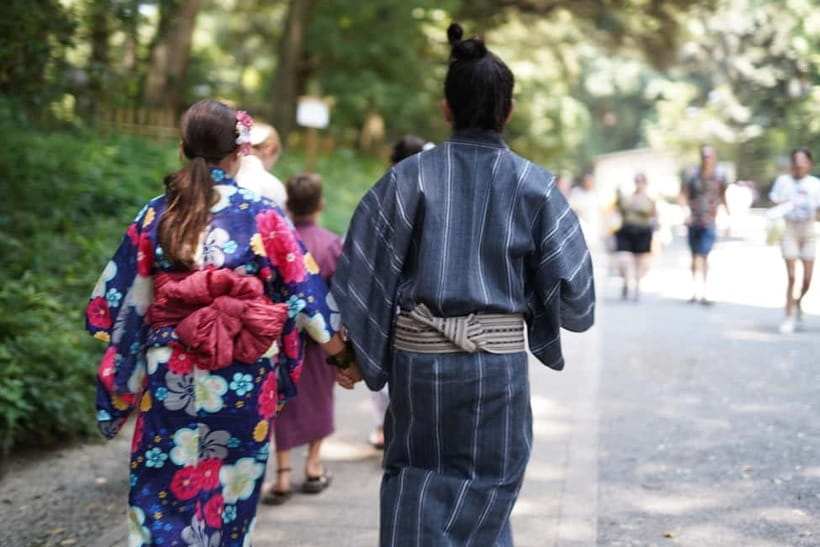
Your guided portion focuses on six recommended spots inside Meiji Jingu. The guide covers them at a steady pace—long enough for understanding and photos, short enough to keep you from feeling rushed.
After a 50–60 minute guided presentation/circuit, you’ll get free time to wander. That split is smart. You learn where to look first, then you can use your remaining time for personal photos, quiet moments, or just slowing down.
Here are the six stops you’ll be guided through:
- Torii Gates
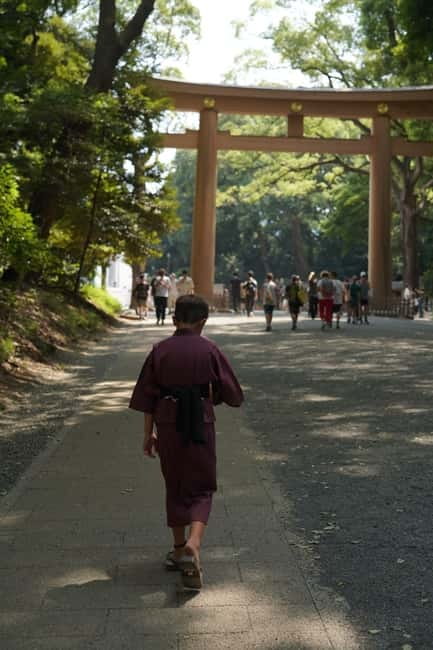
These are usually the first big visual statement. Your guide helps you position for photos so you don’t end up with the wrong angle or background.
- Sake Barrels
You’ll see them as a visual cue for shrine offerings. The point here isn’t “memorize facts,” it’s understanding what you’re looking at as part of the shrine’s daily visual language.
- Wine Barrels
Same idea: you’ll connect the dots on what those barrels represent in the shrine setting. It’s also one of those contrast spots that makes photos feel unique.
- Meiji Shrine Forest
This is where the mood shifts. The guide points out what to watch for so your photos feel more like a story and less like a random walk.
- Main Shrine
The main area is the heart of the visit. Your guide helps you find the most sensible routes and the better viewing spots without turning it into a chaotic free-for-all.
- Shinto Prayer Hall
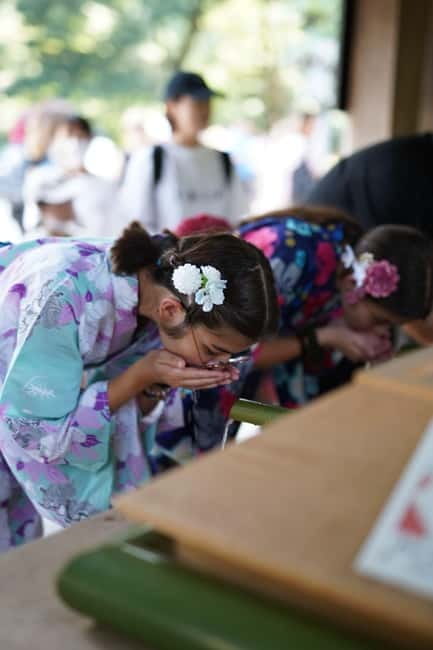
This stop is about understanding the atmosphere and how people participate. Your guide gives you the cultural framing so you can behave respectfully and not just take pictures.
Optional add-ons: Meiji Jingu Museum and the Inner Garden
These aren’t included in the tour package admission. If you love architecture, seasonal garden layouts, or museum context, you can visit during your free time. If you’re short on energy, you can skip them and still have a complete shrine experience from the guided stops.
Photo time and free wandering: making the most of your 1.5 hours
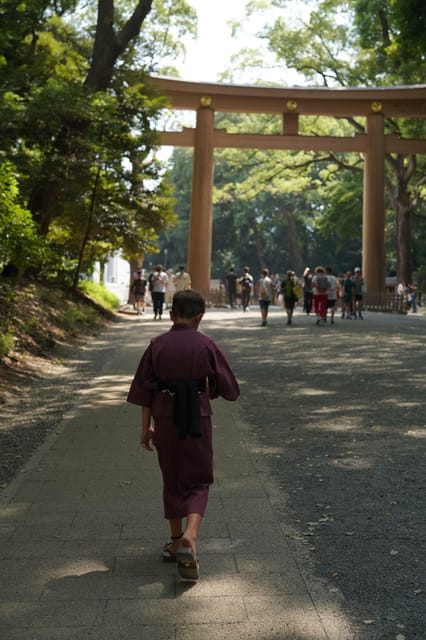
A lot of kimono tours fail because they either rush you through photos or they leave you on your own with no clue where to stand. This one tries to solve that.
During the guided portion, you’ll get help taking photos at key spots. Your guide can take pictures for you and help with angles so you don’t have to rely on strangers. Video recording is also possible, which is great if you want short clips of the grounds in kimono.
Then comes the best part: your free time. After the guide presentation, you’ll have about 1.5 hours to explore on your own. This is when you can:
- Revisit the places that stood out to you
- Take photos without the pressure of “next stop”
- Walk at your own pace through the shrine grounds
Because the tour includes kimono rental, you’ll also have a time cutoff. You’ll meet again around 1.5 hours later and return to the SHIBUI store to change clothes. That’s helpful for planning—you don’t need to guess when you’ll be “done.”
If you’re trying to maximize photos, aim to use the free time for your preferred style:
- Wide shots with the shrine setting
- Portrait-style images framed by trees and gates
- Detail shots that show barrels, textures, and kimono patterns
Price and value: what $137 buys you (and what it doesn’t)
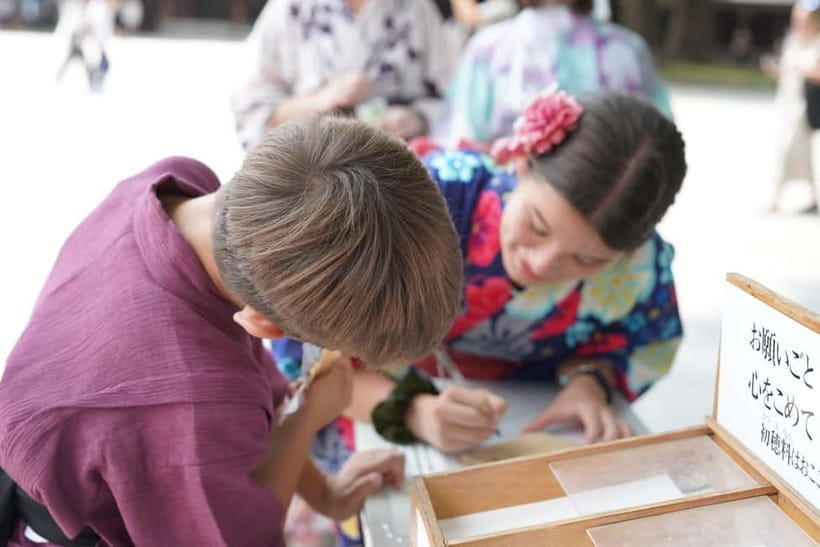
At $137 per group (up to 1 in the pricing note you provided), you’re paying for a short, high-effort experience: kimono rental plus guided time in one of Tokyo’s most photogenic cultural settings.
Here’s what the price includes:
- A friendly English-speaking guide
- Kimono rental (kimono or yukata)
- Accessories like slippers, bags, and extras included
- Guided exploration of six shrine stops
- Photo help during the experience
Here’s what the price does not include:
- Admission for Meiji Jingu Museum and Inner Garden (optional)
- Any food and drink you buy yourself
- Hair set (optional, extra 2000 JPY at the shop)
Is it good value? For me, it is when you want two things at once: convenience and guided context. Instead of spending time figuring out where to go, how to plan your photos, and how to make the shrine meaningful, you get a structured route plus time to enjoy it afterward.
If you’re already experienced with kimono rental logistics and you don’t care about guided photo stops, you may find a cheaper self-guided approach. But if you want the whole “kimono + Meiji Shrine” experience to run smoothly, this pricing makes sense.





Location perks: easy access from Harajuku and Shibuya-side plans
One of the biggest practical advantages is where SHIBUI is placed. It’s described as:
- About a 5-minute walk from Meiji Shrine
- Very close to Takeshita Street (listed as roughly a 2-minute walk)
That proximity matters because it makes your day feel less like transportation and more like sightseeing. You can pair the tour with nearby Harajuku plans before or after, and you won’t lose half the morning to getting from A to B.
Also, walking in kimono outside at all is part of the fun. The shorter the transfer time, the less you’re thinking about your outfit and the more you’re enjoying the streets.
Who should book this kimono and Meiji Shrine tour
This tour fits best if you:
- Want an English-friendly guide who helps you understand what you’re seeing
- Care about photos and want help getting the right angles
- Like the idea of pairing Harajuku area convenience with a quieter, more formal shrine setting
- Prefer a small-group format (limited to 10 participants) so the guide can keep things organized
It may be less ideal if you:
- Want to spend half a day at Meiji Jingu without time limits
- Are hoping the museum and inner garden are automatically included
- Don’t want to deal with kimono logistics (changing clothes and timing)
Quick practical tips so your day runs smoothly
- Arrive a bit early so you can find Room 413 without stress.
- If you want hairstyle, decide ahead of time because it’s an extra fee at the shop (2000 JPY).
- Plan your free time with intention: pick whether you want museum/inner garden or focus only on photography and shrine atmosphere.
- Wear comfortable footwear for the walk to and from the shop area. You’ll switch into slippers as part of the kimono setup, but your approach to the meeting point still counts.
Should you book this Meiji Shrine tour in kimono?
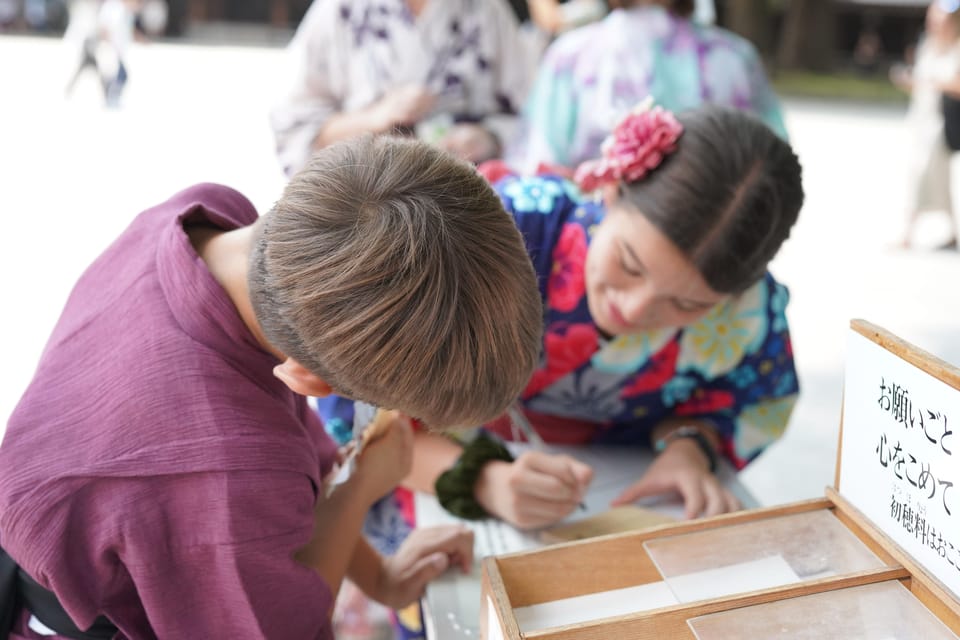
If you want a hassle-light way to do kimono and Meiji Jingu in one go, I’d book it. The biggest strengths are simple: kimono included, a guided route through major shrine areas, and real photo support that helps you get better results without awkward guesswork.
I’d only hesitate if you’re the kind of traveler who hates time limits or you know you want extra museum/garden time that day. In that case, you may prefer a longer independent plan or plan extra hours around this tour.
If your goal is one memorable, well-organized experience—kimono on, Meiji Shrine seen properly, and plenty of time for your own photos—this hits the mark.
FAQ
How long is the Meiji Shrine tour?
The tour lasts 3 hours.
What language is the guide?
The live tour guide provides instruction in English.
How large is the group?
This is a small group limited to 10 participants.
What’s included with the kimono rental?
Kimono rental is included, and you can freely choose from a diverse collection of kimono and yukata. Slippers, bags, and accessories can also be chosen without charge.
Is hair styling included?
Hair set is optional and costs an additional 2000 JPY, paid at the shop.
Are Meiji Jingu Museum and Inner Garden tickets included?
No. Admission fees for the Meiji Jingu Museum and Inner Garden are not included. You can choose to visit them during free time.
Is food and drink included?
No. If you buy food and drink, that is on your own.
Is free cancellation available?
Yes. You can cancel up to 24 hours in advance for a full refund.