REVIEW · TOKYO
Tokyo:Samurai Training : Swords, Bushido & Mental Discipline
Book on GetYourGuide →Operated by INTERNATIONAL GOSHIN-BUDO ASSOCIATION · Bookable on GetYourGuide
Your hands learn what legends can’t.
In Tokyo’s Kojimachi district, you get hands-on samurai training in a traditional dojo tied to the inner grounds of Edo Castle. What I like most is the focus on basics with real technique and the way it treats you like a practitioner, not a spectator. One thing to consider: this isn’t a polished show, and it includes physical drills that won’t feel great if you’re not feeling well.
Two parts really stand out for me: the emphasis on Bushido etiquette and the chance to practice techniques through one-on-one sparring with an instructor. You also get mental training—breathing and meditation—so the session isn’t only about moving your arms. If you want gentle sightseeing vibes only, this may feel intense, especially during the heavy stick work and balance drills.
The main drawback is simple: it’s not suitable for pregnant women and it isn’t recommended if you have a cold. Also remember shoes are not allowed indoors, so you’ll want to be ready for dojo rules from the moment you arrive.
In This Review
- Key things I’d plan for before you go
- Kojimachi dojo: the setting behind the sword lesson
- The two-hour rhythm: etiquette, Bushido, and mental focus
- Wooden sword basics: form, distance, and safety
- Heavy stick conditioning and posture work
- Kata and one-on-one sparring: testing skills without chaos
- Matcha tea break, sweets, and your scroll-style certificate
- Price and what $83 buys you in Tokyo
- Who should book it (and who should skip it)
- Book it or pass: my decision guide
- FAQ
- Is this activity a show or actual training?
- How long is the samurai training session?
- Is it beginner-friendly?
- Do I need to bring my own sword or practice weapon?
- Is the class taught in English?
- Where do I meet the instructor on arrival?
- What’s included in the price?
- Are there restrictions on what I can wear or do indoors?
- Is it suitable for pregnant women or someone with a cold?
Key things I’d plan for before you go
- Real dojo approach, not a staged performance: you train the same kind of progression students use—etiquette, fundamentals, then applications.
- English instruction with hands-on teaching: the class is conducted in English, with Japanese support from instructors like Oedo and Yukikaze.
- Mind-body drills: breathing/meditation, plus heavy stick conditioning and silent walking for balance and awareness.
- Kata first, then sparring: you learn one authentic combat kata and practice realistic techniques in a structured one-on-one format.
- Cultural pause built in: you take a break for matcha green tea and traditional Japanese sweets.
- You leave with more than photos: you get a personalized scroll-style certificate with your name and the techniques you learned.
Kojimachi dojo: the setting behind the sword lesson
This training happens in a traditional dojo in the Kojimachi area of Tokyo, in an older part of town once connected with the inner grounds of Edo Castle. That matters because samurai training here isn’t sold as a theme park. The space and the rules reinforce the point: you’re stepping into a discipline that expects respect, calm focus, and steady practice.
You’ll meet at the dojo entrance, with a staff member waiting for you and a nobori flag as the landmark. I like meeting-point clarity like this because Tokyo has plenty of look-alike streets, and you don’t want to burn your time hunting for the right door.
Another detail that helps the experience feel authentic: uniforms are rented for you, and you’re expected to follow dojo etiquette right away. Shoes are not allowed indoors, and smoking indoors is prohibited. These are small rules, but they shape the mood fast—your brain starts treating it like training, not like a quick activity.
The group size is limited to 6 participants, and the experience runs for 2 hours. Minimum 2 participants are required, so if you’re booking solo, keep an eye on scheduling so you’re not stuck waiting for a departure that fills.
You can also read our reviews of more tours and experiences in Tokyo.



The two-hour rhythm: etiquette, Bushido, and mental focus
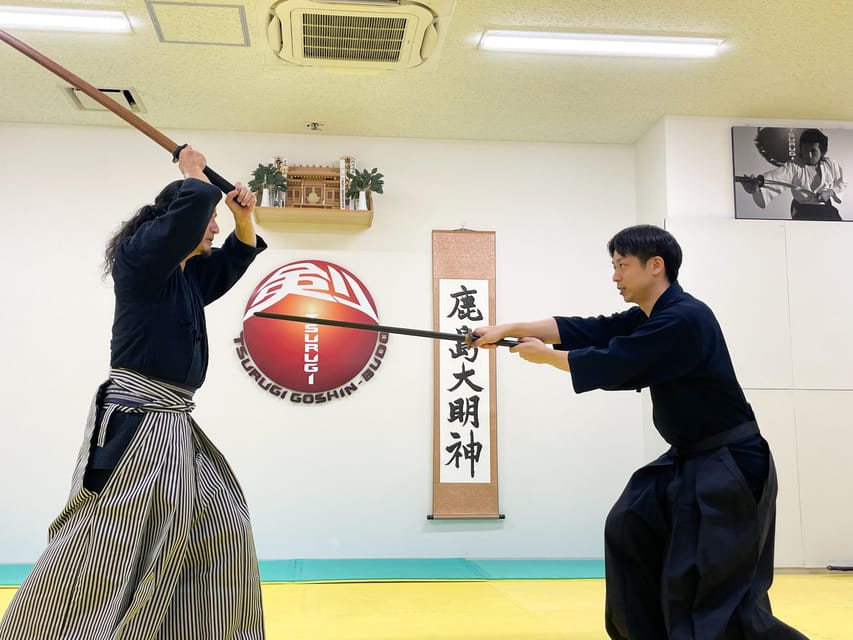
The session starts with the parts people usually skip when they only think about swords. Here, you begin with samurai etiquette and the spirit of Bushido—how a practitioner carries himself, how he enters a training space, and how he controls attention.
You then move into breathing techniques and meditation. This isn’t “wellness theater.” It supports the physical work that follows. Heavy stick drills and sword work punish sloppy breath and tension. When you calm the mind and stabilize breathing, posture gets easier, footwork becomes smoother, and movements look more controlled.
For first-timers, I appreciate that the class is beginner-friendly and guided in English. At the same time, you should expect instruction to be a mix of explanation and demonstration. One review note highlighted that English may not always be fluent, but instructors still go above and beyond to communicate through positivity and coaching. In practice, that usually means you’ll learn fastest by copying form, watching corrections, and asking questions when you get a chance.
This “mind first” start is also why this feels different from many Tokyo activities. You’re not just learning how to swing a sword-shaped object. You’re learning how samurai practice framed the problem: discipline of body and mind, then technique.
Wooden sword basics: form, distance, and safety
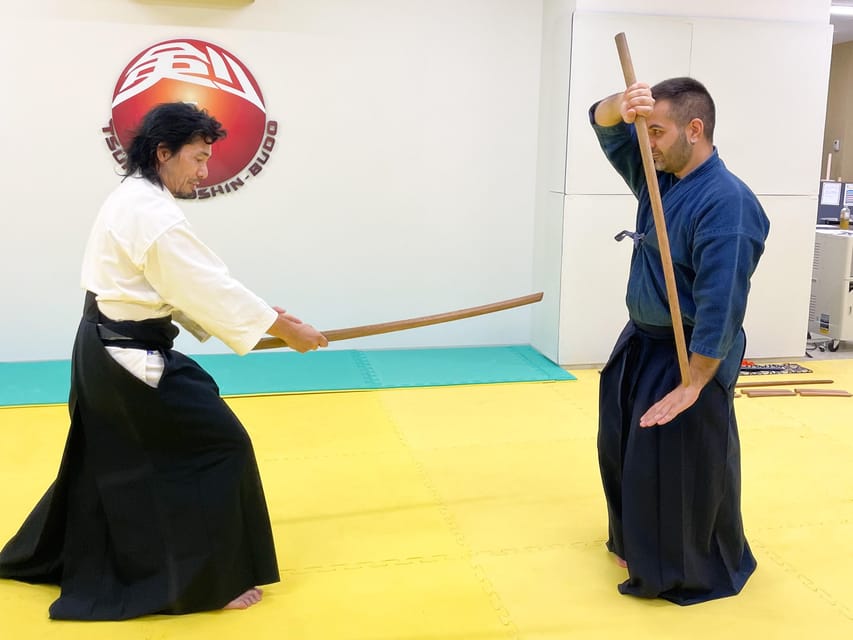
After the mental reset, training moves into basic wooden sword drills. The objective at this stage is control—distance, direction, and timing—rather than speed or showy power.
You’ll work with wooden sword basics that build the foundation for later combat techniques. Even if you’re a complete beginner, you’ll likely notice a pattern: slow practice first, then consistency, then gradual application. That’s exactly what you want in a class that ends with sparring. It’s much safer when your body has already been taught the “rules of movement.”
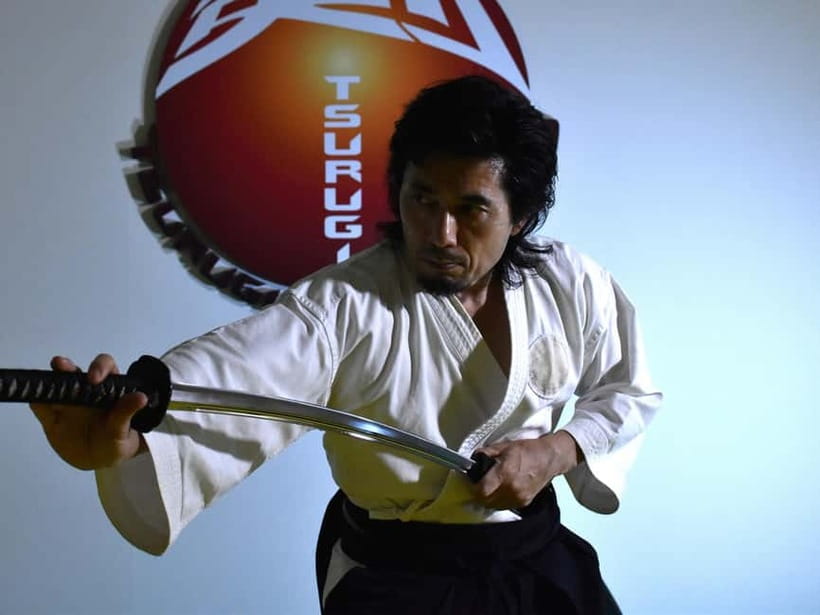
There’s also a live sword demonstration by the instructor. Live demonstrations are useful because they show what good looks like in real time—how foot placement and angle control everything. It’s one thing to hear words about form; it’s another to see the pacing and intent.
Uniform rental helps here too. When clothing fits the exercise, you can focus on your movements instead of worrying about what your clothes will do during drills. You’ll be asked to share everyone’s height and size (S/M/L) ahead of time, so the uniform can be prepared properly.
Finally, remember this is indoor training. You’ll follow dojo rules and likely train on a floor that requires careful movement. Wearing grippy, comfortable clothing and keeping your body ready for constant stance changes will make the whole session feel smoother.
Heavy stick conditioning and posture work
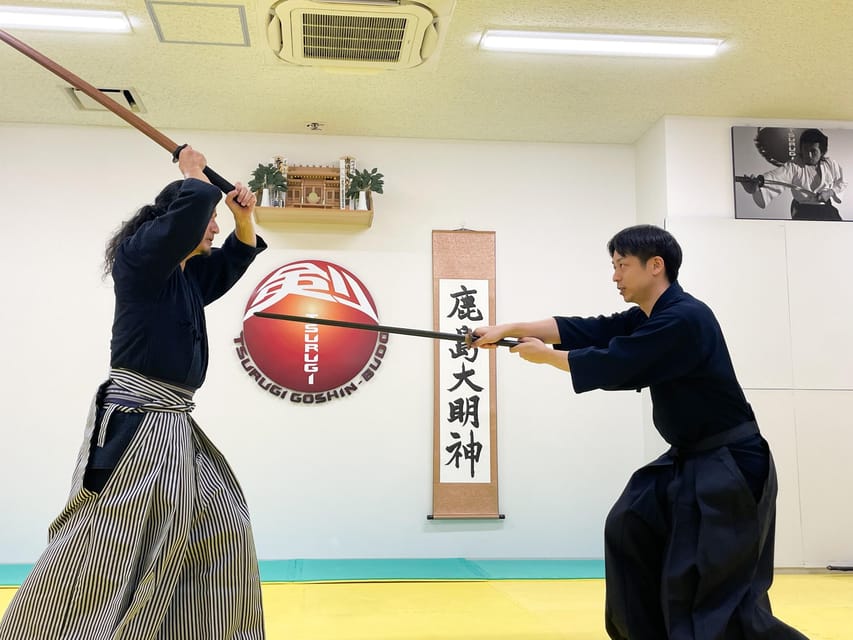
Next comes one of the more unique parts: strength and conditioning using a heavy practice stick. You might think “this is just strength,” but the goal is posture, control, and stamina. Heavy stick drills force you to keep alignment. If your shoulders hunch or your balance shifts, the stick will punish that mistake.
This is also where the session gets real physically. The drills are designed for training, not for casual try-it-once fun. Your legs and core will work. Your forearms and shoulders will feel it. Your mind will also have to stay present, because controlled repetitions are part of discipline.
A good sign that the program is serious: there’s silent walking work. Silent walking sounds simple until you try it as a balance and awareness drill. In martial arts, silence often means stability—no sudden steps, no rushing, no dragging your weight.
If you’re the type who likes to understand why something matters, this is one of the smartest parts of the schedule. Samurai practice wasn’t only about hitting. It was about moving in a way that keeps you ready to respond without wasting energy.
Kata and one-on-one sparring: testing skills without chaos
After fundamentals and conditioning, you learn an authentic samurai combat kata—one kata, not a dozen. That’s an advantage. You get time to absorb it instead of learning a blur of moves that never become reflex.
Kata training gives you structure. It’s like a written lesson in motion: a set sequence that teaches direction changes, timing, and how to generate force without random flailing. When you train a kata, you’re also learning to see yourself. You can compare what you do against what you’re being corrected on.
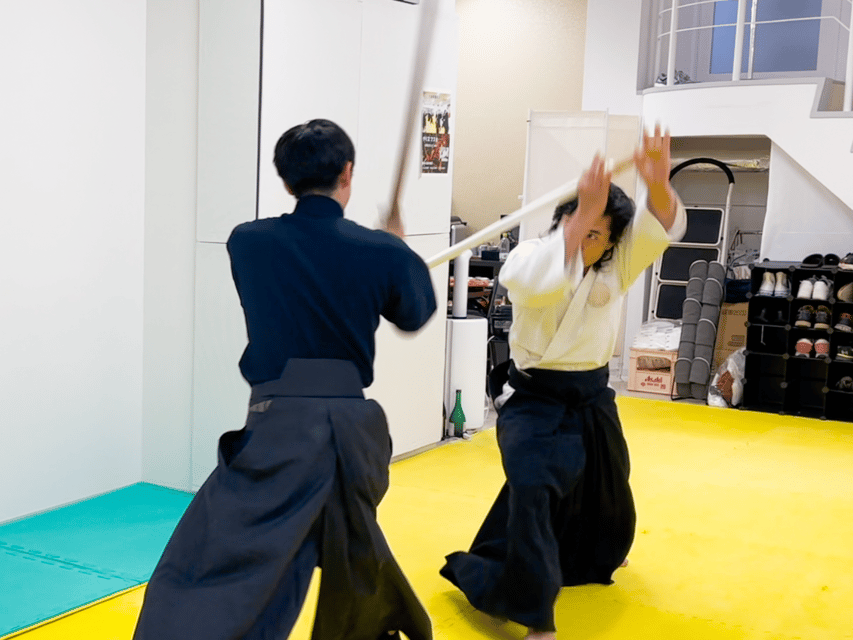
Then comes the practical payoff: one-on-one sparring with an instructor. This is the part most people have imagined from samurai stories, but here it’s framed as training. You’re not thrown into uncontrolled chaos. Instead, you practice realistic techniques while getting feedback on what to improve.
Because the class is small (up to 6), sparring can stay structured. Your partner role and the instructor’s supervision reduce the chance of “everyone doing their own thing.” If you’re unsure whether you’ll keep up, don’t panic. Beginner-friendly doesn’t mean “easy,” but it usually means the instructor slows the pace and corrects fundamentals before pushing intensity.
One note worth considering: you might get more from this if you’re comfortable communicating questions. English instruction is included, but if your instructor’s English leans more functional than conversational, the demonstration and correction style still carries the learning.






Matcha tea break, sweets, and your scroll-style certificate
You get a break mid-training with matcha green tea and traditional Japanese sweets in a quiet cultural setting. This matters because the class has two modes: physical effort and mental focus. A break like this prevents the experience from turning into a nonstop workout.
I also like the way the program ends with tangible proof of participation. You receive a personalized scroll-style certificate with your name and the techniques you learned. It’s not just a souvenir; it helps anchor what you practiced into a specific, memorable set of skills.
Then there’s the photo moment in samurai attire. Wearing the uniform and taking a commemorative photo is a fun capstone, especially if you’re coming with family or friends. One review highlighted family bonding as a key benefit, which makes sense—this activity naturally creates shared memories without requiring everyone to be the same skill level.
The overall vibe is respectful and calm, not gimmicky. You finish with a sense of having learned something real, even if you’ve only taken one 2-hour session.
Price and what $83 buys you in Tokyo
At about $83 per person for a 2-hour session, this can be a good value if you want more than photos and a sword pose. Here’s what you’re getting built into that price:
- Samurai uniform rental included
- Live sword demonstration by the instructor
- English guide on sword skills, Bushido spirit, and samurai history
- Personalized scroll-style certificate
- Matcha green tea and Japanese sweets
- Commemorative photo with samurai
The biggest value driver is the combination: technique coaching + cultural structure + equipment and outfit support. If you tried to recreate this on your own, you’d pay for a guide, suitable training space, and you’d still miss the etiquette-and-mind component.
Group size also affects value. With up to 6 participants, you’re less likely to get ignored than in a bigger class. And the minimum 2 participants requirement helps keep the session active rather than running a private-feeling lesson with no momentum.
Transportation is not included, so you’ll plan your own way to Kojimachi. That’s normal for activities like this, but it does affect total trip cost and planning time.
Who should book it (and who should skip it)
This is a smart fit if you want a hands-on Tokyo experience that goes beyond sightseeing. It’s especially good for:
- First-time samurai fans who want real training, not a performance
- People who like discipline-based activities (mind-body work is built in)
- Visitors who enjoy small-group instruction and personal correction
- Travelers who want a memorable cultural moment with matcha, sweets, and a certificate
It’s not a good fit if you:
- Are pregnant
- Have a cold or feel unwell
- Want a slow, seated activity with no physical drilling
Also, be mentally ready for the “practice” parts: heavy stick conditioning, silent walking, and sparring. You don’t need prior martial arts experience, but you do need to show up ready to work your body.
One more practical tip: because uniforms are prepared by height and size, take that request seriously. If you want the uniform to fit well for your movements, provide accurate measurements (S/M/L) when asked.
Book it or pass: my decision guide
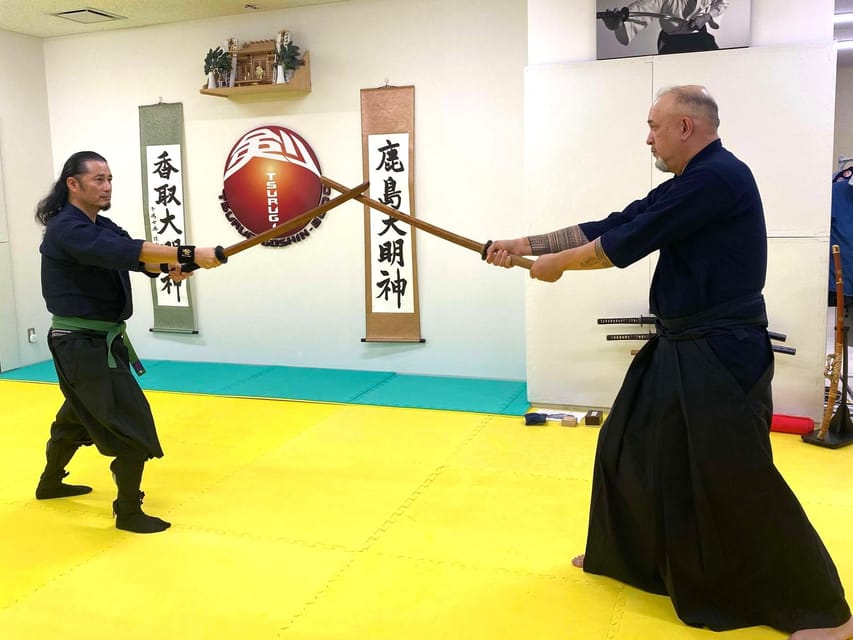
If you’re deciding between this and another Tokyo activity, choose this when your priority is learning a structured skill—etiquette, sword basics, one kata, and sparring—within a real dojo setting. The fact that it’s conducted in English, beginner-friendly, and capped at 6 participants makes it much less intimidating than many martial arts classes.
Pass if your day is already booked with heavy walking and you want something light and low-impact. The heavy stick drills and balance work will feel like work, not like a casual demo.
If you do book, go in with the right mindset: pay attention to breathing and posture, follow corrections quickly, and treat the etiquette portion as part of the lesson—not as a warm-up you can ignore.
FAQ
Is this activity a show or actual training?
It’s actual training in a traditional dojo. You learn etiquette, breathing and meditation, sword basics, heavy stick drills, silent walking, a combat kata, and then do one-on-one sparring with an instructor.
How long is the samurai training session?
The experience lasts 2 hours.
Is it beginner-friendly?
Yes, it’s designed to be beginner-friendly.
Do I need to bring my own sword or practice weapon?
No. You train with the included wooden sword basics and use the provided practice equipment as part of the lesson. A uniform rental is also included.
Is the class taught in English?
Yes. The training is conducted in English (and Japanese).
Where do I meet the instructor on arrival?
You meet at the entrance of the dojo. Look for the staff member waiting for you and the samurai nobori flag as your landmark.
What’s included in the price?
Included are the samurai uniform rental, a live sword demonstration, an English guide, a personalized scroll certificate, matcha green tea and Japanese sweets, and a commemorative photo.
Are there restrictions on what I can wear or do indoors?
Yes. Smoking indoors is not allowed, and shoes are not allowed indoors.
Is it suitable for pregnant women or someone with a cold?
No. It’s not suitable for pregnant women, and it’s not for people with a cold.