REVIEW · TOKYO
Tokyo’s Imperial Palace & Nihonbashi Tour
Book on Viator →Operated by True Japan Tour · Bookable on Viator
A palace stroll plus old-trade Tokyo. I love how this tour pairs the Imperial Palace East Gardens with a guided Nihonbashi outing—plus practical tastings like dashi and a Japanese sake set. One catch: it is a lot of walking, and the experience depends on decent weather.
You pick a morning or afternoon slot, and you get a nationally accredited guide-interpreter to help you move past language barriers. With a maximum of 28 people, it feels structured without being cramped, and you’ll have a mobile ticket for the included palace entry.
At about 4 hours, it packs two major Tokyo “areas of focus” into one half-day. For $101.72, the value comes from getting guide support at multiple specialist shops, not just sightseeing.
In This Review
- Key things you’ll notice on this tour
- Starting at Tokyo Station: getting your bearings fast
- The Imperial Palace East Gardens: Otemon Gate and what is actually included
- Nihonbashi: where Tokyo’s trade routes start feeling real
- Ninben dashi, Yamamoto nori, and Kiya knives: old skills you can see
- Ninben dashi store: tasting the building block of Japanese cooking
- Yamamoto Noriten Honten: roasted seaweed and the craft of nori
- Kiya Nihombashi Main Branch: a knife store founded in 1792
- Ozu Washi washi making and Toyama’s antenna shop: the tour’s best ending rhythm
- Pacing, weather, and the real value of $101.72
- Who should book this Imperial Palace and Nihonbashi tour
- FAQ
- What is the approximate duration of the Tokyo Station to Nihonbashi tour?
- Where does the tour start and end?
- Is entrance to the Imperial Palace East Gardens included?
- What food or drink is included?
- Do I get to make washi, or is it only viewing?
- Is there a language helper on the tour?
- How does the tour handle bad weather?
- Can I cancel if plans change?
- Should you book this tour?
Key things you’ll notice on this tour
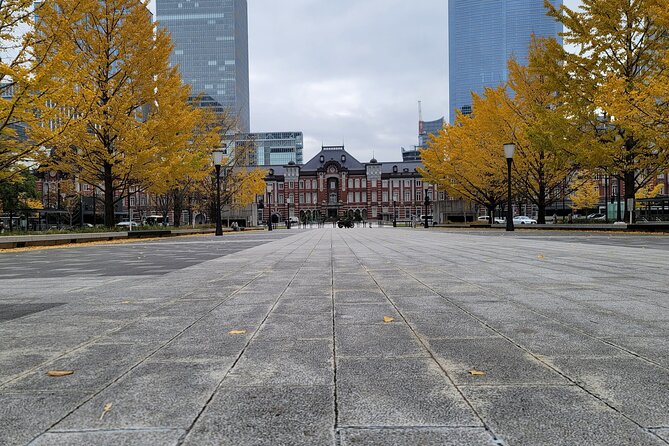
- Ginkgo-lined approach to the Imperial Palace grounds before you even reach the gates
- Otemon Gate and the East Gardens interpretation, including Edo Castle context
- Nihonbashi as the early national highway hub—you’ll see why the area mattered
- Hands-on washi making at Ozu Washi (not just watching)
- Specialist stops with tastings and demos, including dashi and roasted nori
- A shop-heavy ending in Nihonbashi with a Toyama prefecture antenna focus
Starting at Tokyo Station: getting your bearings fast
The tour starts at Tokyo Station (1 Chome-9 Marunouchi, Chiyoda City). This is a smart meeting point for first-time visitors because Tokyo Station is one of the easiest places to connect from, and you’ll start near major transit lines.
From there, you’re not immediately stuck in a museum. Instead, you begin with a walk toward the Imperial Palace area—one reason this tour works so well at the start of a Tokyo trip. You get a quick sense of how the city organizes itself around history and movement: wide streets, clear directions, and then the quiet shift once you hit the palace grounds.
Expect a steady pace. This isn’t a sit-down “talking tour.” You’ll spend time on your feet, including the approach, garden walking, and the later Nihonbashi segment.
You can also read our reviews of more tours and experiences in Tokyo.



The Imperial Palace East Gardens: Otemon Gate and what is actually included
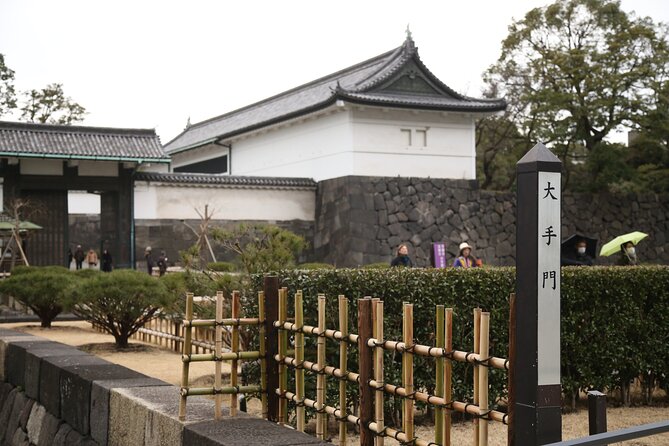
The centerpiece is the East Gardens of the Imperial Palace. Your entry is free, and it’s timed so you can enjoy the grounds without turning it into an all-day project.
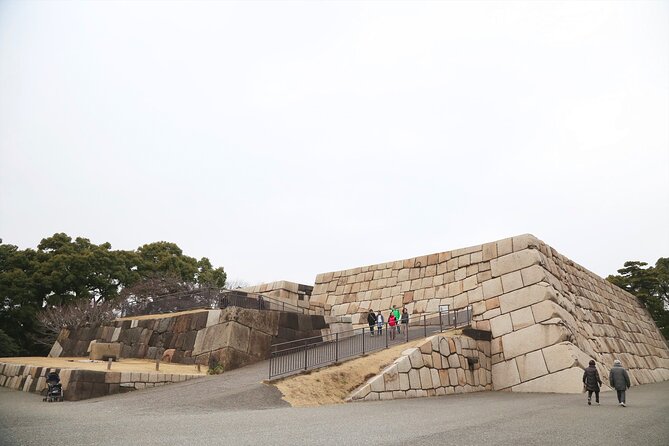
Before you get too far inside, you walk along the palace avenue lined with ginkgo trees, and then you move through Otemon Gate. This gate matters because it was once the main entrance to Edo Castle, home of the Tokugawa shoguns. You’re not just strolling scenery—you’re getting the “why this spot mattered” explanation.
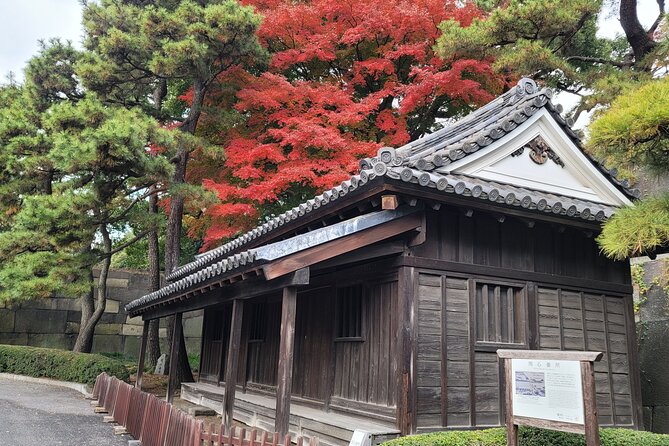
Inside the East Gardens, you’ll cover a lot of ground along paths bordered by seasonal trees such as cherry and pine. Depending on when you go, the gardens can look totally different, but the structure stays the same: clear walking routes, big open grounds, and plenty of photo opportunities.
Important expectation check: this is an East Gardens experience. The tour includes entrance to the gardens, not a guided tour of the palace interior rooms. If you’re expecting to see inside the imperial residence buildings, you’ll likely be disappointed. Plan for gardens, gates, and the surrounding Imperial grounds interpretation.
Nihonbashi: where Tokyo’s trade routes start feeling real

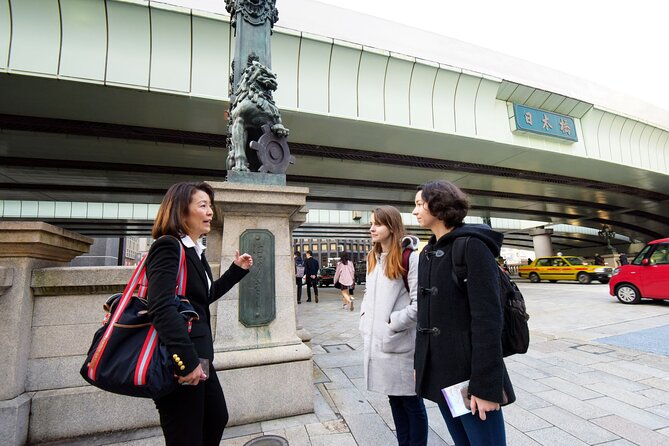
After the palace, you’ll take a short journey to Nihonbashi, one of Tokyo’s most important commercial districts. This area is more than just shopping streets. It’s a historic “movement hub”—the start point of Japan’s national highway network going back to the early seventeenth century.
That detail changes how you see the neighborhood. You start noticing patterns: long-standing shop presence, dense street activity, and the way foot traffic and commerce reinforce each other. Nihonbashi feels like Tokyo’s past living inside its present, and this tour is set up to help you read the area instead of just walking through it.
Nihonbashi is also a great contrast to the palace. One part is controlled calm behind walls and gates. The other is everyday city energy—workdays, customers, and the kind of storefronts that don’t feel designed for tourists.
Ninben dashi, Yamamoto nori, and Kiya knives: old skills you can see

This is where the tour becomes less like “a sightseeing loop” and more like a guided tour of actual trades.
Ninben dashi store: tasting the building block of Japanese cooking
You stop at Ninben dashi store. Dashi is the traditional Japanese soup stock that shows up in everything from noodle soups to hotpot. Here, you’re shown how dashi is made and you get a sample—one of the most practical “use it later” experiences on the itinerary.
If you’ve ever eaten ramen or miso soup in Japan and wondered what gives the broth that distinct depth, this is the connection. The tasting makes the explanation stick.






Yamamoto Noriten Honten: roasted seaweed and the craft of nori
Next is Yamamoto Noriten Honten, a nori seaweed producer in business since 1849. You’ll see different types of nori, and you can watch the staff roast it. This stop is less about buying and more about understanding why nori quality can taste so different—from texture to flavor intensity.
It’s also a nice change of pace from indoor explanations. You’re watching a process tied to everyday Japanese eating.
Kiya Nihombashi Main Branch: a knife store founded in 1792
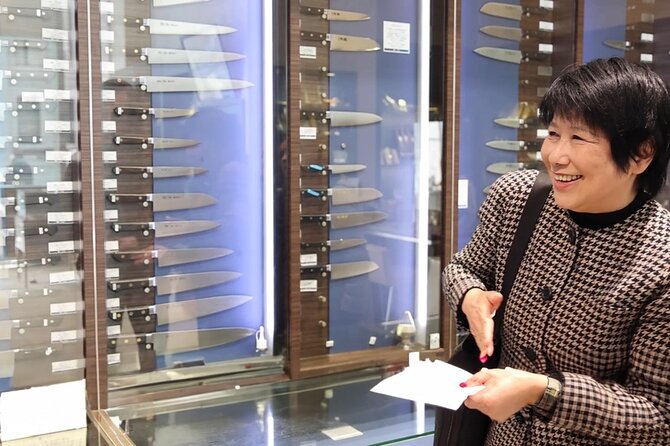
Then you visit Kiya Nihombashi Main Branch, a knife shop founded in 1792. The shop is known for a wide range of utensils, including traditional Japanese knives and even modern European styles.
Even if you do not buy a knife, this stop is still worth it. You’ll learn how a specialist shop thinks: what styles exist, what the customers typically look for, and why the craft matters. If you do have shopping in mind, this is one of the few places on the itinerary where the selection feels broad enough to justify a serious look.
Real-world note: knife shops can tempt you with great-looking gear. If you have limited baggage space, set your budget before you get there so you don’t end up regretting it later.
Ozu Washi washi making and Toyama’s antenna shop: the tour’s best ending rhythm
After knives, you head to Ozu Washi, a Japanese paper store focused on washi—traditional Japanese paper. This stop goes beyond display. You learn about different types of paper and stationery, and you also make your own sheet of washi.
That hands-on moment is one of the most satisfying parts of the whole tour because you leave with something you created, not just something you bought. It’s also a great “mental break” from food-heavy stops: you’re switching from tasting to making.
Finally, the tour wraps around Toyama Prefecture Antenna Shop. Toyama is a coastal prefecture on the Sea of Japan, and the shop sells items from that region. This is a calmer finishing stop, giving you a chance to reset before you head off on your own in Nihonbashi.
The tour ends in the Nihonbashi area. The closest stations listed are Nihombashi Station (Toei Asakusa Line, Metro Ginza Line, Metro Tozai Line) and Mitsukoshimae Station (Metro Ginza Line, Metro Hanzomon Line). Plan for an easy exit by using one of those lines rather than trying to force a longer walk through central Tokyo.
Pacing, weather, and the real value of $101.72
This experience is about 4 hours and runs with a guide-interpreter. It includes key cultural “inputs” (palace entry and craft time) plus tangible experiences (dashi and sake).
Here’s where the money makes sense:
- Included palace admission to the East Gardens saves time and keeps the pacing efficient.
- Food and drink are not vague: you get a dashi sample and a Japanese sake set.
- Washi making is the kind of activity you can’t easily replicate on your own without reservations.
- You’re guided through multiple specialist stops where language barriers would otherwise slow you down.
Now the trade-offs.
- Walking adds up. Several stops are short distances apart, but the overall day still expects comfortable footwear and stamina.
- Weather matters. The experience requires good weather, and it can be rescheduled or fully refunded if canceled for poor weather. In Tokyo terms, that means wind and rain can change how pleasant the walk is.
A smart way to handle this: treat it as a half-day “structured tour walk,” not a casual stroll. If you’re the type who hates being on your feet for hours, pick a different day or bring a plan B mindset.
One more practical point: if a facility is temporarily closed, you’ll be guided to other facilities. So the exact look of every stop can vary slightly, even though the theme stays the same.
Who should book this Imperial Palace and Nihonbashi tour

Book it if you want:
- A guided look at Imperial Palace East Gardens that gives context beyond photos
- A concentrated dose of Japanese craft and food basics (dashi, nori, washi)
- A strong Nihonbashi experience that goes deeper than window shopping
Skip it if:
- You expect a full “palace interior” tour. This is gardens and grounds, not the imperial residence buildings.
- You have low walking tolerance or mobility limitations, since the itinerary is active and weather-dependent.
- You’re looking for lots of restaurant time. This is more “tastings and shop stops” than “sit and eat.”
FAQ
What is the approximate duration of the Tokyo Station to Nihonbashi tour?
It runs for about 4 hours.
Where does the tour start and end?
It starts at Tokyo Station (1 Chome-9 Marunouchi, Chiyoda City) and ends in the Nihonbashi area (near Nihombashi Station and Mitsukoshimae Station).
Is entrance to the Imperial Palace East Gardens included?
Yes. Entrance to the East Gardens of the Imperial Palace is included.
What food or drink is included?
You get a sample of dashi soup stock and a Japanese sake set.
Do I get to make washi, or is it only viewing?
You’ll make a sheet of washi at Ozu Washi as part of the experience.
Is there a language helper on the tour?
Yes. The tour includes a nationally accredited tour guide-interpreter.
How does the tour handle bad weather?
The experience requires good weather. If it’s canceled due to poor weather, you’ll be offered a different date or a full refund.
Can I cancel if plans change?
Free cancellation is available if you cancel at least 24 hours before the experience starts for a full refund.
Should you book this tour?
If you want a smart first “Tokyo half-day” that mixes Imperial Palace gardens with real-world shopping stops in Nihonbashi, I think this is a strong choice. The standout value is that you don’t just look—you taste dashi, see processes like roasting nori, and make washi.
Just go in with the right expectations: it’s active, weather-dependent, and focused on the public East Gardens rather than palace interior rooms. If that fits your style, it’s an easy yes.