REVIEW · TOKYO
Tokyo: Samurai Adventure! Authentic Sword Experience
Book on GetYourGuide →Operated by ICHIMILE Co., Ltd. · Bookable on GetYourGuide
Samurai training in Tokyo is surprisingly hands-on. I love that you start with safe, beginner-friendly sword basics and then get a real sense of the role through live instruction by Dai-san and Kume-san. The main drawback is that this is physical practice, so it is not a fit if you have back issues or vertigo.
You’ll also like the setup: you can simply watch or jump in, and the workshop ends right where you started at Samurai Experience Photo Studio ICHI. Just note that it is not actual sword combat, so if you’re expecting live blade sparring, this will feel more like choreography and technique than a fight.
In This Review
- Key Things That Make This Samurai Workshop Different
- First Step Into Samurai Training at Samurai Experience Photo Studio ICHI
- What You Actually Do: Wooden Swords, Stances, and Safe Technique
- Dai-san and Kume-san: Close Instruction and a Real Sense of Practice
- Public Course vs Private Course: Pick the Right Samurai Vibe
- The Action-Movie Moment: Paired Practice and a Live Demonstration
- Costumes, Photos, and the Keepsake Part You’ll Actually Use
- Price and Value: Why $24 Can Be a Good Deal in Tokyo
- Logistics That Matter: Timing, What to Wear, and How to Prepare
- Safety and Suitability: When This Is Not the Right Fit
- Who This Samurai Workshop Is Best For
- Should You Book This Samurai Adventure? My Recommendation
- FAQ
- Where is the meeting point for the workshop?
- Is this experience safe for beginners?
- Do I need to have experience with martial arts?
- What happens in a public course?
- What happens in a private course?
- Are wooden practice swords provided?
- Can I take photos during the experience?
- Are meals included?
- What should I wear to the workshop?
- Is it suitable for wheelchair users or people with vertigo?
Key Things That Make This Samurai Workshop Different
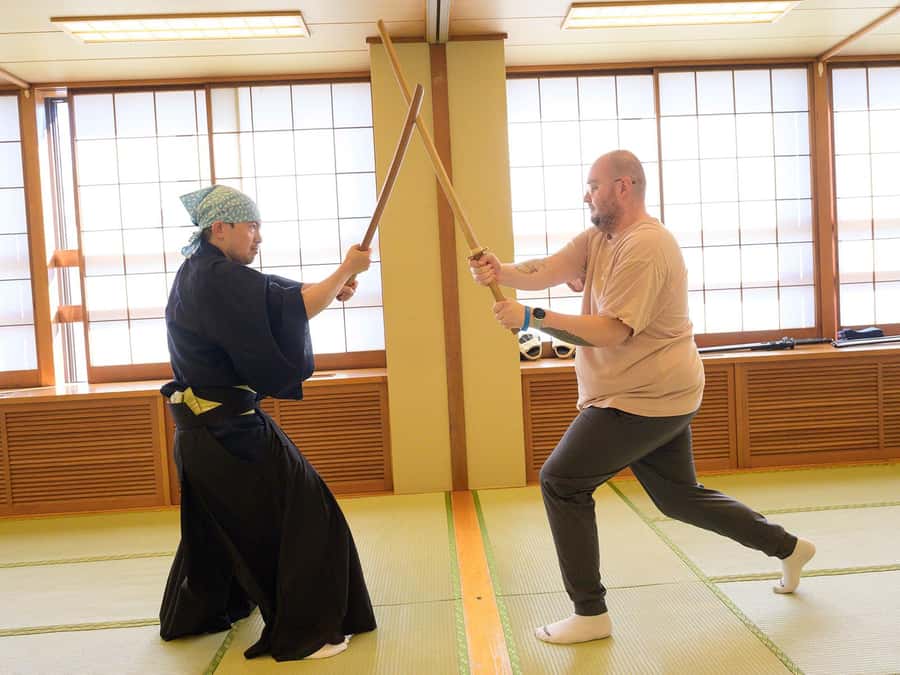
- Action-actor instructors help you learn the movements without putting you in real danger
- Wooden practice swords let you practice stances, grips, and strikes safely
- Warm-ups and fundamentals mean you’re not thrown into a scene right away
- Paired practice and a close-up demonstration give you the movie-scene feel
- Photo time with the samurai turns the lesson into a real keepsake
- Public course interaction means you might train alongside Japanese acting-student groups
First Step Into Samurai Training at Samurai Experience Photo Studio ICHI
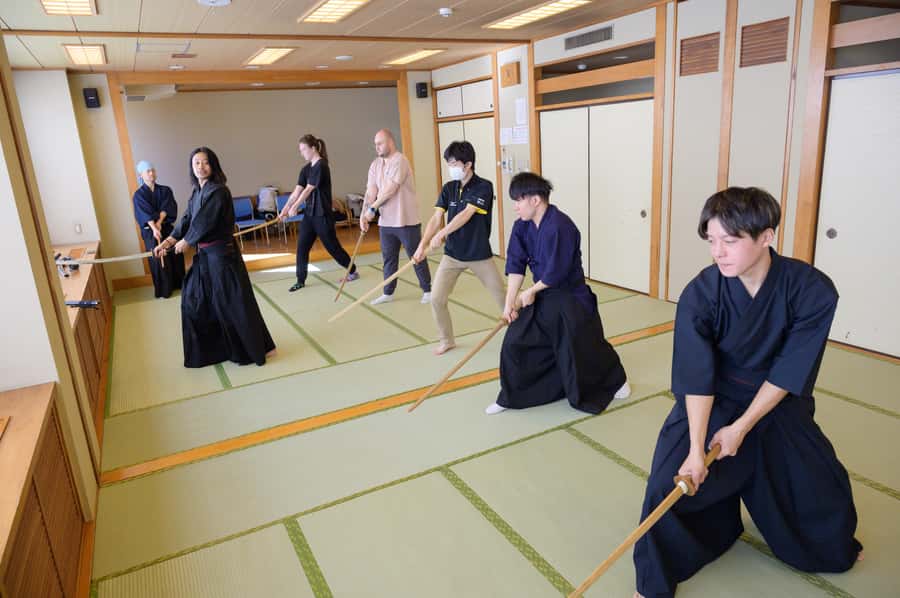
The experience starts at Samurai Experience Photo Studio ICHI, the place you can find by searching that exact name on Google Maps. You’ll meet there, get oriented, and then the program carries you through the lesson before returning you back to the meeting point at the end.
This matters because you’re not wandering around Tokyo trying to figure it out. It also makes the whole thing feel self-contained: arrive, train, take photos, and you’re done. If you’re building a day around Tokyo Station, Ginza, or Tsukiji, you’ll probably like the convenience since the workshop is described as easily reachable from those areas.
You can also read our reviews of more tours and experiences in Tokyo.



What You Actually Do: Wooden Swords, Stances, and Safe Technique
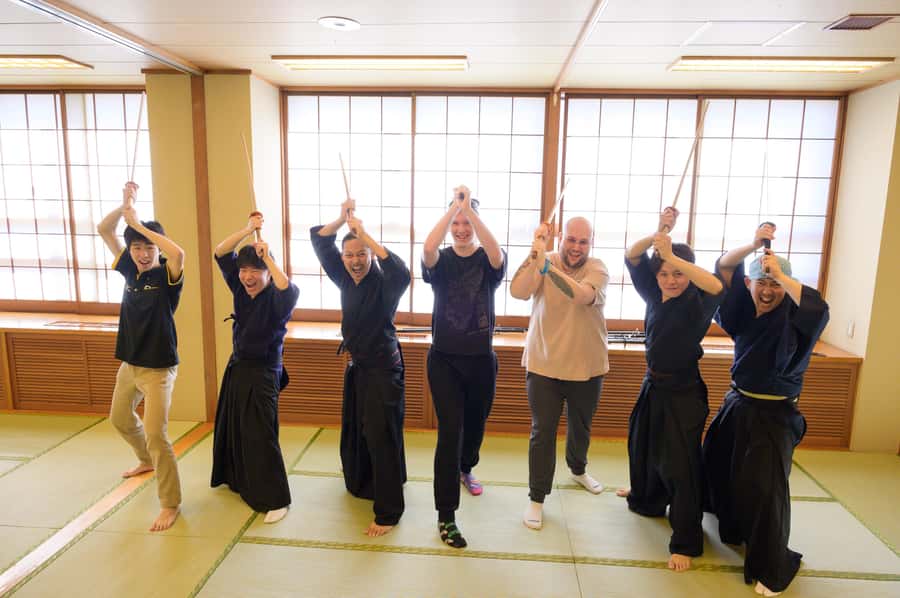
Here’s the core idea: you do not do real sword fighting. Instead, you learn samurai movement patterns using practice wooden swords while professional instructors guide you step by step. That’s a big reason this works even if you’ve never picked up a sword-shaped object in your life.
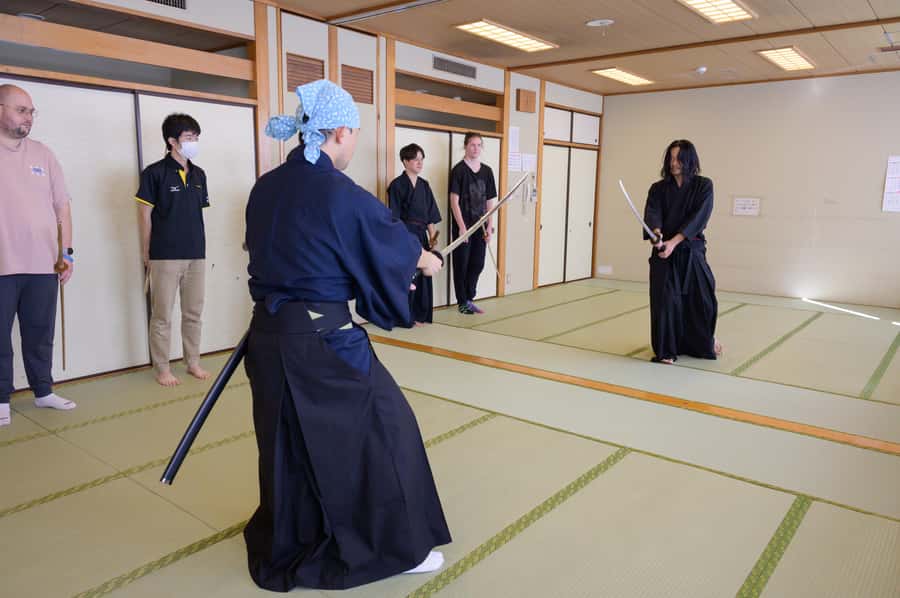
The workshop typically begins with warm-up exercises, then moves into the fundamentals. You’ll work on the basics like how to grip properly, how to hold the sword, and how to swing it with better form. From there, you practice strikes and defensive movements at a safe level—enough to feel the discipline of technique without the risk of live steel.
What I like about this structure is that it’s teaching-first. You get the “how” before the “movie scene,” so your body has a chance to understand what you’re doing.
Dai-san and Kume-san: Close Instruction and a Real Sense of Practice
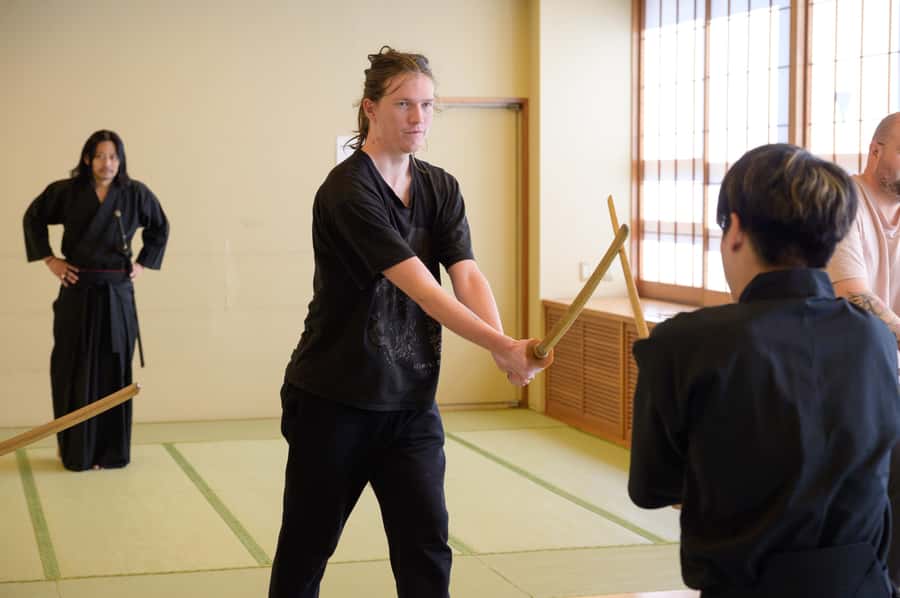
In the reviews, Dai-san and Kume-san come up again and again as the instructors people remember. The repeated theme is not just friendliness—it’s the way they correct details and help you feel at ease while you learn.
That is a practical win. Sword training can feel intimidating, but having instructors who explain and adjust your movement lowers the fear factor fast. One review specifically calls out Dai sensi as a coach who made the experience feel closer to what it might be like to train as a samurai, and that lines up with what you’re actually getting here: guidance that turns “trying” into “doing.”
Also, the group energy seems welcoming. People talk about the instructors being kind and attentive, and that matters when you’re in a setting where everyone is learning at the same time.
Public Course vs Private Course: Pick the Right Samurai Vibe
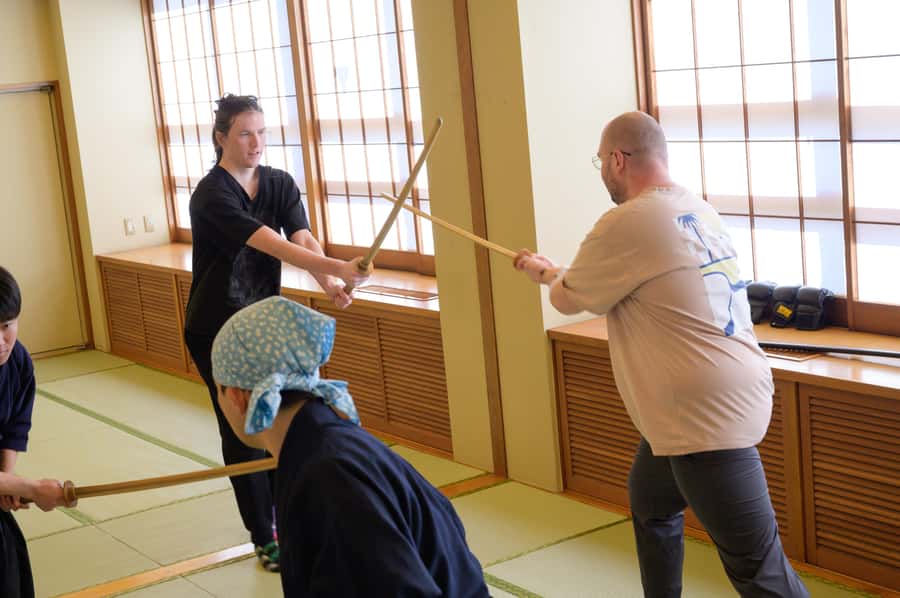
You can choose either a private course or a public course. Both options follow the same overall flow—warm-ups, fundamentals, practice with wooden swords, and the chance to see demonstrations—but your class atmosphere will change.
For the public course, you join a class where aspiring Japanese actors are learning samurai action. The program is described as starting with observing, then practicing alongside them. This can be a cool choice if you like the feeling of being part of something active and you don’t mind training in a group setting.
For the private course, you first get a brief introduction to samurai history and culture, and then the action actor tailors the lesson to your level and goals. Private lessons are popular with martial arts practitioners and people who already know some Japanese culture. If you want faster feedback or a more focused pace, this is where you’re more likely to get it.
My practical take: if you want to sample the experience without overthinking it, public is often the easiest way to go. If you want more direct guidance and you’re a bit more serious about learning, private tends to fit better.
The Action-Movie Moment: Paired Practice and a Live Demonstration
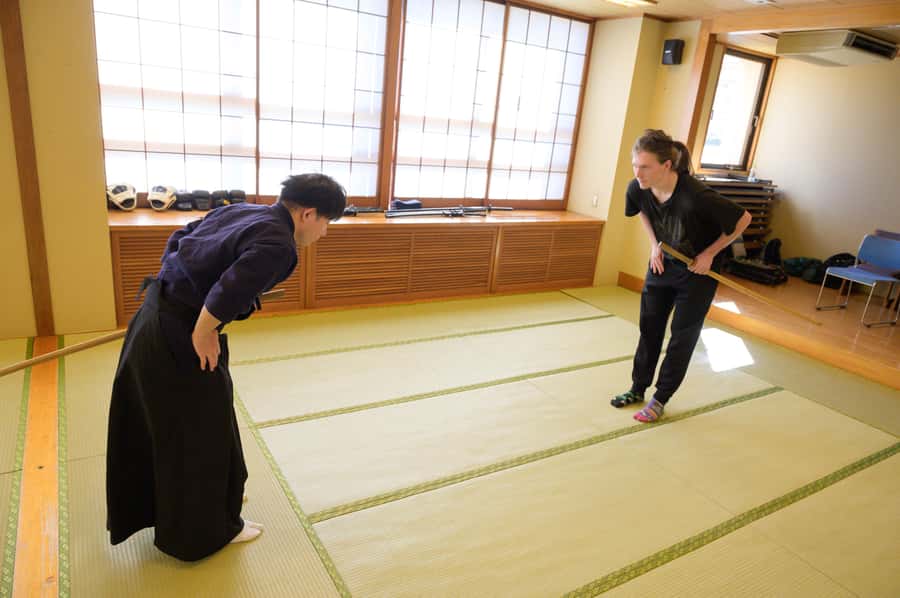
Once you’ve learned the basic movements, the lesson steps up into a paired practice section with a professional samurai. This is where you get that action-movie feel—more dramatic, more dynamic, and clearly “performance plus technique.”
You’ll also witness a powerful demonstration by the samurai. Close-up viewing is the point. Even if you only learn a few core motions yourself, watching someone who has mastered the form helps you understand what the practice is building toward.
This part is valuable because it changes your perspective. Before this, it’s mostly grip, stance, and safe movement. After this, you can connect those basics to something bigger: control, timing, and presence.






Costumes, Photos, and the Keepsake Part You’ll Actually Use
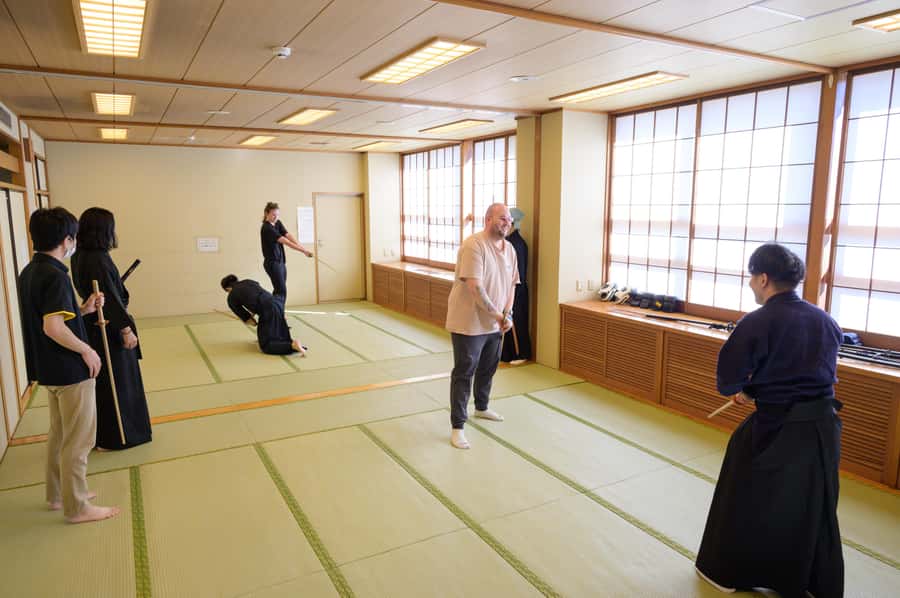
At the end of the session, you get photo time with the samurai. You’ll leave with images that capture the moment, not just a memory of a few practiced moves.
Some versions of the experience also include samurai attire as part of the experience, and the provided info says a samurai costume is available as an option. A review also mentions dressing in samurai clothes, and that’s a big part of why people remember it. When you’re in costume, your body stops thinking like a tourist and starts moving more like a trainee, even if the practice is still beginner-safe.
If you’re unsure about participating fully, you can still enjoy the day by observing. The session is set up so you can watch first, then practice when you feel ready.
Price and Value: Why $24 Can Be a Good Deal in Tokyo
The price listed is $24 per person. For Tokyo, that’s a low-cost entry point into a hands-on cultural activity—especially one that includes instruction, practice swords, a live demonstration, and a photo session.
You are not paying for a museum ticket here. You’re paying for time with an instructor, structured practice, and the chance to take home images. That combination is what tends to make the value feel real.
One thing to keep in mind: the lesson is designed for tourists, and it’s not presented as long-term martial arts training. Still, that doesn’t reduce its usefulness. Think of it as a short, well-guided introduction that gives you enough technique to understand what you’re seeing and enough participation to feel you actually did something.
Logistics That Matter: Timing, What to Wear, and How to Prepare
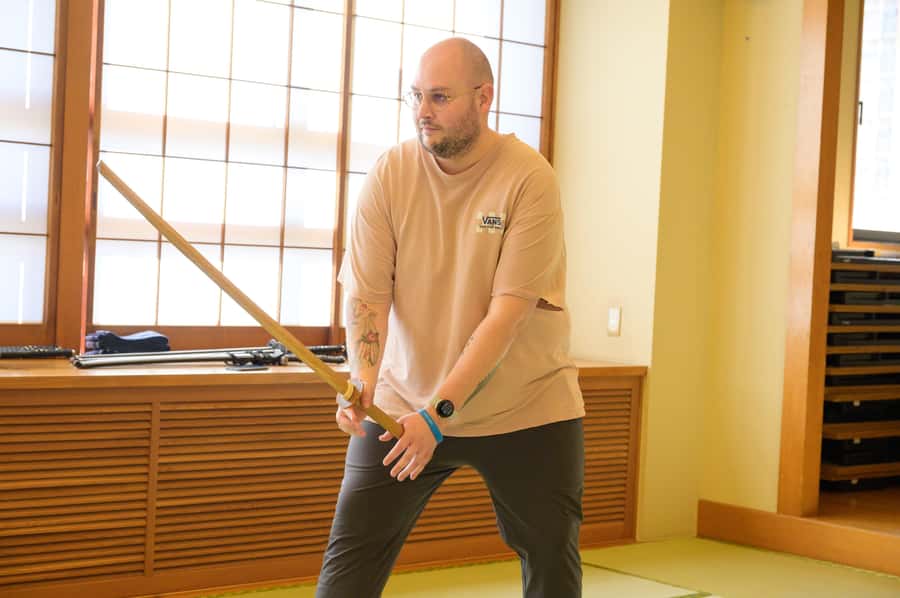
Plan to arrive 15 minutes early so the session can start on time. That buffer helps you settle in, get ready, and avoid the stress that ruins good learning.
Wear comfortable clothes and closed-toe shoes suitable for physical activity. Avoid anything that restricts movement. Also, high-heeled shoes are not allowed.
You should also know what is not allowed: smoking, drones, alcohol and drugs, electric wheelchairs, and explosive substances. If you’re carrying any of those items, it’s best to leave them behind before you go.
The lesson is offered in Japanese and English, which should make it easier to follow instructions even if your Japanese is minimal.
Safety and Suitability: When This Is Not the Right Fit
This experience has clear suitability limits. It is not suitable for pregnant women, people with back problems, wheelchair users, and people with vertigo. It’s also not recommended for people with pre-existing medical conditions.
That isn’t just fine print. The activity includes warm-ups, stance work, and paired practice using practice swords. If your balance, spine, or comfort under movement is a concern, you’ll want to skip this one.
If you’re generally healthy and just looking for a fun, structured physical activity in Tokyo, it may feel like a surprisingly friendly intro to disciplined movement.
Who This Samurai Workshop Is Best For
If you want an activity that’s more than watching—you want to do the movements—this fits well. It’s also ideal for multi-generational groups, since the tone in the reviews emphasizes fun, support, and a welcoming environment.
It’s a strong match for:
- Beginners who want safe sword basics with professional guidance
- People who like action-movie performance but want real technique behind it
- Visitors who want a memorable photo and a physical “I tried it” experience
- Anyone curious about Japanese culture who prefers learning through practice
If you’re a martial arts practitioner, the private option may feel more tailored, since it’s specifically described as popular for people who want depth.
Should You Book This Samurai Adventure? My Recommendation
Book it if you want a short, well-managed taste of samurai movement with clear beginner safety and friendly instruction from Dai-san and Kume-san. The combination of warm-up fundamentals, wooden practice, paired training, and photos makes it feel complete for the price.
Skip it if you can’t handle physical movement comfortably or if any of the listed conditions apply, especially vertigo and back problems. Also, if your expectation is live blade fighting, adjust your mindset now—the focus here is controlled technique, not real combat.
If you want a fun Tokyo activity that still feels grounded in form and instruction, this is the kind of workshop you’ll be happy you tried once.
FAQ
Where is the meeting point for the workshop?
The activity starts at Samurai Experience Photo Studio ICHI. You can find it by searching for that name on Google Maps. The experience ends back at the meeting point.
Is this experience safe for beginners?
Yes. Beginners are welcome, and you practice using wooden practice swords with professional instructors by your side. You learn movements safely rather than engaging in actual sword fighting.
Do I need to have experience with martial arts?
No. The lesson begins with warm-ups and basic techniques like grip, holding the sword, and swinging. A private lesson can be tailored to your level if you choose that option.
What happens in a public course?
In a public course, you join a class where aspiring Japanese actors are learning samurai action. You typically observe first, then practice alongside the group with instruction.
What happens in a private course?
In a private course, you receive a brief introduction to the history and culture of the samurai, and then the instructor tailors the lesson to your level and goals.
Are wooden practice swords provided?
Yes. Practice wooden swords are provided as part of the hands-on practice.
Can I take photos during the experience?
Yes. You get a photo session with the samurai at the end of the workshop.
Are meals included?
No. Meals and beverages are not included.
What should I wear to the workshop?
Wear comfortable clothes and closed-toe shoes suitable for physical activity. High-heeled shoes are not allowed.
Is it suitable for wheelchair users or people with vertigo?
No. It is not suitable for wheelchair users or people with vertigo, and it’s also not suitable for people with back problems or pregnant women.