REVIEW · TOKYO
Tokyo Private Customizable Tour with a Local Guide
Book on GetYourGuide →Operated by Travels on peak · Bookable on GetYourGuide
Tokyo can feel huge fast. This private, customizable day turns it into a plan you can follow, with pickup and a local guide keeping the story straight. I especially like the mix of big-name sights and neighborhood time, so you get both icons and everyday Tokyo flavor.
The main thing to plan for is walking. Between temples, shopping streets, and crowded areas like Shibuya Crossing and Harajuku, you’ll want comfortable shoes and a good water habit.
Guides like Mukkarram, Shomo, and Yoshi are mentioned in past experiences, and that matters because Tokyo’s details can be lost if you’re just hopping from photo spot to photo spot. If you want a day that feels organized but still personal, this fits well.
In This Review
- Key things I’d pay attention to
- How a private 10-hour Tokyo day stays personal
- Nakamise Street and Sensō-ji: old Tokyo, up close
- Skytree for the big-picture view
- Imperial Palace area photos, then Meiji Jingu’s quiet contrast
- Tsukiji Outer Market: smart timing beats overthinking
- Shibuya Scramble Crossing: the world’s busiest crossing, handled right
- Harajuku and cafes: fashion you can taste
- What’s included, what’s not, and how to avoid surprises
- Price: does $367 per group feel fair?
- Which traveler this fits best
- Should you book this Tokyo private custom tour?
- FAQ
- How long is the tour?
- What is the group size and price?
- Where do you get picked up?
- Is the tour private?
- What language is the guide?
- Is lunch included?
- Do I need to pay for Tokyo Skytree?
- Are there any rules about photography or smoking?
- Is it wheelchair accessible?
- What should I bring?
Key things I’d pay attention to
- Private, up to 5 people: One vehicle and one group lets you move at your pace instead of syncing with strangers.
- A custom route: You’re not locked into one rigid set of stops, which helps if you prefer shrines over shopping or the reverse.
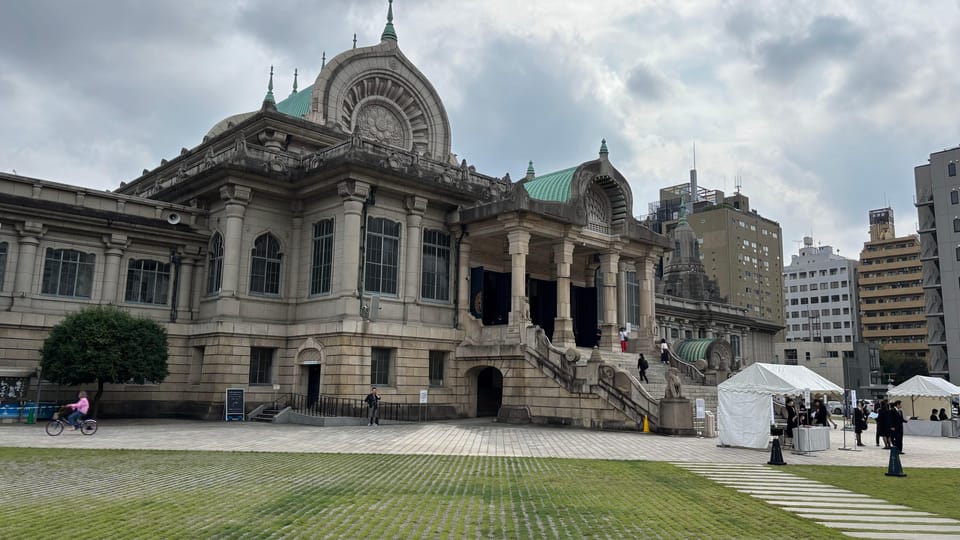
- Sensō-ji plus Nakamise Street: You start with the old-town feel, then step into one of Tokyo’s most important Buddhist sites.
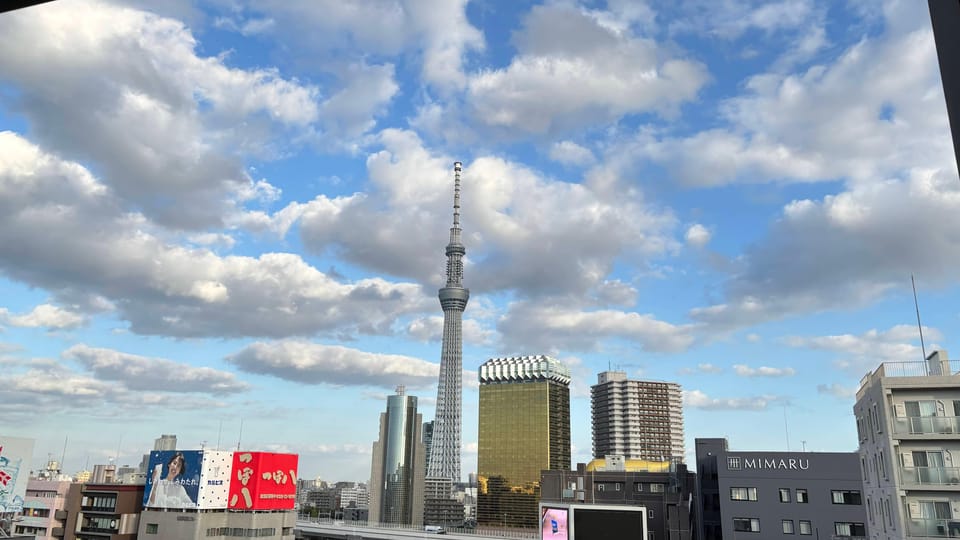
- Skytree views: A top-of-Tokyo panorama is a great reset point after dense neighborhoods below.
- Shibuya into Harajuku: You get the contrast between a major city crossing and a fashion-and-cafe area that’s fun to wander.
- Crowd planning: Shibuya and Harajuku can be intense, so having a guide to keep you moving helps.
How a private 10-hour Tokyo day stays personal
This is a private tour for your group (up to 5), designed for one big goal: show you key places while still letting your day feel like yours. You start with pickup in the hotel lobby or a pickup address, and the day is built to cover a lot without turning into a blur of “next, next, next.”
The big value here is that your guide can adjust priorities. Maybe you want more time photographing at the Imperial Palace area, or maybe you’d rather spend longer on food and snacks around Tsukiji Outer Market and keep moving. Either way, you’re not stuck with a one-size schedule.
One practical note: the details mention wheelchair accessibility but also say it’s not suitable for wheelchair users and people with mobility impairments. If mobility is a factor for you, confirm with the provider before you book, especially because multiple stops involve walking and crowd navigation. Also, children under 5 aren’t listed as suitable.
You can also read our reviews of more guided tours in Tokyo
Nakamise Street and Sensō-ji: old Tokyo, up close
Most Tokyo tours jump straight to temples. Here, you begin with Nakamise Shopping Street, a traditional lane lined with souvenir shops and food vendors near Sensō-ji. This start is smart because it sets the tone. You’re walking into history with your senses turned on, not just waiting at a single landmark.
Plan for this part as a sensory warm-up. You’ll smell the area, spot lots of small treats and keepsakes, and pick up the vibe of Asakusa, which is where Tokyo feels a lot more like “old meets new” than high-rise meets vending machine. You only have about 30 minutes for shopping here, so treat it like browsing time rather than a big shopping mission.
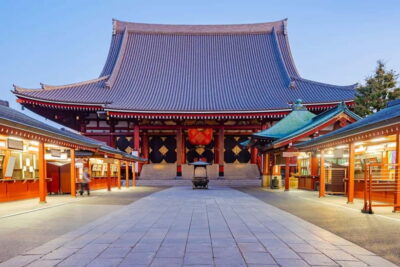
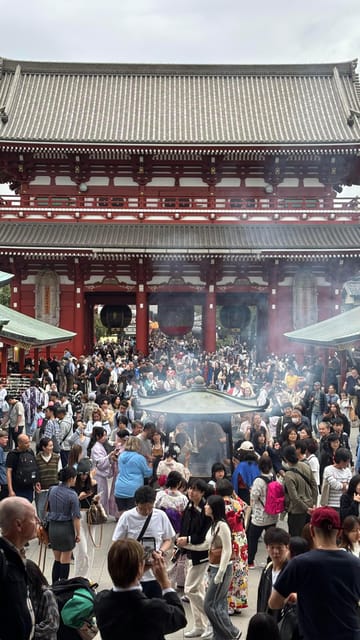
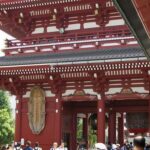
Then you move to Sensō-ji (Asakusa Kannon Temple) for a guided visit of about an hour. Sensō-ji isn’t just a pretty stop; it’s one of Tokyo’s most important Buddhist sites, and the value is in understanding what you’re looking at. With a guide, you’re more likely to notice the shrine layout, the architecture details, and why the grounds matter.
If you’re the type who likes calm photo moments, arrive mentally prepared for crowds. Sensō-ji gets busy, especially around popular viewing angles. Having someone to pace you through the key areas can save you from backtracking when foot traffic gets thick.
Skytree for the big-picture view
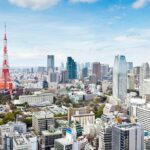
After Asakusa, the day shifts into skyline mode with Tokyo Skytree, Tokyo’s tallest building. You’ll get about an hour here, which is enough time to enjoy panoramic views and orient yourself to how the city’s neighborhoods stack up.
Skytree’s best use on a 10-hour day is simple: treat it as your “reset” view. From up high, Tokyo stops being a mass of streets and becomes understandable. You’ll likely see why the guide’s earlier route made sense, and you’ll be better at choosing what to photograph later.
About admission: the provided details are a bit conflicting. Some notes say tickets aren’t included, while other notes say Skytree admission is included and there’s also a listed 1800 fee mention. I’d treat this as a confirm-before-you-go situation so you’re not surprised at the counter.
Imperial Palace area photos, then Meiji Jingu’s quiet contrast
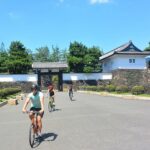
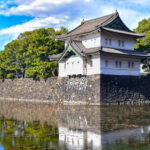
Next comes the Imperial Palace, with a guided visit that’s shorter (about 30 minutes) and mostly photo-focused from the outside. This is the kind of stop that works best when you know what you’re looking for. With a guide, you don’t just see walls and gates; you get the context that makes it feel like more than a backdrop.
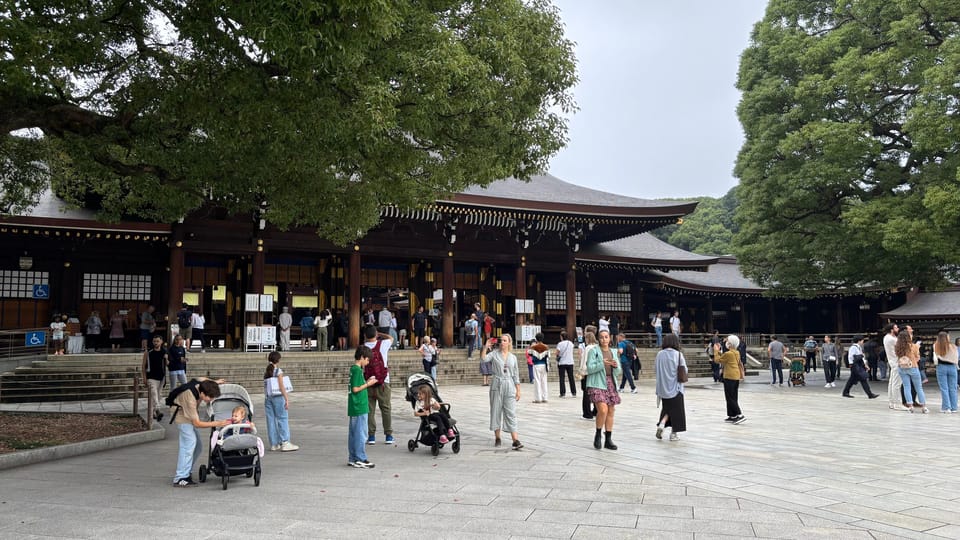
One thing I like about this pairing is the emotional contrast it creates. After the Imperial Palace area, you head to Meiji Jingu Shrine, described as the most respected shrine in Japan, dedicated to Emperor Meiji and Empress Shoken. Meiji Jingu is about atmosphere, not speed.
You’ll get about an hour here for sightseeing, which usually feels just right on a long day. The shrine visit gives your feet a mental break after market streets and landmark crowds, and it’s a good place to slow down with your camera instead of rushing for the next photo.
Tsukiji Outer Market: smart timing beats overthinking
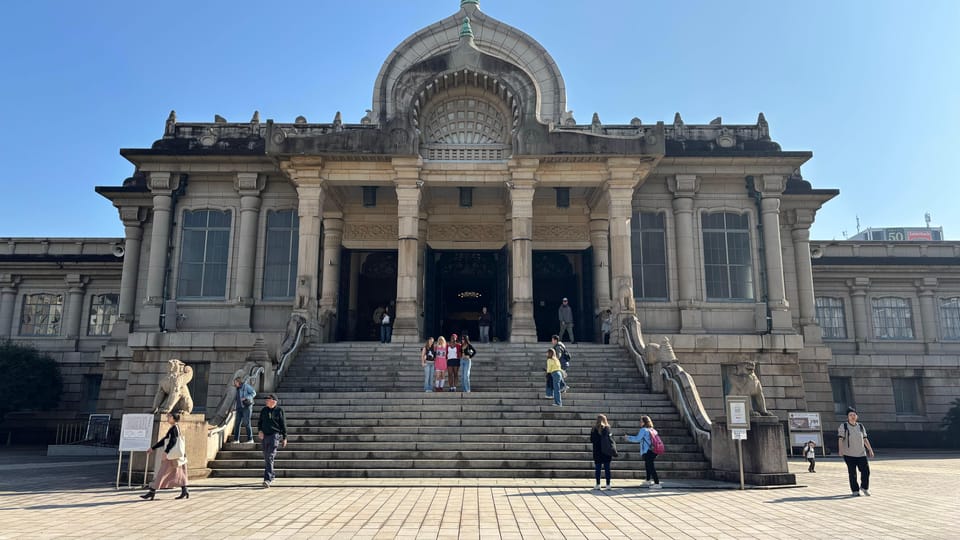
You’ll spend around one hour around Tsukiji Outer Market. This part of the day is all about energy: snack stops, food stalls, and people-watching, with just enough time to try something small if you want.
Even if you don’t go heavy on food, Tsukiji is still valuable. It shows you how Tokyo’s food culture looks at street level, not just in polished restaurants. And because you have a guide, you can move through the area efficiently instead of wandering in circles.
Lunch is not included, so Tsukiji can be a convenient place to handle your own meal strategy. Keep your expectations practical: this is a shopping and eating zone, so expect crowds and narrow pathways. If you’re prone to getting overwhelmed, ask your guide to help you pick a less congested route through the market.
You can also read our reviews of more private tours in Tokyo
Shibuya Scramble Crossing: the world’s busiest crossing, handled right
Then comes the moment most people picture when they hear Tokyo: Shibuya Scramble Crossing. You’ll get about 30 minutes for sightseeing, which can sound short until you realize this is a place you should experience at the right moment, not just walk around indefinitely.
The guide value here is timing and flow. When you’re standing at Shibuya, it’s easy to lose track of where you can cross safely and where you’re blocking someone else’s path. With a guide, you’re more likely to get the angle you want without spending half your time retracing steps.
The plus: Shibuya is a real-life Tokyo movie scene. The energy is loud and fast, and it’s one of those places where you feel the city’s scale. The drawback: crowds can be intense, so keep your focus on the experience and avoid getting too wrapped up in perfect photo setups.
Harajuku and cafes: fashion you can taste
After Shibuya, you’ll head to Harajuku for about 30 minutes, including time at Takeshita Street. This is Japan’s fashion hub in practice, not just in theory. You see styles moving fast, pop culture energy in storefronts, and a “try it now” attitude that feels very Tokyo.
What makes this stop especially fun is the cafe options mentioned: the day can include different kinds of themed cafes, like owl cafes and cat cafes. If you’re into quirky experiences, this is where you’ll likely enjoy the most.
Still, treat Harajuku time as short and playful. Thirty minutes goes quickly, especially if you’re detouring for photos, snacks, or storefronts. If themed cafes are your priority, plan to keep Takeshita Street browsing moving so you don’t end up with the cafe feeling rushed.
Also note: the activity details say there will be crowded places, especially at Shibuya and Harajuku. That’s not a reason to avoid it, just a reason to wear shoes you can rely on for standing and quick walking.
What’s included, what’s not, and how to avoid surprises
This tour includes private transportation, pickup and drop-off, and a customizable itinerary. It’s run with an English-speaking guide/driver, and the group is kept private so you’re not squeezed into someone else’s pace.
Not included: lunch, any activity fees, and possibly the Tokyo Skytree admission depending on how your specific booking is set. Skytree is repeatedly referenced as a paid admission area in the details, even with the conflicting notes about inclusion, so I’d treat it as something to verify.
Practical rules: no smoking, and no flash photography is mentioned. That’s mostly about keeping the experience respectful and comfortable in crowded sacred or public spaces.
What to bring is straightforward but important: comfortable shoes, a hat, camera, sunscreen, and water. On a 10-hour day, water isn’t optional unless you love headaches.
Price: does $367 per group feel fair?
At $367 per group (up to 5) for a 10-hour private day, the price works best when you compare it to the cost of doing this kind of route on your own and adding up the time-saving.
You’re essentially paying for:
- a private vehicle and pickup/drop-off
- an English-speaking guide across multiple neighborhoods
- a plan that connects distant areas in a single day
If you’re traveling as a couple or small group, it can become good value because you’re not paying per person at full retail for a guide. If you’re a solo traveler, it can feel pricier, but private Tokyo days still have a payoff: less stress, fewer navigation dead ends, and more time experiencing instead of figuring out.
A helpful mindset: think of this as buying time and clarity. Tokyo rewards research, but you shouldn’t have to be your own traffic navigator for 10 hours.
Which traveler this fits best
You’ll likely enjoy this tour if you:
- want iconic Tokyo (Sensō-ji, Skytree, Imperial Palace area, Meiji Jingu, Shibuya, Harajuku)
- prefer a guide who can connect spots with context, not just point at them
- like the idea of a private group where you can slow down for photos or push on when you’re ready
- care about English support through busy areas
It may not be the best match if:
- you need a low-walking day or full wheelchair compatibility (because the details conflict here, and the route includes crowded, active areas)
- you’re traveling with children under 5
- you hate crowds and don’t want Shibuya and Harajuku on the same schedule
If your travel style is slow travel with long meals, you might also find 10 hours feels packed. Still, the customizable angle is the tool that can help you trim or rebalance.
Should you book this Tokyo private custom tour?
Book it if you want a high-efficiency but guided day that covers Tokyo’s big emotional points: old-town reverence in Asakusa, a city-scale view from Skytree, political-cultural landmarks near the Imperial Palace, the calm of Meiji Jingu, and then the energy switch to Shibuya and Harajuku.
Skip or rethink it if you’re looking for a relaxed, low-footprint day. This is a sightseeing day with lots of movement, and it makes the most sense when you’re comfortable walking and handling crowds.
My practical advice: before you go, confirm two things in writing—how Skytree admission is handled for your specific booking, and what “wheelchair accessible” means in your case. Then show up with your best walking shoes, and you’ll get a Tokyo day that feels put together, not random.
FAQ
How long is the tour?
The tour duration is listed as 10 hours.
What is the group size and price?
The price is $367 per group for up to 5 people.
Where do you get picked up?
Pickup is included, and you meet in the hotel lobby or at a provided pickup address.
Is the tour private?
Yes. This is a private group tour.
What language is the guide?
The tour is listed as English.
Is lunch included?
No. Lunch is not included.
Do I need to pay for Tokyo Skytree?
Skytree admission is mentioned as not included in one place, while another note says admission is included. There’s also a listed 1800 fee mention, so it’s best to confirm for your booking.
Are there any rules about photography or smoking?
Yes: smoking is not allowed, and flash photography is not allowed.
Is it wheelchair accessible?
The details include wheelchair accessible, but they also state it is not suitable for wheelchair users and people with mobility impairments. Confirm with the provider before booking.
What should I bring?
Bring comfortable shoes, a hat, a camera, sunscreen, and water.