REVIEW · TOKYO
Tokyo: Mount Fuji Must-see Attractions One Day Sightseeing Tour
Book on Viator →Operated by F Trip · Bookable on Viator
Some days Tokyo feels too far from nature.
This one-day trip gives you round-trip coach transfers and live commentary, so you spend less time figuring things out and more time getting the best Mt. Fuji angles. I also like how the route mixes big-name spots with a couple of calmer, Fuji-focused stops. One drawback to plan for: Mt. Fuji visibility is unpredictable, and if clouds roll in, a few photo moments can turn into cloudy sightseeing instead.
The day runs at a steady pace—10 hours—yet you still get meaningful time at the key places. In the guide feedback, names like Kevin, Andrew, Yulina, and Maddy show up often, and the common thread is clear, organized explanations that make the stops feel more than just a checklist. Still, a couple of reviews note time can feel short at the busiest hotspots, especially if you’re focused on one specific photo spot.
If you go with the right expectations, this tour is a strong way to see the Fuji region without a transit maze. You’ll hit Lake Kawaguchi, Oshino Hakkai, and the Arakurayama area (including the Chureito Pagoda), plus the Arakura Fuji Sengen Shrine. But it’s not a slow, deep cultural day—think efficient and scenic.
In This Review
- Key Points Worth Knowing Before You Go
- Price and What $60 Really Buys You
- How the 10-Hour Schedule Works (And Why It Matters)
- Stop by Stop: What You’ll Get at Each Mount Fuji Hit
- Saiko Iyashi no Sato Nenba: A Traditional Village Backdrop
- Lake Kawaguchiko: Quick Water Views With Fuji Angles
- Oishi Park: Seasonal Color With a Short Time Window
- Kawaguchiko Natural Living Center: The Red Torii Photo Moment
- Arakurayama Sengen Park: The Chureito Pagoda Area
- Arakura Fuji Sengen Shrine: Quick, Historic, and Peaceful
- Oshino Hakkai: The Water Springs Part of the World Heritage Story
- Guides Make a Big Difference on a Day Like This
- Weather Reality: The Main Thing You Can’t Control
- Transportation Comfort and Group Size: Mostly a Yes
- Who This Tour Fits Best
- Practical Tips So Your Day Feels Smooth
- Should You Book This Tokyo-to-Fuji Day Tour?
- FAQ
- How long is the Mount Fuji sightseeing tour from Tokyo?
- What does the $60 price include?
- Is lunch included?
- Is a printed ticket required?
- Are entrance fees included for the stops?
- Does the tour include round-trip transportation from Tokyo?
- How many people are in the group?
- What is the cancellation window for a full refund?
Key Points Worth Knowing Before You Go
- Round-trip transfers from Tokyo remove most of the stress of getting to Fuji.
- Live guide commentary helps you understand what you’re seeing, not just where to stand.
- A classic Fuji route covers Lake Kawaguchi, Oishi Park, Arakurayama, and Oshino Hakkai in one day.
- Mt. Fuji visibility can be hit or miss, so bring a flexible mindset for clouds.
- Time at stops varies, and the busiest photo spot may feel rushed if weather worsens.
- Group size caps at 45, which keeps it from feeling like a school bus stampede.
Price and What $60 Really Buys You
At about $60 per person for roughly 10 hours, this is priced like a practical day trip rather than a premium private excursion. What makes it feel fair is what’s included: air-conditioned vehicle plus all fees and taxes. You also get round-trip transportation, which is usually the hardest part of planning a Fuji day from Tokyo.
Entrance fees are a mixed bag by stop. Saiko Iyashi no Sato Nenba includes admission, while places like Lake Kawaguchiko, Oishi Park, and Oshino Hakkai are listed as free during the tour. So you’re mostly paying for the ride, the itinerary flow, and the guide’s narration—not a long list of paid entrances.
If you’re the type who hates wasting daylight on transfers, waiting for trains, and re-checking bus routes, $60 can be a bargain. If you already know how to navigate the Fuji area by yourself and prefer extra time at fewer stops, you may feel the tour is efficient to the point of sometimes feeling crowded or rushed. Either way, the price-to-coverage ratio is the tour’s main strength.
You can also read our reviews of more tours and experiences in Tokyo



How the 10-Hour Schedule Works (And Why It Matters)
A one-day Mount Fuji plan always has a timing problem. Distances take time, and photo-worthy conditions can change hour to hour. This tour solves the timing problem by using a fixed route and a coach format with multiple scheduled stops.
The stop times are short to moderate:
- Saiko Iyashi no Sato Nenba: 1 hour
- Lake Kawaguchiko: 20 minutes
- Oishi Park: 25 minutes
- Kawaguchiko Natural Living Center: 10 minutes
- Arakurayama Sengen Park area: 1 hour
- Arakura Fuji Sengen Shrine: 15 minutes
- Oshino Hakkai: 1 hour
That spread is why you’ll leave with lots of different views, but also why you may not feel fully “settled” at any one place. If you’re chasing a specific composition—especially the classic Arakurayama angle—you’ll want good weather early, because later conditions can shift.
Stop by Stop: What You’ll Get at Each Mount Fuji Hit
Saiko Iyashi no Sato Nenba: A Traditional Village Backdrop
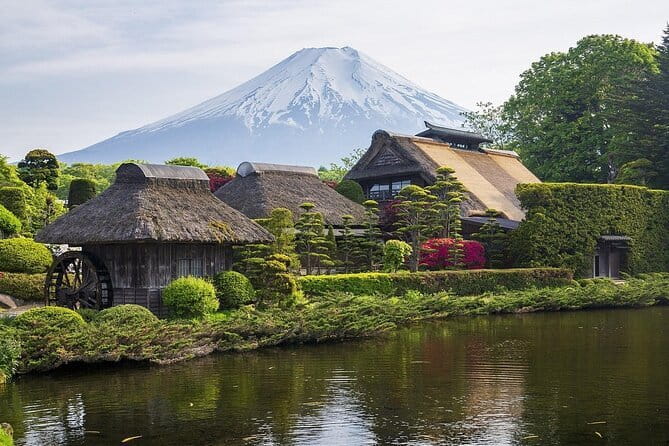
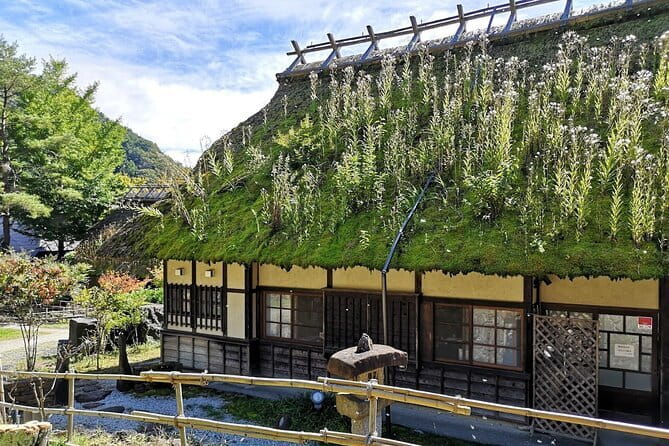
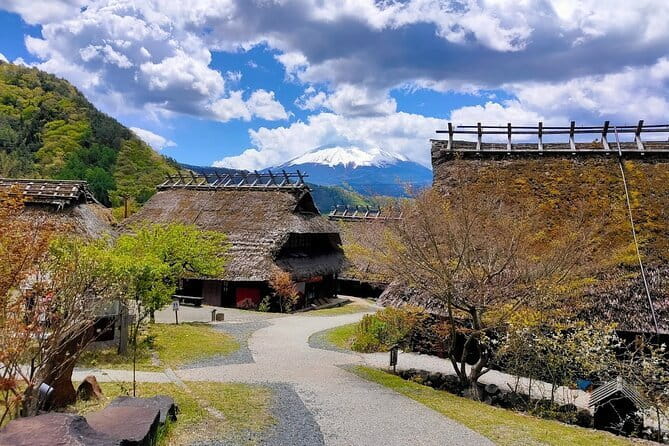
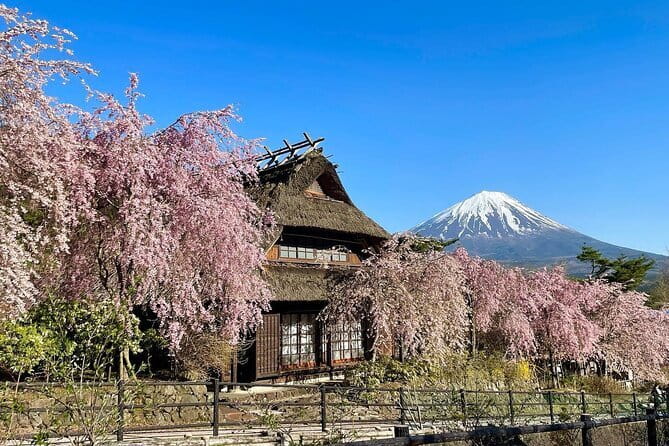
The day starts at Saiko Iyashi no Sato Nenba, a traditional village in Fujikawaguchiko Town known for Mt. Fuji in the background. It’s also tied to a real-life story: the village was destroyed by a landslide after a typhoon in 1966. That history adds weight to what might otherwise be a scenic open-air set.
You get 1 hour, which is the longest stop besides Arakurayama and Oshino Hakkai. That extra time matters here because this is a place you’ll likely want to walk slowly, scan details, and see how the village layout frames Fuji.
One thing to consider: this stop is included by admission, so it’s likely where the tour’s structure most strongly influences your experience. If you’re hoping for more time at lakeside viewpoints instead, keep in mind this is a village-and-view mix rather than a pure scenery stop.
Lake Kawaguchiko: Quick Water Views With Fuji Angles
Next is Lake Kawaguchiko, one of the five Fuji lakes. You’ll spend about 20 minutes, and the goal is simple: get shoreline views where Mt. Fuji often shows up as a backdrop.
Even with a short stop, lake timing can pay off. On clear days, you can catch crisp reflections and skyline compositions. On cloudy days, the value becomes more about the atmosphere—fresh air, shoreline walks, and turning photo hopes into “at least I’m here” moments.
Because the stop is brief, bring a plan for what you want most: a wide view, a photo spot, or a quick stroll. Don’t expect time to wander far away from the main viewing areas.





Oishi Park: Seasonal Color With a Short Time Window
Then it’s Oishi Park, known for seasonal flower displays. Depending on the time of year, it can feature cherry blossoms, lavender, red leaves, kochia, and even snow-and-reeds scenes when winter conditions hit.
You get about 25 minutes, which is enough to see the main views and move between photo-friendly sections without feeling rushed into an early exit. The park is listed as free for the tour, so it’s a good return on time: nature scenery without extra ticket cost.
A practical note: seasonal parks can be crowded when conditions are perfect. This is one reason the coach schedule matters—you’re arriving and leaving at set times.
Kawaguchiko Natural Living Center: The Red Torii Photo Moment
This is a quick one: about 10 minutes at the Kawaguchiko Natural Living Center, with a famous shot where a red torii blends with Mt. Fuji. It’s the kind of photo stop that works best if you can see Fuji clearly, since the entire point is that layered composition.
Because the time is short, don’t treat this as a place to explore deeply. Treat it as a grab-and-go viewpoint. If weather is good, it can be one of those satisfying “that’s the Fuji picture I wanted” moments.
Arakurayama Sengen Park: The Chureito Pagoda Area
Now you reach the heavy hitter: Arakurayama Sengen Park in Fujiyoshida. This is the area where the Chureito Pagoda is found, and it’s famous enough that it’s repeatedly described as a must-see for photographers.
You get 1 hour here, which helps because you may need time for stairs, viewpoints, and adjusting to changing light. This is also where weather timing can make or break your photos. Reviews mention Mt. Fuji visibility can be unpredictable, and one critique specifically flags that the pagoda area worked best earlier rather than later when conditions worsened.
So here’s the advice if you’re thinking about booking: if you care most about the iconic pagoda view, you’ll want to arrive mentally ready to make the most of whatever weather you get at this point in the day.
Arakura Fuji Sengen Shrine: Quick, Historic, and Peaceful
After Arakurayama, you visit Arakura Fuji Sengen Shrine for about 15 minutes. The shrine is described as having origins going back to 705 and a history of more than 1,300 years. It’s a holy place for prayers related to well-being and family happiness.
This stop is short, but it gives you a different tone from the photo-driven park sections. Even in a brief visit, you’ll get a sense of how Fuji is part of religious life, not just a mountain for pictures.
Oshino Hakkai: The Water Springs Part of the World Heritage Story
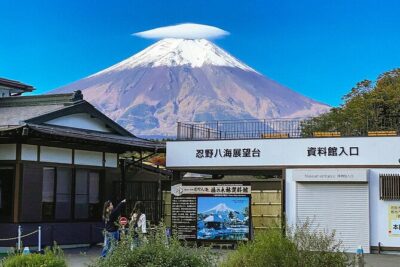
You end with Oshino Hakkai, a World Heritage Site shaped by eight clear springs fed by snow melt from Mt. Fuji. The springs are also linked to the idea of “100 Famous Waters of Japan,” and you can taste the water for free.
You get 1 hour, and that’s a good amount of time because Oshino Hakkai isn’t just one photo angle. It’s a small complex where you can move around, compare spring views, and take in the flow of the water.
This stop can be a nice payoff if earlier views are hazy. Even when Fuji isn’t clearly visible, the water setting still feels special—and it’s a different kind of Fuji connection than lakeside scenery.
Guides Make a Big Difference on a Day Like This
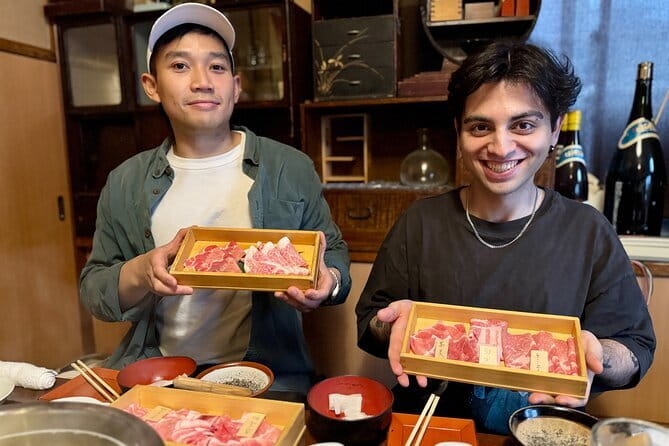
This tour is only as good as the way the guide frames it. In the feedback, guides named Kevin, Andrew, Yulina, and Maddy come up with praise for being organized, friendly, energetic, and good at sharing details. A couple of comments also point out that the tour becomes more interesting thanks to the historical and location context.
That matters because Mount Fuji days can turn frustrating fast if you’re only chasing photos. When a guide explains what’s happening at each stop—why this shoreline angle exists, what the shrine represents, or why the water at Oshino Hakkai matters—you’re less likely to feel like you paid for a bus ride.
So look at the guide quality as part of the value, even if you can’t choose the person. The consistent praise for communication is a real plus here.
Weather Reality: The Main Thing You Can’t Control
Here’s the honest part: Mt. Fuji visibility is unpredictable. Overcast days happen. Reviews mention cases where the group saw little or no mountain in the distance, yet still described the tour as scenic with a good guide.
If Fuji is hidden, you’ll still get:
- lakes and viewpoints
- seasonal park colors (weather permitting)
- shrine and village atmosphere
- the water springs at Oshino Hakkai
But you should also know what you’re signing up for. This is a shared day trip where you won’t be able to endlessly re-route every time the sky shifts. In one critique, timing around the pagoda area was affected by worsening weather later in the day. That’s a key consideration if your main goal is a very specific photo.
Transportation Comfort and Group Size: Mostly a Yes

The tour runs in an air-conditioned vehicle, and the group size is capped at 45 travelers. That cap helps keep the experience manageable—enough people to feel lively, not so many that it becomes total chaos.
Still, comfort can be variable. One review mentions an older bus without Wi-Fi and being less comfortable. Others specifically call out a comfortable bus. So I’d plan as if Wi-Fi might not be a sure thing, and focus on comfort basics you control: water, a light layer, and a phone battery for photos.
Who This Tour Fits Best
This is a great match if you:
- want a one-day plan from Tokyo without transit stress
- like classic Fuji stops like Lake Kawaguchiko and Oshino Hakkai
- want live guide stories so the day feels meaningful even when visibility isn’t perfect
- don’t want to spend your limited vacation time plotting routes
It may not be the best match if you:
- need long, slow time at fewer locations
- care only about one iconic photo spot and get upset if weather changes
- prefer total independence and maximum flexibility day-of
Practical Tips So Your Day Feels Smooth
If you want to get the most out of the tour pacing, do these:
- Dress in layers. Fuji weather can shift quickly, even in a single day.
- Prioritize your photo priorities early. If the pagoda view is your top goal, you’ll feel it most when conditions change.
- Don’t over-plan expectations for reflections. Lakes can look different in haze and cloud.
- Bring snacks if you get hungry between stops. Lunch isn’t included, and the schedule doesn’t promise a full break.
Should You Book This Tokyo-to-Fuji Day Tour?
Book it if you want a low-stress day with round-trip transportation and a route that hits the most famous Fuji-region sights. The biggest wins are the efficient coverage, the guide commentary, and the fact that even on weaker weather days you’re still getting real places—shrines, springs, and Fuji lake settings.
Skip or rethink if your trip depends on getting one single “perfect Mount Fuji in the distance” photo, and you’re the type who needs long time windows at a single spot. In that case, you may be happier with a more flexible approach where you can stay longer at fewer locations.
If you can accept the mountain as weather-dependent (not guaranteed), this tour is a solid way to see the highlights without turning your day into logistics.
FAQ
How long is the Mount Fuji sightseeing tour from Tokyo?
It runs for about 10 hours (approximately).
What does the $60 price include?
The price includes an air-conditioned vehicle and all fees and taxes.
Is lunch included?
No. Lunch is not included.
Is a printed ticket required?
No. The tour uses a mobile ticket.
Are entrance fees included for the stops?
Admission is included for Saiko Iyashi no Sato Nenba, while other listed stops are marked as free (for example Lake Kawaguchiko, Oishi Park, Arakurayama Sengen Park area, Arakura Fuji Sengen Shrine, and Oshino Hakkai).
Does the tour include round-trip transportation from Tokyo?
Yes. The tour offers round-trip coach transfers from the city.
How many people are in the group?
The tour has a maximum of 45 travelers.
What is the cancellation window for a full refund?
You can cancel up to 24 hours in advance for a full refund.
If you’d like, tell me your travel month (and whether your priority is photos, culture, or scenery). I can suggest which part of the route to focus on most when the weather is unpredictable.