REVIEW · TOKYO
Tokyo Ginza : Sumo and Mikoshi Experience,Open from Sep.
Book on GetYourGuide →Operated by Japanticket Inc. · Bookable on GetYourGuide
If you like sumo, this is personal. In Ginza, you’ll watch practice, learn the rules, eat chanko, then try sumo yourself.
What I like most is how close you get to the wrestlers and how much it feels like a festival, not a lecture. You also get hands-on mikoshi time after the show.
One thing to keep in mind: participation in ring time can be limited and may depend on a lottery. Premium and box seats guarantee participation, so plan your seat choice if ring time is your main goal.
In This Review
- Key things that make this Ginza sumo event special
- Where Ginza meets festival sumo
- The itinerary: from sumo practice to ring challenges
- Watching morning sumo training (what you’re really seeing)
- Learning winning techniques (with real clarity)
- Live demonstrations, then the ring
- The meal: chanko hot pot or a simpler snack
- The mikoshi moment: carrying a portable shrine in Ginza
- Meeting point and getting there fast
- Price and value: is $97 per person worth it?
- Who this is best for (and who should skip)
- Practical tips to make your experience smoother
- Should you book this Tokyo Ginza sumo and mikoshi experience?
- FAQ
- What does the price include?
- Is ring time guaranteed?
- What meal options are available?
- Can the food be made vegetarian or vegan?
- Is the event suitable for kids?
- Where is the meeting point and how do I get there?
Key things that make this Ginza sumo event special
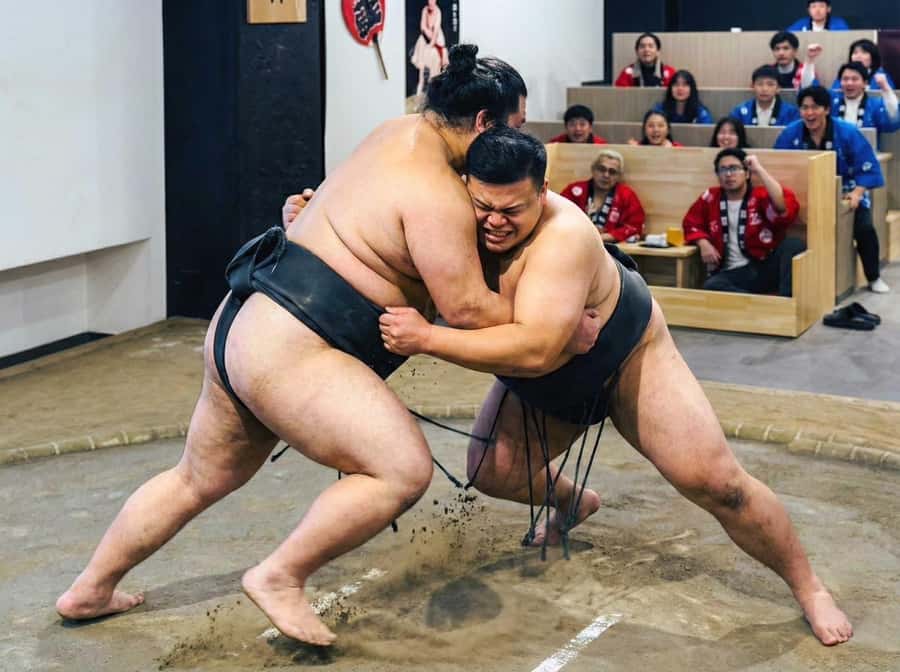
- Ring time with a retired pro wrestler so the training feels real, even though it’s built like an entertaining show
- Chanko hot pot or snack served in a relaxed setting, so you leave full, not just impressed
- Mikoshi experience where you carry a portable shrine the way festival teams do
- Festival energy and clear English guidance, with staff explaining what’s going on and inviting you in
- Limited participation for general seating, so your booking method matters
Where Ginza meets festival sumo
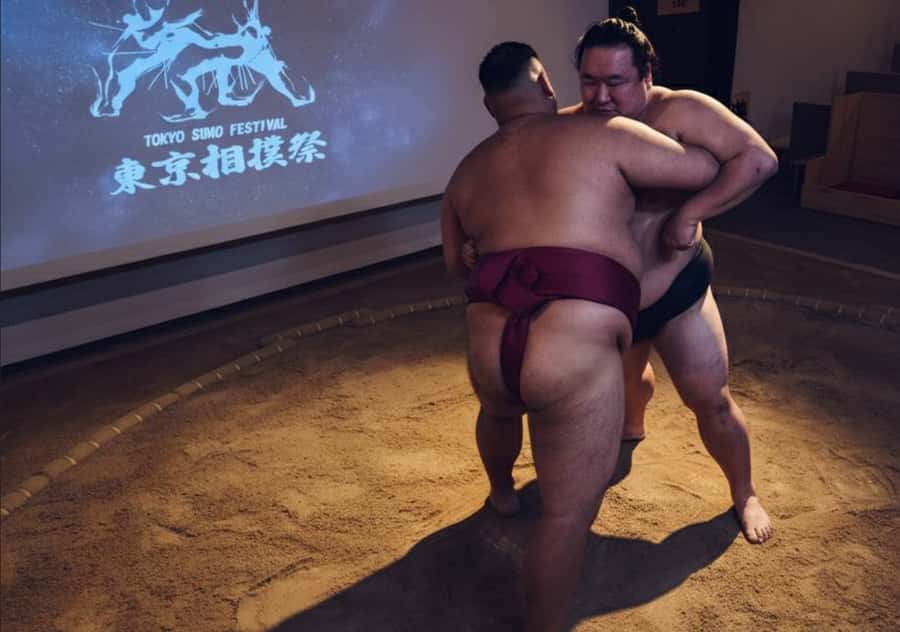
Ginza is famous for shopping, tight streets, and polished department stores. It also happens to be a place where you can experience Japanese festival culture in a way that’s easy to fit into a Tokyo itinerary. This sumo event is built around the idea that you’re not just watching—you’re joining the rhythm of the day.
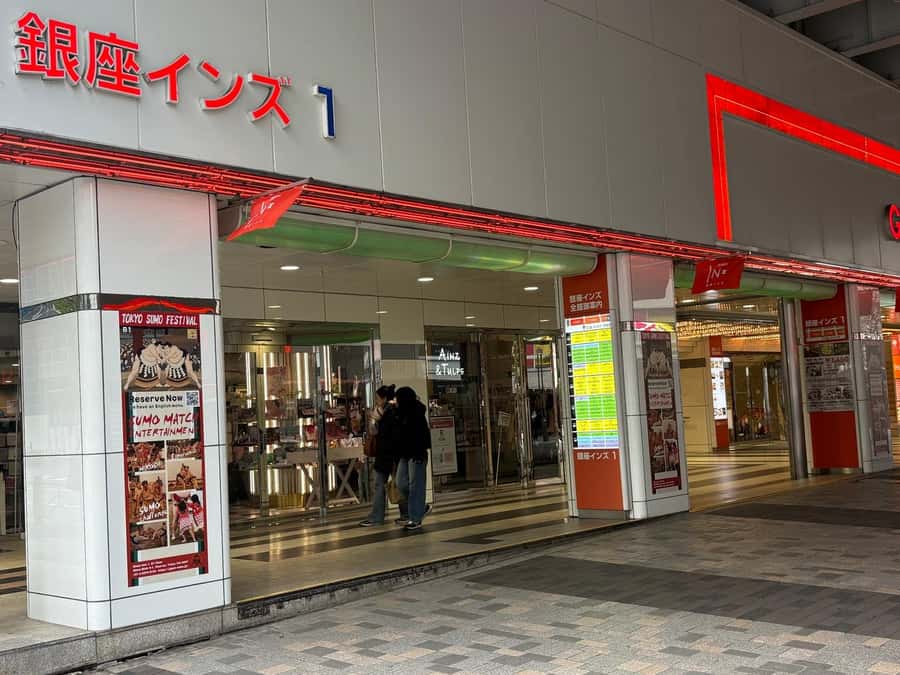
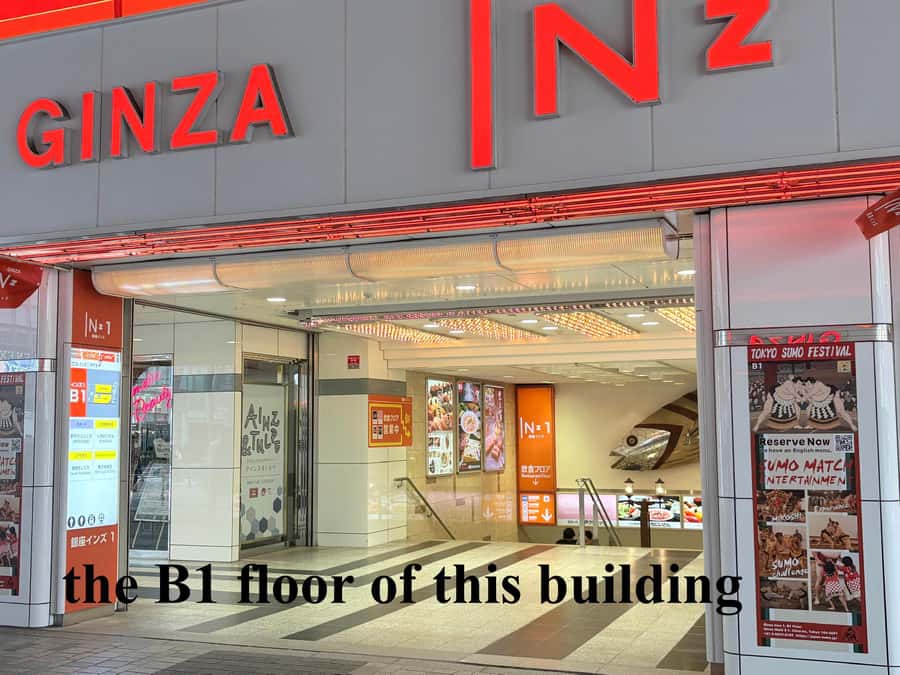
The venue is Ginza INZ, first basement floor (Ginza INZ 1_B1, 1 Nishi 3-chome). The meeting point is the same place where the experience starts and ends. If you’re arriving by train, you’ll find it very walkable from JR Yurakucho Station (about a 3-minute stroll), Tokyo Metro Ginza-Itchome Station (around 2 minutes), or Tokyo Metro Ginza Station (roughly 4 minutes). That short walk matters in Tokyo—less wandering, more time focused on the show.
The experience runs on an opening schedule that starts in September. It also has an English-friendly setup, which makes it much smoother if you’re traveling without Japanese. The staff explain things clearly, and they keep the tone fun enough for adults and kids.
You can also read our reviews of more tours and experiences in Tokyo.



The itinerary: from sumo practice to ring challenges
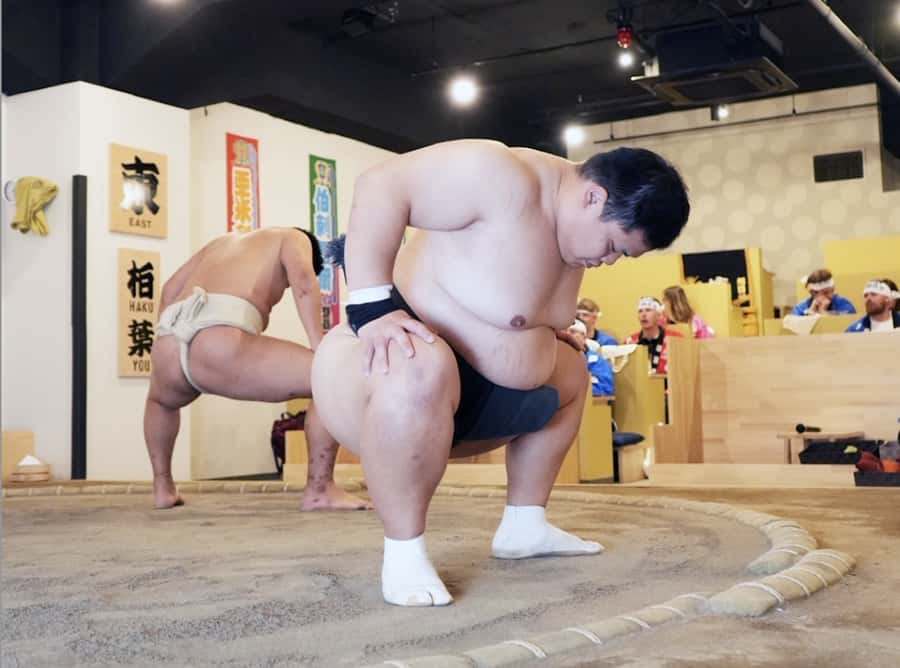
Your day starts with settling in at the basement venue. Then the show follows a clear flow: you watch morning sumo training, learn the logic behind the techniques, and see demonstrations that connect what you’re watching to what you can do later.
Watching morning sumo training (what you’re really seeing)
You’ll see morning sumo training, but with an important distinction: this is not the serious, full-on world of official bouts. It’s a show designed for an audience. That means the focus is on explanation, demonstration, and entertainment.
Still, that morning practice view is valuable. Sumo is deeply ritual. Even when the event is simplified, you’re seeing the culture of preparation—how wrestlers move, how they work, and how technique is explained in a way you can actually understand.
Learning winning techniques (with real clarity)
The rules and techniques get explained in a way that’s easy to follow. People don’t just get told names of moves; you’re guided through what matters. One review-style detail that sticks: the rules are often presented with humor, and the staff invite interaction so you’re not stuck passively watching.
This part is where the experience becomes more than entertainment. You start noticing what the wrestlers are doing and why it works. That makes your later ring time feel more purposeful.
Live demonstrations, then the ring
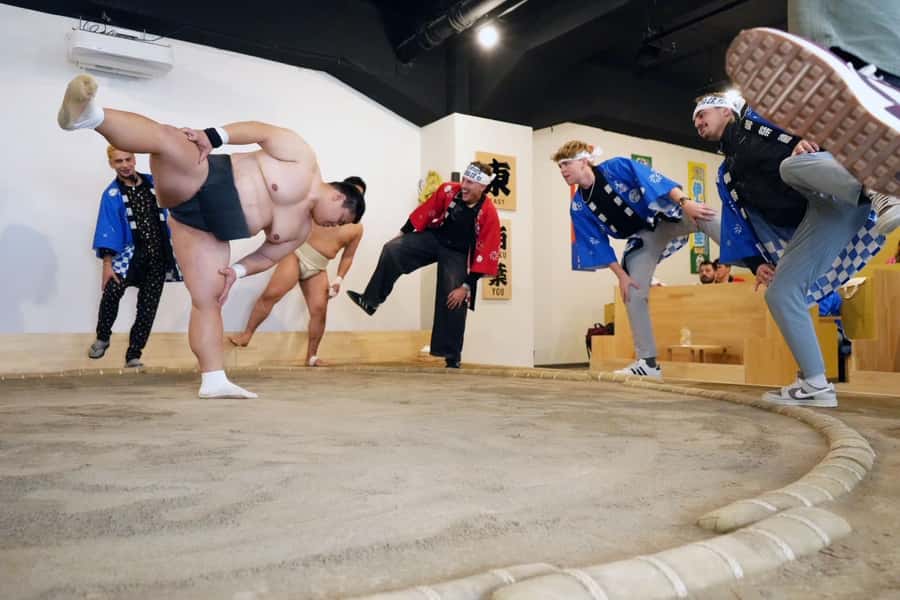
After you’ve watched and learned, you get a chance to go into the ring and try sumo yourself against a wrestler. This is the moment most people book for, and it’s exactly where the event’s biggest consideration appears.
Participation is limited. General seating may be chosen through a lottery if there are many applicants. Premium and box seats provide guaranteed participation, which is a big deal if you really want ring time. If trying sumo is your must-do, I’d treat seat type as part of the strategy, not an afterthought.
There’s also an energy on stage. You might be invited up for parts of the show, and staff may help you get into the festival mood with costume-style elements like a happi (a festival coat). The key point: the show is designed so you can participate, not just stand in the background.






The meal: chanko hot pot or a simpler snack
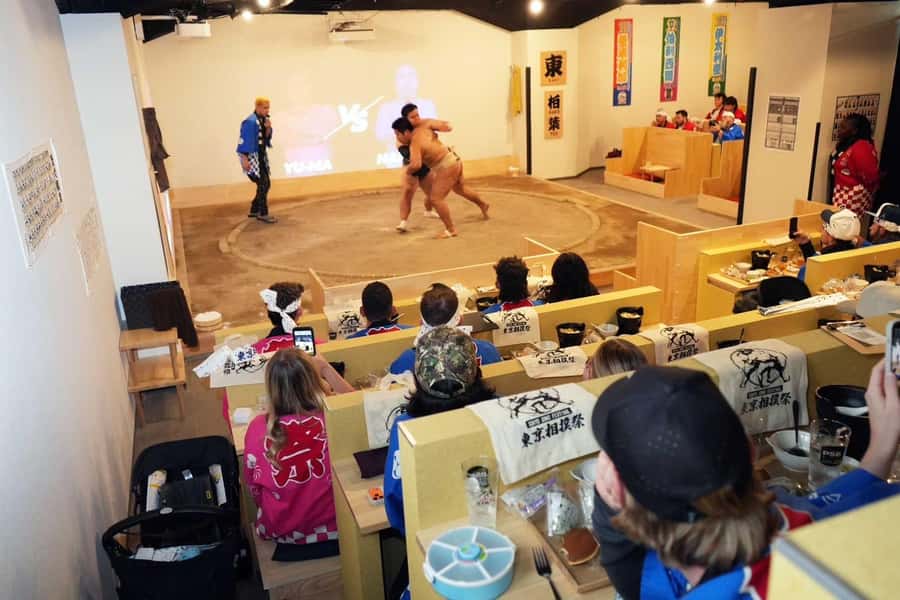
Food in Japan can be either a highlight or an awkward detour. Here, it’s built into the experience, so you’re not searching for dinner after the show.
Your meal choice is chanko hot pot or a snack. Drinks are not included. If you want water or a soft drink, you’ll need to buy it separately.
Why this meal matters: chanko nabe is strongly associated with sumo eating culture. Even if the show format is lighter than an official training day, you’ll still get a sense of what wrestlers commonly eat for strength and recovery. And because the meal is part of the session, it keeps the whole event from feeling disjointed.
Diet notes are practical:
- Vegetarian and vegan meals are available, but you need to inform the provider 2 days before your reservation date.
- Gluten-free or halal food can’t be provided, so if you need strict dietary rules, it’s worth bringing your own items that fit your needs.
The mikoshi moment: carrying a portable shrine in Ginza
After the sumo portion, you shift into the festival element: the mikoshi experience.
A mikoshi is a portable shrine used in Japanese festivals. In plain terms, it’s the sacred object that festival teams carry during processions. Here, you get the physical experience of that tradition—carrying it, participating in the momentum, and seeing how this kind of event works as a group activity.
This is one of the experiences that feels unusually memorable because it’s not “look and point.” It asks something of you. Even if you’re not a sports person, you’ll understand the effort and teamwork immediately.
And it pairs nicely with the sumo portion. Sumo isn’t just sport; it has ritual. The mikoshi adds another layer of living tradition, showing how Japanese festivals and ritual movement can feel in your body.
Meeting point and getting there fast
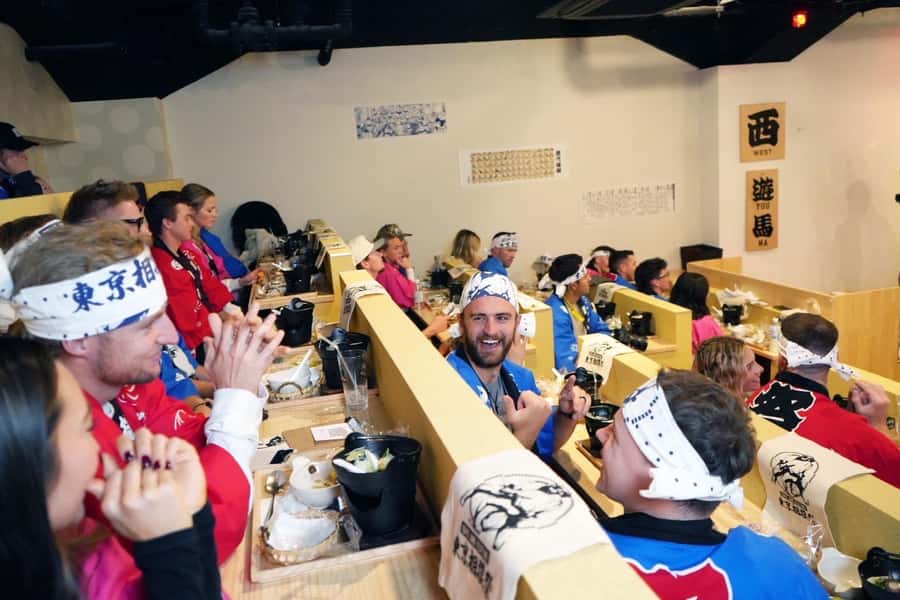
You’ll start and end back at the meeting point: Ginza INZ1 B1, Nishi 3-chome, Ginza. Since the venue is on the first basement floor, give yourself extra time to find it. Tokyo basements can be easy once you know the entrance, but confusing if you arrive late or off by a few turns.
Transit is the easiest part:
- JR Yurakucho Station: about a 3-minute walk
- Tokyo Metro Ginza-Itchome Station: about a 2-minute walk
- Tokyo Metro Ginza Station: about a 4-minute walk
Ginza itself is well connected from Tokyo Station, so if you’re staying near Tokyo Station, the commute is straightforward.
Price and value: is $97 per person worth it?
At $97 per person, you’re paying for more than seats and a performance. You’re paying for access that usually feels out of reach:
- instruction and explanation (in English)
- proximity to wrestlers
- a chance to step into the ring (with seat-type rules that affect your odds)
- a meal connected to sumo culture
- the rare chance to carry a mikoshi in a structured setting
That value equation gets clearer if you compare typical Tokyo experiences. Most attractions are either observation-only or workshop-only. This blends both, with the added advantage of being in central Ginza—less time commuting, fewer “what do we do after this?” gaps.
The main way the price can feel less worth it is if you end up in general seating and you don’t get selected for ring time. If ring time is your #1 goal, premium or box seating makes the risk go away.
Who this is best for (and who should skip)
I think this experience fits best if you want hands-on cultural fun and you don’t mind a show format.
It’s a great match for:
- Sumo fans who want more than watching on TV
- Families looking for something interactive and easy to understand
- First-time visitors who want a Tokyo activity that’s in central Ginza and simple to reach
- Anyone who likes festival culture and wants a mikoshi experience that’s more than a photo stop
It may not be the best match if:
- You’re hunting only serious, real-world sumo training details (this is show-style and not an official bout format)
- You have strict dietary needs beyond vegetarian/vegan (gluten-free and halal can’t be provided)
- You’re relying on ring time but planning to choose the cheapest seat type without understanding the possible lottery rule
Practical tips to make your experience smoother
A few small choices make a big difference.
First, arrive early enough to settle in without stress. The location is basement level, and it can be harder to spot exactly when you’re navigating quickly.
Second, if you have dietary needs, message ahead and choose the vegetarian/vegan plan only if it fits your timing. The provider needs notice 2 days before.
Third, if you use a wheelchair, don’t assume it’s fully flexible. There are limited wheelchair seats, so let the operator know during reservation.
Fourth, skip planning on drinks being included. The meal is included, but drinks are not.
Finally, keep expectations realistic about the format. You’ll learn and participate, but the show is meant to be enjoyable for different ages, not a strict training session.
Should you book this Tokyo Ginza sumo and mikoshi experience?

I’d book it if you want an efficient, central Tokyo activity that mixes sumo basics, a real chance to get on the mat, and a festival tradition you can feel—mikoshi carrying. It’s also a strong option when you want English guidance and you’d rather be involved than just watching.
I would pause and rethink if your entire goal is guaranteed ring time and you’re considering general seating without the assurance of participation. In that case, premium or box seating is the smart move. Also reconsider if gluten-free or halal requirements are non-negotiable, since those can’t be provided.
If your priority is learning, trying, and leaving with stories beyond a photo, this is one of the most practical ways to experience Japanese sumo culture in Tokyo—right in Ginza.
FAQ
What does the price include?
The experience price includes a meal (chanko hot pot or snack), an entertaining sumo experience, a mikoshi (portable shrine) experience, sumo wrestling experience with participation rules by seating type, and a souvenir.
Is ring time guaranteed?
For general seating, participation may be selected by lottery if there are many applicants. Premium and box seats provide guaranteed participation.
What meal options are available?
You can choose between chanko hot pot or a snack. Drinks are not included.
Can the food be made vegetarian or vegan?
Yes, vegetarian and vegan meals are available, but you must inform the provider through the messaging feature at least 2 days before your reservation date.
Is the event suitable for kids?
The sumo show is designed as an entertaining experience for both adults and children, and it is different from serious training and matches in morning sumo practice.
Where is the meeting point and how do I get there?
Meet at Ginza INZ1 B1, Nishi 3-chome, Ginza, Chuo City, Tokyo, on the first basement floor. It’s about a 3-minute walk from JR Yurakucho Station, a 2-minute walk from Tokyo Metro Ginza-Itchome Station, and about a 4-minute walk from Tokyo Metro Ginza Station.