REVIEW · TOKYO
Tokyo: Asakusa Walking Tour & Comedy Night
Book on GetYourGuide →Operated by Karate Comic Ryo · Bookable on GetYourGuide
Sacred sights meet comedy tonight. This Asakusa experience pairs a relaxed, guided look at Tokyo’s most iconic temple-and-street area with live standup from Karate Comic Ryo, all in one smooth evening. You start with history you can actually use, then end with jokes that connect the dots.
I like how Ryo slows the pace just enough for real questions, while still keeping the route tight and efficient. I also love the mix: prayer manners and shrine-to-temple context during the walk, followed by mostly clean standup you can enjoy without turning the night into an uncomfortable guessing game.
One consideration: if you’re expecting a rowdy comedy scene, this one leans family-friendly and teaches through humor rather than shock. Also, you’ll be on your feet for a good chunk of time, so wear shoes you trust.
In This Review
- Key things that make this night work
- Why Asakusa is perfect for a culture-and-comedy combo
- Meeting at Tokyo Cruise and getting your bearings fast
- Kaminarimon Gate: the photo stop that actually teaches
- Nakamise Shopping Street: taste the atmosphere, not just the snacks
- Asakusa Shrine: Shinto manners, explained in real time
- Sensō-ji Temple: walking into the main hall with context
- Your solo hour at the temple area: make it count
- Asakusa Smile Bar & Cafe: meet, then laugh (cleanly)
- Price and value: what $43 buys you in real terms
- Who this tour suits best (and who might not)
- Final thought: should you book the Asakusa walking tour and comedy night?
- FAQ
- Where is the meeting point?
- How far is the meeting point from Asakusa Station?
- What language is the tour guide?
- How long is the experience?
- Is it a small group?
- What does the walking tour include?
- Is there free time during the tour?
- What happens during the comedy part?
- Is the comedy clean or adult-only?
- What is included and what is not included?
Key things that make this night work
- Small group of up to 10, so you get time with the guide instead of standing behind strangers
- Ryo’s Asakusa focus, with landmarks you’ll recognize plus the meaning behind them
- Tokyo Skytree view from a Tourist Information Center, for a quick wow moment that frames the area
- How to pray at Shinto vs. Buddhism, explained in plain language as you move through sites
- A solo hour at Sensō-ji, so you can absorb the atmosphere at your own speed
- Asakusa Smile Bar & Cafe comedy night, with a meet-and-chat before the show
Why Asakusa is perfect for a culture-and-comedy combo
Asakusa works because it’s visually loud but spiritually precise. One minute you’re watching street life at Nakamise; the next you’re at gates and halls where the point is calm focus, not sightseeing clicks.
This tour earns its place by connecting those two worlds. Ryo isn’t just pointing out sights. He’s helping you understand the patterns: why people approach shrines a certain way, why temples feel different, and how the stories overlap without turning everything into one big blur.
And then, later, the comedy night keeps the same tone—learning through laughter. It’s a clever way to make the evening stick, especially if you’re tired of tours that feel like a spreadsheet of landmarks.
You can also read our reviews of more walking tours in Tokyo


Meeting at Tokyo Cruise and getting your bearings fast
You meet at 東京クルーズ 浅草乗り場 (TOKYO CRUISE), in front of the water-bus station area. It’s about a 1–2 minute walk from Asakusa Station on the Tokyo Metro Ginza Line, which makes it easy to pair with the rest of your day.
I like starting near the water because it helps you frame the neighborhood right away. Asakusa can feel like a maze if you arrive hungry and wide-eyed. This meeting point gives you a clear launchpad before you head into the temple zone.
From there, Ryo begins introducing the area and uses a great anchor point: a view of Tokyo Skytree from the top of the Tourist Information Center. That “here’s what you’re looking at” moment matters. It helps you connect modern Tokyo to the older streets you’re about to walk.
Kaminarimon Gate: the photo stop that actually teaches
Your first big landmark is Kaminarimon Gate, the iconic outer gate of Sensō-ji. You get a photo stop and guided context, so you’re not just snapping pictures with no idea what you’re seeing.
What I like here is the way the guide sets expectations for behavior. Even before you’re inside, you’re learning that this isn’t a theme park. People come to pray, and the vibe shifts from street energy to respectful attention.
If you like to avoid the worst congestion, this is also the part of Asakusa where timing and guidance help. A small group means you can move with purpose rather than get stuck in the slowest moving crowd lane.
Nakamise Shopping Street: taste the atmosphere, not just the snacks
Next comes Nakamise Shopping Street, a classic corridor of shops leading toward Sensō-ji. You get another short guided segment plus time to simply look around.
Here’s the practical value: Ryo helps you read what you’re walking through. You’ll understand why the street exists in the first place and what it signals as you move closer to the religious sites.
Also, this is a good moment for mental pacing. Walking through Nakamise feels like sensory overload—smells, crowds, souvenir displays. A guided context keeps it from becoming just background noise while you try to figure out what’s worth your attention.
Asakusa Shrine: Shinto manners, explained in real time
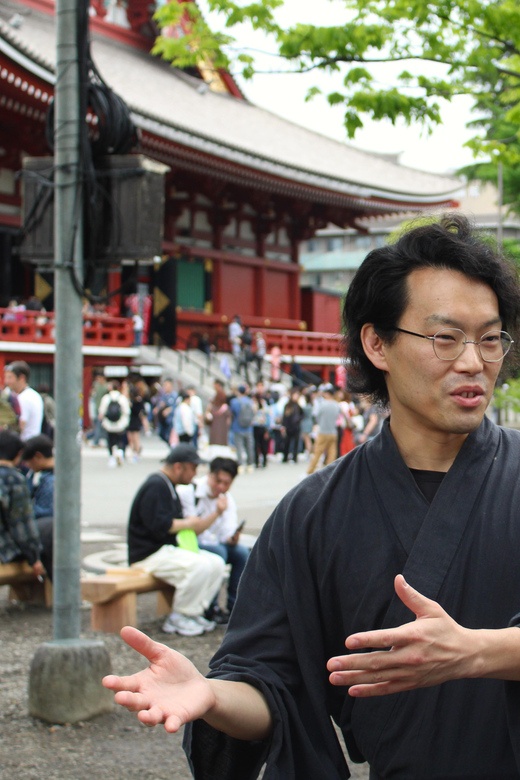
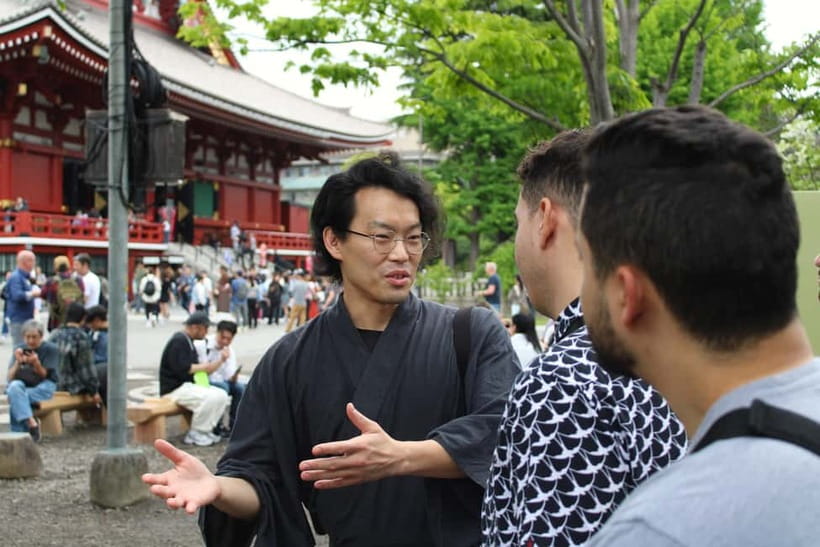
Then the route heads to Asakusa Shrine, where you get guided touring and cultural explanation. This is where the tour starts feeling more personal because Ryo focuses on how to participate correctly.
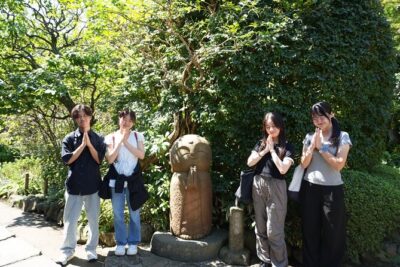
You’ll learn how to pray at a Shinto shrine, including basic manners you can use on your own later. That’s one of those small skills that makes travel feel less like watching and more like understanding.
Ryo also explains the relationship between three deities at Asakusa Shrine and connects it to the principal image of Sensō-ji Temple. Even if you don’t remember every detail, the takeaway is powerful: these sites aren’t isolated. They relate to each other in ways that affect how people experience Asakusa as a spiritual destination.
One more bonus here is the way Ryo answers questions. The conversations don’t feel like a lecture. They feel like you’re standing next to someone who actually wants you to get it.
You can also read our reviews of more evening experiences in Tokyo


Sensō-ji Temple: walking into the main hall with context
From Asakusa Shrine you move toward Sensō-ji Temple, including another guided segment. You also get guided storytelling about the religions in Japan: Shinto and Buddhism, and how the atmosphere changes when you cross into the temple space.
You’ll learn how to pray at a Buddhist temple as well. That matters because the gestures and intent aren’t the same. When you know what you’re looking for, the whole place changes from scenery into something you can respect.
Sensō-ji is also where you’ll notice specific landmarks that most people walk past. The tour includes mention of the Bell of Time, a detail that turns a big temple area into something more specific and memorable.
And after reaching the main hall area, you get a 60-minute free time. This is not wasted time. It’s the payoff: you can slow down, look at the temple environment on your own terms, and shop without feeling rushed.
Your solo hour at the temple area: make it count
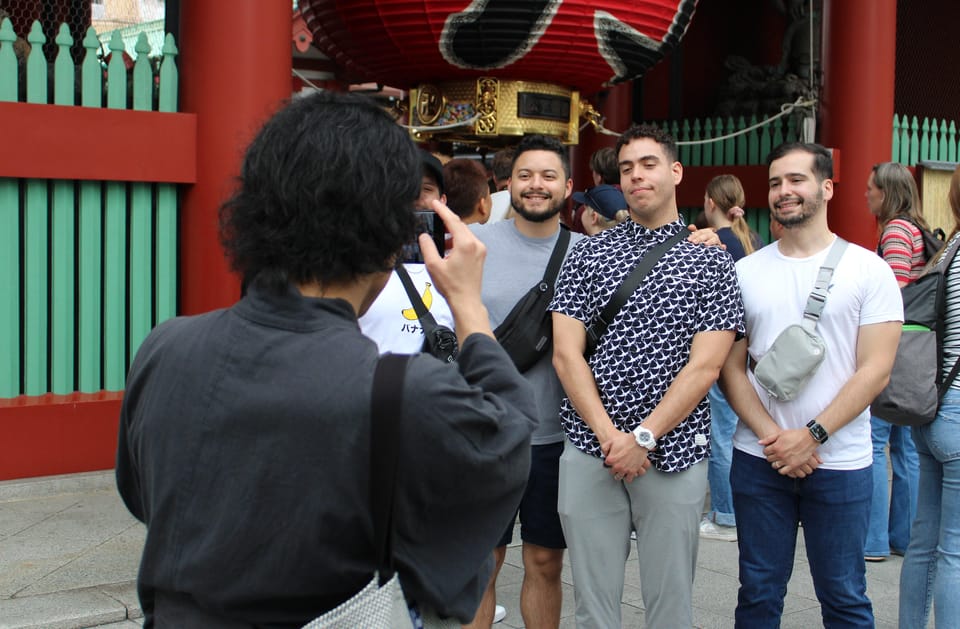
That one hour of free time is one of the best parts of the night. It gives you control over your pace, which is important in Asakusa. Crowds swell and ebb, and you’ll feel the difference from minute to minute.
I’d use the hour in two passes. First, do a calmer walk-through where you just watch and absorb. Second, zoom in on the parts you didn’t fully understand during the guided portion—especially if you felt like you were collecting meaning while moving.
Also, you’ll have time to buy souvenirs. Since this is a religious destination, you might find a lot of small items tied to the experience. Having time to browse without being pulled forward makes the souvenir hunt feel more intentional.
Asakusa Smile Bar & Cafe: meet, then laugh (cleanly)
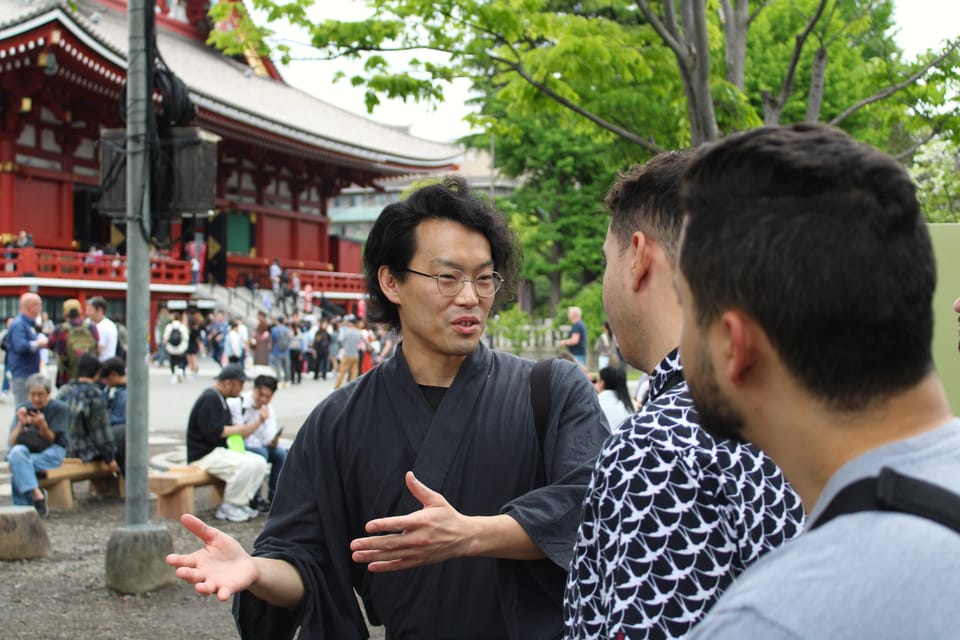
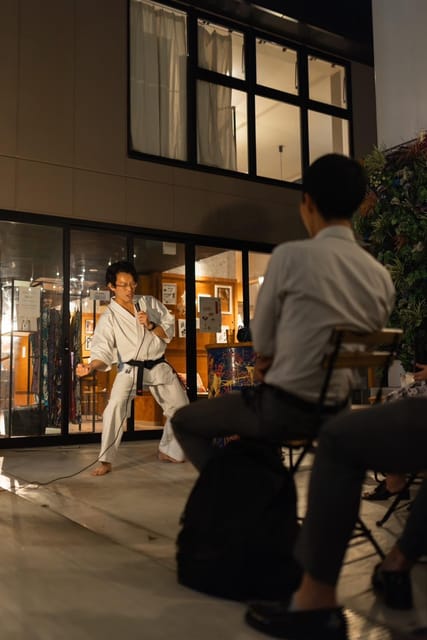
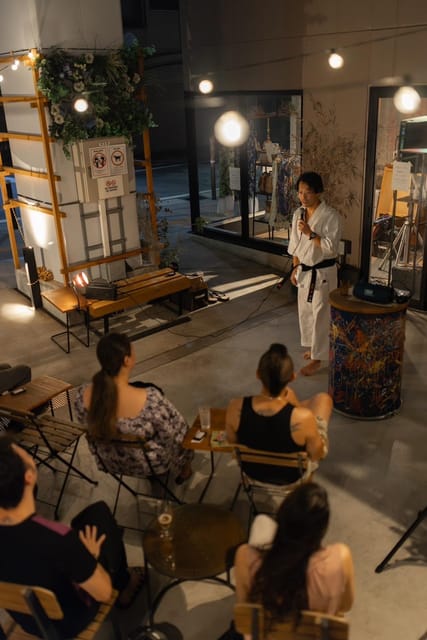
The second half happens at Asakusa Smile Bar & Cafe (浅草スマイルバー&カフェ). Your comedy night runs about 75 minutes, and it’s structured like a friendly hangout rather than a stiff show.
It starts with a casual 30-minute meetup where you can chat with other small-group guests. I like that setup because it turns the night into a shared experience, not just a ticket you swipe and then escape.
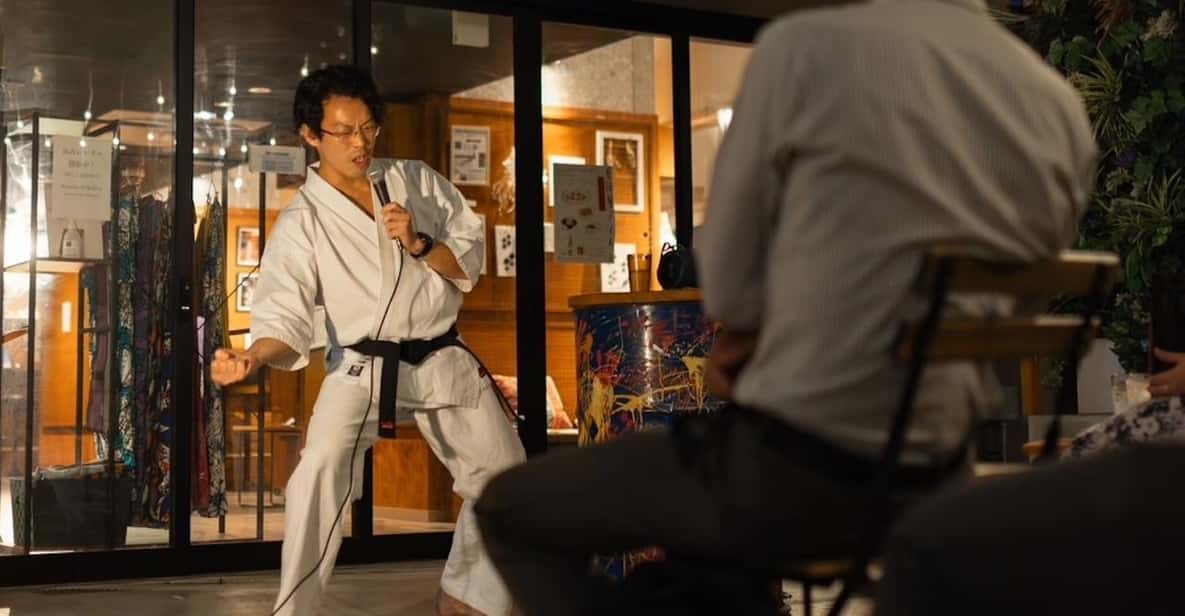
Then comes the main 45-minute comedy show, performed by the same guide. In other words, you’re not switching to a random performer after spending the first part learning context. Ryo keeps the same cultural thread and uses humor to explain Japanese history and culture.
The jokes are mostly clean, which is a big deal if you’re traveling with family or just want laughs that don’t rely on shock. And after the show, you can grab a drink and hang out at the center of Japanese history and culture—Asakusa.
One extra detail I really appreciated from what I’ve heard: the comedy setting is a small, cute bar, so the vibe stays close and personal. It’s the kind of space where you can actually hear the punchlines without strain.
Price and value: what $43 buys you in real terms
At $43 per person, you’re paying for two different things that don’t usually come as a bundle: a guided religious and cultural walk, plus live standup from an experienced Japanese comedian.
Here’s the value logic from my perspective. You get a real guide during the walk, including specific explanations of Shinto vs. Buddhism and manners you can use immediately. Then you get a live performance that turns that same material into jokes that stick.
The small group limit (10 participants) matters because it reduces the “tour bus energy” factor. You’re not just listening from a distance. You can ask questions, and the pace doesn’t feel like a sprint to the next photo spot.
If you’re deciding between an Asakusa walking tour only and a package with comedy, this one is a good fit when you want the culture lesson plus a fun reset afterward. You get two emotional phases in one night: reflection, then laughter.
Who this tour suits best (and who might not)
This tour is ideal if you want Asakusa to feel more meaningful than a checklist. If you like learning small rules—how to pray, what certain connections mean, how Shinto and Buddhism relate—Ryo’s explanations are the point of the experience.
It’s also a strong choice if you like the idea of comedy as a learning tool. You’ll get humor that includes Japanese history and culture insights, not just random one-liners.
On the flip side, if your priority is nightlife energy or a club-like atmosphere, this probably won’t match that mood. The comedy is family-friendly clean rather than edgy, and the evening includes structured walking and temple time.
And if you need maximum free time in the temple area or want a longer unstructured roam, the schedule is built around guided stops plus that one designated free window.
Final thought: should you book the Asakusa walking tour and comedy night?
I’d book it if you want a single evening that mixes sacred sites, practical cultural context, and live standup in a small setting. The combination is the value: you leave with a better understanding of what you saw, plus a genuinely fun way to end the night.
I’d skip it if you dislike guided structure or if you’re hunting for a late, rowdy, alcohol-forward comedy vibe. This is more thoughtful than chaotic.
If you like hands-on learning, clean laughs, and Asakusa at human scale, this one is a very solid pick.
FAQ
Where is the meeting point?
You meet in front of Tokyo Cruise (the water bus station) at the Asakusa pier area.
How far is the meeting point from Asakusa Station?
It’s about a 1 or 2 minute walk from Asakusa Station on the Tokyo Metro Ginza Line.
What language is the tour guide?
The live tour guide speaks English.
How long is the experience?
The total duration is listed as 210 minutes.
Is it a small group?
Yes. The group is limited to 10 participants.
What does the walking tour include?
The walking portion covers key Asakusa landmarks such as Kaminarimon Gate, Nakamise Shopping Street, Asakusa Shrine, and Sensō-ji Temple.
Is there free time during the tour?
Yes. After arriving at the main hall of Sensō-ji Temple, you have 60 minutes free time to look around or buy souvenirs.
What happens during the comedy part?
There’s a casual 30-minute meetup, followed by a 45-minute standup comedy show with funny insights on Japanese history and culture.
Is the comedy clean or adult-only?
The comedy is mostly clean jokes, suitable for family members.
What is included and what is not included?
Included: cultural jokes about Japan and insights on Japanese culture. Not included: descriptive dirty jokes.