REVIEW · TOKYO
Sushi-Making in Nakameguro, Tokyo with a Professional Chef
Book on Viator →Operated by 寿司活LAB · Bookable on Viator
Tokyo can be intense. This class is not.
In Nakameguro, I love the way the experience starts with VR fishing and then quickly moves into real sushi skills. You’re in a small group (max 6), so it doesn’t feel like you’re watching from the back row.
My other favorite part is the hands-on focus—shaping nigiri with a professional chef while you learn how to handle fresh fish. The only potential drawback is timing: the whole thing is about 1 hour 30 minutes, so you’ll get skills and a full taste, but not a long, slow deep practice.
In This Review
- Key Takeaways Before You Go
- A One-and-a-Half-Hour Nigiri Class in Nakameguro
- Where the Experience Starts: VR Fishing to Set the Stage
- Putting On the Chef-Ready Clothing (and Why It Helps)
- Fresh Fish Handling and Nigiri Shaping With a Pro
- Grating Fresh Wasabi: Small Detail, Real Difference
- Tamagoyaki Demo: Rolled Egg, Learned the Right Way
- What You Taste at the End: Your Own Sushi
- Small Group Size and the Warm Professional Touch
- Price and Value: Is $114.45 Worth It?
- Getting There From Nakameguro: Simple Planning Tips
- Who Should Book This Nigiri Experience?
- Should You Book Sushi Katsu LAB’s Nigiri Sushi Experience?
- FAQ
- Where is the meeting point for the Nigiri Sushi Experience?
- How long does the experience take?
- What’s included in the class?
- How big are the groups?
- How much does it cost?
- Is the tour near public transportation?
- What is the cancellation option?
Key Takeaways Before You Go
- VR fishing first: You get a fun setup for where the fish comes from before you touch anything.
- Fresh fish, real technique: You cut and handle fish as part of the nigiri lesson.
- Wasabi practice: You grate fresh wasabi on-site, not from a pre-made squeeze bottle.
- Live tamagoyaki demo: Expect a hands-on-style show-and-learn moment with rolled egg.
- You eat what you make: Your class ends with tasting your own sushi.
A One-and-a-Half-Hour Nigiri Class in Nakameguro
Sushi Katsu LAB runs its Nigiri Sushi Experience in Nakameguro, a neighborhood that’s more local-life than tourist-shiny. The session lasts about 1 hour 30 minutes, and it’s capped at 6 people. That small size matters. It means you get real feedback while you’re forming nigiri, not just a quick instruction and a silent hope for the best.
You meet at GEMS Nakameguro, 2-chōme-13-3 Kamimeguro, Meguro City. The activity ends back at the same meeting point, so it fits neatly between sightseeing blocks. You’ll also use a mobile ticket, which keeps things simple when you’re bouncing around Tokyo.
And yes, this is an actual sushi-making class. Not a cooking show where you eat leftovers. You handle the process, watch key techniques, and then taste what you made.
You can also read our reviews of more tours and experiences in Tokyo.



Where the Experience Starts: VR Fishing to Set the Stage
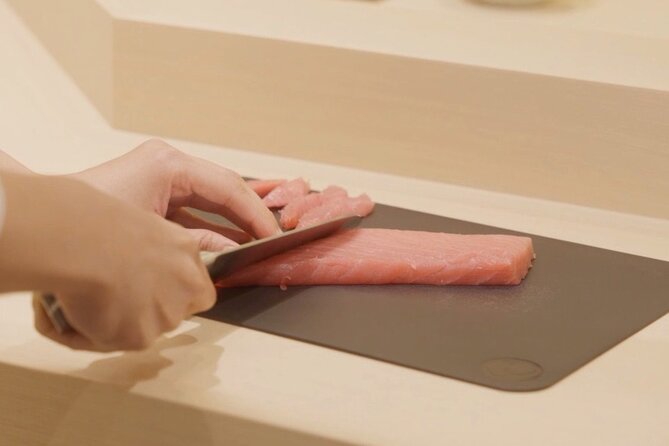
The tour begins with a virtual-reality fishing adventure. It’s not just there to fill time. It acts like a warm-up story for the rest of the lesson: you see the fish theme first, then you switch from imagination to technique.
From what you can expect on the ground: once you’re done with the VR segment, the group moves into the sushi-making space with staff and a sushi chef ready to guide you. The whole start feels organized, and you’ll likely be treated like you belong there—warm greeting, then practical steps.
Why I like this opener for visitors: it reduces the intimidation factor. If sushi feels mysterious, VR turns the topic into something you can picture. Then, when the chef hands you real fish tools, the learning curve feels smaller.
Putting On the Chef-Ready Clothing (and Why It Helps)
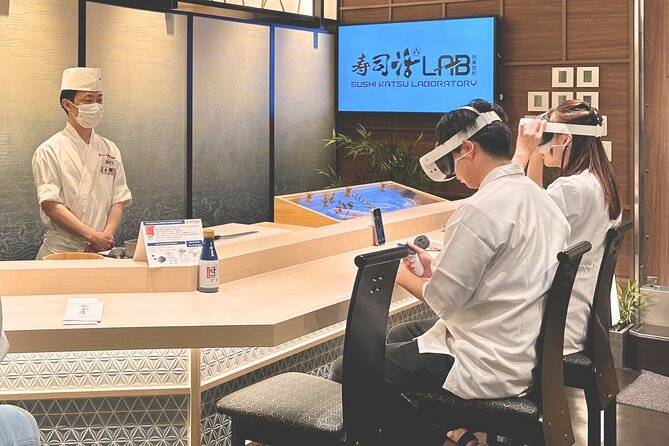
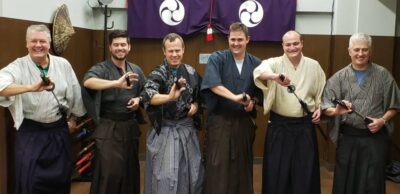
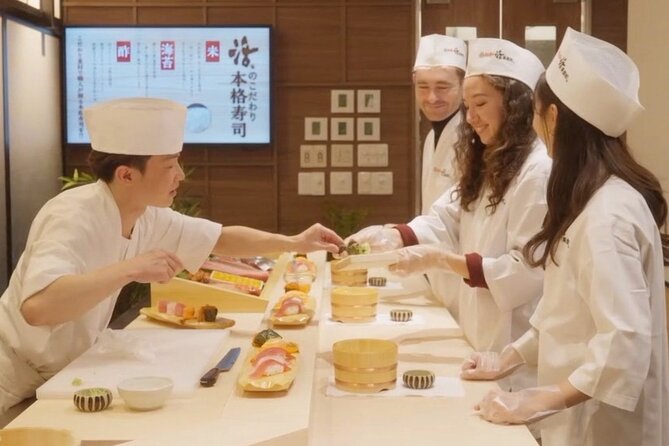
Part of the experience is getting appropriate clothing. That detail sounds small, but it changes how the class feels. You’re not wearing your “nice shirt you only wear for museums.” You’re dressed to work.
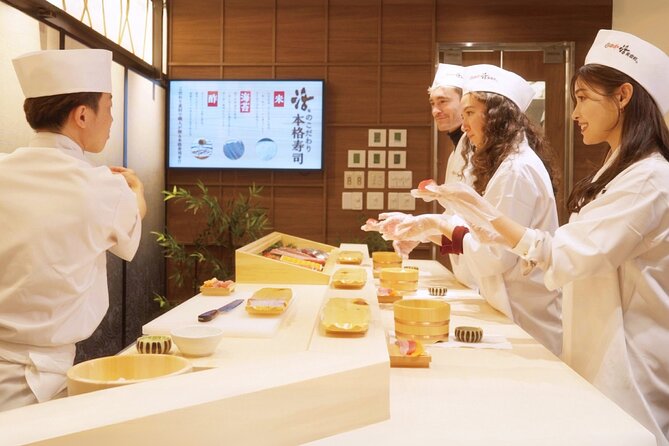
You’ll be cutting fish and shaping sushi, and proper clothing makes it easier to focus on technique rather than worrying about mess. It also gives you that fun photo moment people love—chef-style outfits and hands-on action are made for pictures.
If you’re the type who plans outfits for every Tokyo stop: bring basic layers you can move in comfortably. This isn’t a formal restaurant moment. It’s a working class.
Fresh Fish Handling and Nigiri Shaping With a Pro
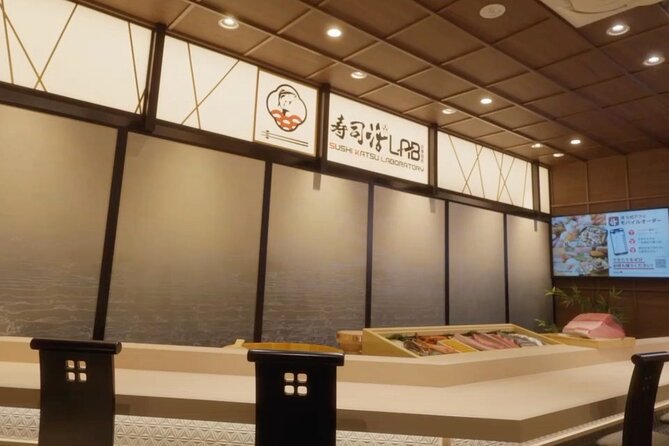
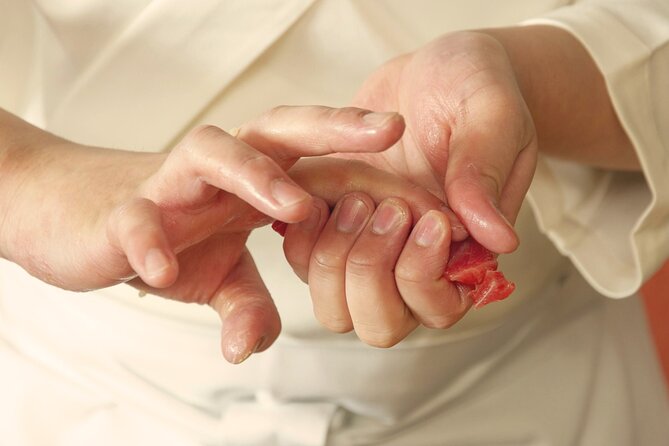
The core of the experience is hands-on nigiri sushi making under a professional chef. You learn how to handle fresh fish and how to shape sushi in a way that matches Japanese technique, not just “make something that looks sushi-ish.”
In practice, what you’re doing is learning motion and control:
- handling fish carefully
- working with rice and shaping
- adjusting pressure so nigiri holds its form
- building confidence as you go
A nice thing here is the pacing. The chef doesn’t just demonstrate and vanish. You get guided instruction while you’re working. That’s where the small group size pays off again. With max 6 people, you’re less likely to be waiting while others take turns.
And if your comfort level varies—say you’re nervous about fish cutting at first—this class is set up to bring you along step-by-step. The result is that you’re not just making one piece of sushi. You’re making enough that you genuinely feel the payoff.
Grating Fresh Wasabi: Small Detail, Real Difference
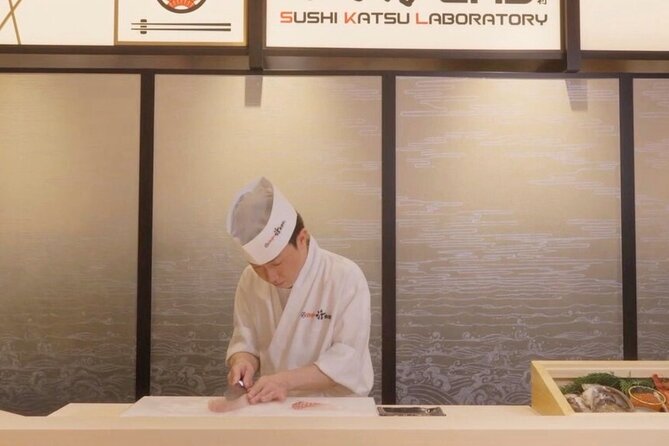
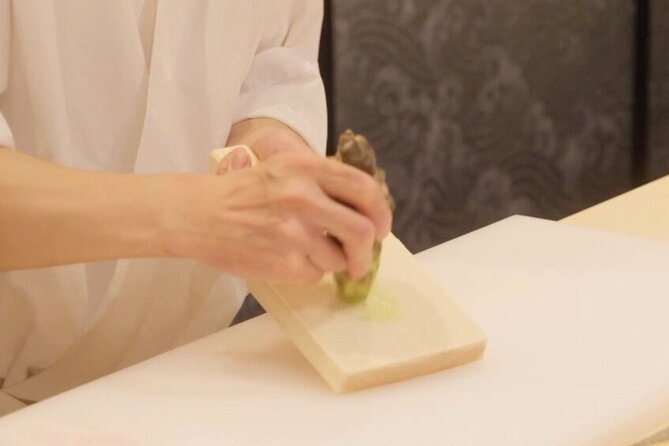
You’ll try grating fresh wasabi during the class. This is one of those “simple on paper” parts that can actually teach you something important: scent and texture change fast when wasabi is fresh.
If you’ve only had wasabi that comes from a tube, the flavor is a whole different ballgame. Fresh wasabi tends to hit with more immediate sharpness and a different aroma. It’s also a hands-on task, so you feel the process instead of just tasting a final product.
It’s a short segment, but it’s memorable. And it pairs well with the rest of the class because it gives you a second “touch” point beyond shaping rice and fish.




Tamagoyaki Demo: Rolled Egg, Learned the Right Way
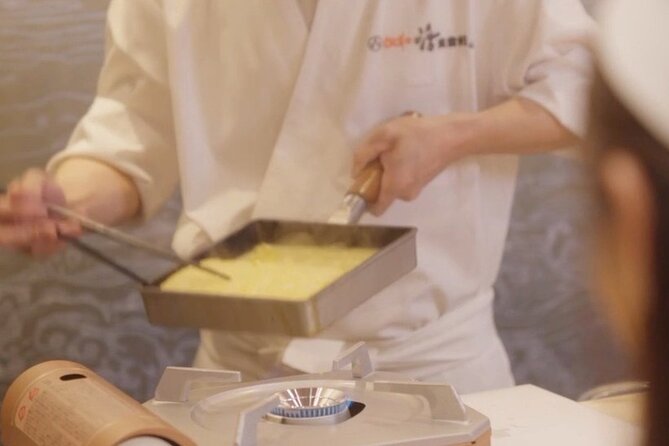
After the fish work and nigiri steps, you’ll see a live demonstration of tamagoyaki, the Japanese omelet.
This part matters because tamagoyaki isn’t just an egg dish. It’s technique: rolling, timing, and texture. Even if you don’t cook it yourself in the demo, watching the chef handle the process helps you understand how Japanese cooking builds layers rather than treating food like one finished surface.
One highlight you can look forward to: the broth rolled egg is described as excellent. That lines up with what tamagoyaki is supposed to deliver—soft, layered richness rather than a dry, flat omelet.
If you like food technique—knife skills, heat control, texture—this demo gives you a smart side lesson without taking over the whole class.
What You Taste at the End: Your Own Sushi
The experience ends with tasting the sushi you create. This is a key value point. Many classes stop at “look what we made.” Here, you eat what you shaped, so you learn by feedback—taste tells you what technique actually achieved.
You’ll likely also notice how everything comes together: the rice, fish, and wasabi serve as one unit. When you eat it right after making it, you can connect each step to the flavor.
This is where the experience feels most satisfying. You leave with more than photos. You leave with understanding—at least the basics of why a properly shaped nigiri feels different than an improvised one.
Small Group Size and the Warm Professional Touch
Max 6 travelers is a big deal for a class like this. In a room where people are cutting fish and shaping rice, it’s hard to manage when groups are large. The small number makes it more like a guided workshop than a conveyor belt.
The staff and chef also set a welcoming tone. People talk about warm greetings and getting put into the right clothing and setup quickly. That matters in Tokyo, where jet lag and logistics can be real. A smooth start helps you enjoy the actual learning.
Also, since the activity ends back where you started, you don’t need to plan a complicated route for your next stop. It’s a clean loop.
Price and Value: Is $114.45 Worth It?
At $114.45 per person for about 1 hour 30 minutes, this isn’t a budget sampler. But it may be good value if you care about doing rather than just eating.
Here’s why the price can work:
- Professional chef guidance: You’re not learning from a script or a video.
- Hands-on instruction with fresh ingredients: Fish handling, shaping, and wasabi grating aren’t “props.”
- Included tasting of what you make: You’re eating your results on-site.
- Small group limit: You’re more likely to get direct help while you’re working.
Where the value may not fit:
- If you only want to eat sushi and not learn technique, you could probably spend less elsewhere.
- If you want a long, slow class with multiple rounds of repetition, the 1 hour 30 duration may feel quick.
My practical take: this is a strong choice for people who want one high-quality “skill meal” experience—something you can tell friends about because you actually did it.
Getting There From Nakameguro: Simple Planning Tips
The meeting point is GEMS Nakameguro. Since the tour is near public transportation, you can likely stitch it into a day without overthinking. The session also ends back at the meeting point, which helps you avoid “what now?” stress.
If you’re planning your route: build in a little buffer time. Classes involving fish work run on schedule. You’ll want to arrive ready to participate, not still hunting for the entrance.
Also, bring a phone for photos if that matters to you. People often want pictures of the sushi they make and the chef outfit moment. The class vibe supports it.
Who Should Book This Nigiri Experience?
You’ll probably love this if you:
- want hands-on sushi making with guidance
- enjoy learning food technique (not just tasting)
- want a Tokyo activity that feels interactive and different from standard restaurant meals
- travel as a small group or family and want everyone involved
You might pass if:
- you’re only interested in eating and don’t want to handle fish or rice
- you dislike short classes and prefer longer cooking sessions
- you need lots of flexibility in timing (the session is about 1 hour 30 minutes)
Also, it’s rated 4.7 with 3 reviews, which suggests people generally leave happy—especially with the hands-on format and the overall “making” experience.
Should You Book Sushi Katsu LAB’s Nigiri Sushi Experience?
If you’re aiming for one memorable Tokyo food activity that feels real and practical, this is a solid pick. The combination—VR fishing, chef-guided knife/fish handling, wasabi grating, a tamagoyaki demo, and eating what you make—adds up to a full “learn + do + taste” arc in a compact time window.
Book it when:
- you want a hands-on sushi story, not just sushi dinner
- you’re comfortable trying new techniques (and a little messy is fine)
Consider skipping or choosing something else if:
- you want a pure tasting experience with no participation
- you’re on a tight budget and prefer to spend on more meals
FAQ
Where is the meeting point for the Nigiri Sushi Experience?
You’ll meet at GEMS Nakameguro, 2-chōme-13-3 Kamimeguro, Meguro City, Tokyo 153-0051, Japan.
How long does the experience take?
It runs for about 1 hour 30 minutes.
What’s included in the class?
It includes a VR fishing experience, hands-on sushi making with a professional chef, learning how to handle fresh fish and shape nigiri, grating fresh wasabi, a live tamagoyaki demonstration, and tasting the sushi you make.
How big are the groups?
The experience has a maximum of 6 travelers.
How much does it cost?
The price is $114.45 per person.
Is the tour near public transportation?
Yes, it’s near public transportation.
What is the cancellation option?
Free cancellation is available up to 24 hours before the experience’s start time for a full refund.
—
If you tell me your travel dates and what else you’re doing that day in Tokyo, I can suggest where this class fits best (morning vs late afternoon) based on practical timing.