REVIEW · TOKYO
Seat B Ticket Tokyo Sumo Wrestling Tournament in Ryogoku
Book on Viator →Operated by MagicalTrip Inc. · Bookable on Viator
Sumo has a way of pulling you in fast. This tour pairs a B-rank seat at Ryogoku Kokugikan with a guided walk through Ryogoku’s sumo landmarks, so you’re not just watching, you’re following what’s happening. I especially like the timing: you get the basics and the spot-by-spot context before you settle in for the tournament atmosphere. One thing to consider is that if you’d rather skip explanations and jump straight to the matches, the walking portion may feel like extra time outdoors.
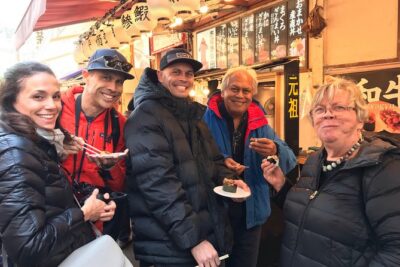
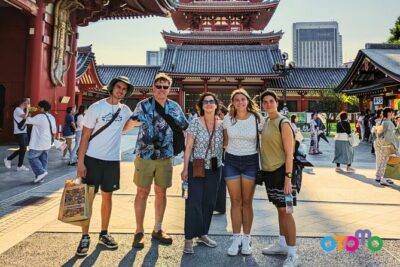
I also like how small the group is. With a maximum of 5 travelers, the guide can slow down when you have questions, and it makes the cultural bits feel personal instead of rushed. The only real drawback is practical: the tour starts at 1:30 pm, and if you’re late and miss the group, you won’t be able to join or get a refund, so you’ll want to arrive early.
In This Review
- Key things I’d plan around
- Your Seat B Ticket at Ryogoku Kokugikan (What it Really Means)
- The Big Value: Ryogoku Walk First, Then Matches
- Ryōgoku Edo Noren Stop: A Place You’ll Actually Use Later
- Ryōgoku Street Spots: Small Stops, Big Context
- Ekoin Temple: A Calm Pause Before the Loud Part
- Entering the Sacred Hall: Using Your Time Inside the Kokugikan
- Timing and Schedule: How to Plan a Smooth Day
- Cost and Value: Is $117.61 a Good Deal?
- Who This Tour Suits Best (and Who Might Feel Restless)
- Small Details That Can Make or Break Your Day
- Should You Book This Ryogoku Sumo Seat B Tour?
- FAQ
- What seat does the tour include for the sumo tournament?
- How long is the tour portion?
- Where do I meet the tour?
- What stops are included before you enter the arena?
- Is the sumo tournament ticket mobile?
- Are food and drinks included?
- How many people are in the group?
Key things I’d plan around
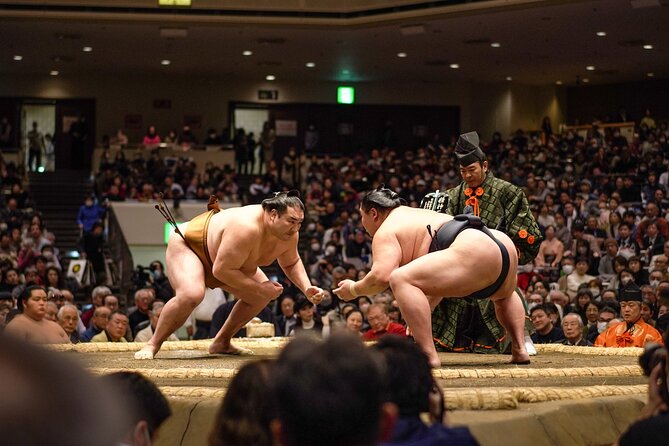
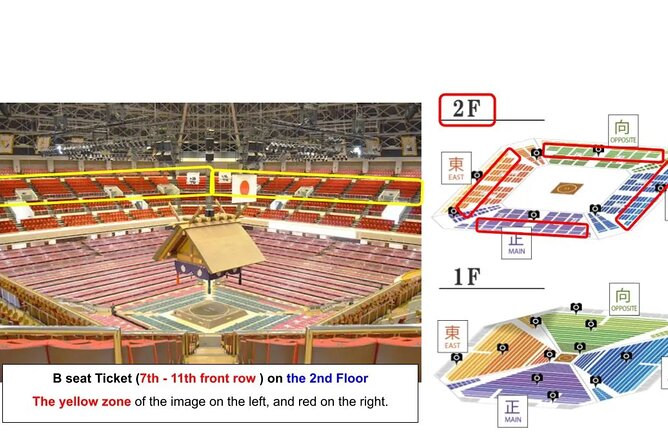
- Seat B (2nd floor, rows 7–11): a solid viewpoint option for first-timers who want good atmosphere.
- Guided Ryogoku walk before the bouts: you get context before you watch, which makes the day click.
- Four main stops in about 1.5 hours: fast pacing, minimal wandering, and then you’re off to the arena.
- Small group (up to 5): easier questions, less crowding, calmer experience.
- Mobile ticket included: fewer ticket headaches once you’re in the venue.
Your Seat B Ticket at Ryogoku Kokugikan (What it Really Means)
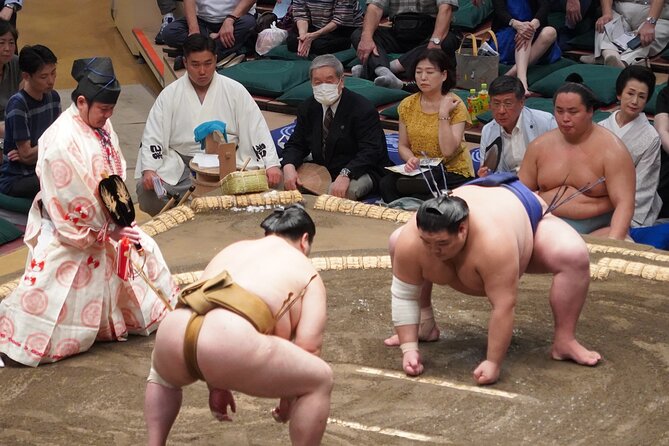
You’re not just buying entry. You’re buying access to one of Tokyo’s most iconic sumo settings, the Ryogoku Kokugikan, and you’ll be seated in the 2nd floor B-ranked area, roughly rows 7 to 11. For many first-timers, that’s a smart middle ground: you get a real view of the action and the building’s energy without needing the very top-tier premium seats.
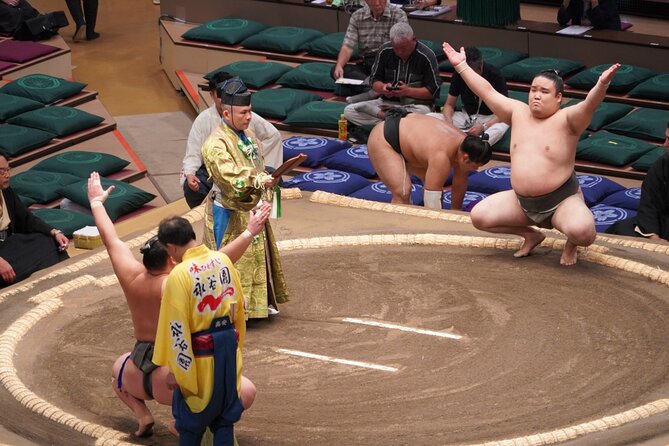
In B-rank seating, your experience is more about atmosphere and understanding than tiny details. That’s a good match for this tour, because the guide is there to help you interpret what you’re seeing, including the meaning of the flags you’ll encounter during the bouts. When you know what those signals mean, the whole match becomes easier to follow.
Also, the arena vibe matters. In the feedback I saw, people called out the big full-house feeling, with one note mentioning a full crowd around 11,000. That kind of crowd energy is exactly what you want for sumo, and it’s the reason this isn’t just a ticket—it’s a day event.
You can also read our reviews of more tours and experiences in Tokyo

The Big Value: Ryogoku Walk First, Then Matches
What I like most about the format is the order. You start with a guide-led walk around Ryogoku, then you move into the arena. That sequence helps you connect the sport to the place, instead of treating it like random entertainment.
If it’s your first sumo tournament, the learning payoff is immediate. You’ll get a primer on the fundamental rules of sumo, plus practical tips on what to pay attention to while watching. Once you’re in the stands, your brain stops guessing and starts tracking.
There’s also a simple comfort benefit. By the time you enter the Kokugikan, you’ve already gotten your bearings in Ryogoku. That reduces stress and helps you focus on the main event.
Ryōgoku Edo Noren Stop: A Place You’ll Actually Use Later
The tour begins at Ryōgoku Edo NOREN (the address is listed right at the meeting point). This first stop is short, about 20 minutes, and it’s free to enter. Think of it as orientation with flavor. Ryogoku is the sumo heartland, and this is one of the first places that sets the tone for the day.
Even if you’re not a history person, a good orientation stop helps you understand what you’re walking through. You’ll get guide tips meant to make your arena time smoother—what to watch for, how sumo culture is tied to the neighborhood, and how to avoid the common first-timer confusion of thinking it’s all about the fight only.
This is also where the tone of the day becomes clear: you’re not just passively taking photos. You’re learning how to enjoy the tournament.
Ryōgoku Street Spots: Small Stops, Big Context
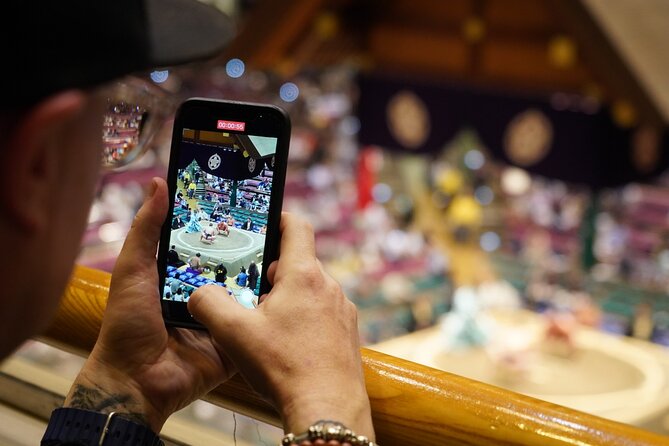
Next comes another short segment—about 15 minutes—focused on walking around sumo historical spots. This stop is free, but it’s not filler. The point is to connect what you’ll see in the ring to what you see around Ryogoku.
On a first visit, these kinds of streets can look like normal city blocks. The guide makes them feel purposeful. You’ll learn how Ryogoku’s identity is tied to sumo’s long traditions, and that makes the tournament feel less like a one-off show and more like a continuation of something local and old.
One detail I appreciate from the tour feedback style: the guides tend to bring explanations that feel grounded in real sumo life and culture, not just textbook facts. When that happens, the walk becomes useful instead of just scenic.
Ekoin Temple: A Calm Pause Before the Loud Part
Then you’ll head to Ekoin Temple, about 20 minutes. This stop is free to enter and works as a reset. The temple segment gives you a quieter rhythm before the arena’s intensity.
Why does this matter? Because sumo is loud, formal, and intense, and you’ll likely sit for a while. A brief cultural pause helps you feel more present when you arrive at the Kokugikan. It’s also a chance to see Ryogoku’s spiritual and historical side beyond athletics.
This stop is also helpful for photos and mental pacing. If your body is on Japan-walking autopilot, this temple break gives you permission to slow down and actually absorb where you are.




Entering the Sacred Hall: Using Your Time Inside the Kokugikan
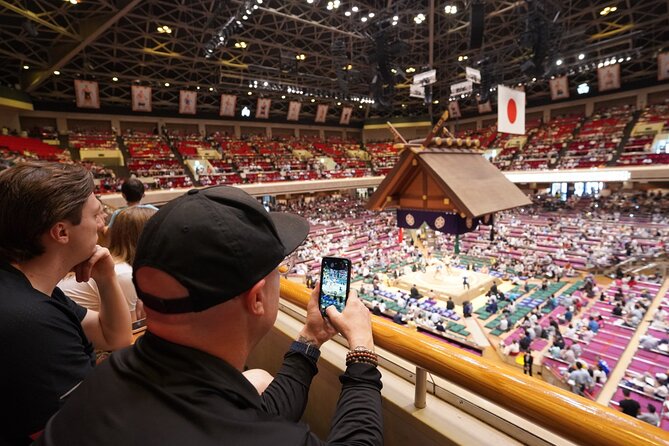
Your final stop is the big one: Ryogoku Kokugikan, with about 30 minutes included time in the arena area. Your tournament ticket is included here, and it’s for the 2nd floor B rank (rows 7–11).
Here’s the best way to think about this: your match enjoyment will come from two things working together. One is your seat location, and the other is your understanding. This tour’s value is that you get a bundle of “what to notice” right before you need it most.
The guide’s tips are designed to make the spectacle legible. For example, they help explain the sport basics and the meaning of signals you’ll see during bouts, including the flags. That turns watching from passive cheering into active following.
Also, since the tour portion ends around 3:00 pm, you’ll have time to settle into the tournament day. People note that the later bouts tend to feel stronger, so plan to stay for the later part of the schedule if you can. The tournament itself runs until around 6:00 pm, giving you a nice window to arrive, find your rhythm, and then let the drama build.
Timing and Schedule: How to Plan a Smooth Day
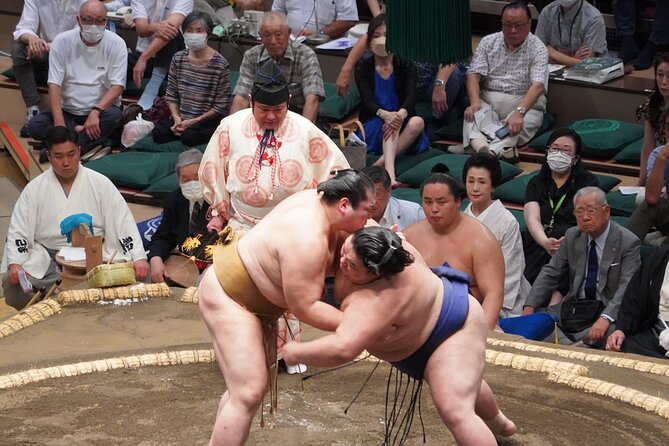
Start time is 1:30 pm, and the full tour portion is about 1 hour 30 minutes (finishing around 3 pm). That means you’re not committing to a full-day schedule just to get a seat and a bit of history. You’ll still need to plan for the tournament evening, since it ends around 6 pm.
The most practical advice: build in buffer time for walking and for settling into the arena. The meeting point is specific (Ryōgoku Edo NOREN, 1st floor), and the day runs on time. The tour also states you must start on schedule, and if you’re late and miss the group, you can’t join later.
Weather matters too. Japan’s conditions can swing hard, with summer highs around 40°C (110°F) and winter lows around -5°C (20°F). Even though the walk is only about an hour, you’ll be outdoors part of the time. Dress for the actual temperature, not the forecast you hope for.
Cost and Value: Is $117.61 a Good Deal?
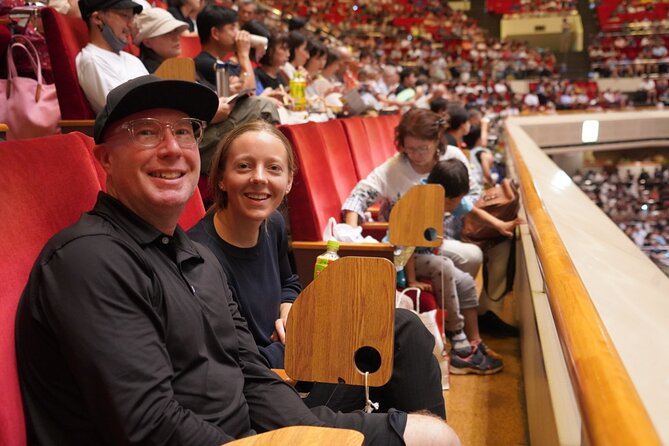
At $117.61 per person, you’re paying for three things that usually cost money separately in Tokyo: a guided experience, a specific tournament seat, and entry to the venue portion at the right time.
The ticket component matters most. You’re getting a tournament ticket included for the 2nd floor B rank—a defined seat category rather than a vague admission. That removes the biggest uncertainty for many first-timers: where you’ll actually sit.
Then there’s the guide-led part. The walk isn’t just “nice neighborhood stroll.” It’s structured around key Ryogoku locations and includes tips meant to improve match viewing. When I see feedback naming guides like Mark, Hina, Shogun, Masao, and Emmy as especially engaging and knowledgeable, it points to the real value here: understanding is part of the product.
What’s not included is also clear. Food and drinks are on you. Plan a simple snack strategy so you’re not hunting for meals while the day is heating up.
Overall, I’d call this good value if you want the easiest first-timer experience: you get context, then you get the atmosphere, and you’re not left figuring out what you’re seeing.
Who This Tour Suits Best (and Who Might Feel Restless)
This tour is a strong fit if you:
- are seeing sumo for the first time and want quick, useful guidance
- enjoy short walks tied to culture instead of long museum-style time
- like the idea of sitting down later with context already in your head
- prefer a small group experience where questions feel welcome
It may be less satisfying if you:
- only want the arena, with no pre-match explanations
- struggle with outdoor walking in extreme heat or cold
- have a schedule that makes a 1:30 pm start hard to protect
One subtle point: sumo can be intense and rhythmic, not always fast. The guide’s explanations can help you enjoy it even if you’re not already a fan, which is a theme in the feedback.
Small Details That Can Make or Break Your Day
A few practical things will shape your experience more than you might think:
- Arrive early. The tour emphasizes that if you miss the group due to lateness, you can’t join, and there’s no refund or reschedule. That makes punctuality part of the deal.
- Bring the right layers. With temperatures swinging from winter lows to summer highs, dressing correctly is not optional.
- Plan to stay for later bouts. The tournament ends around 6 pm, and the later matches are described as stronger. If you want the peak intensity, don’t treat it like a quick stop.
Also, the tour includes tour photos. That’s helpful because Ryogoku and the arena area are photo-friendly, and you’ll likely be more focused on listening than remembering to shoot everything.
Should You Book This Ryogoku Sumo Seat B Tour?
Book it if you want a smooth first-timer sumo day: a real B-rank seat at Ryogoku Kokugikan plus a guided walk that gives you the tools to enjoy what happens in the ring. The small group format also makes it feel more like learning from a local fan than following a scripted production.
Skip or reconsider if you’re hoping for a purely casual experience with minimal walking and no explanation. If that’s you, you might still love the tournament—but this specific structure is built around helping you understand sumo before you watch it.
My bottom line: for most people visiting Tokyo, this is a practical way to turn a ticket into a better story.
FAQ
What seat does the tour include for the sumo tournament?
You get 2nd floor B rank seating at Ryogoku Kokugikan, about rows 7th to 11th.
How long is the tour portion?
The tour is approximately 1 hour 30 minutes, starting at 1:30 pm and ending around 3 pm.
Where do I meet the tour?
The meeting point is Ryōgoku Edo NOREN (1st floor), 1-chōme-3-20 Yokoami, Sumida City, Tokyo 130-0015.
What stops are included before you enter the arena?
The tour includes stops at Ryogoku Edo NOREN, Ryogoku historical spots, Ekoin Temple, and then Ryogoku Kokugikan.
Is the sumo tournament ticket mobile?
Yes. The tour uses a mobile ticket.
Are food and drinks included?
No. Additional food and drinks are not included.
How many people are in the group?
The maximum group size is 5 travelers.