REVIEW · TOKYO
Mt Fuji Small Group 1 Day Tour Kawaguchi and Yamanaka with Pickup
Book on Viator →Operated by QHTravel · Bookable on Viator
Fuji in one day, no train stress. I like this tour because it bundles the scenic stops around Kawaguchi and Yamanaka into one smooth day, and you get hotel pickup plus an air-conditioned vehicle. The bonus is how efficiently you can hit multiple Fuji viewpoints without juggling trains, transfers, and ticket counters.
I also appreciate that the route mixes big-name sight spots with quick, fun photo stops like the Lawson near Kawaguchiko Station and the clock-shop streets. One thing to watch: Mt. Fuji is famously moody, so even with good planning you’re doing a weather-dependent day, and the guide support is mostly practical rather than deep cultural explanations.
In This Review
- Key highlights at a glance
- Why Kawaguchi and Yamanaka make sense for a one-day Fuji run
- Price and logistics: what $15 buys you from Tokyo
- The day’s flow: how the timing helps your photos (and your feet)
- Oishi Park: panoramic Fuji views with a park that does the styling for you
- Lake Kawaguchiko: lakeside Fuji and seasonal sakura energy
- Lawson Fujikawaguchiko and Hikawa Clock Shop: short stops that can save your photo set
- Oshino Hakkai: UNESCO spring ponds fed by Fuji’s underground water
- Lake Yamanaka option: a big-view finale with a hot spring trade-off
- Guide support, English limits, and how to get the most out of it
- Weather reality check: what to expect when Fuji hides
- Who this tour is best for (and who should look elsewhere)
- Should you book this Mt. Fuji day trip?
- FAQ
- What’s the duration of the Mt. Fuji small group tour?
- Where do I meet for the tour?
- Does the tour include hotel pickup?
- What’s included in the price?
- Is lunch included?
- Are admission tickets included for the stops?
- What is the mobile ticket used for?
- What happens if the weather is poor?
- How many people are on the tour?
Key highlights at a glance
- Small-group size (max 50): easier movement through viewpoints and photo stops than on giant buses.
- Pickup from Tokyo Station area: convenient meeting point for a day trip that returns to the start.
- Free admission at major stops: Oishi Park, Kawaguchiko, Lawson/clock-shop areas, Oshino Hakkai, and Lake Yamanaka are listed as free.
- UNESCO water stop: Oshino Hakkai’s crystal-clear spring ponds are a major “wow” moment.
- Photo-friendly pacing: short stops for iconic shots plus longer time for the best scenery.
- Lake Yamanaka option with a trade-off: if you choose Yamanaka, the hot spring visit is skipped.
Why Kawaguchi and Yamanaka make sense for a one-day Fuji run
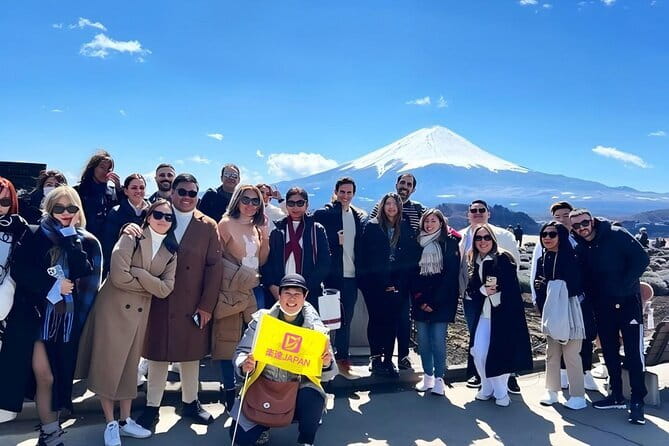
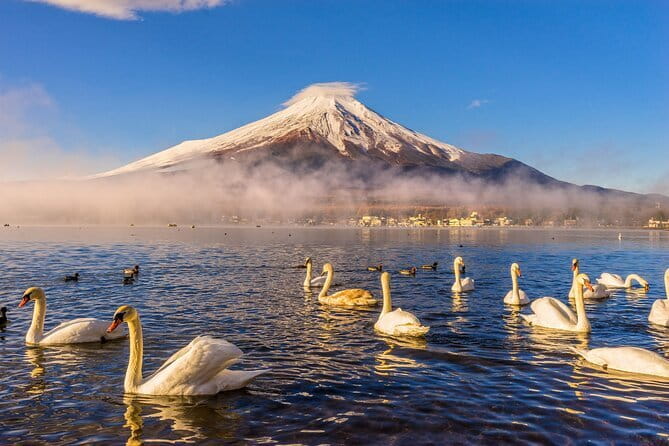
If you want Mt. Fuji views but only have a day, this area is a smart target. Kawaguchiko and Yamanakako are both set up for seeing the mountain from the water and viewpoints around the lakes, so your odds stay decent even when conditions change.
What I like about focusing here is that you get different “Fuji angles” in one route. You’re not stuck staring at the same view from one platform. Instead, you rotate through parks, lakeside areas, spring ponds, and lakeshore viewpoints—each one changes the background details around Fuji, which makes your photos feel more varied even if your time is limited.
You can also read our reviews of more tours and experiences in Tokyo



Price and logistics: what $15 buys you from Tokyo
This tour is priced at $15.00 per person, with a typical booking window around 40 days in advance. For that price level, the value is less about luxury and more about removing friction: the air-conditioned vehicle and driver/guide service cover the heavy lifting of transport and stop coordination.
Here’s the practical side you’ll care about:
- Pickup is offered, and you start near Tokyo Station Marunouchi North Gate.
- The day runs about 10 hours, then you return to the meeting point.
- You’ll use a mobile ticket, which cuts down on lining up.
One more reality check: the tour lists driver guidance in basic English. That means you should treat this as a sightseeing and photo routing day, not a deep-dive cultural lecture. If you want history context, you’ll have the option to read up on your own while you’re there.
The day’s flow: how the timing helps your photos (and your feet)
A one-day Fuji trip is always a balancing act: you need enough time to enjoy each place, but you also want to keep the schedule moving so you’re not stuck in one fog bank all day.
This itinerary is built around short photo windows plus longer scenic stops:
- You’ll have about 50 minutes at Oishi Park.
- Around 1 hour at Lake Kawaguchiko.
- Then a pair of quick, Instagram-friendly stretches (roughly 20 minutes each).
- A longer nature stop at Oshino Hakkai (about 1 hour 20 minutes).
- And either another lakeside experience at Lake Yamanaka (about 1 hour 30 minutes) depending on the option.
For me, the best strategy on tours like this is to think in “layers”:
- Shoot wide first (to catch Fuji if it clears).
- Then do details (flowers, pond reflections, street corners).
- Keep moving—your view can change quickly when clouds slide in and out.
Oishi Park: panoramic Fuji views with a park that does the styling for you
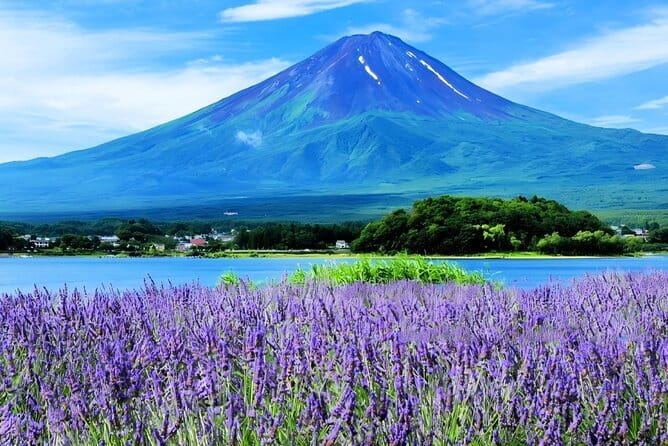
Oishi Park is your first serious viewpoint, and it’s chosen for good reason. It’s known for panoramic Mt. Fuji views, with flower fields and a lakeside setting that helps frame the mountain without needing fancy equipment or perfect angles.
The tour gives you about 50 minutes, plus admission is listed as free. That duration is just right for:
- Getting a few “main viewpoint” shots
- Strolling for different compositions
- Checking the sky for that moment when the peak appears
A practical note: Fuji can show up as a partial view through clouds rather than a perfect, unobstructed skyline. When that happens, don’t wait for a miracle for the whole hour—grab the angle the moment it opens, then keep looking for a better line of sight while you still have daylight at the stop.
Lake Kawaguchiko: lakeside Fuji and seasonal sakura energy

Next is Lake Kawaguchiko for about 1 hour, again with free admission listed. Kawaguchiko is the kind of place where the mountain often looks like it’s hanging over the water, and that makes it great for photos that feel calm and balanced rather than cramped.
This stop is also tied to seasonal events. During mid-March, there are mentions of a Kawaguchiko Sakura Festival and a Kawaguchiko lakeside cherry blossom festival limited to that period. If your travel dates line up, you’ll likely see extra decorations and more people photographing along the lakeside.
If you’re not traveling in that window, that’s okay. Even without blossoms, the setting still gives you lots of chances to frame Fuji with shoreline perspective. Just give yourself enough time to move a bit—if you stay in one spot, you’ll miss the best sight lines that open up after you walk 5–10 minutes.



Lawson Fujikawaguchiko and Hikawa Clock Shop: short stops that can save your photo set
Then the tour gets fun and a little quirky—in a good way.
You’ll stop near a famous Lawson in Fujikawaguchiko for about 20 minutes. This is all about fast, distinctive street photography, with Mt. Fuji visible in the distance from the area near Kawaguchiko Station.
After that, you get Hikawa Clock Shop for another 20 minutes. The idea here is to take a short walk through a place called The Heavenly Town, where the street layout gives you picture-perfect corners and a different look than the lakes and ponds.
These two stops are quick, so don’t treat them like sightseeing museums. Treat them like photo opportunities:
- Arrive, aim for one signature shot
- Then wander to find a second angle
- Move on while your light is still good
Oshino Hakkai: UNESCO spring ponds fed by Fuji’s underground water
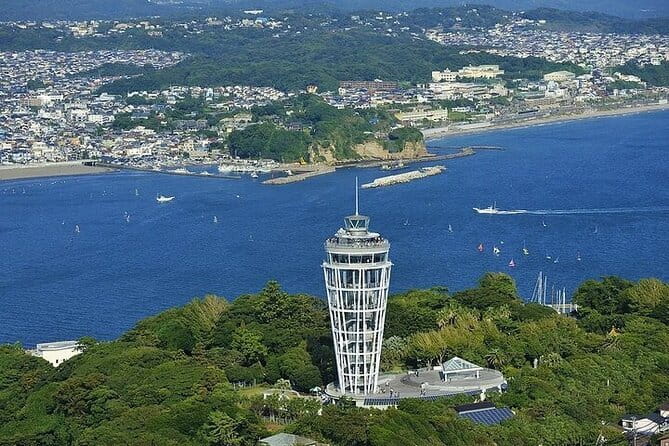
If you want one stop that feels most “nature-real,” it’s Oshino Hakkai. The tour budgets 1 hour 20 minutes, and admission is listed as free. It’s also described as a UNESCO World Heritage site with crystal-clear spring ponds.
What’s special here is the story of how the water works. The ponds are fed by underground water connected to Mt. Fuji. In plain terms: you’re not just looking at pretty ponds—you’re seeing a system that depends on Fuji’s melt and geology.
For photos, Oshino Hakkai is one of the best places for reflective shots and close-up texture. Even if Fuji is partly hidden, the ponds and surrounding features still give you a satisfying scene. And if you do catch Fuji in the background, the combination of mountain + water makes the whole day feel worth it.
Time tip: spend some minutes walking the pond area slowly rather than rushing to the first viewpoint. The reflections and the spacing between the water surfaces can look very different after a short shift in angle.
Lake Yamanaka option: a big-view finale with a hot spring trade-off
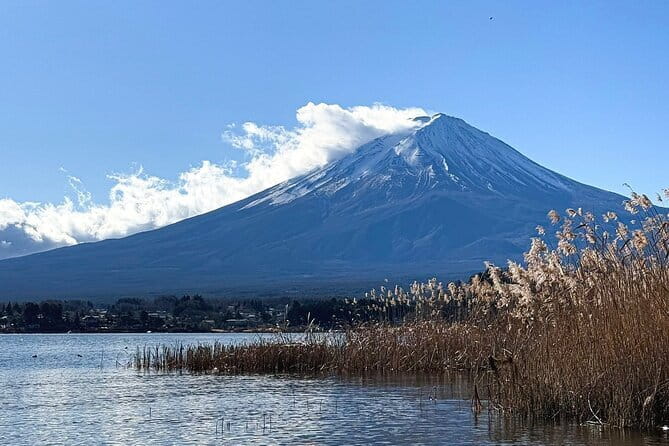
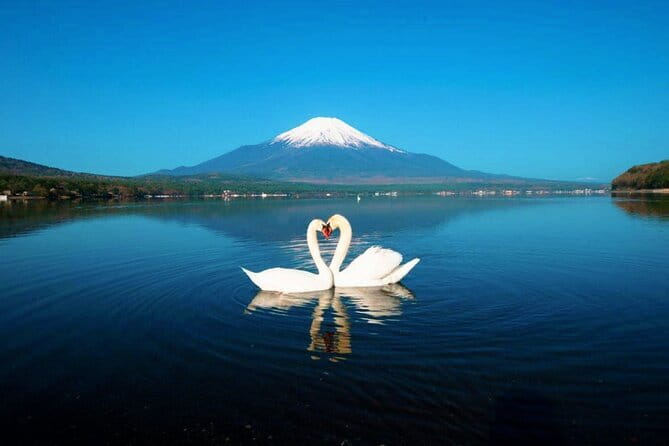
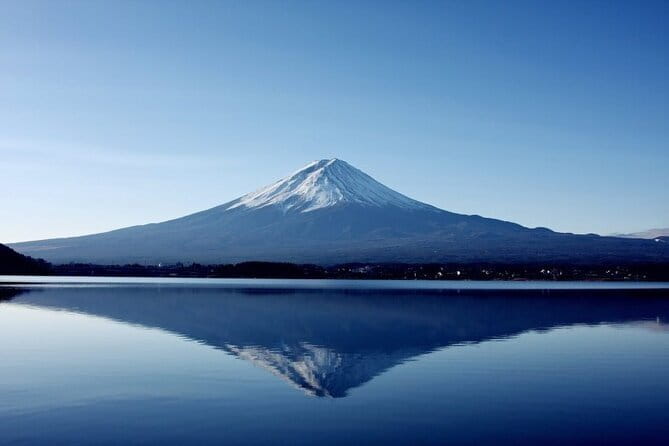
Your final lakeside stop can be Lake Yamanaka for about 1 hour 30 minutes, with free admission listed. The tour notes that the views of Mt. Fuji are especially striking at sunrise, so if you’re sensitive to light and timing, this is the stop that likely rewards patience.
There’s an important trade-off written right into the tour: if you opt for Lake Yamanaka, the hot spring visit is skipped. That means you should decide what you care about more that day:
- Fuji views and lakeside scenery (Lake Yamanaka)
- Or a hot spring experience (only if your route includes it)
If you’re the type who wants the mountain as the main character, Yamanaka is a strong choice. If you’re trying to “collect” onsen time too, then you’ll want to verify what option you selected before you go, since the schedule changes based on your choice.
Guide support, English limits, and how to get the most out of it
The tour includes a driver and guide service fee, and the driver provides basic English guidance. They’re described as unable to give in-depth explanations of attractions and culture, but you’re free to explore on your own at each stop.
So how do you make this kind of tour work for you?
- Ask practical questions at the start of each stop: Where is the main viewpoint? How long do I have? What direction should I head?
- Use your phone for quick context while you walk.
- Treat the guide as a routing and timing helper, not a lecturer.
One review highlighted that the driver was friendly and helpful in ensuring people understood where to go during each stop. That’s exactly the kind of support you want on a day trip: simple, clear orientation so you don’t waste minutes scanning maps.
Weather reality check: what to expect when Fuji hides
Mt. Fuji can look stunning—or frustratingly obscured—depending on cloud cover. The tour itself is clear that it requires good weather, and if poor weather cancels the tour, you’ll be offered a different date or a full refund.
On a practical level, here’s how I’d plan mentally for the day:
- Assume you’ll need a bit of luck.
- Don’t fall into the trap of waiting in one place all day.
- When you see a gap in the clouds, treat it like a short window: shoot, enjoy, then keep moving.
Even when the peak is only briefly visible, those moments tend to be the ones you remember. The best part of having multiple stops is that you’re not betting everything on one single viewpoint.
Who this tour is best for (and who should look elsewhere)
This is a good match if you:
- Want a structured day outside Tokyo without transport planning
- Like photo stops and scenic lakeside viewpoints
- Prefer a small-group format (max 50) over mass crowds
- Would rather pay for convenience than spend time figuring out trains and transfers
It may be less ideal if you:
- Want a long, guided cultural lesson (the guide is described as basic English and not in-depth)
- Are planning a day that must include a hot spring (Lake Yamanaka option skips it)
- Hate weather-based uncertainty, since the tour requires good conditions
Should you book this Mt. Fuji day trip?
I’d book it if your main goal is efficient Fuji viewing plus standout nature at Oshino Hakkai, with minimal logistics stress from Tokyo Station. The price-to-inclusions ratio is strong, especially since the tour lists air-conditioned transport and free admission for the key stops.
I’d think twice only if you’re expecting a deep lecture-style tour or you’re set on a hot spring experience regardless of route options. If you choose Lake Yamanaka, just remember the hot spring skip is part of the deal.
If you can be flexible with the skies and you’re ready for a full 10-hour day, this one-day routing is a practical way to get out to Fuji country without turning your trip into a transport project.
FAQ
What’s the duration of the Mt. Fuji small group tour?
It runs about 10 hours (approx.) and ends back at the meeting point.
Where do I meet for the tour?
The start meeting point is Tokyo Station Marunouchi North Gate Dome1-chōme-9-1, Chiyoda City, Tokyo 100-0005, Japan.
Does the tour include hotel pickup?
Yes, hotel pickup is offered, and you’ll ride in an air-conditioned vehicle.
What’s included in the price?
The price includes an air-conditioned vehicle and the driver/guide service fee.
Is lunch included?
No. Lunch is not included.
Are admission tickets included for the stops?
The tour lists admission tickets as free at the listed stops.
What is the mobile ticket used for?
You’ll receive a mobile ticket for this activity.
What happens if the weather is poor?
The tour requires good weather. If it’s canceled due to poor weather, you’ll be offered a different date or a full refund.
How many people are on the tour?
The tour has a maximum of 50 travelers.