REVIEW · TOKYO
Language Exchange : Meet Locals & Expats
Book on Viator →Operated by Tokto International Friends & Events · Bookable on Viator
Conversation starts fast in Tokyo. This language exchange night mixes rotating chats with seasonal games, so you’re talking from minute one, not hunting for topics. I like the way the format prevents awkward pauses, and I also like that you meet a mix of Japanese, tourists, and expats, which makes the Japanese or English practice feel real. One thing to consider: the structure is social and active, so if you want a quiet, slow meetup, this might feel a bit busy.
In practice, it’s held at Sakura Cafe & Restaurant in Sendagi, right by public transport, which makes it easy to fit into an evening plan. The tour runs about 1 hour 45 minutes, uses a mobile ticket, and keeps the group small (max 20), so you get more speaking time than in big meetups.
In This Review
- Key Things That Make This Tokyo Language Exchange Worth Your Time
- What This Really Feels Like Once You’re There
- Rotating Seats That Actually Prevent Awkward Silences
- Seasonal Games: The Secret Weapon for Keeping Your Japanese or English Moving
- Who You’ll Meet: Locals, Expats, and Tourists in the Same Circle
- The Pace: How to Use the 1 Hour 45 Minutes Without Rushing
- Meeting Point in Sendagi: Getting There Without Stress
- Price and Value: Why $10 Can Make Sense in Tokyo
- What to Bring (So You Don’t Have to Perform)
- Tips to Get Real Conversation, Not Just Small Talk
- Is This for You? A Quick Match Check
- Should You Book This Tokyo Language Exchange?
- FAQ
- How much does the Tokyo language exchange cost?
- How long is the session?
- What’s included in the ticket price?
- How big is the group?
- Where do I meet the group?
- Is it a mobile ticket?
- Can I practice Japanese and English?
- What’s the cancellation window?
Key Things That Make This Tokyo Language Exchange Worth Your Time
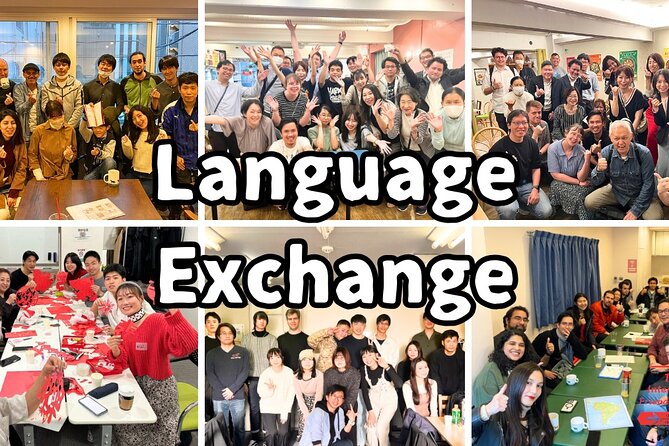
- Rotating conversations: you switch people through the night to avoid the same tired back-and-forth.
- Seasonal games and surprises: the activities are meant to keep things moving, even when your vocabulary is limited.
- A real mix of participants: Japanese 40% with tourists and expats 60%, so the room feels international.
- Small-group vibe (up to 20): easier to talk, easier to hear, less waiting around.
- Long-running organizer: this language exchange format has been running for over 5 years.
- Ends where it starts: no complicated end-of-night navigation.
What This Really Feels Like Once You’re There
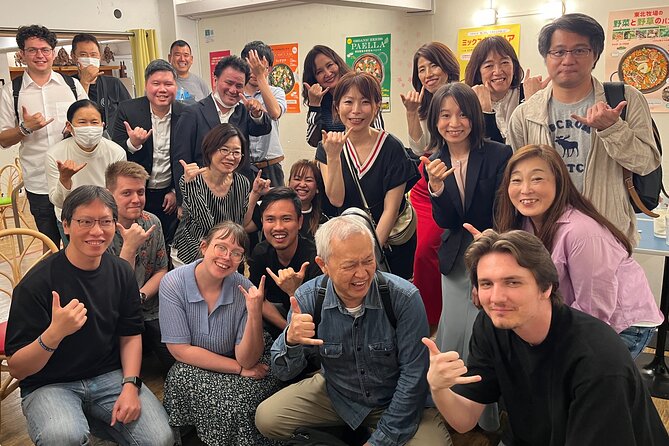
This is not a sit-down class. It’s a structured chat night. You’ll rotate partners and keep meeting new people, which makes it hard to freeze up.
The point is simple: practice happens while you’re doing something, not while you’re trying to be perfect. And when the session includes games, it gives you natural prompts that don’t rely on having a perfect sentence ready.
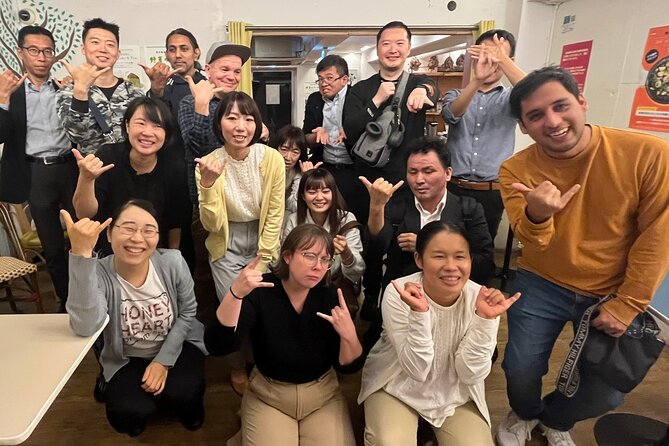
You’ll also notice the social balance right away. With Japanese participants making up about 40% and the rest largely tourists and expats, you get both correction-by-context and the comfort of people who are learning too. That mix matters because it keeps the mood friendly instead of intimidating.
You can also read our reviews of more tours and experiences in Tokyo.



Rotating Seats That Actually Prevent Awkward Silences
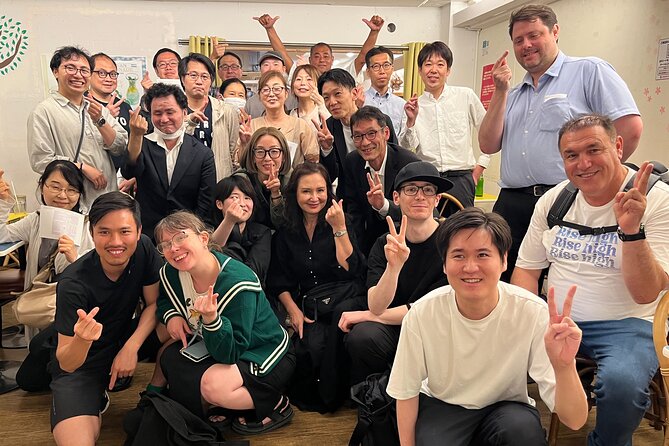
One of my favorite parts of this format is how it handles the hardest part of language exchanges: the moment when both people run out of things to say. Here, you don’t get stuck with one partner for the whole night. You switch seats and meet more of the group.
That does two useful things for you:
First, you practice “starting over” in a language, which is how real conversations work in Tokyo. Second, you get more chances to hear different accents and phrasing, because you’re not repeating the same limited pattern with the same person.
If you’ve ever tried a traditional meetup where everyone clumps into pairs, this solves that. The night is designed so conversation keeps flowing.
Seasonal Games: The Secret Weapon for Keeping Your Japanese or English Moving
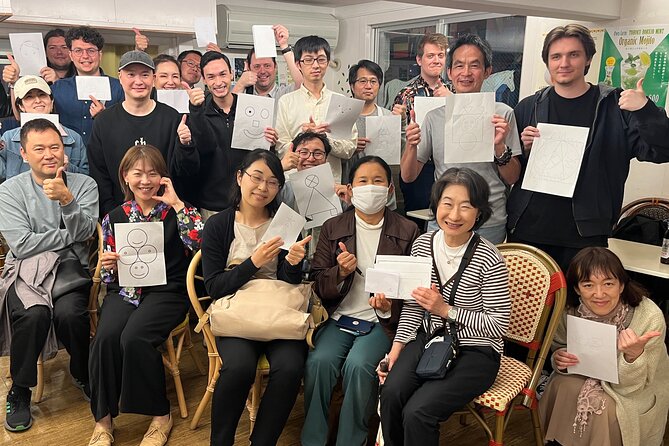
The session includes seasonal games and activities, and the structure is built around variety. That matters because language practice often fails when the activity becomes repetitive or too structured.
Games give you a reason to ask questions. They also give you permission to try, fail, and try again without turning it into a test. You’re not just “talking about stuff.” You’re playing, reacting, and clarifying.
If your Japanese is rusty, that’s still fine. Games usually let you participate with shorter answers and gestures. If your English is the one you want to practice, you can lean into explaining your thoughts instead of translating perfectly.
Who You’ll Meet: Locals, Expats, and Tourists in the Same Circle
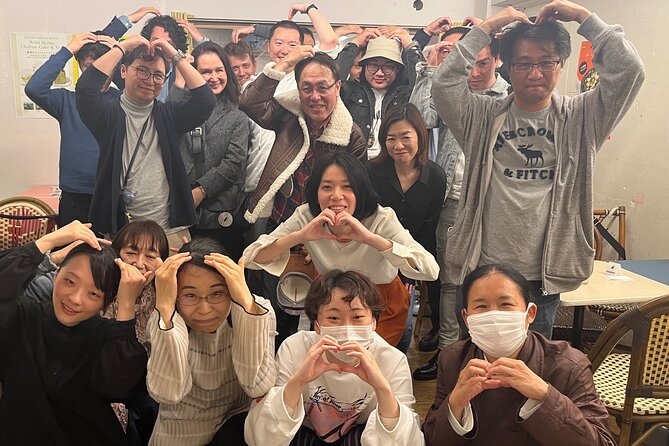
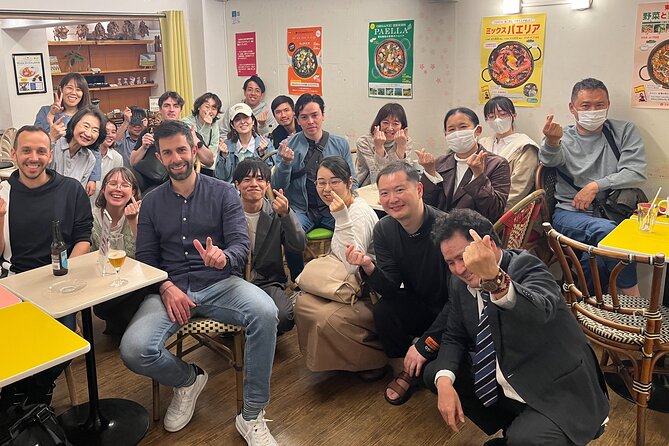
This event is built for a mixed room. The breakdown is Japanese 40% and tourists or expats 60%. In plain terms, it means you won’t be the only learner, and you won’t be the only native speaker either.
That’s a big deal. When the room is mostly learners, conversations can get stuck in textbook mode. When the room is mostly native speakers, learners can go quiet. This ratio gives you a healthier middle: people share stories, you practice, and nobody acts like you should already know every word.
You’ll also find that expats and tourists bring their own topics. Ask about day trips, favorite neighborhoods, how they learned their Japanese, or what they still struggle with. Those answers tend to be easy to follow and easy to respond to.
The Pace: How to Use the 1 Hour 45 Minutes Without Rushing
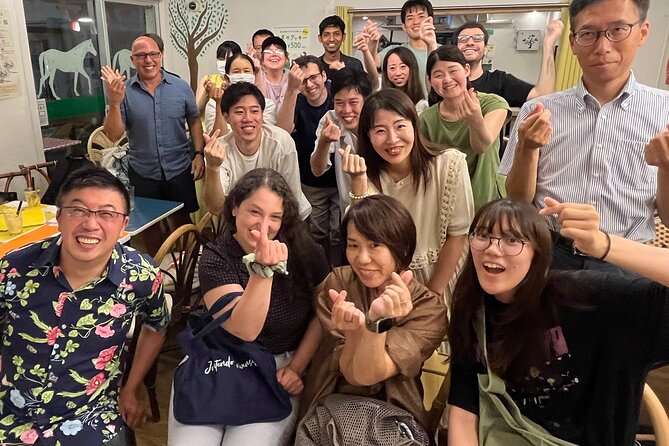
The session lasts about 1 hour 45 minutes. That time is long enough to build momentum, but not so long that you’re exhausted halfway through.
You can use that pacing to your advantage:
- Treat the first part as warm-up. Say your name, where you’re from, and what you want to practice.
- Treat the middle as your real practice time. Ask follow-ups and try small explanations.
- Treat the end as your wrap-up. Swap last questions, exchange basic contact info only if the vibe is right, and keep it light.
Because you rotate people, you don’t need to carry the whole conversation for one long stretch. Just stay present and keep trying.






Meeting Point in Sendagi: Getting There Without Stress
The meetup is at サクラカフェ&レストラン日暮里 (Sakura Cafe & Restaurant Jinnai Bunkyo area), at 3-chōme-43-15 Sendagi, Bunkyo City, Tokyo 113-0022. The activity starts there and ends back at the same place.
That matters more than you might think. Tokyo evenings can be a maze of stations and side streets. Starting and finishing at the same point means you can focus on meeting people, not navigating at the end.
It’s also described as near public transportation, so you should be able to get there without planning a half-day route.
Price and Value: Why $10 Can Make Sense in Tokyo
The price is $10.00 per person, and the key detail is that it includes all fees and taxes. Dinner is not included, and coffee or tea is not included either.
At this price, you’re not paying for a polished lecture. You’re paying for organization: seat rotation, group management, and structured conversation prompts so you actually get speaking time.
What makes it good value is the combination of:
- a small group cap (max 20),
- a long enough session to build comfort,
- and a format designed to keep conversation from stalling.
The only real question is whether the activity style fits you. If you like active social settings and you want to practice language in real dialogue, you’ll feel the value fast. If you prefer quiet or one-on-one learning, you might not.
What to Bring (So You Don’t Have to Perform)
You don’t need fancy prep. But you’ll do better if you come ready with a few go-to phrases and topics.
Here are practical things I’d do before you go:
- Decide what you want to practice most: Japanese or English.
- Prepare 3 simple intro facts: where you’re from, why you’re in Tokyo, and what you’re curious about.
- Have a short list of topics ready: favorite food, neighborhoods, travel style, work or hobbies, and something you’re learning.
- Bring a charged phone and be ready to show your mobile ticket.
Also, if you drink alcohol, note that some cultural events in this area are often tied to tastings. The provided material here doesn’t spell out drink specifics for this language exchange itself, so treat any alcohol portion as a possibility and plan accordingly. If you don’t drink, you’ll still be able to participate with conversation and games, but it’s worth checking with the organizer if alcohol is part of your specific session.
Tips to Get Real Conversation, Not Just Small Talk
Rotating conversations can still become “surface talk” if you don’t steer gently. Here’s how to make it stick.
Ask questions that invite stories, not just facts:
- What brought you to Tokyo?
- What’s one thing you changed your mind about?
- What’s your favorite way to spend a free evening here?
Then, practice the follow-up. If someone says they like a neighborhood, ask what they do there. If they mention a hobby, ask how they got into it. That’s where language practice turns from vocabulary dumping into actual flow.
And if you feel stuck, use the game prompts. Games are there to carry you through the awkward moments. Let them do the heavy lifting.
Is This for You? A Quick Match Check
This language exchange is a strong pick if you want:
- structured conversation with rotating partners,
- practice in a mixed room (Japanese plus expats and tourists),
- an evening activity that’s more social than classroom-style.
It may be less ideal if you:
- hate meeting new people and prefer quiet one-on-one settings,
- need deep grammar correction with no small talk,
- plan to keep to yourself most of the night.
If you fall in the “I want to talk more, not study more” category, you’ll likely have a good time.
Should You Book This Tokyo Language Exchange?
If you’re in Tokyo and you want fast, low-pressure speaking practice, I think it’s worth booking. The small cap, the seat rotation, and the mix of Japanese plus expats and tourists make it easier to get genuine back-and-forth instead of awkward silence.
Book it especially if you’ve tried other language meetups that turned into name exchanges and then awkward drifting. This one is designed to keep you talking.
Just be honest with yourself about the social pace. If you want a quiet, slow evening, choose something calmer. If you want a chat-filled night that helps you use Japanese or English right away, this fits.
FAQ
How much does the Tokyo language exchange cost?
The price is $10.00 per person.
How long is the session?
It lasts about 1 hour 45 minutes.
What’s included in the ticket price?
All fees and taxes are included.
How big is the group?
The activity has a maximum of 20 travelers.
Where do I meet the group?
You meet at サクラカフェ&レストラン日暮里, 3-chōme-43-15 Sendagi, Bunkyo City, Tokyo 113-0022, Japan. The activity ends back at the meeting point.
Is it a mobile ticket?
Yes, the ticket is mobile.
Can I practice Japanese and English?
Yes. The session is designed for practicing Japanese or English through conversation and activities.
What’s the cancellation window?
You can cancel for a full refund if you cancel at least 24 hours before the experience’s start time. Free cancellation is available.