REVIEW · TOKYO
Imperial Palace run with fun trivia by an Imperial Palace geek
Book on Viator →Operated by TOKYO ACTIVE TOURS · Bookable on Viator
Tokyo wakes up early at this run.
This Imperial Palace tour turns a simple morning jog into a guided route with stories, trivia, and plenty of chances to ask questions. I like that it starts before the big crowds, so the famous grounds feel calmer, and you get a more personal experience in a small group.
Two things I especially like: the guide’s fun trivia approach, and the fact that the pace can flex. It’s not marathon-only energy. It’s friendly for casual runners (and also people who prefer walking parts).
One consideration: you’ll want a little fitness for the overall loop. Even though you can slow down, it’s still an active morning with several segments, gates, and some uphill when you head back out.
In This Review
- Key things to know before you go
- The appeal: an early Imperial Palace run with real stories
- JOGLIS meeting point: where your run starts (and where you can reset)
- From JOGLIS to Hanzomon: rules first, then you’re off
- Sakuradamon area: trivia stops that turn sightseeing into momentum
- Nijubashi Bridge: the classic photo moment with a calm feel
- Gyoko-dori Street: marathon finish vibes in a palace-adjacent morning
- East Gardens through Kokyo Otemon Gate: where the tour becomes real sightseeing
- Fujimi-yagura and Tenshudai: seeing Edo Castle layers without getting lost
- Kitahanebashi return and the uphill climb: pace yourself like a local
- Cherry blossom areas: Daikancho-dori and Chidorigafuchi secrets
- Guide YUKO and the trivia that makes the route stick
- Price and value: what $90 buys you in Tokyo
- Who should choose this Imperial Palace run (and who might not)
- Should you book the Imperial Palace run with fun trivia?
- FAQ
- How long is the Imperial Palace run tour?
- What is the meeting point and start time?
- Do I need to be an experienced runner?
- Is the tour in English?
- Are lockers or showers available?
- How big is the group?
Key things to know before you go
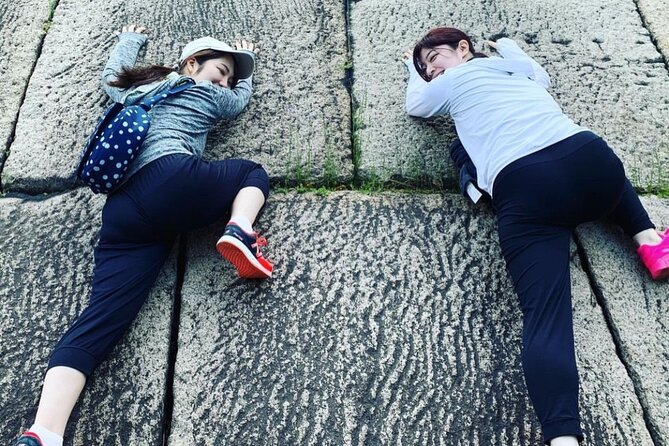
- Small group max 8, so questions about the Imperial Palace don’t feel awkward
- Mix of running and walking, with short stops instead of one long unbroken effort
- Guide YUKO’s Imperial Palace passion shows up through the trivia and answers
- Iconic gates and bridges, from Hanzomon to Nijubashi, plus East Gardens highlights
- Marathon-route vibes on Gyoko-dori Street, where the Tokyo Marathon finish is referenced
- Locker option at JOGLIS for ¥1,500 if you want to store bags and freshen up
The appeal: an early Imperial Palace run with real stories
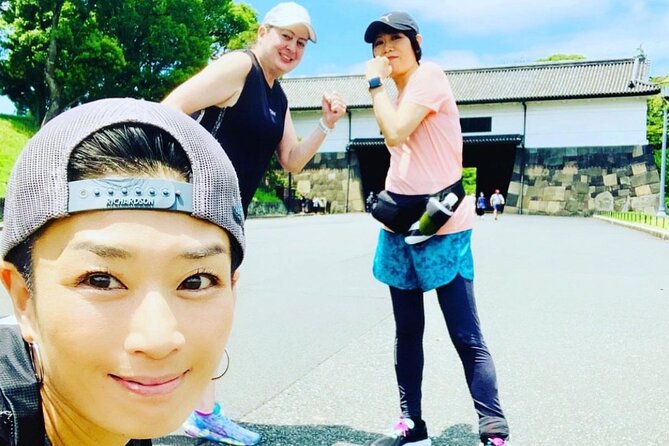
This is one of those Tokyo experiences that sounds simple until you actually get moving. You’re not just covering distance around a landmark. You’re learning how the place fits into the city, and you’re doing it at 8:30 am, when the area feels less hectic.
What makes it work for your day is the timing and the format. You get exercise, photos, and context without losing half a day to lines. And because the tour is small, you’re not stuck watching the guide from the back like it’s a school field trip.
You can also read our reviews of more tours and experiences in Tokyo.



JOGLIS meeting point: where your run starts (and where you can reset)
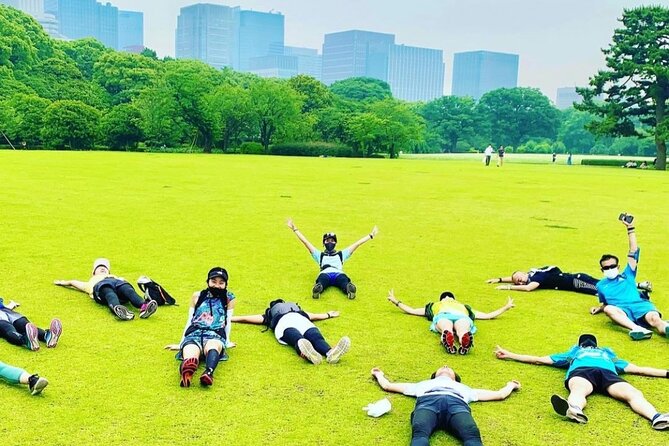
The tour begins at JOGLISJapan, in Chiyoda near Kojimachi (FMセンター地下 1F). You’ll get a briefing first, then head out for the route.
If you’re the type who likes to travel light, this matters. The tour includes an option to use changing lockers and showers at JOGLIS for ¥1,500. That’s not included in the price, but it’s a handy add-on if you want to go from early run to breakfast, meetings, or sightseeing without feeling sweaty and stuck.
A practical note from the tour info: running clothes, shoes, and towels are available for rent for a fee. If you show up without the right kit, you still have a workaround.
From JOGLIS to Hanzomon: rules first, then you’re off
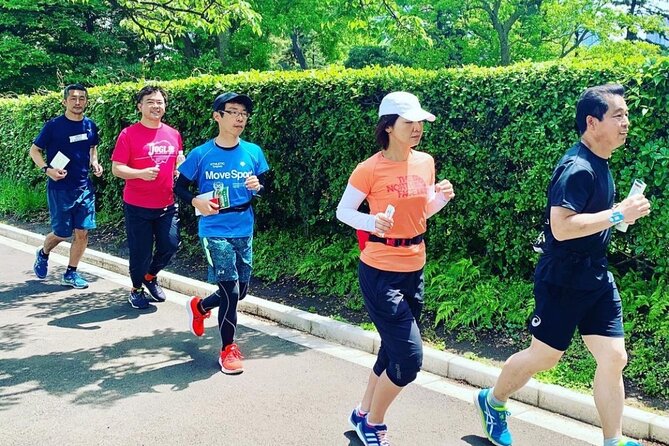
Stop one is JOGLIS, with a briefing on the history of the Imperial Palace and the rules for the Imperial Palace Run. That matters more than it sounds. When rules are clear upfront, the whole group moves smoothly and you avoid that awkward moment of guessing what’s allowed where.
Then you start the run section from Hanzomon, one of the entrances to the Imperial Palace grounds. This is where you’ll feel the “morning Tokyo” blend: palace walls and gates on one side, and major civic buildings visible as you descend Miyake-zaka, described as one of Tokyo’s most beautiful slopes.
You also get views toward the National Theatre and the Diet Building. It’s a nice reminder that this isn’t a museum-only stop. You’re running in the middle of a living capital.
Sakuradamon area: trivia stops that turn sightseeing into momentum
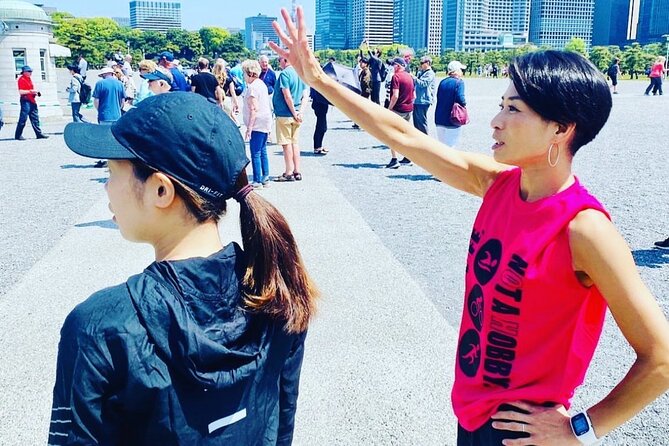
As you move toward Sakuradamon (the large gate), the guide brings in stories that you can’t easily pick up just by walking on your own. You’ll hear about the belief in Mt. Fuji, something many Japanese people cherish, and you’ll also get a moment to recharge at a power spot type of stop.
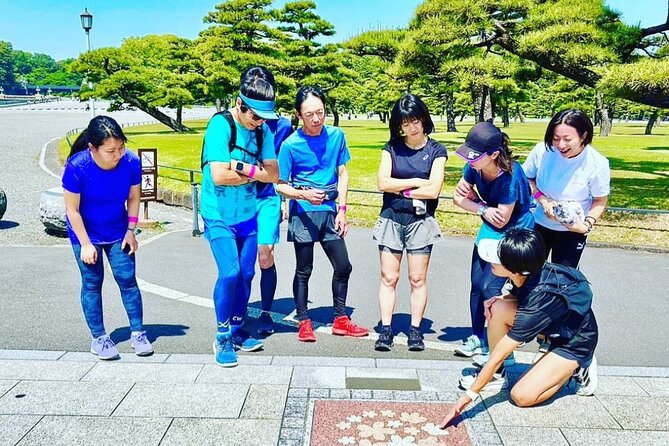
Then there’s another short pause in the Sakuradamon square for a very “runner-brain” kind of moment: the guide shares the secret of the clock that many runners gather around. Even if clocks sound boring, these are the kinds of details that make your photos and route feel intentional.
One thing I like about the pacing here: these are not long sightseeing slogs. The stops are short enough that you still feel like you’re running, but you’re also getting the point of each location. That mix is what keeps the energy up.
Nijubashi Bridge: the classic photo moment with a calm feel

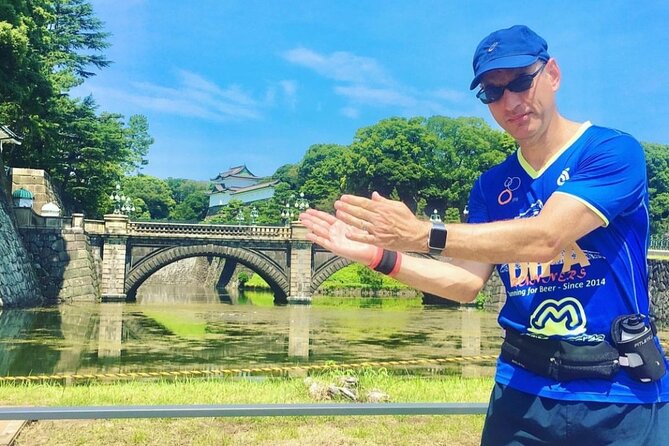
Next comes the Two-tiered Bridge (Ni-ju Bashi / Nijubashi). This is one of the Imperial Palace’s most recognizable visuals, and the tour treats it like a destination, not a random pass-through.
You’ll stop for a commemorative photo, then keep going. The bridge works well for this format because it’s a natural “breather” spot: you can slow your pace for a moment, regroup as a group, and look at the structure without feeling rushed.
If you care about photos, this is where I’d expect you’ll take more than one shot. The timing (earlier in the day) helps too, since you’re less likely to be fighting crowds.





Gyoko-dori Street: marathon finish vibes in a palace-adjacent morning
Then you hit Gyoko-dori Avenue, which the tour info connects to the Tokyo Marathon finish area. This is a fun contrast: you’re still within the Imperial Palace environment, but the feeling shifts toward event energy.
You’ll also talk about secrets of Tokyo Station, plus the Emperor and the Tokyo Marathon during this segment. That’s exactly the type of trivia I enjoy on active tours. Instead of facts that sit in your head for five minutes and vanish, the guide builds context you can associate with a specific street and moment.
There’s also a photo moment here that’s described as looking like the marathon finish line scene. Even if you don’t think of yourself as a “marathon person,” it’s a memorable way to make the route feel like an experience, not just a checklist.
East Gardens through Kokyo Otemon Gate: where the tour becomes real sightseeing
After Gyoko-dori, you go to Kokyo Otemon Gate. From here, you enter the East Gardens of the Imperial Palace.
Important practical detail: before entering the gardens, there’s baggage inspection. If you’re carrying a small day bag, wear something with accessible pockets and plan for that check. It’s also a reminder that this is a managed space, so moving with the group is the smart move.
Inside, you’ll be greeted by a Shachihoko detail as described in the tour info. The keepers of these spaces clearly want you to notice symbolic elements, not just buildings.
This part of the tour is valuable because it’s where you shift from “running landmarks” to “actually seeing the garden environment.” The guide’s commentary helps you notice what might otherwise blend into a general scenery walk.
Fujimi-yagura and Tenshudai: seeing Edo Castle layers without getting lost
Next you’ll reach Fujimi-yagura, described as “our little castle,” with beautiful turrets that served as substitutes for the Edo Castle keep. This is one of those stops that feels extra rewarding if you like architecture, defensive structures, or the way Tokyo layers old and new.
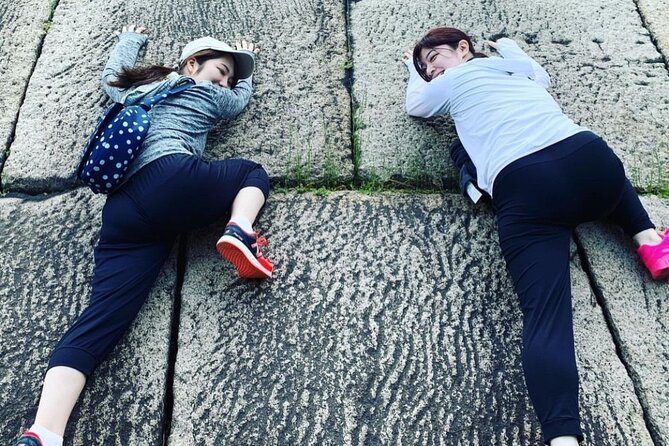
After that comes Tenshudai, the remains of the main tower. You’ll see stone walls of the Edo Castle keep, and while the original keep is destroyed by fire and no longer visible, you’ll also see a reconstructed model.
I like this segment because it gives you a clear sense of what’s gone and what remains. Instead of pretending the view is complete, the tour frames the ruins honestly and shows you the reconstructed picture. It makes your photos feel more meaningful, even if you’re just learning on the fly.
Kitahanebashi return and the uphill climb: pace yourself like a local
To wrap up, you exit through Kita Hanebashi-mon Gate (Kitahanebashi), described as a drawbridge of the Edo Castle.
From here, you’ll begin an uphill climb. The tour info says to run at your own pace and enjoy it. This is where you’ll feel whether your early start and mixed stops worked for you. If you went out too fast, this is the part where your legs remind you to breathe and settle.
The practical beauty of a guided run is that you don’t have to manage navigation. You just manage effort. You can treat this section like a cool-down that gradually turns into the final push.
Cherry blossom areas: Daikancho-dori and Chidorigafuchi secrets
As you continue, you’ll go to Daikancho-dori, known historically as a street where daimyo residences were during the Edo period, and also known as a cherry blossom viewing spot.
Then you reach Chidorigafuchi Park, another major cherry blossom area. The guide also teaches secrets of cherry trees that Japanese people cherish. This stop is a nice way to end the tour on an emotional note—flowers, tradition, and careful attention to detail.
Even if you’re not visiting in peak blossom season, the tour’s framing can still help you understand why this area is famous and what to look for when trees are in bloom.
Finally, you return to JOGLIS for dismissal. If you used the facilities at JOGLIS, you can take a shower. That makes this tour feel like a complete “morning routine,” not just a ride.
Guide YUKO and the trivia that makes the route stick
The tour’s standout ingredient is the guide. The guide is YUKO, and you can tell she approaches this run with real affection for the Imperial Palace.
In practice, that means the trivia feels like it belongs to the exact places you pass. The clock detail in Sakuradamon square, the Mt. Fuji belief, the Shachihoko mention, the reconstructed tower context, and the marathon-finish talk on Gyoko-dori Street all serve one purpose: they give you anchors.
Anchors help you remember what you saw. They also make your photos better, because you know what you’re photographing and why it matters in the local story.
There’s also another big plus: you can ask questions freely. If something confuses you—rules, buildings, why certain gates matter—this format gives you a direct line to an answer.
Price and value: what $90 buys you in Tokyo
At about $90 for roughly 2 hours 30 minutes, you’re paying for more than “someone to lead the way.” You’re paying for:
- A guide-led route with commentary at specific gates and streets
- Small group attention (max 8)
- A pacing plan that mixes running, walking, and photo stops
- Bilingual delivery with Japanese and simple English
Not included: locker use at JOGLIS for ¥1,500 if you want it. That’s the only clear extra cost listed.
Is it a bargain? For Tokyo, a guided early-morning activity with a capped group size often costs more than this. This one also includes a mobile ticket and a structured plan that doesn’t waste your time. You’re paying for “guided meaning,” not just movement.
If you’re comfortable exploring on your own, you could replicate parts of the route. But if you want the shortcuts in understanding—what you’re seeing and why—this price starts to look fair.
Who should choose this Imperial Palace run (and who might not)
This works best if you like:
- A morning start and quieter sightseeing
- Light-to-casual exercise (with stops)
- Learning through stories and trivia rather than reading alone
- Asking questions and getting answers fast
It’s also good if you’re a first-timer to Imperial Palace areas but you still want a sense of accomplishment from doing something active. The tour format is built to avoid the all-run grind, and that keeps it approachable.
If you’re training for a hard long-distance run, you might find the stops disrupt your rhythm. But if your goal is “active Tokyo with meaning,” you’ll probably enjoy the balance.
Should you book the Imperial Palace run with fun trivia?
I’d book this if you want an early Tokyo morning that feels purposeful. You get iconic places—Hanzomon, Sakuradamon, Nijubashi, East Gardens, Tenshudai, and Chidorigafuchi—plus a guide who brings them to life through trivia and clear explanations. The small group format means your questions can actually land.
Don’t book it if you only want a pure run with no stops or if you’re expecting a totally leisurely walk. This is active, and there’s at least some uphill when you head back out. Also plan for the extra ¥1,500 if you care about lockers or showers.
If your ideal morning is: move a bit, see important sights, learn something real, and still feel ready for the rest of your day, this tour fits.
FAQ
How long is the Imperial Palace run tour?
It lasts about 2 hours 30 minutes.
What is the meeting point and start time?
You meet at JOGLISJapan (Chiyoda City, Kojimachi area) and the start time is 8:30 am.
Do I need to be an experienced runner?
No. The tour is aimed at casual runners and exercise enthusiasts, and you can also walk if running isn’t your thing. You should have moderate physical fitness.
Is the tour in English?
It’s conducted in Japanese with simple English, so Japanese and English speakers can both join.
Are lockers or showers available?
Yes. You can use lockers and showers at JOGLIS for an additional ¥1,500 per person.
How big is the group?
The tour has a maximum of 8 travelers.