REVIEW · TOKYO
Iconic Tokyo Uptown Landmarks Go Kart Tour (120 Minutes)
Book on GetYourGuide →Operated by Kartzilla Discovery Japan (Kartzilla Go Kart, Tokyo) · Bookable on GetYourGuide
Tokyo from the driver’s seat feels personal. This street-legal go-kart tour gives you live storytelling and two-way radio safety guidance as you roll through Tokyo’s most recognizable streets. You’ll get that “I’m seeing it up close” feeling without needing racing skills—just a valid license and an early arrival for the briefing.
I also like the setup for comfort and confidence: the karts are built for real city control, with suspension and hydraulic brakes that make first-time driving less stressful. The main catch is practical: you must have an accepted driver’s license (often an International Driving Permit) and you’ll need to be there about 40 minutes before start time.
In This Review
- Key Points You’ll Actually Care About
- Why Tokyo’s Uptown Go-Kart Route Works
- The Big Gatekeeper: Your License and What They’ll Accept
- Getting Oriented at Kartzilla (Before You Roll)
- Tokyo Skytree and Ryogoku: Big Icons, Street-Level Angles
- Tokyo Station and the Imperial Palace Area: The City’s Main Story
- Tokyo Tower to Ginza: Neon Energy With a Controlled Pace
- Kabuki-za and the Return to Kartzilla
- Go-Karts Built for Comfort and Real Control
- Live Radio Guidance: The Secret Sauce for a Low-Stress Ride
- Capturing the Ride: Insta360, Free Photos, and What to Bring
- Price and Value: What $116 Buys You in Tokyo
- Who This Is Best For (and Who Might Skip It)
- Should You Book This Tokyo Uptown Go-Kart Tour?
- FAQ
- Do I need an International Driving Permit?
- What’s the meeting point and how do I get there?
- How long is the tour?
- Is the camera included?
- Are meals included?
- What languages are the live guides?
- What if it rains during the tour?
Key Points You’ll Actually Care About
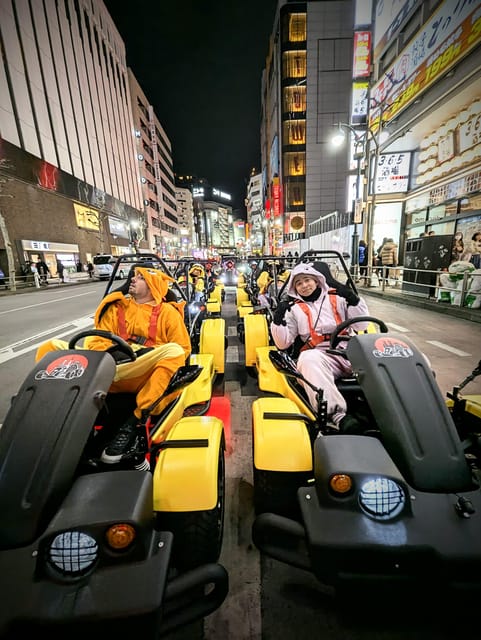
- Live guide on two-way radio keeps you both informed and moving safely.
- Street-legal, comfort-focused karts are easier than standard recreational karts.
- Small group (max 10) means more attention and less waiting.
- Uptown route hits major icons like Skytree, Ryogoku, Tokyo Station, Imperial Palace area, Ginza, and Kabuki-za.
- Optional Insta360 is hands-free, but you’ll need a microSD card (purchase on site).
Why Tokyo’s Uptown Go-Kart Route Works
Tokyo has a lot of “look at this landmark” tours. This one works because it swaps the usual bus-window view for a street-level ride in a professionally built kart. You’re moving at a relaxed, guided pace, so you can actually notice what makes each district feel like Tokyo.
I like that the experience is built around two things at once: fun driving and real context. The guide doesn’t just announce where you are; you get live landmark stories while the route is actively managed. If you want a photo-heavy first taste of the city, this is one of the easiest ways to do it without trying to navigate crowded streets on your own.
One more big plus: the karts and route are designed for first-timers. You’re not there to race. That single decision makes the whole experience feel more like sightseeing with wheels.
You can also read our reviews of more tours and experiences in Tokyo.



The Big Gatekeeper: Your License and What They’ll Accept
This tour is a true driving experience, so the driver’s license rules matter. To join, you need a valid driving license, plus passport. For non-residents, an International Driving Permit issued under the 1949 Geneva Convention is the standard path.
If you’re from Switzerland, Germany, France, Belgium, Monaco, or Taiwan, your license can be accepted when paired with an official Japanese translation issued by JAF. Digital licenses, photos of licenses, or expired documents won’t work.
I recommend checking this early in your trip planning, not at the last minute. A denied day-of license usually means you lose your spot with no refund, so it’s not a “maybe it will be fine” situation.
Getting Oriented at Kartzilla (Before You Roll)
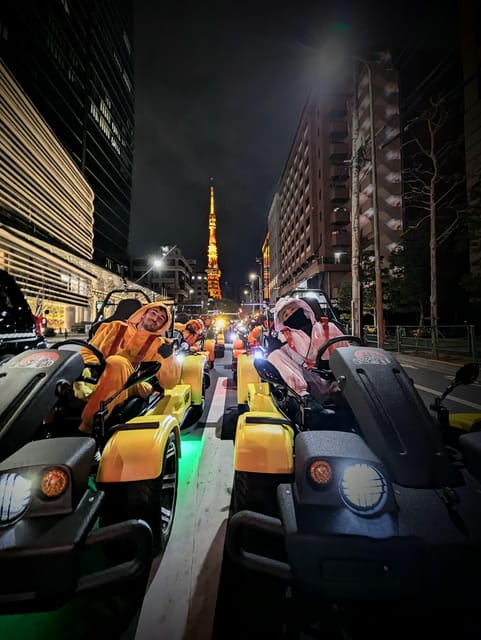
Most first-time kart experiences feel chaotic for about five minutes—gear, helmet, instructions, nervous laughs. Here, the pace is calmer. You start at Kartzilla Go Kart Tokyo, in a building marked clearly, and you’ll walk there from Yotsugi Station (about 8–10 minutes).
You should plan to arrive early because there’s a mandatory safety briefing and check-in, and you’re told to be there at least 40 minutes before your scheduled start. That time usually buys you something important: clear driving instructions and a chance to ask questions before you’re on city streets.
Also, the tour is set up for English, German, and Spanish-speaking guests. That matters because the guide’s storytelling and directions aren’t just “here’s the route.” It’s how you understand what you’re seeing while still driving safely.
Tokyo Skytree and Ryogoku: Big Icons, Street-Level Angles
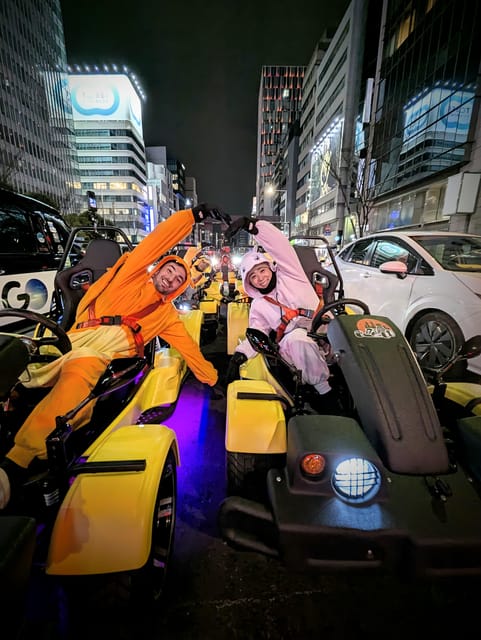
Your ride begins near Tokyo Skytree. Expect scenic drive time plus guided stops where the guide connects the landmark to local culture. Skytree is one of those places where just seeing it in the distance isn’t enough. From the kart, you get the scale and the way the surrounding streets funnel people toward it.
Next comes Ryogoku Kokugikan, the Ryogoku area tied to sumo. Even if sumo isn’t your main interest, this stop helps you understand Tokyo’s layers: a place known worldwide for sport is also part of everyday urban life, not a museum display.
A practical takeaway here: this part of the route is a good confidence builder. You’re not thrown into the toughest driving moments right away. The guide keeps pace and spacing, and the radio connection helps you stay calm and in sync with the group.
Tokyo Station and the Imperial Palace Area: The City’s Main Story
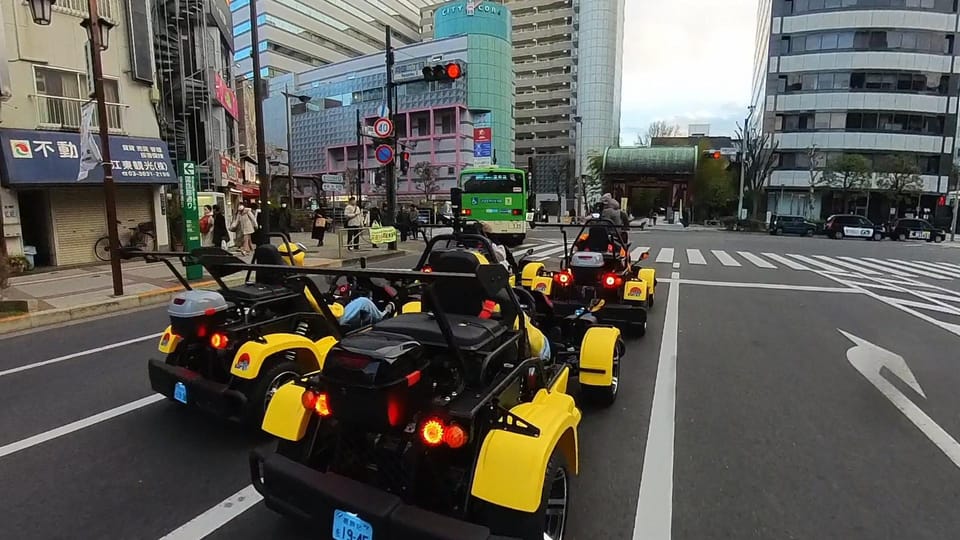
As the tour moves toward Tokyo Station, you get a shift from skyline views to a more “center of gravity” feeling. Tokyo Station is busy and symbolic, and watching it from a kart lane gives you that street-level sense of how trains and commuters shape the rhythm around you.
From there you head toward the Imperial Palace surroundings. This is the kind of area where the scenery changes mood. You’ll be close enough to feel the scale of the space and the formality of the surroundings, but you’re still seeing it like a pedestrian would—just from behind the wheel.
I like that this segment isn’t treated like a quick photo stop. The guide’s live storytelling is what turns the scenery into something you can remember later. It also helps keep your attention on the road, which is the real priority.





Tokyo Tower to Ginza: Neon Energy With a Controlled Pace
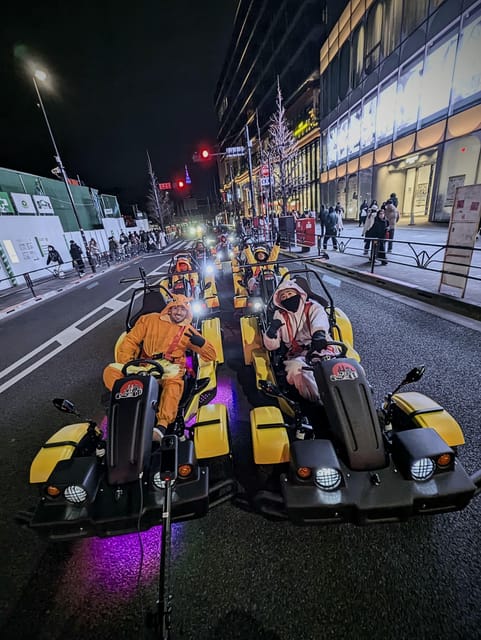
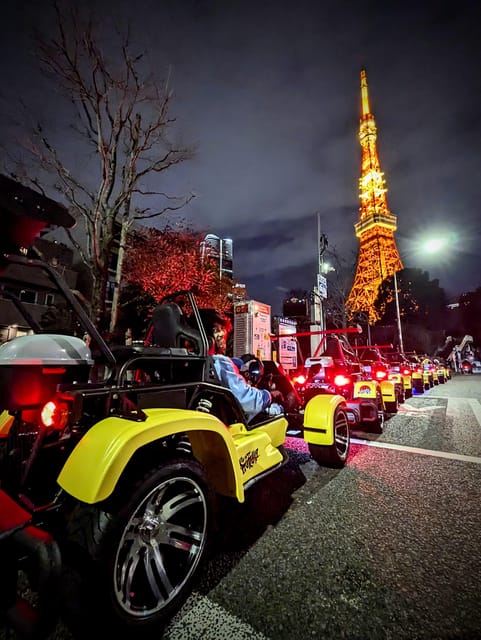
Next up is Tokyo Tower, one of the easiest landmarks to recognize even if you only know it from postcards. The kart perspective adds something simple: you feel the distance change as streets tighten and open up again. It’s not just a tall object in the background; it’s part of a real commuting environment.
Then the route continues through Ginza. Ginza can feel like Tokyo’s polished shopping and dining district, and the kart lets you experience how that “look” functions at street level. You can see the flow of pedestrian areas, storefront rhythms, and side streets that don’t show up the same way from a distance.
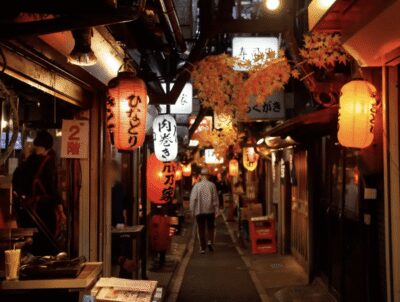
If you’re thinking about timing, one practical tip comes from recent riders: a night tour is especially good for the neon look. So if you have flexibility, night can add a lot of visual payoff. And if rain shows up, you might be glad to know that rain jackets were available for at least one group during a rainy session.
Kabuki-za and the Return to Kartzilla
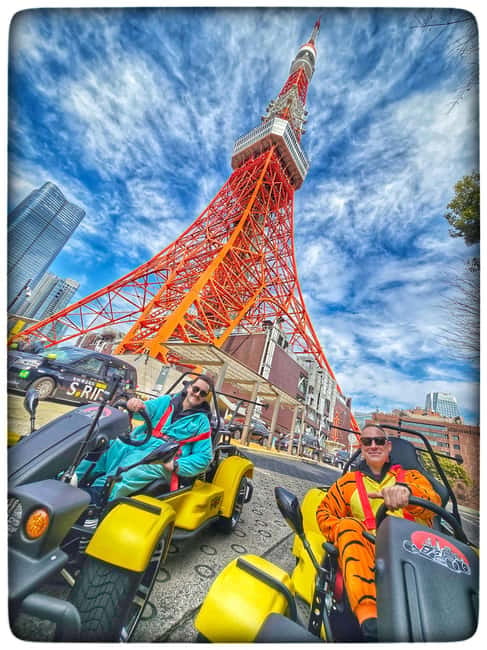
The route finishes at Kabukiza Theatre (Kabukiza). This stop brings theater culture into the ride in a way that feels natural. From the kart, you’re not just looking at a building—you’re moving through the surrounding streets where people would gather and come and go.
After Kabukiza, you circle back to Kartzilla Go Kart Tokyo. This is where it clicks for most people: you started with basic instructions and now you’ve driven through major districts as part of a guided flow. It feels like sightseeing, but with the “hands-on” memory that sticks.
One small end-of-tour detail to plan for: a recent rider mentioned hair dryers and towels were handy afterward. Even if that isn’t guaranteed for every session, it’s a sign that the team tries to make the post-drive moment workable—especially if you get damp.
Go-Karts Built for Comfort and Real Control
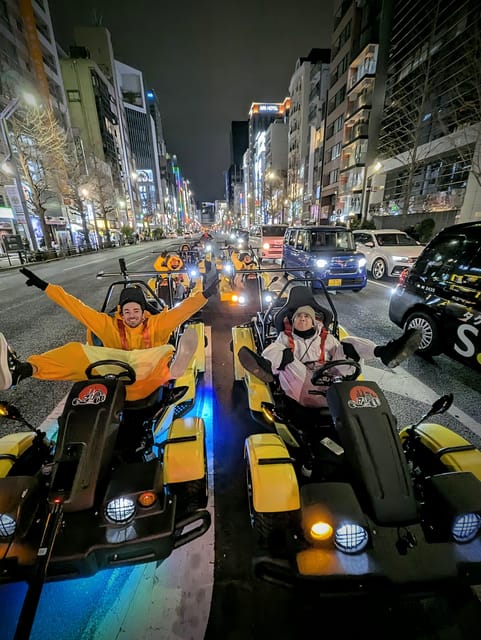
A lot of recreational karts feel sketchy, especially for first-time drivers. Kartzilla’s karts are designed for real street conditions and driver comfort. The features that matter to you are the ones that reduce fatigue and improve control:
- Advanced suspension for a smoother ride over uneven pavement
- Hydraulic brakes for more precise stopping
- Reinforced frames that comfortably accommodate big and tall riders
- Stable handling that’s easier to learn
That last point is huge. When a kart feels stable, you stop fighting it and start enjoying the ride. It also makes the tour less stressful if you’re not a gearhead.
Live Radio Guidance: The Secret Sauce for a Low-Stress Ride
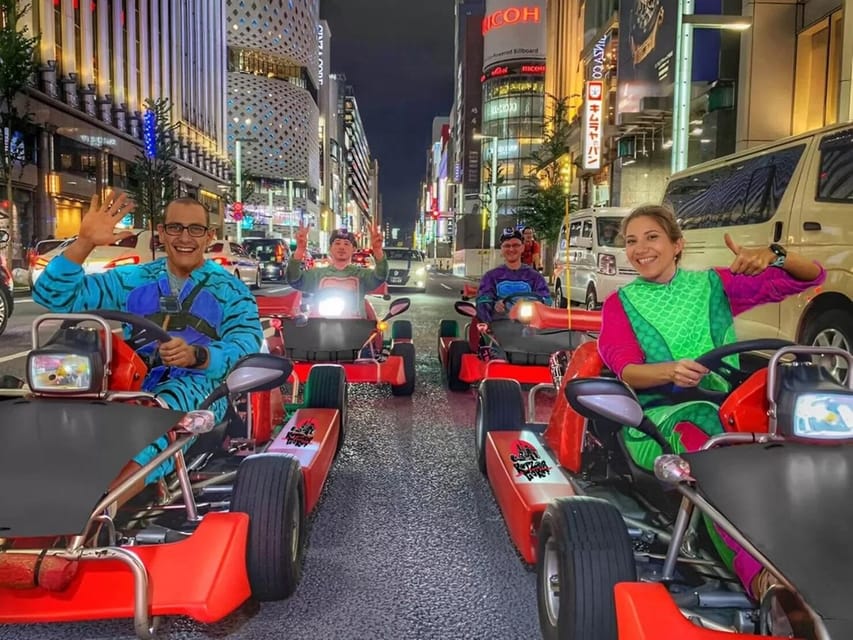
This tour doesn’t rely on vague hand signals. You get live guide storytelling and real-time safety guidance through two-way radio. That means you’re not just hearing directions; you’re also being warned and coached so the group stays smooth.
You’ll likely notice two benefits right away:
1) You can focus on driving without guessing what comes next.
2) The guide can keep sharing stories while still managing timing and spacing.
In a recent session, guides named Sata and Travis stood out for clear directions and making first-time driving feel easier. That “clarity” is what you’re paying for, even when you’re just thinking about the karts.
Also, the guide is leading you at all times. This matters because it prevents the common beginner problem: getting separated and then trying to catch up in a foreign city.
Capturing the Ride: Insta360, Free Photos, and What to Bring
You have two ways to document the experience: free photos and an optional onboard camera.
- Insta360 option: You can use an on-board Insta360 camera for hands-free recording from the driver’s seat.
- Micro SD card requirement: The microSD card is not included. You can purchase it on site.
So your prep job is simple: if you want the footage, plan for the microSD card. If you don’t, you still get free photos as part of the experience.
Because you’re driving, it’s smart to think of the camera as “memory insurance,” not your main priority. The best videos are usually the ones where you didn’t keep taking your hands off the controls.
What to bring is straightforward: passport, driver’s license, and (when needed) an International Driving Permit. Drones are not allowed, and you shouldn’t plan to drive if you’ll be intoxicated.
Price and Value: What $116 Buys You in Tokyo
At $116 per person for 2 hours, you’re paying for a bundle, not just the kart. And for Tokyo, the value depends on what you compare it to.
Here’s what’s included:
- Street-legal go-kart rental
- Fuel for the tour
- Professional local guide
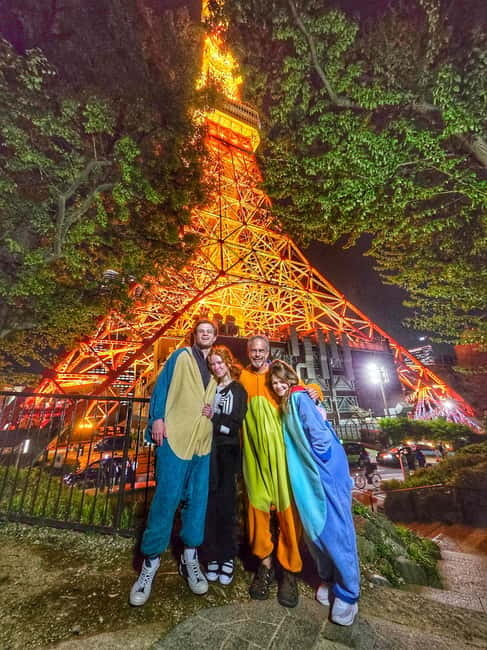
- Anime costume rental
- Insta360 camera use (microSD not included)
- Accident insurance
- Drinks (water, tea, coffee)
If you’ve ever tried to put together a guided activity plus equipment plus a professional guide plus city-time, you know it adds up. This package makes the day simpler. Even if you only care about the driving, you still benefit from insurance coverage, guided radio coordination, and a team that handles the logistics.
The anime costume rental is also not just a gimmick. It’s a quick way to add a playful Tokyo moment without needing props. It’s useful if you want photos that look like a real experience, not just a selfie at a landmark.
The main “extra” cost risk is the microSD card if you want the Insta360 footage, plus meals (not included).
Who This Is Best For (and Who Might Skip It)
This go-kart tour is built for adults who want a guided, street-level Tokyo experience without complicated planning.
It’s a good fit if you:
- Want to see major Uptown icons from ground level
- Prefer a small group (limited to 10 participants)
- Like guided storytelling but also want hands-on fun
- Have a valid license and feel comfortable driving a kart
It may not fit you if:
- You’re under 18
- You’re visually impaired
- You don’t have a driver’s license (required)
- You’re over 95
One more note: intoxication and alcohol/drugs are not allowed, which is standard for any vehicle-based activity.
Should You Book This Tokyo Uptown Go-Kart Tour?
Book it if you want a 2-hour activity that mixes city icons, real driving, and a guide who actually helps you enjoy it. The two-way radio safety guidance plus the comfort-focused karts reduce the most common stress of doing something like this in a major city.
Skip it if you don’t have the right license documents ready, or if the idea of driving on city streets (even with guidance) just doesn’t appeal to you. This isn’t a passive sightseeing tour. It’s a you-are-the-driver kind of experience.
If you can choose timing, I’d lean toward a night slot for the neon look—just be prepared for the possibility of rain, and know rain protection may be available.
FAQ
Do I need an International Driving Permit?
For non-residents, a valid International Driving Permit issued under the 1949 Geneva Convention is the standard requirement. Other accepted cases include certain country licenses paired with an official Japanese translation issued by JAF. Your license must be valid and accepted, and expired or digital photos aren’t accepted.
What’s the meeting point and how do I get there?
You meet at the Kartzilla Go Kart Tokyo facility, which is about an 8–10 minute walk from Yotsugi Station. The building is clearly marked, and you can use Google Maps to find it.
How long is the tour?
The tour lasts 120 minutes.
Is the camera included?
You can use an on-board Insta360 camera option, but you need a microSD card (not included). The microSD card can be purchased on-site.
Are meals included?
Meals are not included. Drinks like water, tea, and coffee are included.
What languages are the live guides?
Live tour guides are available in English, German, and Spanish.
What if it rains during the tour?
If weather turns rainy, rain jackets may be available. One recent session included rain and riders reported using the rain jackets provided.