REVIEW · TOKYO
Get to know the secret of Asakusa! Shrine and Temple Tour
Book on Viator →Operated by OTOMO Travel Guide · Bookable on Viator
Seven lucky temples, one smart plan. On this private Asakusa shrine-and-temple tour, you get a focused route built around the Seven Gods of Fortune, plus a guide to translate the meaning behind what you see and where to stand for it. I like that the experience is exclusively for your party, so the pace can match you instead of the clock. One catch: the tea-house stop has a separate listed fee, so the tour price is only part of your spending.
I also really like the stamp souvenir concept. As you hop from shrine to temple, you collect stamps along the way, which turns the day into a simple keepsake you can actually use back home. The tour is also set up for Edo-period context, so these stops feel less like random photos and more like one connected story.
In This Review
- Key Points I’d Use to Plan Your Day
- A Seven Gods of Fortune Walk Through Asakusa’s Old Streets
- Private Guide, Mobile Ticket, and a 5½-Hour Pace That Works
- Stop-by-Stop: Honryuin Matsuchiyama to Senso-ji
- Raku Ishihama Saryo Raku at Ishihama Shrine: Tea, Food, and the Fee
- What the Deities Mean: Bishamonten, Hotei, Benzaiten, Ebisu, and Friends
- Kaminarimon and Nakamise Street for Souvenirs and Snacks
- Price and Value: Where Your $103.92 Tour Spending Goes
- Should You Book This Secret of Asakusa Tour?
- FAQ
- How long is the Asakusa shrine and temple tour?
- Is this tour private, or do I join a bigger group?
- Are the shrine and temple admissions included?
- What happens on Wednesday when Ishihama Saryo Raku is closed?
- Do I get anything to take home from the shrines and temples?
- Is free cancellation available?
Key Points I’d Use to Plan Your Day
- Seven Gods of Fortune in one route: you visit the shrines and temples tied to the luck deities, not a scattershot checklist
- Free stamp souvenirs along the way: the stamp collection gives the tour a clear goal beyond sightseeing
- Edo-era details show up in small ways: the architecture and traditions are part of what your guide points out
- Flexible pace, plus photo help: guides are described as patient, friendly, and willing to adjust your movement needs
- A tea-house break inside Ishihama grounds: expect to pay extra at this stop, and note Wednesday closures
A Seven Gods of Fortune Walk Through Asakusa’s Old Streets
Asakusa works best when you treat it like a web, not a line. This tour does that for you by linking seven religious stops to the Seven Gods of Fortune. Each place has a different theme tied to luck—things like health, good relations, marriage fortune, art, prosperity, and more—so your route feels purposeful as the day moves forward.
What makes the concept work in real life is that you’re not just wandering. Your guide keeps you moving between sites while explaining why that particular shrine or temple matters. You’ll spend enough time at each stop to notice the small cues people often skip: what deity is associated here, what kind of wish that site is known for, and what to look for in the ceremony atmosphere.
This is also a very “story-friendly” day. As you connect one stop to the next, the themes start repeating in your head—marriage luck shows up more than once, and prosperity shows up in different forms. That repetition is useful because it helps you remember what you learned when you’re back at your hotel.
You can also read our reviews of more tours and experiences in Tokyo.



Private Guide, Mobile Ticket, and a 5½-Hour Pace That Works
This runs about 5 hours 30 minutes and is built as a private tour for your group only. That matters because Asakusa can be crowded around the main gates and shopping streets, and a private format helps you avoid feeling swept along by other groups. It also means your guide can handle the day’s flow—where you wait, where you enter, and when you take a breather.
You’ll meet near Asakusa Station (Asakusa Sta. 1-chōme) and the tour ends back at the meeting point area. One extra detail: the finish spot can differ, so it helps to tell your guide if you want to end somewhere specific. For timing, plan for walking. The tour is short on paper, but it still covers multiple sites in one morning or afternoon chunk.
A smart practical point: this experience is a mobile-ticket style activity, and it’s confirmed at booking. That usually makes day-of logistics smoother when you’re navigating trains, street corners, and entrances.
And if weather turns, you’re not stuck with a single outdoor spectacle. One past group even did the full route during rainy conditions and still got their stamp souvenirs, which tells you the schedule is built around clustered stops rather than one big, fragile outdoor-only plan.
Stop-by-Stop: Honryuin Matsuchiyama to Senso-ji
Here’s the heart of the day—seven luck-focused shrines/temples plus a tea-house break and a shopping-street finish.
Stop 1: Honryuin Matsuchiyama Shoden (25 minutes, free admission)
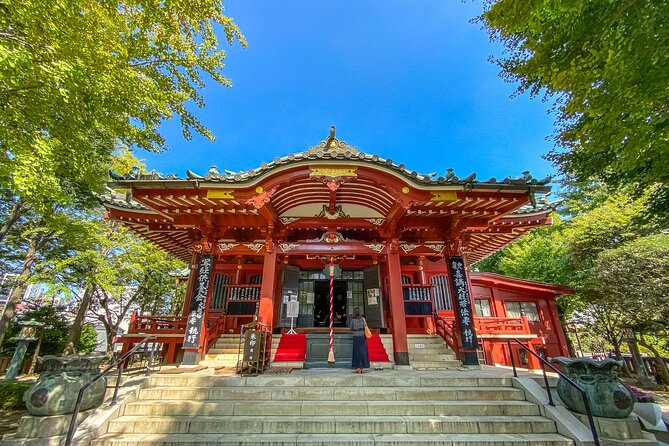
This temple is associated with health and also with harmony in relationships. The theme also includes good luck for marriage and prosperity in business. It’s tied to Bishamonten, one of the Seven Gods of Fortune, so you’ll likely hear how this deity connects to practical hopes, not just abstract wishes.
Stop 2: Imado Shrine (20 minutes, free admission)
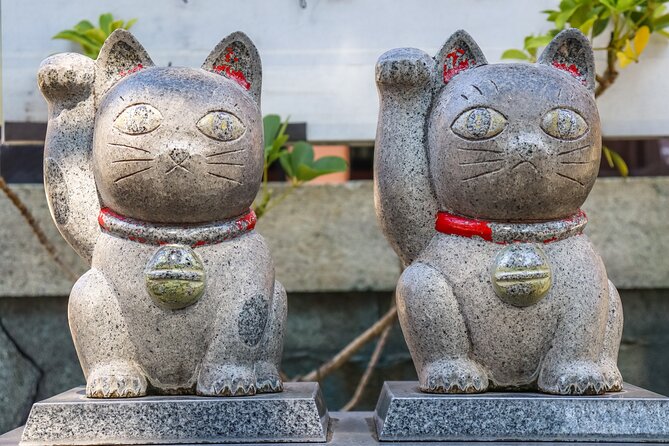
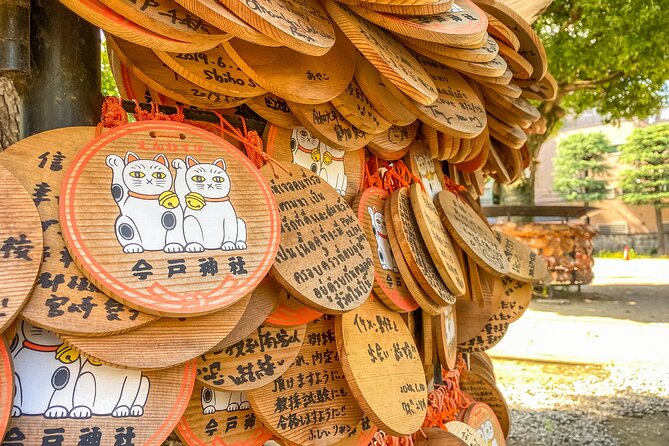
Imado Shrine is famous as the birthplace of Maneki Neko—the waving cat that you see everywhere in Japan. In Asakusa, that “cat luck” doesn’t feel random. You’ll also learn it’s a place where many female worshipers go seeking marriage luck, which gives the cat a more grounded role than a souvenir gimmick.
Stop 3: Hashiba Fudoson (15 minutes, free admission)
This one is smaller and simpler, and the focus is on what Edo-period temple style looks like in real structure, not just in textbooks. It’s associated with Hotei-son, the deity linked with good fortune. Even with a shorter stop time, you’ll get enough context to notice the building details your guide points out.
Stop 4: Raku Ishihama Teahouse at Ishihama Shrine (40 minutes)
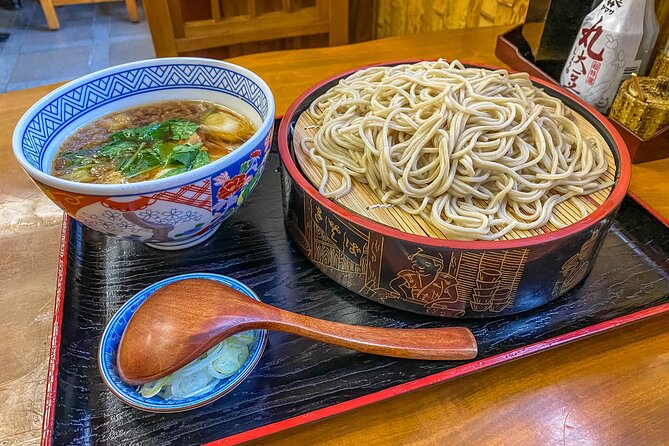
This is the food and tea break inside Ishihama shrine grounds. The menu can include things like tempura bowls and soba, plus sweets. Important: admission here is listed separately, so this stop is where your budget can jump if you treat it like a full meal experience.
Stop 5: Yoshiwara Shrine (20 minutes, free admission)
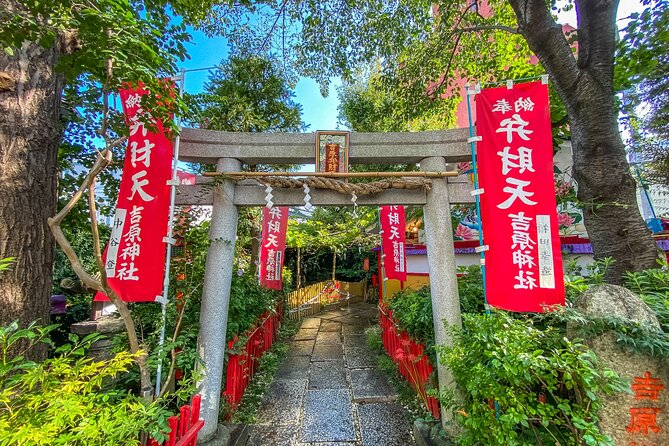
Yoshiwara Shrine is singled out as the only female deity among the Seven Gods of Fortune. It enshrines Benzaiten, which is associated with wishes related to women, plus luck tied to art and marriage. If you’re the kind of person who likes understanding why certain shrines attract specific crowds, this stop is a great one.
Stop 6: Otori Shrine (20 minutes, free admission)
Otori Shrine is known for a dramatic rake display and for the Rooster Market, where lucky rakes are sold. There’s also a cultural symbol linked to a Noh mask character: Okame-san. This stop feels playful but purposeful—the tradition is visual, and your guide helps you connect the symbols to the meaning.
Stop 7: Asakusa Shrine (15 minutes, free admission)
This shrine has a close relationship with Sensoji Temple and is dedicated to Ebisu, another of the Seven Gods of Fortune. Ebisu often connects to good luck and prosperity, so the explanation ties nicely into the earlier business-and-success themes you heard at Honryuin Matsuchiyama Shoden.
Stop 8: Senso-ji Temple (30 minutes, free admission)
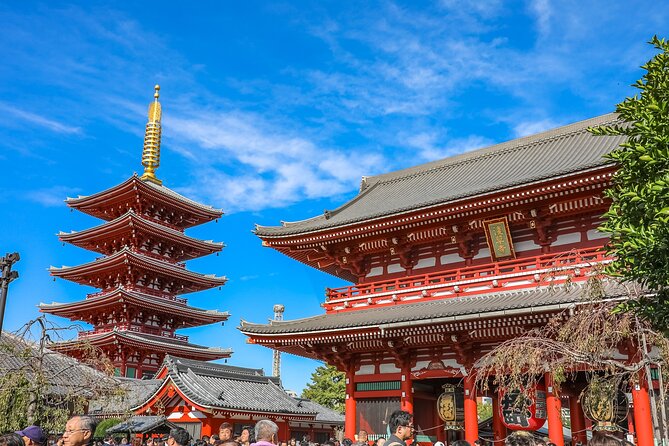
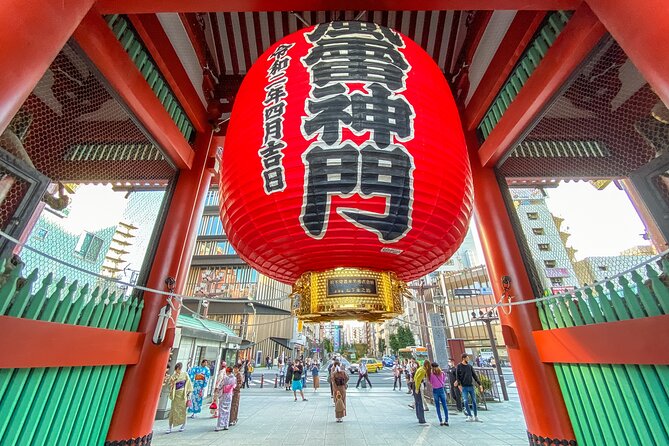
This is the big one: Tokyo’s oldest temple, identified by the huge red lantern that anchors Asakusa. The grounds and vermilion colors are what make it famous, but the real value here is that you’re not just taking one classic photo—you’re arriving with context from the earlier stops, so you know what each place is “doing” spiritually.
Stop 9: Nakamise Shopping Street near Kaminarimon (20 minutes, free admission)
This is your final stroll through Asakusa’s main souvenir and snack artery. Your guide can point you to recommended shops to buy souvenirs and grab something to eat before the day ends. If you’re trying to take home something that actually belongs in Asakusa, this timing helps: you’ve learned the area, then you shop with purpose.
Raku Ishihama Saryo Raku at Ishihama Shrine: Tea, Food, and the Fee
This is your midday reset, and it’s also the only stop in the plan that tends to cost real money in a noticeable way. The tour gives you about 40 minutes here, with a menu that can include tempura bowl, soba, and sweets.
What you need to know before you go: the teahouse has a listed admission fee of ¥4,800 per person. The tour does not treat that as included. So if you’re doing this on a tight budget, decide in advance how you want to handle this stop—light snack versus a full meal plan.
There’s also a practical day-of detail: on Wednesday, Ishihama Saryo Raku is closed, and the tour will show an alternative spot. The key is that you still get the tea/food break in the general rhythm of the day; you’re not left scrambling.
If you like eating as part of your sightseeing rather than as an afterthought, this is a good place to do it. And if you prefer to spend your money on photos, stamps, and souvenirs instead of a paid teahouse, you can treat it more like a rest break and keep expectations realistic.
What the Deities Mean: Bishamonten, Hotei, Benzaiten, Ebisu, and Friends
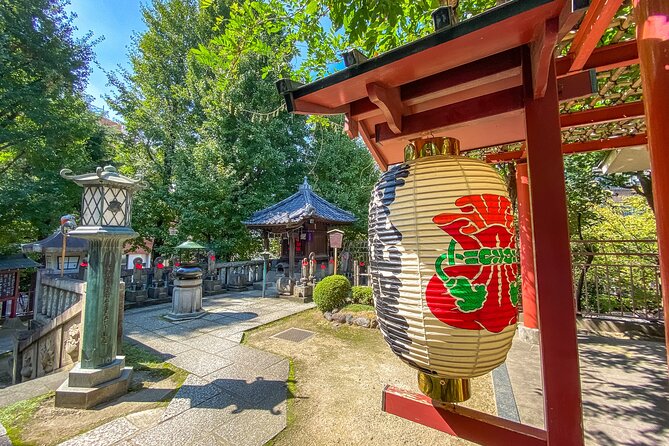
Here’s where the tour turns into more than a walking tour. Each stop is tied to a different aspect of luck, and you’ll hear how those themes connect to everyday hopes.
For example, Bishamonten at Honryuin Matsuchiyama Shoden is framed around health, relationship harmony, marriage luck, and prosperous business—things people actually talk about in daily life. Then you bounce to Imado Shrine, where Maneki Neko is tied to marriage luck, especially for women. After that, Hotei-son at Hashiba Fudoson connects to good fortune, while the Edo-style architectural cues help you feel the historical flavor of what you’re standing in.
Yoshiwara Shrine and Benzaiten shift the gendered side of luck: it’s presented as the only female deity among the Seven Gods of Fortune, with a focus on wishes for women and luck for art and marriage. Then Otori Shrine adds a very visual element with the rake and the Rooster Market. It’s one of those places where symbols make sense quickly because they’re right there in front of you.
Finally, Asakusa Shrine’s Ebisu connection ties the whole chain back to prosperity and good fortune, and Sensoji closes the loop with the famous temple experience once you’ve already learned what the day is about.
This “meaning first” approach is what I’d call the tour’s real value. You don’t just see temples; you learn how people interpret luck through them.






Kaminarimon and Nakamise Street for Souvenirs and Snacks
After Sensoji, the tour shifts into a more casual Asakusa rhythm: Nakamise Shopping Street. This is where the area turns into a classic Tokyo postcard mix of shopping, food smells, and quick shopping decisions.
The practical advantage of having a guide here is simple: you get help choosing where to go. Nakamise can feel like a long corridor of decisions, and if you’re hungry, the decision-making gets harder. With the guide’s suggested shops, you can grab souvenirs and a snack without doing a full, stressful “map the entire street” exercise.
Also, you’ve already got your stamp souvenirs. That means your shopping here can focus on things you actually want, not on hunting for one more proof item. If you’re buying edibles, sweets, or small luck-themed gifts, you’re at the perfect stage of the day to make those choices.
Price and Value: Where Your $103.92 Tour Spending Goes
At $103.92 per person, you’re paying primarily for the private guide and the structure of the day. The tour includes the tour guide and covers necessary expenses for the guide during the tour. Most shrine and temple admissions on the route are listed as free, so your money is less about ticket collection and more about expert guidance and time efficiency.
But you should budget beyond the sticker price. The tour data estimates additional costs of about 4,800 JPY per person, with a breakdown that includes transportation (300 JPY) and meal costs (1,000 JPY). It also lists optional experience costs of 3,500 JPY per person.
Then there’s the big wildcard: Raku Ishihama Teahouse admission fee ¥4,800 per person. Depending on how you plan to eat and how you handle that stop, your “real” total can land quite a bit higher than the base tour price.
So the value question becomes: is a private, guided Seven Gods route worth paying for the guide time and the teahouse stop? For me, it is when you care about meaning—symbols, deity connections, and Edo-period context—and when you want to avoid losing time guessing your way through Asakusa’s entrances and customs.
One more planning tip: this tour is on average booked 63 days in advance, which suggests it fills up enough that booking earlier is smart, especially if you’re traveling around busy periods.
Should You Book This Secret of Asakusa Tour?
Book it if you want a structured Asakusa day with a clear theme: the Seven Gods of Fortune, stamp souvenirs, and a guide who connects each site to what people go there for. It’s especially good for couples, small families, and anyone who likes cultural meaning more than just chasing landmarks.
Skip it or rethink it if you’re very cost-sensitive and don’t want to pay for the tea-house stop. Even though many temple admissions are free, this tour includes a paid teahouse component and also assumes some extra spending for meals and optional experiences.
I’d also say it’s a great choice if you prefer a calmer experience. Private format, steady pacing, and a focused route help you feel like you’re learning Asakusa instead of getting swept up in it.
FAQ
How long is the Asakusa shrine and temple tour?
It lasts about 5 hours 30 minutes.
Is this tour private, or do I join a bigger group?
It’s private and exclusively for your party.
Are the shrine and temple admissions included?
Most admissions at the visited shrines and temples are listed as free, but the Raku Ishihama Teahouse admission fee is not included.
What happens on Wednesday when Ishihama Saryo Raku is closed?
On Wednesdays, Ishihama Saryo Raku is closed, and the tour will show an alternative spot.
Do I get anything to take home from the shrines and temples?
Yes. You collect stamps from the shrines and temples as a free souvenir.
Is free cancellation available?
Yes. You can cancel up to 24 hours in advance for a full refund.