REVIEW · TOKYO
From Asakusa: Old Tokyo, Temples, Gardens and Pop Culture
Book on GetYourGuide →Operated by Pinpoint Traveler · Bookable on GetYourGuide
Tokyo changes fast on this four-stop walk.
You start in Asakusa and work through old temple streets, Ueno market life, Akihabara pop culture, then end in Koishikawa Korakuen-style quiet, explained clearly by English guides like Taka.
I particularly like the way this route translates Tokyo’s past into what you see today. I also like the pace of 45 minutes at each key area, so you get context without turning it into a marathon.
One thing to consider: four hours is tight for long photo stops, and you will be on your feet through multiple neighborhoods.
In This Review
- Key takeaways before you go
- From Kamiya Bar in Asakusa: A simple start for a packed route
- Asakusa’s temple streets and the Senso-ji focus
- What to watch for
- Ueno and Okachimachi: Marketplace grit and everyday Tokyo
- A practical note about pace
- Akihabara Electric Town: How electronics turned into pop culture
- What you’ll likely enjoy most
- Koishikawa Korakuen: A calm finish in an Edo-era garden
- Garden tips that matter
- Price and value: What $68 buys you in East Tokyo
- Who this tour fits best (and who might want a different day)
- Tour style: Small group, English guide, and an easy rhythm
- Before you go: Simple preparation that helps
- Should you book this East Tokyo tour?
- FAQ
- How long is the tour?
- Where does the tour start?
- What stops are included?
- Is the guide an English speaker?
- Is the price $68 and what is included?
- Is Tokyo National Museum admission included?
- Is this tour wheelchair accessible?
- Can I cancel or change plans?
Key takeaways before you go
- Temple + city contrast: Senso-ji and Nakamise street energy, then a breather at Koishikawa Korakuen
- Market realism: Ueno and Okachimachi feel like everyday shopping, not a theme park
- Akihabara history meets pop culture: electronics roots feeding gaming and anime life
- Small-group comfort: up to 8 people, with an English live guide throughout
- Guides really connect the dots: from Asakusa’s subway link to Ueno to how neighborhoods evolved
From Kamiya Bar in Asakusa: A simple start for a packed route
The meeting point is the Kamiya bar in Asakusa (start time varies by availability). If you’ve never navigated Tokyo by foot before, this is a good sign: it keeps the first steps easy and helps you get your bearings fast.
This is a 4-hour walking tour with several distinct areas. The plan is practical: you move between neighborhoods using local transit that’s included, and you spend the tour time where it matters—each zone gets real face time rather than quick drive-by views. With a max group size of 8, you can actually hear the guide and ask questions without constantly waving your arms.
The biggest benefit for value is that admissions and standard local costs during the tour are included. That makes the $68 price feel more like a guided plan than a ticketed attraction hunt. You just need to bring comfortable shoes, because the day is built on walking.
You can also read our reviews of more tours and experiences in Tokyo.



Asakusa’s temple streets and the Senso-ji focus
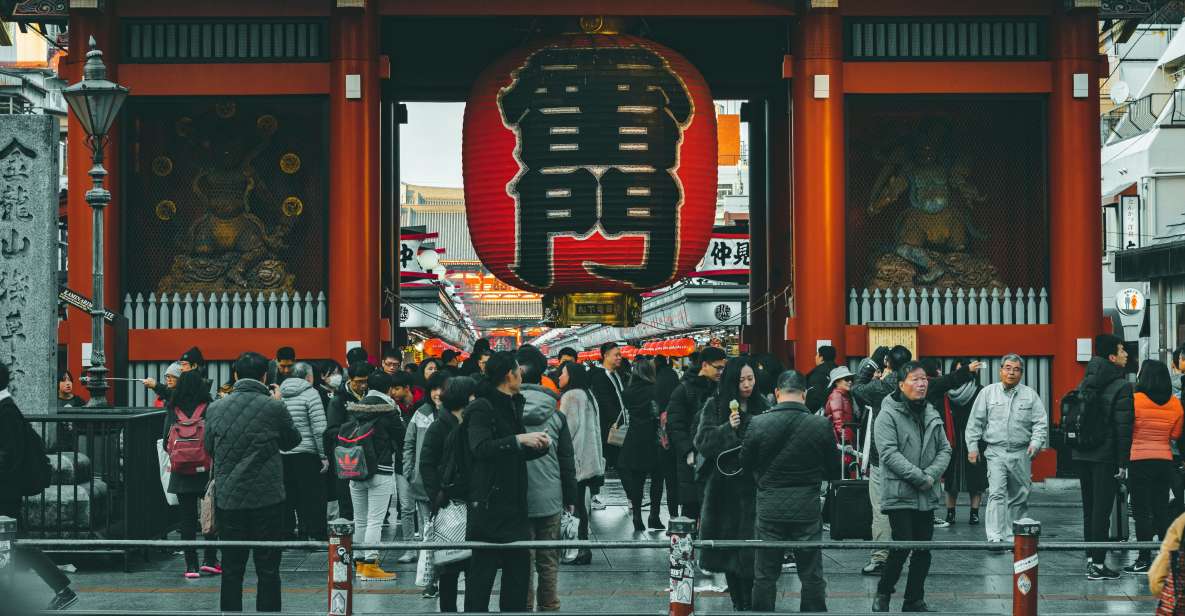
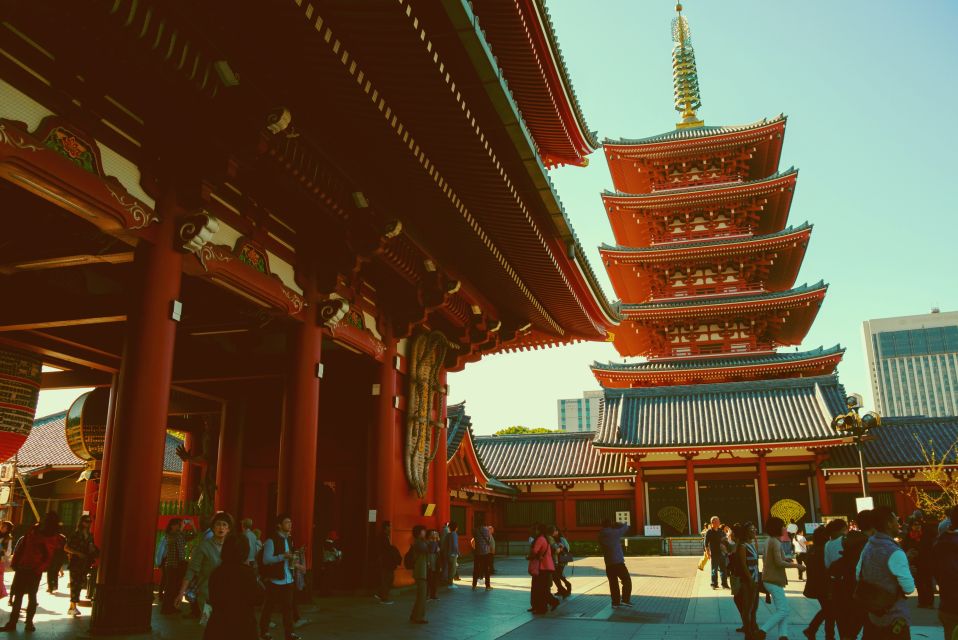
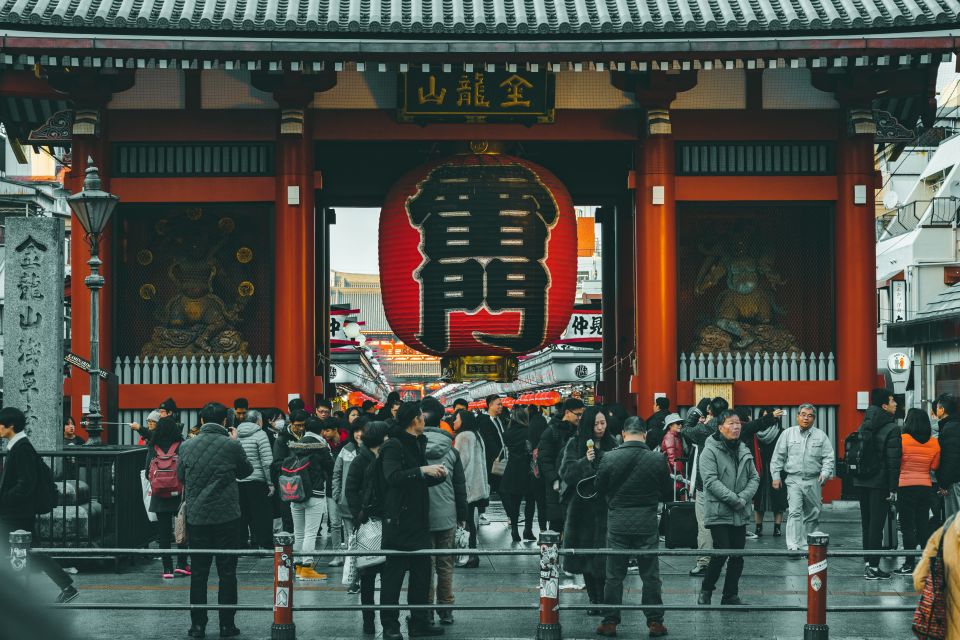
You begin with Asakusa (about 45 minutes), then you zero in on Senso-ji Temple (about 15 minutes). This isn’t just about taking photos. It’s about learning what you’re looking at and why this place became such a magnet in the first place.
Senso-ji is one of Japan’s very early Buddhist temples. Your guide will explain the temple’s role and help you read the experience: what’s ceremonial, what’s everyday, and how the neighborhood formed around the attraction. Even if you’ve seen temple photos before, having context changes how you notice details—like how the street scene supports the temple visit.
From there you move through the shopping street experience on foot. Nakamise-dori (the famous approach street) is where you see a long-running tradition of visitors coming to browse and snack. The trick here is to go with the expectation that it’s busy and layered. You can pause for the atmosphere, but don’t get trapped in shopping so early that you run out of energy for the rest of the tour.
What to watch for
- If you’re sensitive to crowds, aim to pace yourself during the Senso-ji + Nakamise portion.
- If you love photos, decide in advance which angles are must-have, then keep moving. Time disappears fast here.
Ueno and Okachimachi: Marketplace grit and everyday Tokyo
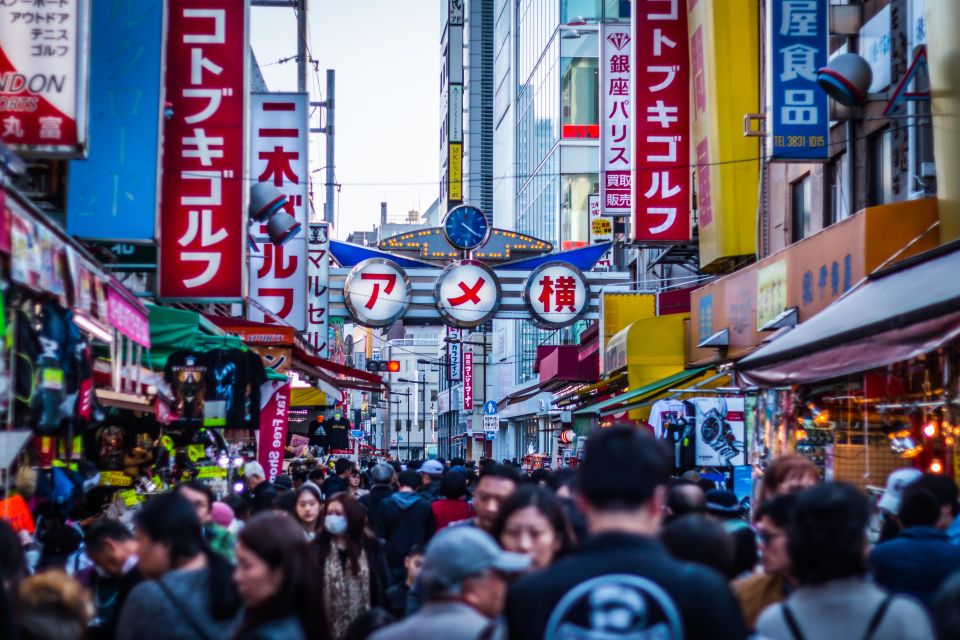
Next comes Ueno (about 25 minutes) and then Okachimachi (about 25 minutes). This is the area I think many people underestimate. It isn’t about one single landmark. It’s about the feeling of a district built for commerce, museums, and seasonal crowds.
Your guide helps you connect the dots: Ueno and Okachimachi have long served as places where street vendors and small shops sold everything from food to everyday items. That “this is how people actually shop” vibe makes it easier to understand Tokyo as a living city, not just a list of famous stops.
There’s also an important detail your guide brings up: Asakusa connects to Ueno by rail history too. As far back as a century ago, Asia’s first subway began operating between Asakusa and Ueno. That matters because it explains why people move between these areas and why the neighborhoods stayed intertwined instead of becoming separate worlds.
You’ll get a sense of Ueno’s market energy and also why the area has a reputation for cherry blossoms in season. If your visit lines up with spring, you’ll likely feel the seasonal shift more strongly, but even outside peak blossom time, the district still works as a window into day-to-day life.
A practical note about pace
Ueno and Okachimachi are great for browsing, but the tour window is limited. If you want a slow stroll or planned museum time, you’ll have to do that on your own day after this tour.




Akihabara Electric Town: How electronics turned into pop culture
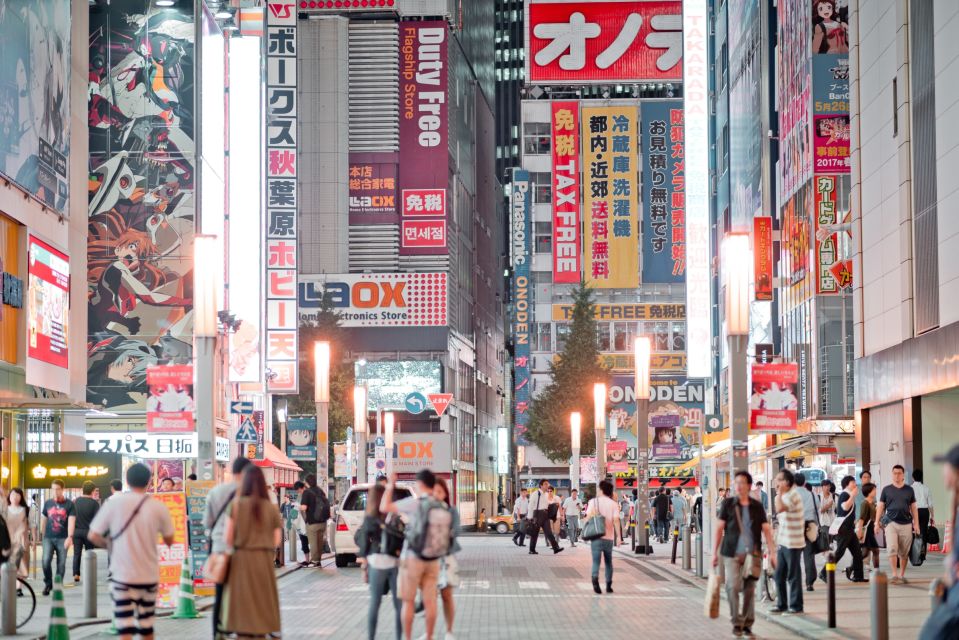
Akihabara is the next stop (about 45 minutes), and this is where the tour leans hard into the modern Tokyo story. It’s known as Electric Town, and the guide explains how it became a hub for electronics long before the anime and gaming boom people associate with today’s Akihabara.
You’ll walk through streets where the pop culture side is obvious—gaming culture, anime havens, and plenty of themed shops. But the value here is the context: the area didn’t become pop culture magic out of nowhere. It grew from the electronics identity, then shifted as customers’ tastes and media trends changed.
One of the most fun parts is how easily fantasy and daily life overlap. You may spot cosplayers around the area, and you’ll see how that plays into the street atmosphere. This isn’t about treating it like a costume show. It’s about understanding why people want to gather in a place that already feels like a story setting.
What you’ll likely enjoy most
- The sense of contrast after Ueno: more neon energy, more focused themed shopping, and louder street life.
- The historical framing: how pre-war electronics culture connects to today’s otaku world.
If you’re not into anime or gaming, don’t worry. You’ll still get something out of the way the guide explains the neighborhood’s evolution and the way consumer culture works in Tokyo.
Koishikawa Korakuen: A calm finish in an Edo-era garden
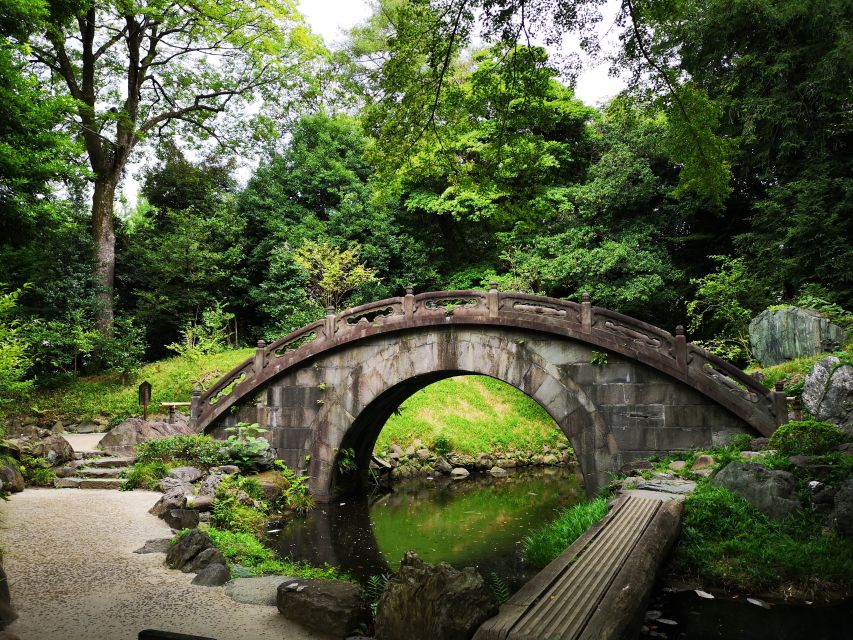
After the noise of Akihabara, you end with Koishikawa Korakuen (about 45 minutes). This is the garden break your body needs, and it’s also the tour’s best reminder that Tokyo’s “old vs new” isn’t only a theme—it’s real geography.
Your guide presents Koishikawa Korakuen as an Edo-era garden, and the experience changes with the season. In spring, you might catch the feeling of cherry blossoms. In autumn, the colors can shift dramatically. Even if your timing isn’t perfect for a specific season highlight, a Japanese garden at the end of a walking tour works as a reset button.
Here’s why I like this stop for practical travelers: you’re not just looking at pretty scenery. You’re walking paths shaped by design choices that control sightlines and pauses. After Akihabara, it feels almost physical. Your pace slows without you forcing it.
Garden tips that matter
- Wear shoes that work well on paths. Even in a pretty setting, you’re still walking.
- If you like photos, pick one or two viewpoints and then enjoy the walk rather than constantly stopping.
Price and value: What $68 buys you in East Tokyo
Let’s talk money. The tour costs $68 per person for about 4 hours, and admissions and standard local costs during the tour are included. Food and drinks are not included, and Tokyo National Museum admission is only included if you go separately by your own choice (it’s not part of the standard package).
What makes this feel like a good deal is the mix of places that normally take extra effort to piece together:
- Senso-ji in Asakusa
- Ueno and Okachimachi market life
- Akihabara’s Electric Town pop culture area
- Koishikawa Korakuen garden time
Instead of stitching these stops into your own plan with transit timing headaches, you get a guide coordinating the flow, plus local transit costs that are part of the package. Add in the small-group size (up to 8) and the English live guide, and the value equation gets clearer.
If you’re trying to cover a lot of East Tokyo in one day without losing time, $68 doesn’t sound crazy. It sounds fair.
Who this tour fits best (and who might want a different day)
This tour is a strong match if you want a single organized thread through East Tokyo’s different faces:
- tradition (temples)
- daily shopping districts (Ueno/Okachimachi)
- pop culture and modern consumer life (Akihabara)
- quiet breathing room (Koishikawa Korakuen)
It also suits families. Some English guides have a knack for keeping kids interested, which matters if you’re traveling with younger travelers and don’t want the day to turn into lectures.
You might want to skip or swap this tour if you:
- want long museum time at Ueno (the tour window is limited)
- need lots of downtime mid-day
- hate walking in general (the route includes multiple neighborhoods and transit segments)
- want a food-focused itinerary (the tour includes sights, not meals)
Tour style: Small group, English guide, and an easy rhythm
This is a live guided tour in English with a small group size limited to 8 participants. That’s a sweet spot. Large groups can feel like you’re watching someone else’s day. Here, the guide can keep conversations moving and help you make sense of what you’re seeing.
You also get a tour rhythm that’s easy to follow: Asakusa first, then Ueno/Okachimachi, then Akihabara, and Koishikawa at the end. By the time you reach the garden, you’ve built enough context to notice the shift from street life to designed calm.
What I find especially useful is that strong guides tend to connect the “why” across neighborhoods. The way Asakusa and Ueno connect historically by subway is the kind of detail that makes the city feel like one system instead of four separate places.
Before you go: Simple preparation that helps
- Bring comfortable shoes. Seriously.
- Plan for a lot of walking time even if each stop has a set duration.
- Keep snacks and drinks optional, since food isn’t included.
- If you’re traveling with mobility needs, the tour is listed as wheelchair accessible.
Also, the tour is flexible in the sense that availability determines starting times. If your day is tightly scheduled, check for a time that fits your energy level and your other plans.
Should you book this East Tokyo tour?
Book it if you want a guided way to see multiple sides of Tokyo in one afternoon: temple streets, market neighborhoods, Electric Town, and a garden reset. The small group size and the included guide + standard local costs make the $68 feel practical.
Skip it if you’re craving one ultra-deep experience like a full museum day, or if you prefer to wander entirely on your own without structure. In that case, you might enjoy building your own Asakusa + Ueno day and saving Akihabara or Koishikawa for a separate visit.
If you like tours that explain what you’re seeing—without turning Tokyo into a lecture—this one’s a strong choice.
FAQ
How long is the tour?
The tour duration is 4 hours.
Where does the tour start?
The meeting point is Kamiya bar in Asakusa.
What stops are included?
The tour includes Asakusa (including Senso-ji Temple), Ueno, Okachimachi, Koishikawa Korakuen, and Akihabara.
Is the guide an English speaker?
Yes. The live tour guide is English.
Is the price $68 and what is included?
The price is $68 per person. Guide costs and standard costs during the tour are included, including admissions and local train rides. Food and drinks are not included.
Is Tokyo National Museum admission included?
Tokyo National Museum admission is not included (you would need to choose it separately).
Is this tour wheelchair accessible?
Yes, the tour is listed as wheelchair accessible.
Can I cancel or change plans?
Free cancellation is available up to 24 hours in advance for a full refund. You can also reserve and pay later to keep plans flexible.