REVIEW · TOKYO
Akihabara Tour with Vintage Gaming Anime and Gachapon Experience
Book on Viator →Operated by Alva Japan Tours 🇯🇵 · Bookable on Viator
Akihabara can feel like sensory overload fast, so this tour gives it a clear path through the noise. I like that you get hands-on time with vintage gaming and then finish with the very specific joy of gachapon shopping, not just window staring. One thing to keep in mind: you’ll likely want to spend extra yen once you see prize games and capsule options, so set a small budget in advance.
The best part is that the whole route is built around real fan-life stops: retro consoles at Super Potato, anime and model browsing at Akiba Hobby Akihabara, and then arcade action under the TAITO Station glow. If you’re chasing a particular character or series, your guide’s job is to help you navigate the sheer selection so you don’t waste your time wandering.
Key stops stay tightly packed for an efficient 1 hour 30 minutes, and that’s great for first-timers. The tradeoff is that it moves at a fan’s pace, not a slow museum pace, so come ready to decide quickly and play as you go.
In This Review
- Key highlights you should know before you go
- Radio Kaikan: starting at the Akihabara icon tied to 1962
- Super Potato: vintage console nostalgia for people who want more than photos
- Akiba Hobby Akihabara: anime and model fans get room to breathe and browse
- Taito Station: crane-game tricks, UFO Catchers, and Mario Kart Arcade time
- Akihabara Gachapon Hall: 500+ capsule machines and the fun of choosing blind
- How the 90-minute flow works (small group, mobile ticket, easy start)
- Price and value: what $45.52 buys beyond the headline number
- Who should book this Akihabara vintage gaming and gachapon tour
- Booking decision: should you do it?
- FAQ
- FAQ
- How long is the Akihabara tour?
- What does the price include?
- Where is the meeting point, and where do we end?
- How big is the group?
- Is admission required for the listed shops?
- What is the gachapon price range for extra turns?
- Does the tour run in all weather?
- Can I cancel and get a refund?
Key highlights you should know before you go
- Radio Kaikan starting point: a landmark tied to Akihabara’s shift from Electric Town to global pop culture
- Super Potato’s 8-bit focus: poster-lined stairs and lots of vintage consoles and cartridges to study
- Anime and model browsing: glass cases with figures and plastic models from series like One Piece, Gundam, and SPY×FAMILY
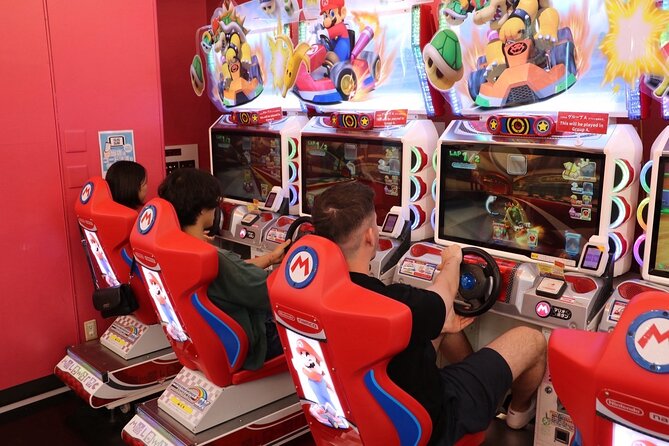
- TAITO Station games: learn crane-game tactics, try UFO Catchers, then get behind the wheel for Mario Kart Arcade
- Gachapon Hall finale: 500+ capsule machines, with one capsule toy included so you leave with a souvenir
Radio Kaikan: starting at the Akihabara icon tied to 1962
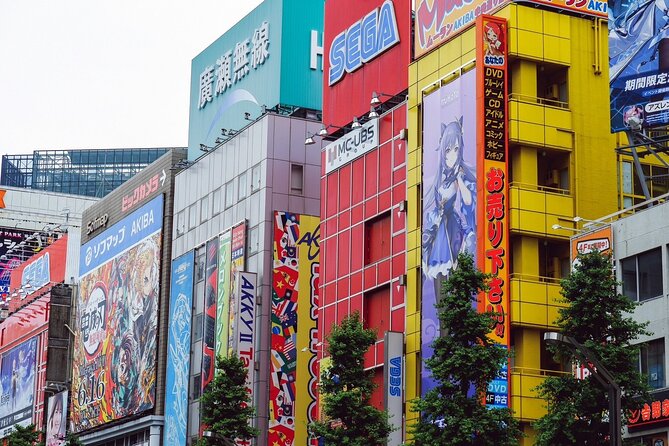
You kick things off at Akihabara Radio Kaikan, an eight-floor tower that’s basically part of the neighborhood’s identity. It’s the right place to start because Akihabara didn’t always mean anime merch and arcades. Since 1962, this area has reflected a bigger shift—from Electric Town roots toward the global subculture hub it is today.
Even before you go inside, you’ll see the colorful façade that Radio Kaikan is known for. That matters because it helps you understand what you’re stepping into: not random shops, but a long-running electronics-and-collectibles ecosystem. The tour keeps the first step short, so you don’t feel stuck waiting around—just enough time to get your bearings and orient yourself.
Practical note: Radio Kaikan is on the path you’ll want anyway for a classic Akihabara stroll. So even if you come early or split the day later, it stays a helpful anchor point.
You can also read our reviews of more tours and experiences in Tokyo.



Super Potato: vintage console nostalgia for people who want more than photos
Next up is Super Potato, a place that feels made for anyone who grew up on 8-bit and cartridge-era gaming. The experience isn’t just about seeing old systems—it’s about spotting details. You’ll get access to an organized wall of retro gaming culture, where vintage consoles, rare cartridges, and original boxes are part of the display language.
One thing I like about this stop is the guidance style you’re set up for. You’re not expected to know what to look for at a store that deals in niche items. Your guide helps you connect the dots, whether you care about classic titles, the hardware itself, or just the collectible packaging.
What to watch for:
- Boxes and labels, since they can tell you what era and version you’re looking at
- Cartridge condition and how items are presented
- The “why it matters” context behind the games and systems
A possible consideration: if you’re only interested in modern games, this stop could feel slower. But if you like the idea of understanding what people actually collect—hardware, not just software—Super Potato is where the tour earns its keep.
Akiba Hobby Akihabara: anime and model fans get room to breathe and browse
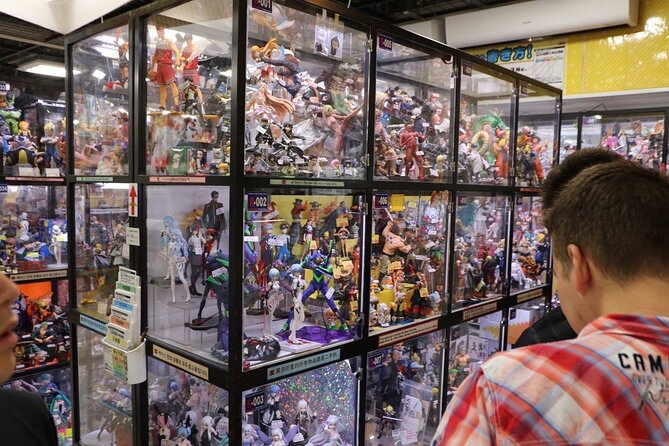
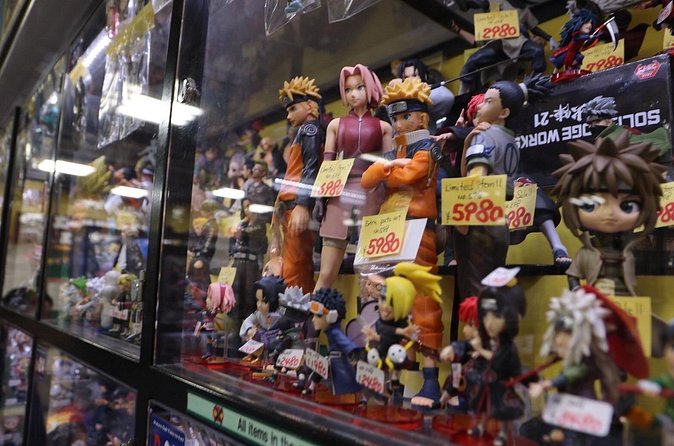
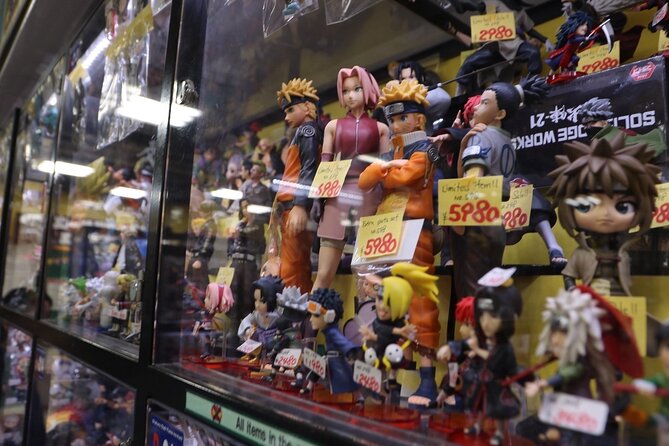
Then you move into Akiba Hobby Akihabara, a multi-floor hobby zone for anime, manga, and model fans. This is the “collector’s paradise” stop, and the structure is what makes it useful. You’ll see glass cases full of figures and plastic models, including limited-edition style items tied to series like One Piece, Gundam, and SPY×FAMILY.
Here’s why this part works even if you’re not a hardcore collector. The guide helps you navigate the variety so you can find something specific—maybe a character you recognize, a series you love, or a model type you can picture on a shelf at home. Instead of spending your whole time asking yourself Where do I even start?, you’re pointed toward what’s worth your attention.
What I’d do if you’re buying:
- Set a simple target before you get there (one character, one figure, or one model)
- Decide whether you want something display-ready or more budget-friendly
- Watch prices as you browse, because the choices can add up fast in a store like this
A possible drawback: this stop is 20 minutes. That’s not long in a multi-floor hobby shop. If you’re the type who needs time to compare every model, you may want to plan a longer solo return after the tour ends.
Taito Station: crane-game tricks, UFO Catchers, and Mario Kart Arcade time
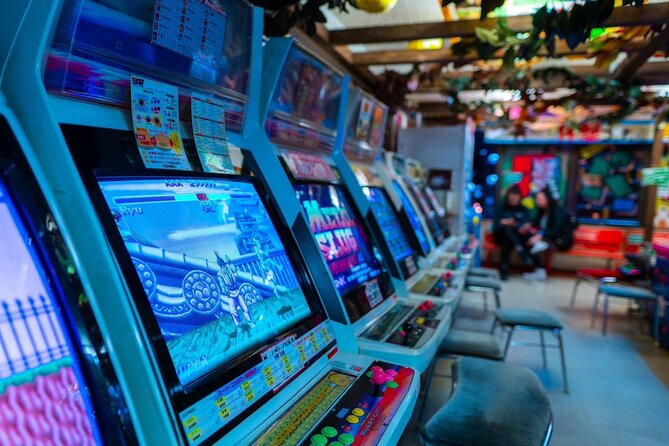
By the time you reach TAITO STATION, the vibe shifts from shop-browsing to play. You’ll be under the glowing Space Invader sign, and your guide shows you how the crane games are supposed to work. That includes practical stuff like prize rotations, claw strength, and timing—tiny mechanics that can turn a guess into a strategy.
After that explanation, you get to try your luck. The tour includes time for UFO Catchers, those classic grab-and-win games that feel equal parts luck and skill. Even if you don’t win big, the point is to learn how the system behaves so you don’t feel totally lost.
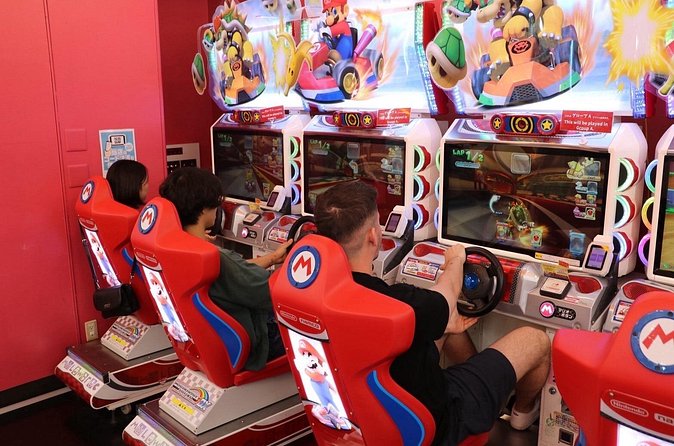
Then comes one of the biggest “I’m glad this is included” moments: you hop into Mario Kart Arcade and race your friends in the driver’s seat. The tour includes one Mario Kart game, so you’re guaranteed an arcade payoff, not just advice and watching.
Quick reality check: arcades can tempt you to keep playing after your included rounds. That’s normal. If you want to control the budget, decide before you start whether you’re stopping at the included game or doing a few extra plays.
Akihabara Gachapon Hall: 500+ capsule machines and the fun of choosing blind
You finish at Akihabara Gachapon Hall, where you’ll find 500+ capsule machines. This is where the tour delivers a satisfying ending: you get the culture lesson plus the souvenir that makes the whole day feel tangible.
Gachapon is all about the click and the spin. You choose, you wait, and you hope you get something good—art, a gag, or a rarer surprise. The included capsule toy means you don’t have to gamble with your budget to leave with something. It’s also a great way to understand the genre without needing to research beforehand.
For extra turns, the tour info gives you a clear price range: ¥200–¥500 per turn. That’s useful because you can decide on the spot whether you want one more attempt or to call it a day. If you’re souvenir-shopping for someone who loves quirky minis, this is one of the easiest categories to shop for in Tokyo.
One more tip: with so many machines, you can get decision fatigue. If you want a calmer experience, scan a few to find the style you like first—character-focused, art-focused, or gag-focused—then commit.






How the 90-minute flow works (small group, mobile ticket, easy start)

This tour is about 1 hour 30 minutes, and it’s built for efficiency. You visit five stops, and each one is timed so you get a feel for Akihabara without losing half your day to transit and long lines.
The group size is capped at 8 travelers, which helps a lot. With a small group, guides can actually steer you—especially in places with huge selections like the hobby and gaming stores. It also tends to make arcade play more social, because you’re around the same group for the whole 90 minutes.
You’ll use a mobile ticket, and the meeting point is near Akihabara Station (Electric Town Exit West Square). The tour ends back at the meeting point, so you’re not dumped somewhere inconvenient when you’re done.
Weather matters: the experience requires good weather, and if it gets canceled due to poor weather, you’ll be offered a different date or a full refund. In practice, that means you should check the forecast and dress for walking.
Price and value: what $45.52 buys beyond the headline number
$45.52 sounds like a lot or a steal, depending on how you judge value. Here’s the math that matters.
You’re paying for:
- A guided route that handles orientation through major Akihabara stops
- Time at multiple fan stores that are marked as free admission for this experience
- Included play moments: one Mario Kart arcade game and one capsule toy
That included pair is a big deal. If you were doing this day on your own, you’d still need to line up games, find the best places for gachapon, and figure out what’s worth your time. Paying for a guide compresses that decision-making and gives you a structure.
Where extra spending can happen (and it’s your choice):
- Crane-game prizes
- Additional UFO Catcher attempts
- Extra gachapon turns (¥200–¥500 per capsule attempt)
- Purchases at Super Potato and the hobby floors
So the tour is best seen as a plan that buys you time, guidance, and two guaranteed “souvenir/game” outcomes. If you love the idea of gaming and capsule toys but you don’t want to spend the day figuring out logistics, that’s when the value clicks.
Also worth noting: this kind of tour is commonly booked in advance (around 9 days). If your dates are firm, book earlier rather than assuming you can walk up.
Who should book this Akihabara vintage gaming and gachapon tour
You’ll likely love this tour if:
- You want an efficient introduction to Akihabara’s retro gaming side and capsule toy culture
- You like anime and model collectibles, especially series like One Piece, Gundam, and SPY×FAMILY
- You enjoy hands-on arcade time (crane games and Mario Kart Arcade)
It’s also a strong fit for gift hunters. Gachapon and arcade items make it easy to leave with small, character-driven souvenirs without carrying huge bags all day.
You might skip it if:
- You want a long, slow shopping session where you can compare every item without time pressure
- You’re not interested in arcades or retro gaming at all
- You’re traveling during weather that’s likely to disrupt walking plans
Booking decision: should you do it?
I think this is a smart first-timer move. The route covers the core Akihabara experiences in a tight loop: Radio Kaikan as the cultural anchor, Super Potato for retro hardware and cartridges, Hobby Akihabara for anime/model browsing, TAITO Station for games and tactics, and Gachapon Hall for the signature capsule finale.
If you go in expecting a guided sampler that ends with a real souvenir and a real arcade game, you’ll get exactly that. If you want deep shopping time at one store, plan to add solo time after the tour rather than trying to cram everything into 90 minutes.
FAQ
FAQ
How long is the Akihabara tour?
It runs about 1 hour 30 minutes.
What does the price include?
You get time at the main stops with guided guidance, plus one Mario Kart arcade game and one capsule toy.
Where is the meeting point, and where do we end?
You meet at Akihabara Station Electric Town Exit West Square (1-chōme-17-18 Sotokanda, Chiyoda City, Tokyo). The tour ends back at the meeting point.
How big is the group?
The tour has a maximum of 8 travelers.
Is admission required for the listed shops?
The stops in the itinerary are marked with admission ticket free for this activity.
What is the gachapon price range for extra turns?
Extra capsule turns are typically ¥200–¥500 each, depending on the machine.
Does the tour run in all weather?
It requires good weather. If canceled for poor weather, you’ll be offered a different date or a full refund.
Can I cancel and get a refund?
Yes, you can cancel up to 24 hours in advance for a full refund. If you cancel less than 24 hours before, it isn’t refunded.