REVIEW · TOKYO
Tokyo: Mt Fuji Lake Kawaguchiko Tour & Arakuyama Sengen Park
Book on GetYourGuide →Operated by Hakuu Co Ltd. · Bookable on GetYourGuide
Fuji views start before you blink. This day trip strings together the best Mt. Fuji photo stops with calm pacing and real time to wander. Arakurayama Sengen Park delivers the Chureito Pagoda shot, and Oshino Hakkai gives you Fuji reflections at a UNESCO site.
I also like how the plan is built for photos without turning you into a sprinting zombie. You get repeated chances to frame Mt. Fuji from different angles, plus a quirky break at a Lawson spot that’s famous for its Fuji backdrop. One drawback to keep in mind: this is a long day on the bus, and visibility depends heavily on weather, so you’ll want to come with flexibility.
In This Review
- The Tokyo Station Start: Find Your Guide Without Stress
- Arakurayama Sengen Park and Chureito Pagoda: The Fuji Photo Hit List
- Hidakaya Clock Street: The Fuji Photo at Human Scale
- Oshino Hakkai: UNESCO Ponds That Let Fuji Reappear in Still Water
- The Lawson Kawaguchiko Station Stop: Yes, It’s a Thing
- Lake Kawaguchi Options: Oishi Park or Maple Corridor in Autumn
- If you’re going in most seasons: Oishi Park / Maple Corridor plan varies
- If you’re going late autumn: Maple Corridor replaces Oishi Park
- Spring detail: Cherry blossom timing matters
- How the Long Bus Day Works (and How to Make It Better)
- Guide Quality: Why Hikari’s Style Matters for a Photo Day
- Price and Value for a $58, 10-Hour Fuji Day Trip
- Who Should Book This Trip (and Who Should Skip It)
- Should You Book This Mt. Fuji Lake Kawaguchiko Tour?
- FAQ
- Where is the meeting point in Tokyo?
- What time does the tour start and end?
- How long is the tour?
- What languages are available for the guide?
- What is included in the price?
- Are meals included?
- Are entrance fees included?
- Who is this tour not suitable for?
- Can I cancel for a full refund?
The Tokyo Station Start: Find Your Guide Without Stress
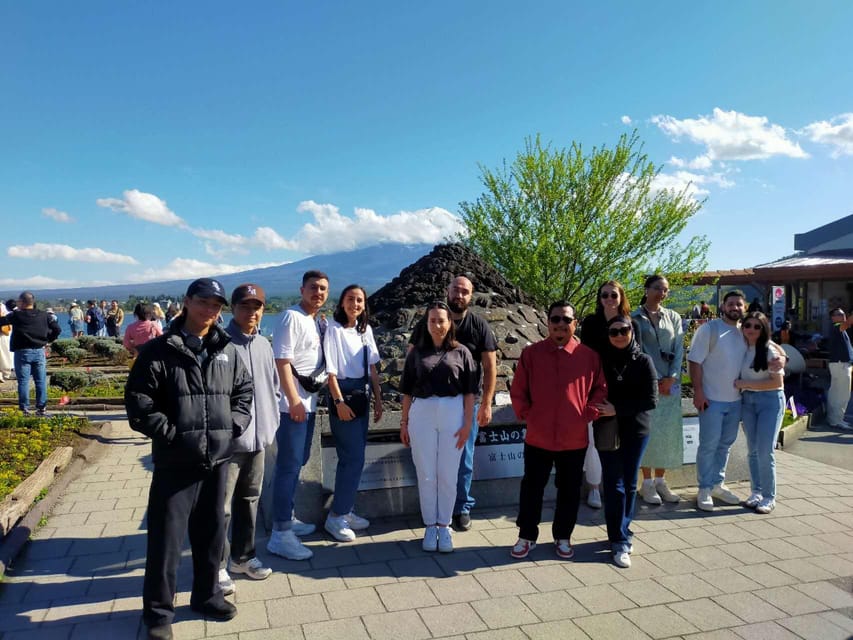
Your day begins at Tokyo Station Marunouchi North Exit (1-chōme-9-1 Marunouchi). Plan to arrive a bit early because the meet-up is straightforward: your guide will be holding a flag (blue for easy recognition), and you’ll connect right there before boarding.
A practical heads-up: the tour provider sends guide details by message the night before (around 7:00–8:00 PM), including the guide’s phone number and the bus license plate number. I strongly suggest you check your inbox and spam folder so you don’t waste your morning scanning faces. Also remember the day can run with minor timing changes due to traffic and weather.
Arakurayama Sengen Park and Chureito Pagoda: The Fuji Photo Hit List
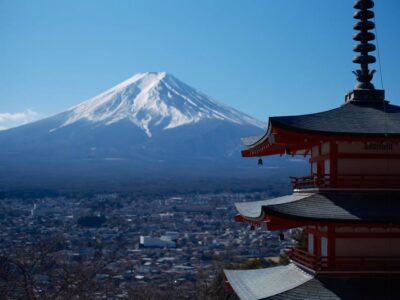
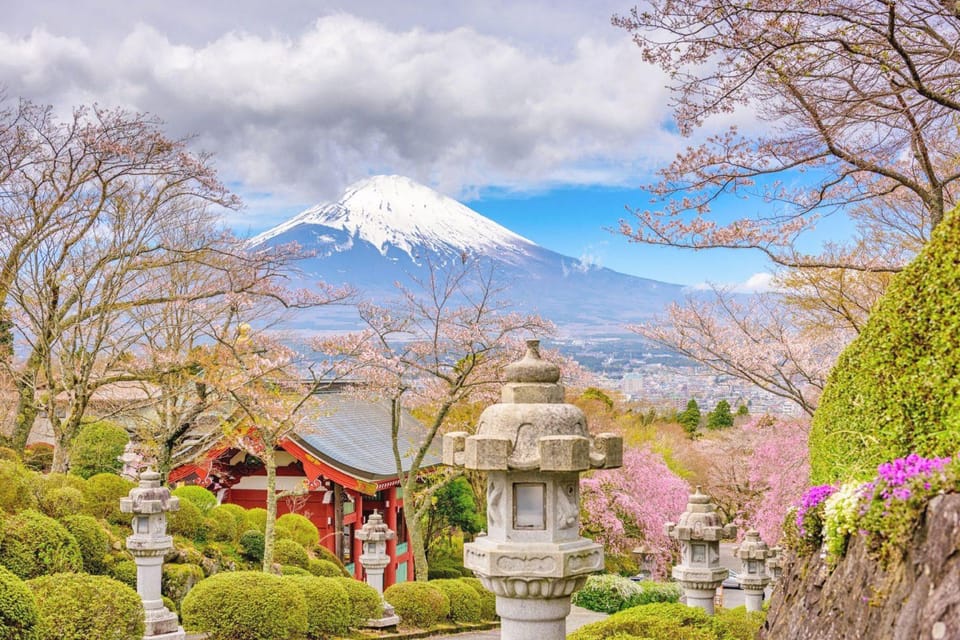
Arakurayama Sengen Park is your first real Fuji stage. You’ll arrive mid-morning, with about an hour for viewpoints and walking. This is where Mt. Fuji often looks like it’s framed by classic Japanese scenery, especially around the Chureito Pagoda area.
Here’s how to make this stop work for you:
- Go for the iconic angle first, then circle back for alternate sightlines.
- If you’re photographing, take a minute to watch how the light changes over the steps and pagoda before you commit to one position.
- Wear shoes that handle stairs and uneven footing; the views are worth it, but it’s not a flat stroll.
If skies are clear, this is the part of the day that feels like Japan on a postcard. If clouds roll in, the park is still worth walking, because you’ll likely catch partial views or dramatic atmospheric layers.
You can also read our reviews of more tours and experiences in Tokyo.



Hidakaya Clock Street: The Fuji Photo at Human Scale
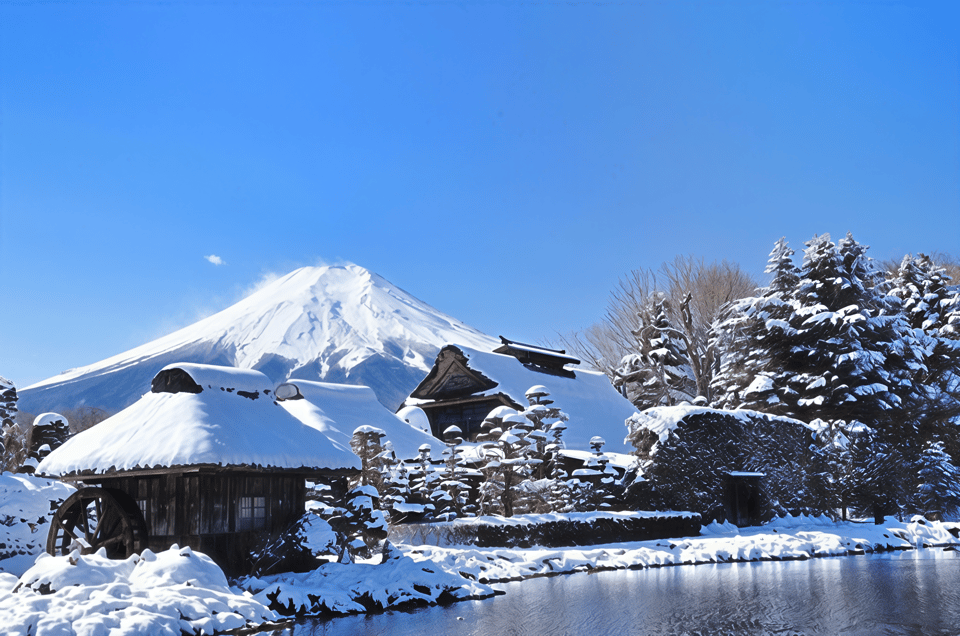
Next comes a shorter stop at Hidakaya Clock Street / Hidakaya Clock Shop. Think quiet, charming, and made for wandering—more calm lane than big-ticket attraction.
The appeal here is the composition. You get a traditional-feeling street vibe that’s designed for photos, with Mt. Fuji appearing at the far end of the scene. It’s a nice contrast after the stairs and crowds around the pagoda area.
Time is limited here, so I’d treat it like a mini break:
- Check the angle quickly, snap what you came for, then enjoy slow walking.
- If you’re traveling with kids or someone who gets tired easily, this is usually the easier stop to manage.
Oshino Hakkai: UNESCO Ponds That Let Fuji Reappear in Still Water
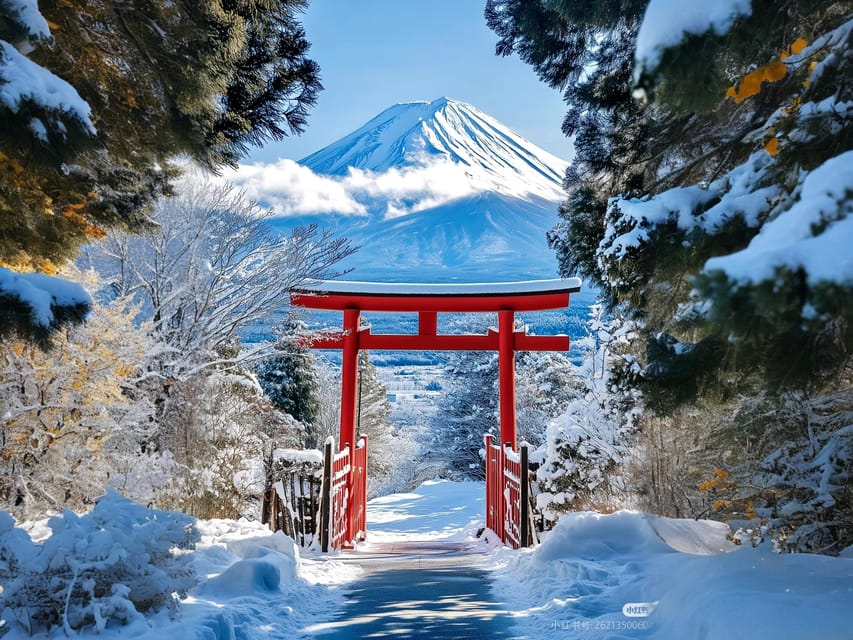
Then you hit Oshino Hakkai, one of the calmest stops of the day. You’ll have about 80 minutes to explore and photograph the ponds that reflect Mt. Fuji.
This is a UNESCO World Heritage place, and the ponds are the whole point: clearer water makes Fuji look more like it’s hanging in the air. The reflections are the payoff, but don’t rush the setting. Walking at a gentle pace helps you find different angles where the water and mountain line up.
A small planning tip: bring your patience for wind and changing light. In some conditions, Fuji can pop in and out behind clouds, and the best reflection shots happen when the sky cooperates for a few minutes.
The Lawson Kawaguchiko Station Stop: Yes, It’s a Thing
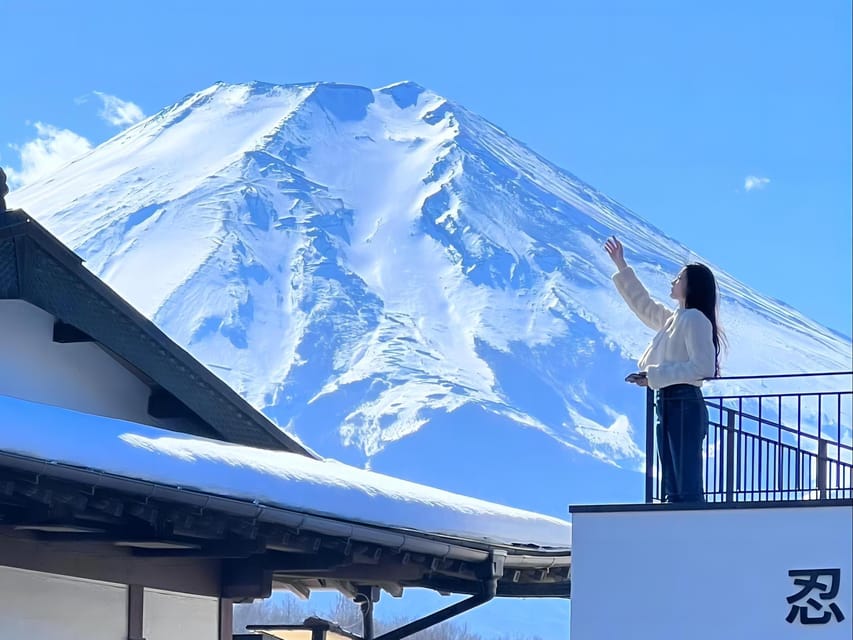
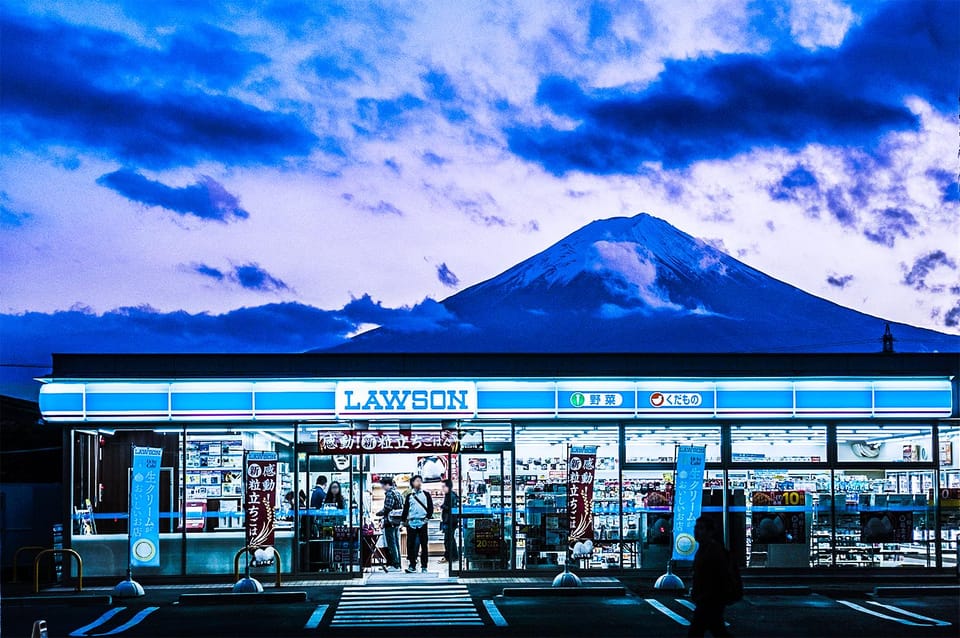
Next you’ll stop at a Lawson near Kawaguchiko Station. You get a short break window for photos, a bit of shopping, and local snack grabbing.
This is the kind of stop that sounds silly until you see why people line up for it: Mt. Fuji can show up perfectly in the background, turning a basic convenience store scene into a memorable travel shot. If you want that classic street-meets-Fuji photo, arrive with your phone/camera ready and keep your timing efficient.
Also, remember the tour does not include meals. This is a useful moment to pick something quick you actually want to eat, since you’ll be on the move the rest of the afternoon.
Lake Kawaguchi Options: Oishi Park or Maple Corridor in Autumn
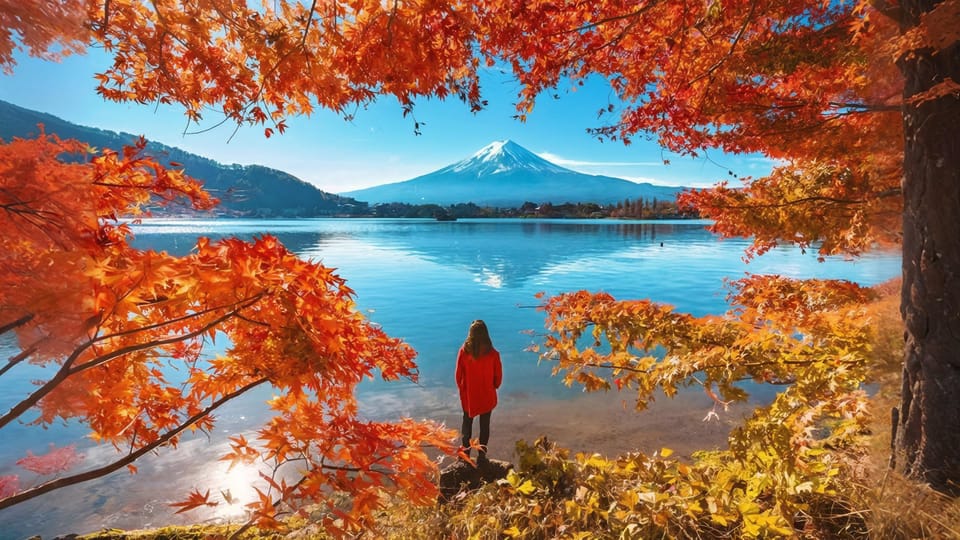
After Oshino Hakkai, the tour moves toward Lake Kawaguchi area viewpoints. You’ll get about 50 minutes to enjoy the lake scenery and photo stops, plus a later seasonal stop depending on the time of year.






If you’re going in most seasons: Oishi Park / Maple Corridor plan varies
Usually, you’ll have Oishi Park as your later highlight. This works well when you want open viewpoints and easy strolling with Fuji in the background.
If you’re going late autumn: Maple Corridor replaces Oishi Park
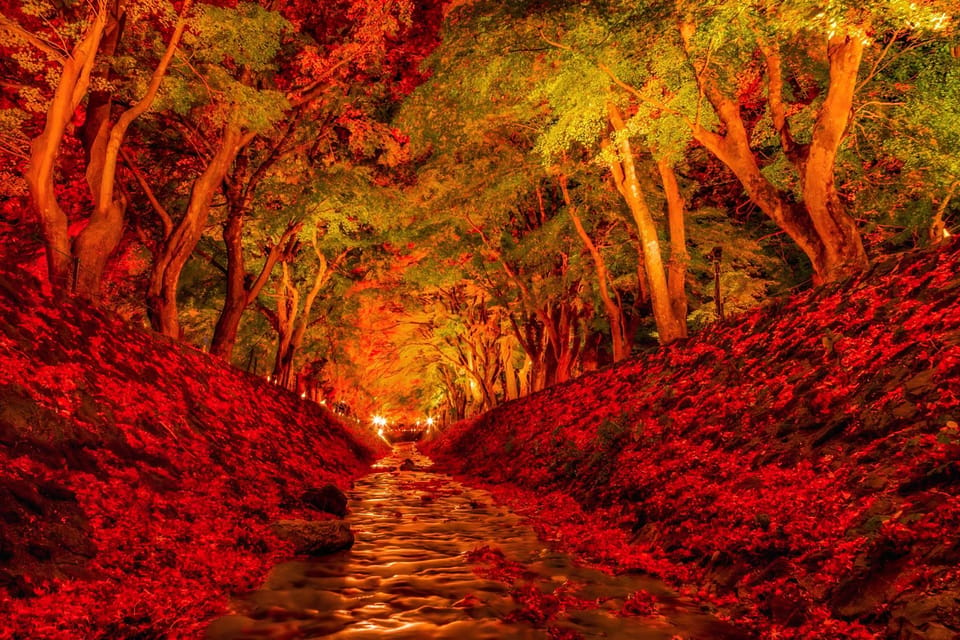
From approximately October 30 to November 20, the tour swaps in Kawaguchiko Maple Corridor instead of Oishi Park to focus on autumn colors. If your travel dates fall in that window, expect the day to feel more like a seasonal color walk, with Fuji framed by leaves.
Spring detail: Cherry blossom timing matters
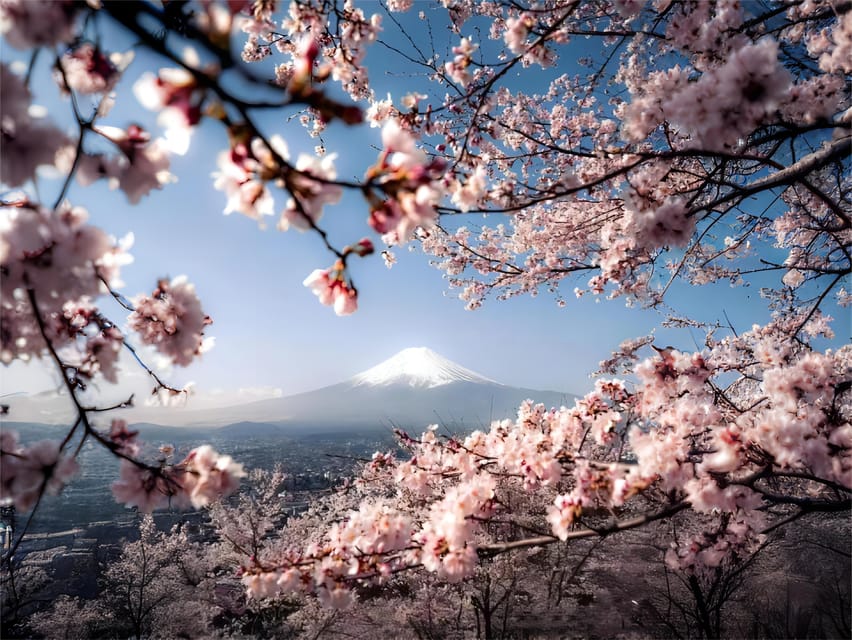
For spring departures, the tour is timed for the cherry blossom window (around March 30 to April 14), when you can catch Mt. Fuji with sakura around it. If you’re traveling in spring, this is the stop that can deliver the “pink + Fuji” look people chase.
A practical note: no matter which seasonal stop you get, you’ll want to plan your photo strategy quickly. You have enough time to enjoy the place, but not enough for long detours.
How the Long Bus Day Works (and How to Make It Better)
This trip is built around structure: about 105 minutes each way from Tokyo, plus walking time at stops. Total time on the ground is the key—so even though the schedule looks full, you’re not stuck doing one exhausting location after another.
Group size can change. You’ll ride either in a small group of up to 13 guests or on a larger bus (14–45 guests). If you’re the type who likes space for photos, smaller groups tend to feel easier for quick repositioning. Either way, the guide helps you with the timing and where you should stand.
Bring a “Fuji mindset.” Mt. Fuji is famous for being temperamental. When the morning is clear, it can feel like the mountain stays visible longer than you expect. When it’s hazy, you’ll still see the area’s beauty, but your best shots may take a bit more luck and patience.
Guide Quality: Why Hikari’s Style Matters for a Photo Day
The guide is a big part of how this day trip feels. One guide named Hikari has been praised for being organized, personable, and even funny in a way that keeps the day from feeling rigid.
That matters because Mt. Fuji day trips are all about timing: you want guidance on where to get off, where to regroup, and which spots are worth prioritizing first. Having an English-speaking guide (English, Chinese, and Japanese are offered) also helps a lot if you’re trying to ask quick questions about views, photo angles, or the order of stops.
If you’re prone to missing details, set your own routine:
- Keep your phone charged.
- Use the night-before message to confirm the correct meeting point and bus number.
- When you arrive at each stop, check what time the guide calls for regrouping.
Price and Value for a $58, 10-Hour Fuji Day Trip
At about $58 per person for a 10-hour outing, the value comes from the transportation + guide package. You’re not just buying access to scenic spots—you’re buying a driver, fuel/tolls/parking coverage, and a plan that moves efficiently between Mt. Fuji viewpoints.
What’s not included is also important: meals, beverages, and snacks are on you, and entrance fees to optional attractions (if you choose any) aren’t covered. That means you should budget a little extra for food and water.
Still, for many visitors staying in Tokyo, this is one of the simplest ways to hit multiple Mt. Fuji classics in a single day without figuring out schedules, transfers, and timing alone. If you’re traveling with limited days, the structured format usually saves you real stress.
Who Should Book This Trip (and Who Should Skip It)
This is a good match if you:
- Want a day trip from Tokyo that hits the best-known Fuji photo spots.
- Prefer a plan with expert guidance and set regroup times.
- Like photography-friendly stops, especially around Arakurayama Sengen Park and Oshino Hakkai.
It’s not a match if you:
- Are pregnant (not suitable).
- Use a wheelchair (not suitable).
- Need lots of room for luggage beyond one piece per person. The tour allows one piece of luggage per person, and extra/oversized items can cost more.
Also note the on-vehicle rules: no smoking and no food in the vehicle. Bring snacks for eating outdoors, not for munching on the bus.
Should You Book This Mt. Fuji Lake Kawaguchiko Tour?
If your goal is classic Mt. Fuji scenery with minimal logistics headaches, I think this is an easy yes—especially if you want Oshino Hakkai reflections plus Arakurayama Sengen Park in one day. The schedule gives you multiple shots at success, and the guide helps keep you from losing time.
Book it if you can handle a full day and you’ll use the stops actively (walk, shoot, and regroup on time). Don’t book it if you’re looking for slow, unstructured sightseeing, or if you know you’ll struggle with stairs and long stretches on the bus.
FAQ
Where is the meeting point in Tokyo?
You meet at Tokyo Station Marunouchi North Exit (1-chōme-9-1 Marunouchi, Chiyoda City, Tokyo). Your guide will be holding a blue flag for easy recognition.
What time does the tour start and end?
You’ll meet at 7:50 AM, depart at 8:00 AM, and return to Tokyo Station around 6:50 PM.
How long is the tour?
The total duration is about 10 hours.
What languages are available for the guide?
The live tour guide offers English, Chinese, and Japanese.
What is included in the price?
Included are comfortable transportation, a professional guide and driver, and coverage for fuel, tolls, and parking fees.
Are meals included?
No. Meals, beverages, and snacks are not included.
Are entrance fees included?
Entrance fees to any optional attractions are not included.
Who is this tour not suitable for?
It is not suitable for pregnant women or wheelchair users.
Can I cancel for a full refund?
Yes. You can cancel up to 24 hours in advance for a full refund.