REVIEW · TOKYO
Samurai Training Tokyo Asakusa
Book on Viator →Operated by Cool Japan Entertainment Inc. · Bookable on Viator
Samurai Training Tokyo in Asakusa is a quick, hands-on class that feels like a real ritual, not a theme-park show. I love that it is private for your group (up to 10) with personal instruction from Jiro and Aya, and I also like the keepsakes: you leave with a certificate plus picture-and-video footage. One consideration: this is a short session (about an hour), so you should expect fun and foundations, not a full dojo-style grind.
You meet in Asakusa, change into costume, practice classic movements, and finish with a staged sword-fighting routine and video recording. If you want something intense, adjust your expectations. It’s still active, but it is built to fit busy schedules and families, with a moderate fitness level noted for participants.
In This Review
- Key things to know
- Why Asakusa Works So Well for Samurai Training
- Finding the Meeting Point in Asakusa (and What to Expect On Arrival)
- Dressing Like a Samurai: Costume Rental and the Photo Setup
- Sword Basics You’ll Actually Do: Battou, Nattou, Kata, and Moves
- Who this fits best during the sword portion
- The Private Instructor Experience: Jiro, Aya, and How They Teach
- Photos, Video, SD Card/Memory Device, and the Certificate
- Timing, Group Size, and Booking Value
- What to Wear and Bring (So You Enjoy the Training More)
- Price and Logistics: How Easy It Is in Real Life
- Should You Book Samurai Training Tokyo Asakusa?
- FAQ
- How long is Samurai Training Tokyo Asakusa?
- Is it a private experience?
- What is the minimum age to join?
- What happens during the training?
- Do I get photos and video?
- Do they provide the outfit?
- Where do we meet and where does it end?
- Is hotel pickup included?
- Is it beginner friendly?
- What if my plans change and I need to cancel?
Key things to know
- Asakusa location: the meeting point is in Taito City, close to public transportation
- Private group experience: max 10 people, so you get more attention than a big workshop
- Samurai kata basics: you practice battou (pulling), nattou (sheathing), and kata steps
- Photo and video included: you receive footage plus a certificate with your photo
- Beginner-friendly structure: greetings, basic sword handling, and staged moves with coaching
Why Asakusa Works So Well for Samurai Training
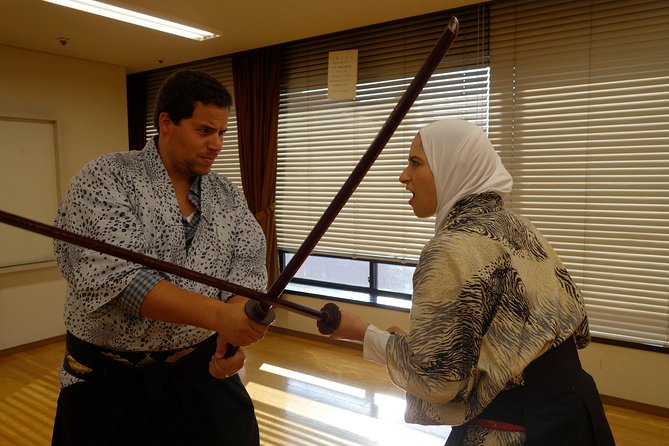
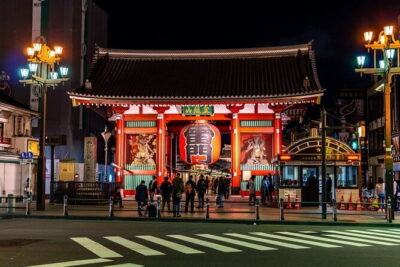
Asakusa is one of those Tokyo neighborhoods where old-school atmosphere helps your brain accept the make-believe fast. You are walking into a setting that already feels like Japan, which makes the costume and sword training feel more grounded.
This class is also designed for real travel schedules. It lasts about an hour, and it ends right back where you start, so you can plan it like an activity block instead of a half-day project. That matters in Tokyo, where travel time can quietly eat your energy.
Also, the organizer notes that the meeting spot and training location can vary depending on the number of participants. That is normal for small private tours in a dense city. You’ll get clear contact at least 2 days before your reserved date, so don’t wait until the last minute to confirm where to go.
You can also read our reviews of more tours and experiences in Tokyo.



Finding the Meeting Point in Asakusa (and What to Expect On Arrival)
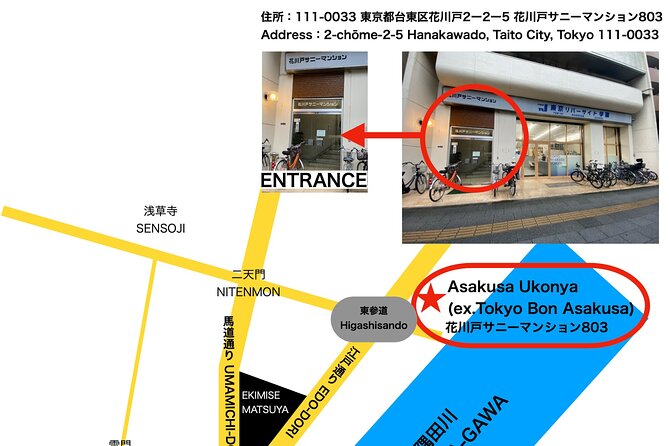
The meeting point is 花川戸サニーマンション2-chōme-2-5, Hanakawado, Taito City, Tokyo 111-0033. The activity also ends back at the same meeting point.
In practice, the main “logistics trick” is this: you are showing up for a small group session where the exact training room may change based on participant count. If you are using a navigation app, set your destination to that meeting address first, then follow any instructions you get after booking.
Once you arrive, the flow is simple and timed. You gather with your group, then you switch into your samurai look. That costume change is not an afterthought. It is part of the experience rhythm, and it helps you get into the mindset quickly.
The class uses a mobile ticket, which keeps things easy once you are in Japan. Still, I’d keep your confirmation handy on your phone in case your group needs a quick check-in.
Dressing Like a Samurai: Costume Rental and the Photo Setup
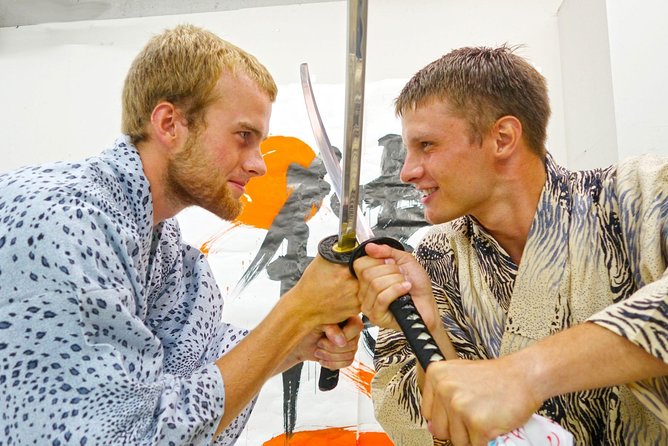
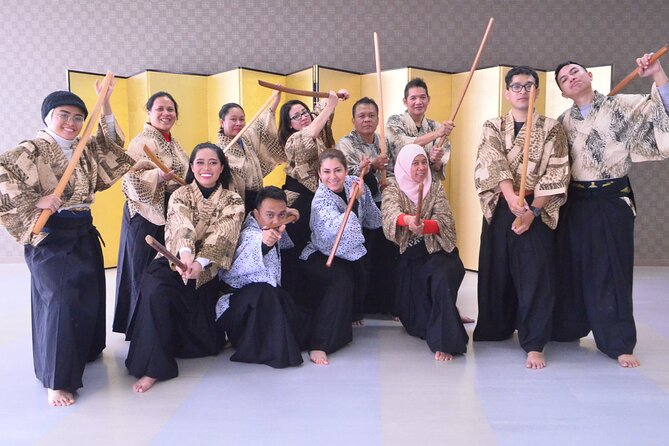
The costume part is one of the biggest reasons people walk away smiling. You will get dressed in a samurai outfit and then start with early photo moments.
Here’s what stands out from the way this class is run: you’re not just being photographed; the training is staged to create good action shots. You belt the sword and get a picture, then you begin with greetings before you pull and sheath.
You also get a strong sense of “you are the student here,” not “we are filming a production and you are optional.” In reviews, people highlight how kind and patient the instructors are, and that the assistant helps keep the process smooth. If you’re traveling with kids, that matters a lot. It keeps the lesson moving without turning it into a stressful crowd-management situation.
If you care about keeping your outfit neat and comfortable, go in with a calm mindset. This is a costume-and-coaching experience, not an athletic garment test. You will want shoes you can move in comfortably, and clothes that can handle a bit of activity.
Sword Basics You’ll Actually Do: Battou, Nattou, Kata, and Moves
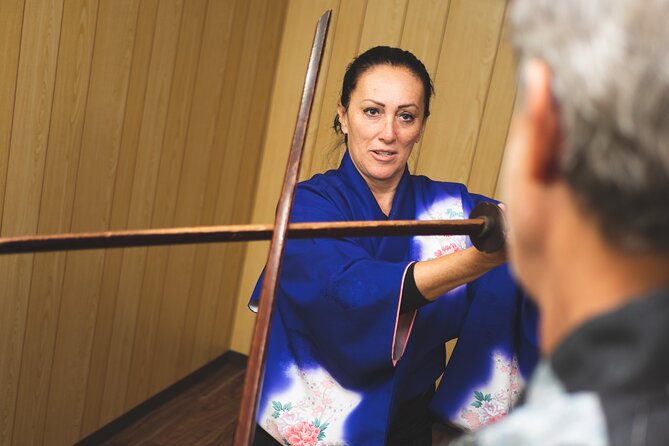
This is the core of the class. You start with greetings, then the instructor guides you through sword handling in steps: battou (pull out katana), nattou (pull back katana), and kata practice.
The school connection is meaningful here. The experience is supervised by Ukon Takafuji, Iemoto of the world-renowned Kenbu Ukon-ryu (Tachibana samurai kenbu school). That helps explain why the lesson has a structured set of traditional movements, instead of random tricks.
What you practice is designed to be learnable in a short time:
- Pull-and-sheathe coordination (basic control and timing)
- Kata-style movement drills (so you understand the pattern, not just the pose)
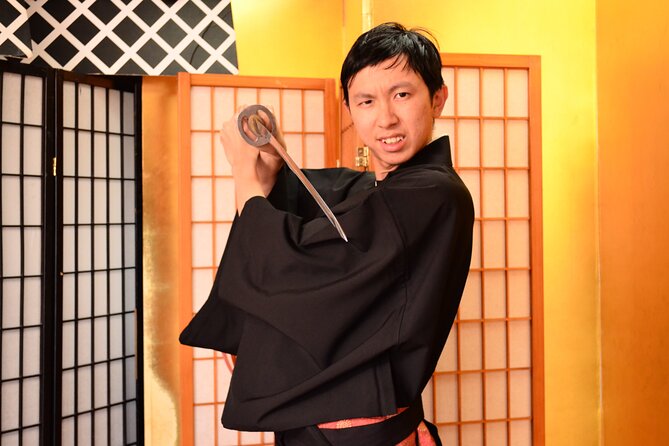
- Simulated sword-fighting practice moves (a choreographed “battle” segment)
A useful detail: the lesson includes sword-fighting practice and a video recording of the session. In reviews, people also mention that the instructor demonstrates with swords of actual size. That can feel dramatic in the best way, especially for first-timers who are used to watching swords behind glass.
That said, you should expect this to be “controlled fun,” not a full sparring gym session. One review specifically calls out that it is not an intense dojo experience. The physical part is moderate, with enough movement to make it feel like training, but it is still built for families and schedules.
Who this fits best during the sword portion
- First-time sword learners who want a foundation and a memorable photo moment
- Families with kids 6+ who need instruction that stays patient
- Couples or friends who want a shared activity with clear endpoints
If you already train seriously and want advanced technique, you might still enjoy it, but keep your goal simple: learn the basic ritual and get the keepsakes.






The Private Instructor Experience: Jiro, Aya, and How They Teach
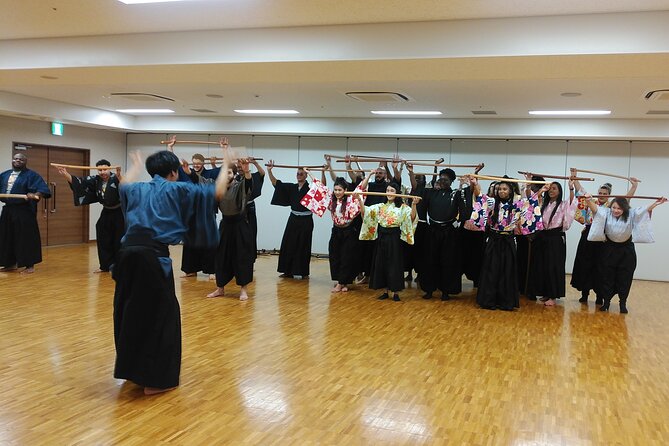
The biggest quality lever here is the teaching style. People consistently mention Jiro as the instructor and Aya as his assistant. They are described as friendly, accommodating, and good with kids.
In a private setting, that means your pace gets respected. You’ll get corrections without feeling lost in a crowd. It also helps if your group has different experience levels, like one adult who is curious and one child who is a true beginner.
Another small but real value: they take time to make sure you can follow. Reviews mention English support, and people highlight how smoothly things go from meeting to training to photos.
If you are worried about not understanding Japanese terminology, you’re in good shape. This is taught as an experience for international visitors, with instruction that focuses on what to do next.
Photos, Video, SD Card/Memory Device, and the Certificate
This experience doesn’t end when the movements end. It turns your training into a souvenir package.
At the end, after changing clothes, you receive:
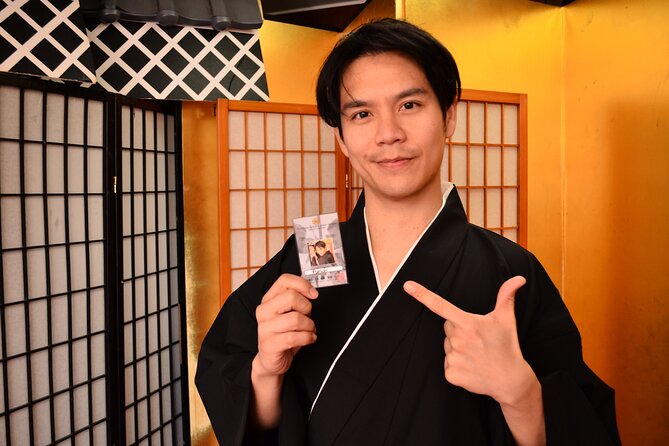
- A certificate of recognition with your photo
- Photo and video footage on a memory device (the details are described as SD card, and reviews also mention pen drive or memory chip/footage downloads)
The photo and video aspect matters more than you might think. In sword training, people often spend the whole time focused on safety and posture and forget to enjoy the moment. Here, the instructors handle a lot of the documentation work, so you can actually participate.
You also get a staged photo shoot early in the class: belt the sword and take a picture. Then you get recorded video as you practice and do your staged battle segment.
One practical tip: if you are the type who always forgets to charge your devices while traveling, this is a relief. You’re not expected to manage all the media yourself. You get a copy to take home.
Timing, Group Size, and Booking Value
This class is about 1 hour (approx.). That short duration is part of the value, especially for families. It is not a “start at 10 and finish at noon” activity that derails the rest of your day.
The booking size is also capped at a maximum of 10 people per booking, and it is private, meaning only your group participates. That is a big difference from shared group demos, where only a few people get coaching. The instruction time feels more usable because the group is smaller.
Price is listed at $85.89 per person. In Tokyo, that sounds like a lot until you break down what you’re actually buying: costume rental, an instructor-led training session, and professionally shot photos and video plus a certificate. You’re not just paying for time; you’re paying for the whole package of learning and keepsakes.
Also, the price can feel more reasonable if your group is 2-4 people, because the class is private. Families often like it because everyone shares the same experience while kids get structured attention.
What to Wear and Bring (So You Enjoy the Training More)
The tour notes a moderate physical fitness level requirement. You don’t need to be athletic, but you should be comfortable standing, moving your arms, and doing basic coordinated motions for a short time.
You should plan for a costume change. That means bringing clothes you’re okay wearing under the costume and shoes you can walk in easily. If you have long hair, tie it back so it doesn’t get in your face during movement and photos.
You also might want to go in with a curious attitude. This is not only about sword technique; it is about greetings and the flow of movements. If you treat it like a short ritual lesson, you’ll get more out of the experience.
Price and Logistics: How Easy It Is in Real Life
A lot of Tokyo experiences fail at one of two points: they are either hard to find, or they require too much time. This one is built to stay simple.
- No hotel pickup and drop-off is listed, so you’ll need to make your own way to Asakusa.
- You meet at the specific address in Hanakawado.
- You return to the meeting point when you’re done.
That is good for control. You won’t lose time waiting for a van. But it does mean you should budget a bit of navigation time the first time you head to Asakusa.
If you are using public transportation, you’re set. The experience is described as being near public transport. That makes it easier to plug into a day that already includes Asakusa sights.
Cancellation can be flexible depending on timing, but I won’t treat that as a reason to gamble. If your trip dates are firm, lock it in early. If your plans shift, check the refund window listed for your reservation before you assume you can change it.
Should You Book Samurai Training Tokyo Asakusa?
Book it if you want a hands-on Tokyo memory that is short, structured, and built for real photos. I’d especially recommend it for:
- Families with kids 6+ (children must be accompanied by an adult)
- Couples or friends who want an activity with a clear ending and keepsakes
- Beginner-level sword learners who want basics like battou, nattou, and kata
Skip it (or treat it as a “fun sampler”) if you’re training for competition and expect intense technical drills or long practice blocks. The session is designed to fit a busy schedule. You’ll get enough to feel the tradition and the motion, but it won’t replace weeks of serious training.
If you want the most bang for your money, aim for a time when your schedule has slack after. You’ll leave with memories and a certificate, but you’ll also want a little buffer to walk around Asakusa and enjoy the rest of your day.
FAQ
How long is Samurai Training Tokyo Asakusa?
It’s about 1 hour (approx.).
Is it a private experience?
Yes. It is a private tour/activity, and only your group participates. The maximum is 10 people per booking.
What is the minimum age to join?
The minimum age is 6 years. Children must be accompanied by an adult.
What happens during the training?
You’ll change into a costume, belt the sword and take a picture, start with greetings, practice battou (pull out katana), nattou (pull back katana), and kata, then do sword-fighting practice moves. There is also video recording.
Do I get photos and video?
Yes. The experience includes picture and video footage. After you finish and change clothes, you’ll receive a certificate plus photo data (SD card is listed) and a photo of your face.
Do they provide the outfit?
Yes. Rental costume is included.
Where do we meet and where does it end?
You meet at 花川戸サニーマンション2-chōme-2-5 Hanakawado, Taito City, Tokyo 111-0033. The experience ends back at the meeting point.
Is hotel pickup included?
No. Hotel pickup and drop-off are not included.
Is it beginner friendly?
It’s designed for beginners and people with no prior samurai sword handling background, but it does note a moderate physical fitness level.
What if my plans change and I need to cancel?
You can cancel up to 6 days in advance of the experience for a full refund. Between 2 and 6 days before, you can receive a 50% refund, and less than 2 days before is not refunded.