REVIEW · TOKYO
Tokyo: Learn Traditional Origami with a Local
Book on GetYourGuide →Operated by Manami Watanabe · Bookable on GetYourGuide
Origami turns nervous energy into calm. In Shinjuku, you learn classical folds from Manami Watanabe, who started making paper creations at age 3. You get hands-on guidance, plus stories that give each shape meaning.
I love the step-by-step teaching style that keeps beginners from getting stuck. You’ll start with options at different difficulty levels, and Manami patiently helps you improve fold lines as you go.
You’ll also like the chance to learn the symbolism behind what you make, including the cultural importance of the origami crane. The only real drawback: you can’t customize the paper-fold choices on site, so very experienced folders might want more challenging designs.
In This Review
- Key things to know before you go
- Why a Shinjuku origami class feels like culture, not just craft
- Finding FEEP Shinjuku Higashi-guchi (and not losing 10 minutes)
- Meeting Manami Watanabe and picking your 3 to 5 shapes
- Paper choice in Tokyo: traditional and modern sheets that change the whole look
- The 90-minute flow: clear folds, gentle corrections, and time to finish
- The stories you’ll remember: from crane symbolism to shape meanings
- What’s included (and what you should bring mentally)
- Price and value: is $58 fair for 90 minutes?
- Who this origami class is best for
- Practical tips so your final pieces actually look great
- Should you book this Tokyo origami lesson with Manami Watanabe?
- FAQ
- What is the duration of the origami class?
- How much does it cost per person?
- Where is the meeting point in Tokyo?
- What’s the nearest station to the meeting point?
- What does the class include?
- Is pickup from the train station included?
- What language is the instructor using?
- Can I expect step-by-step guidance?
- How many origami pieces will I make?
- Are there any restrictions on who can join?
- Is there free cancellation?
Key things to know before you go
- Manami Watanabe teaches in English and guides every fold so you never feel left behind.
- Choose your designs and papers: aim for 3 to 5 shapes in the 90 minutes.
- Stories come with the craft, including how certain figures carry cultural meaning.
- Everything to make the pieces is included, from traditional and modern paper to scissors and pens.
- Shinjuku logistics matter: it’s at FEEP Shinjuku Higashi-guchi on the 5th floor in a shared workspace.
- It’s beginner-focused, so advanced origami fans may find some patterns too easy.
Why a Shinjuku origami class feels like culture, not just craft
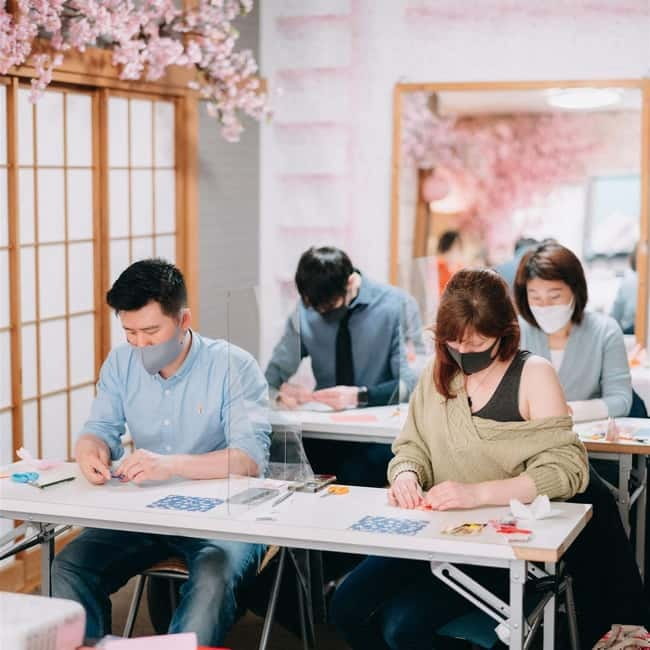
Tokyo is full of activities where you make something and leave. This one sticks longer because it connects the folds to the why behind them. Manami Watanabe has been practicing since she was very young, and you can feel the care in how she teaches.
What I like most is the tone: calm, focused, and encouraging. You’re not racing the clock to finish a cool picture. You’re learning the technique well enough that your pieces actually look right.
And because you pick from different designs (often ranging from simple to more involved), you’ll have a realistic shot at producing multiple keepsakes in a single sitting. The goal is to leave with finished shapes you can pack up and show later.
You can also read our reviews of more tours and experiences in Tokyo.



Finding FEEP Shinjuku Higashi-guchi (and not losing 10 minutes)
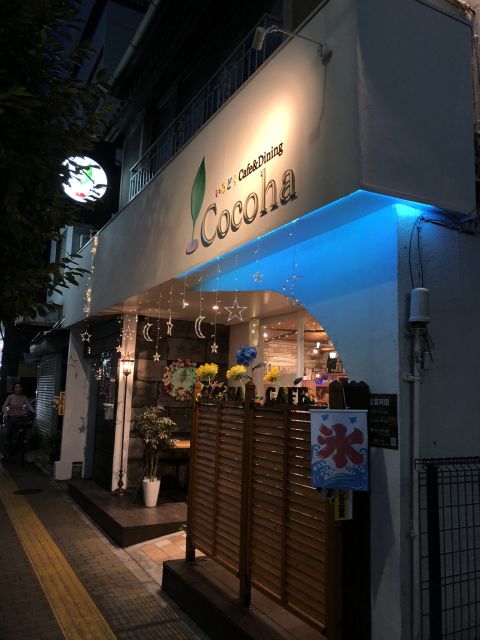
The meeting point is FEEP Shinjuku Higashi-guchi, Shinseido Bldg. 5F, Shinjuku 3-29-11, Shinjuku-ku, Tokyo. The nearest station is metro Shinjuku-sanchome (M09, F13, S02), and you can also get there from the east gate of JR Shinjuku station.
Here’s the practical bit that can trip people up: FEEEP is a shared workspace with many meeting booths, and the entrance is locked. Once you reach the 5th floor, you need to message for entry.
Plan to arrive a little early. Even if you know Shinjuku, station exits can send you the wrong way when you’re juggling signage in a hurry. This is one of those “small hassle, big payoff” situations: find the place smoothly and you start relaxed.
Meeting Manami Watanabe and picking your 3 to 5 shapes

This class centers on Manami Watanabe, an instructor from East Tokyo. She’s been surrounded by origami since she was 3 years old, so you’re not learning from a one-time hobbyist.
Before you fold, Manami typically showcases a set of origami options across skill levels. You choose what interests you, and the session is designed so you make 3 to 5 pieces during the 90 minutes.
A big plus for first-timers: it’s structured for beginners. Most previous participants were new, so the patterns and pace are meant to be achievable. If you’re already very comfortable with origami, you might find some options too easy, and the class can’t be customized to higher difficulty on the spot.
Some examples of designs people have made include:
- Origami crane
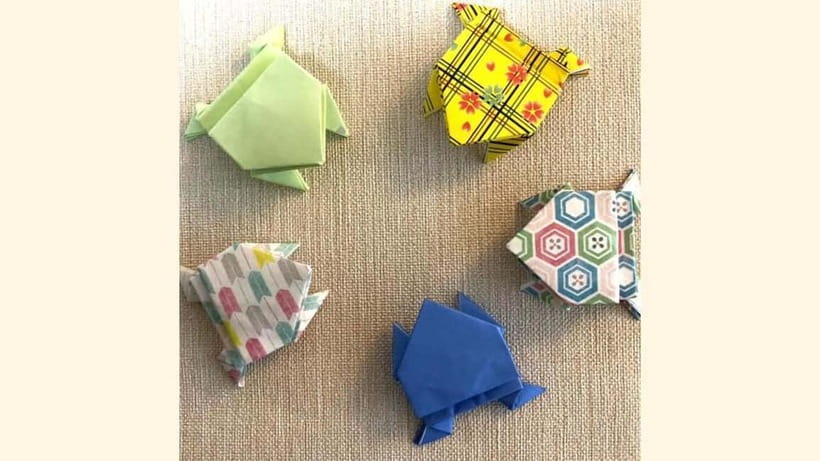
- Jumping frog
- Samurai helmet
- Lotus flower
- Open box
If you want a balanced mix of “easy win” and “cool centerpiece,” you can usually pick one simple figure plus one more detailed one.
Paper choice in Tokyo: traditional and modern sheets that change the whole look
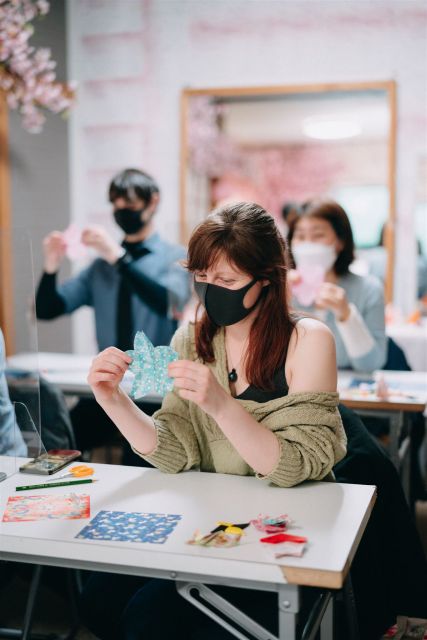
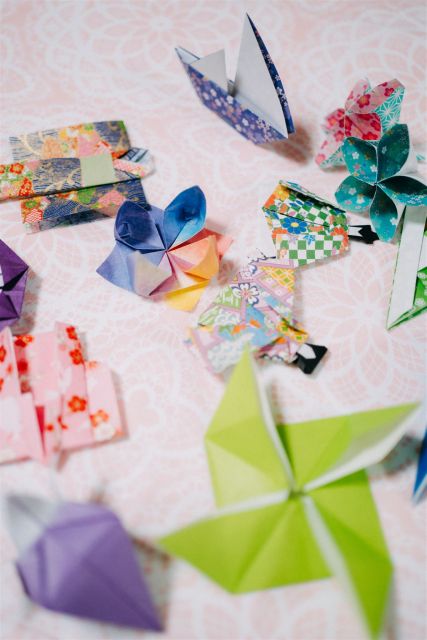
In most origami classes, you don’t get to think about paper. Here, you do. The materials include a variety of traditional and modern origami paper, and you get to select which sheet you want for each shape you make.
That matters more than it sounds. Paper color and texture can make a straightforward fold look crisp and intentional. Traditional patterned sheets also help the final piece feel more like something you’d expect to see in Japan, not just a generic craft.
You’ll also get multiple tools to keep you moving: scissors and pens are included. (Yes, scissors are sometimes part of paper craft when patterns call for trimming or cleanup.)
You’ll take your finished pieces home in the small bags provided. That’s a quiet detail, but it helps you avoid that post-class mess where you’re trying to protect delicate folds in a tote bag.
The 90-minute flow: clear folds, gentle corrections, and time to finish
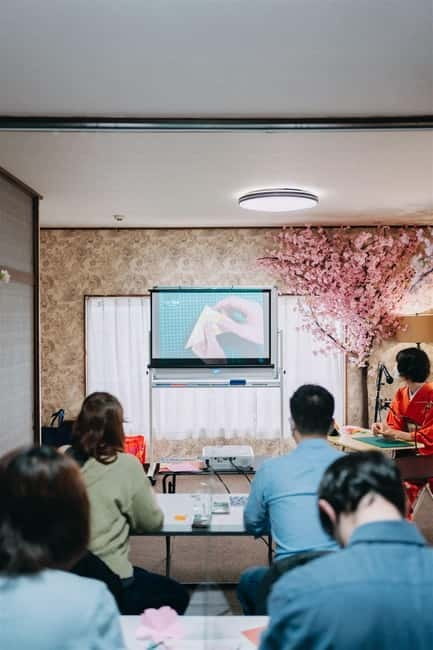
The class runs 90 minutes, and the structure is designed to prevent the classic origami problem: getting lost halfway through.
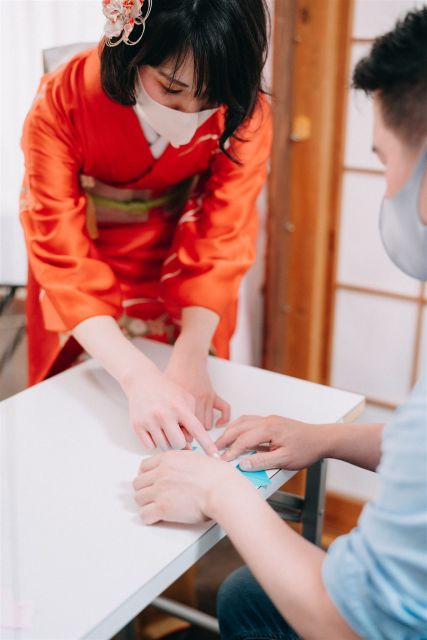
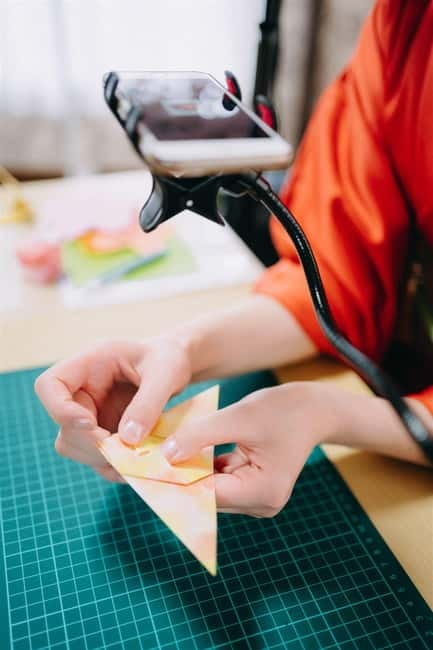
Manami demonstrates and then guides you step-by-step. As you fold, you can ask questions or request help if you’re stuck. The teaching approach emphasizes patience, and correction is done respectfully—especially around fold lines, which are the difference between a sharp model and a floppy one.
In your session, expect a rhythm like this:
- pick your designs
- select paper for each one
- follow demonstrations and fold in sequence
- get help when your folds don’t line up
- finish multiple pieces you can pack right away
This is also one of those activities where conversation can happen naturally. Some people mention chatting as part of the experience, and because the teacher includes explanations about the shapes, you’re not sitting silently counting creases.






The stories you’ll remember: from crane symbolism to shape meanings
Origami has a lot of cultural baggage—in the best way. Each figure can connect to a specific meaning, tradition, or visual idea.
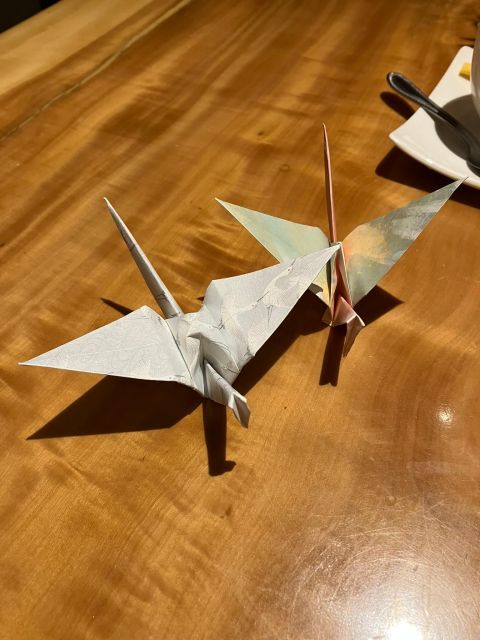
Manami shares the history and significance behind what you’re making. One example specifically highlighted is the origami crane, which is widely recognized in Japan for its cultural importance. You’ll also hear stories that connect the folds to family life and childhood practice, which makes the craft feel personal rather than like a lecture.
Even when the shapes seem playful—like a jumping frog or a lotus flower—there’s usually a deeper logic. Many models follow related base folding patterns, and Manami’s explanations help you understand how different figures come from the same basic folding language.
That’s one of the reasons this works well as a Tokyo experience. You’re not just bringing home paper sculptures. You’re bringing home a way to think about folds.
What’s included (and what you should bring mentally)
The class includes:
- origami paper (traditional and modern designs)
- scissors
- pens
- small bags to take your finished works home
- water and some snacks
Not included:
- pick-up at the train station
So you’ll want to handle getting to Shinjuku on your own. Good news: it’s well connected to metro lines, and the meeting point is reachable from JR Shinjuku as well.
You also should expect that the tools and paper are part of the value. You’re not paying to sit in a chair while someone else supplies everything and you watch. You’re paying for the combination of materials plus skilled instruction that helps your folds hold.
Price and value: is $58 fair for 90 minutes?
At $58 per person for 90 minutes, the price may feel high at first—until you think about what’s covered and what you get out of it.
You’re paying for:
- an instructor who’s practiced since early childhood (not a casual demo)
- English guidance with step-by-step corrections
- access to multiple sheets of traditional and modern paper
- included tools (scissors and pens)
- take-home packaging (small bags)
- water and snacks
For many visitors, this is cheaper than buying books, quality paper, and supplies separately and then still needing help when folds don’t cooperate. More importantly, you’re paying for the coaching that turns a frustrating hobby into something you can finish in one session.
Yes, you may walk away thinking you got a few models plus a story. But those models are tangible proof you learned the method, not just a fun souvenir.
Who this origami class is best for
This experience works for:
- solo travelers who want something calm and hands-on
- couples looking for a shared skill moment
- families (including kids old enough to handle the folding steps)
- larger groups who still want personal instruction
Language is English, so you won’t need Japanese to keep up. Wheelchair accessibility is listed as available.
There are limits worth noting. Kids under age 7 aren’t allowed. If your group includes elderly guests or anyone who needs special care, you should tell the provider in advance so the venue can be adjusted.
If you’re a beginner, you’re in the sweet spot. If you’re already advanced, you might still enjoy the stories and paper variety, but the patterns may not challenge you much.
Practical tips so your final pieces actually look great
If you want your models to turn out better on the first try, treat this like a precision class, not a casual craft.
- Take your time with fold lines. That’s where the “better” look comes from.
- When you’re stuck, ask quickly. The class is designed so help is part of the process.
- Pick a manageable mix of designs. Going too ambitious can steal time from the pieces you care about most.
- Choose paper thoughtfully. A patterned sheet can hide tiny imperfections, but only if the folds are still crisp.
- Bring a positive mindset for small mistakes. Even one corrected crease can save the whole model.
And because the activity notes alcohol and drugs aren’t allowed, keep it simple: water-based refreshment, focus, and steady hands.
Should you book this Tokyo origami lesson with Manami Watanabe?
I’d book it if you want a calm, meaningful Tokyo activity that ends with multiple finished pieces. The best reason: you’re not learning from a book—you’re learning from Manami Watanabe, with patience and step-by-step correction that helps beginners succeed.
I wouldn’t book it if you’re already deep into complex origami and expecting advanced challenge. The options aren’t customized on site, so you may find the designs aimed more at first-timers than at seasoned folders.
If you’re somewhere in the middle—curious, creative, and happy to learn—this is a solid use of a 90-minute window in Tokyo. You’ll leave with paper models that remind you of the lesson every time you see them.
FAQ
What is the duration of the origami class?
The class lasts 90 minutes.
How much does it cost per person?
The price is $58 per person.
Where is the meeting point in Tokyo?
You meet at FEEP Shinjuku Higashi-guchi, Shinseido Bldg. 5F, Shinjuku 3-29-11, Shinjuku-ku, Tokyo.
What’s the nearest station to the meeting point?
The nearest station is metro Shinjuku-sanchome (M09, F13, S02), and it’s also accessible from the east gate of JR Shinjuku station.
What does the class include?
It includes origami paper (traditional and modern), scissors, pens, small bags for your finished works, plus water and some snacks.
Is pickup from the train station included?
No. Pick up at the train station is not included.
What language is the instructor using?
The instructor provides instruction in English.
Can I expect step-by-step guidance?
Yes. Manami provides step-by-step guidance and encourages questions or help if you get stuck.
How many origami pieces will I make?
You can make about 3 to 5 origami shapes during the session, depending on the designs you choose.
Are there any restrictions on who can join?
Kids under age 7 are not allowed, and if your group includes elderly guests or anyone needing special care, you should notify the provider in advance. Alcohol and drugs are not allowed.
Is there free cancellation?
Yes. You can cancel up to 24 hours in advance for a full refund. There is also a reserve and pay later option.