REVIEW · TOKYO
Tokyo: Imperial Palace with Nostalgic Alley Kagurazaka tour
Book on GetYourGuide →Operated by Japan Wonder Travel · Bookable on GetYourGuide
Tokyo past hides in plain sight. This Imperial Palace to Kagurazaka walk turns big landmarks into a clear, on-foot story, with an English guide who helps you see what you’d miss on your own.
You’ll also get the contrast I love most: the formal palace approach, then the smaller streets of Kagurazaka with a love-themed shrine stop and time to snack in less-touristy alley lanes. One thing to keep in mind: this tour does not include entry into the inner palace (it’s only the public areas around the grounds).
In This Review
- Key takeaways before you go
- Starting at Shin-Marunouchi: the easy way to begin near Tokyo Station
- Imperial Palace grounds, without the long lines or wandering
- Seeing Edo Castle in the details: walls, gardens, and scale
- Nippon Budokan: the brief detour that still matters
- The Aomi Coffee Kudanshita break: fuel before Kagurazaka
- Tokyo Daijingū and the love-relationships shrine stop
- Remains of Ushigome Gate: history that still has edges
- Kagurazaka comes into focus: from old red-light district to today’s streets
- The alley-photo sequence: Geisya Komichi, Hyogo Yokocho, and かくれんぼ横丁
- How much is $51 really buying you for 210 minutes
- Who this tour is best for (and who should skip it)
- What I’d watch for on the day
- Book it or skip it: my honest take
- FAQ
- Where is the meeting point for the tour?
- Where does the tour end?
- How long is the experience?
- Does this tour include visiting the inner palace?
- What’s included in the price?
- Is the tour offered in English?
- How big is the group?
- Are there rules about food, smoking, or drones?
Key takeaways before you go
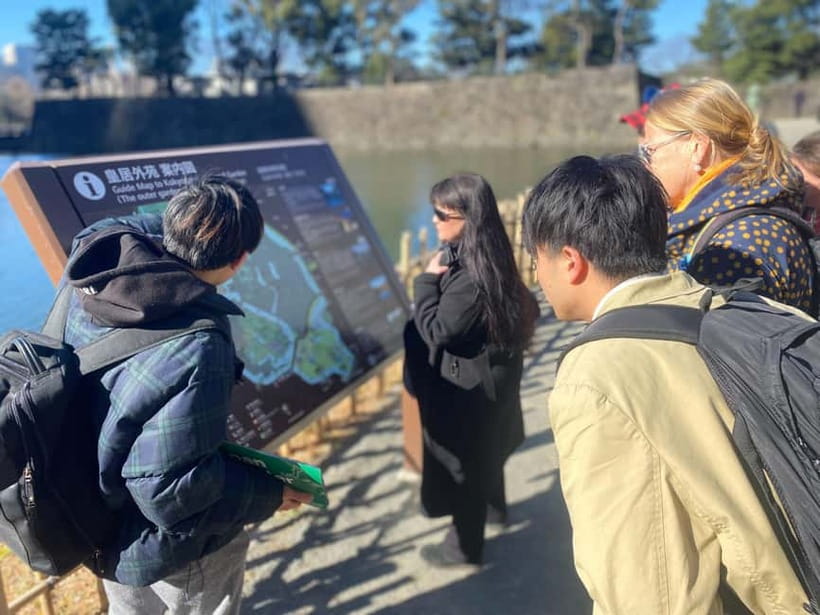
- Small group (up to 8) keeps the pace comfortable and makes Q&A actually useful.
- A focused route through Imperial Palace areas helps you cover the big “must-sees” without aimless wandering.
- Edo Castle context in plain terms so walls, gates, and gardens make historical sense as you walk.
- A scheduled coffee or tea break at Aomi Coffee Kudanshita lets you recharge before Kagurazaka.
- Kagurazaka back alleys plus a shrine linked to love/relationships give you the local Tokyo feeling.
- Snack stops on the quieter streets mean you taste Japan along the route, not just at the start or end.
Starting at Shin-Marunouchi: the easy way to begin near Tokyo Station
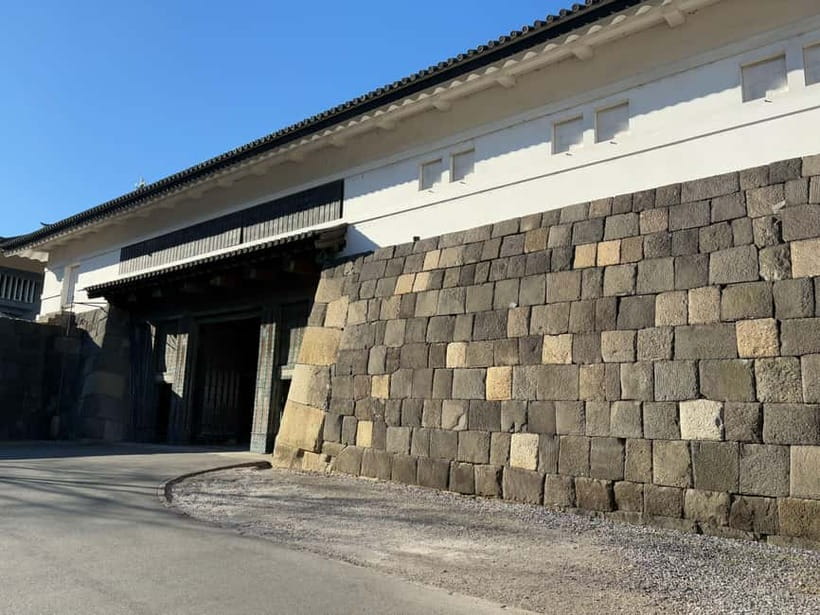
This tour is built for convenience. You meet outside Shin-Marunouchi Building in front of STAND T, with a BEAMS sign on the second floor. From Tokyo Station, the Marunouchi Central Exit is the closest, and it’s about a two-minute walk to get oriented.
Then you roll right into the city rhythm: a photo stop and short guided tour around Tokyo Station before you head toward the Imperial Palace area. If you’ve got limited time in Tokyo, this is a smart setup because it uses your first hour efficiently.
You can also read our reviews of more tours and experiences in Tokyo.



Imperial Palace grounds, without the long lines or wandering
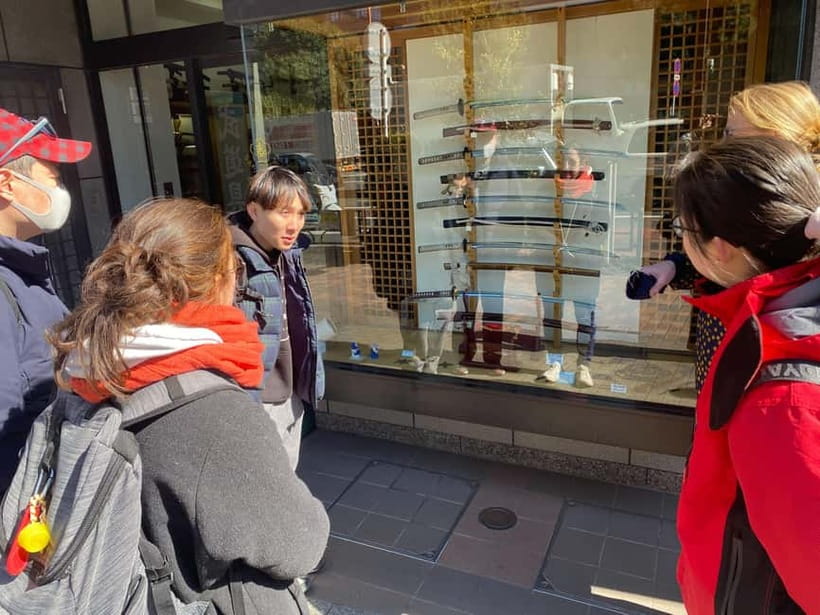
The headline experience is Imperial Palace sightseeing, but with a method. You get a guided walk that focuses on the parts visitors can access, plus a set of photo stops that keeps the route moving.
A big plus here is the pacing. Instead of rushing, the guide helps you understand what you’re looking at while you’re still in the right spot. You spend about an hour on guided time in the palace area, then keep going to the gates and gardens.
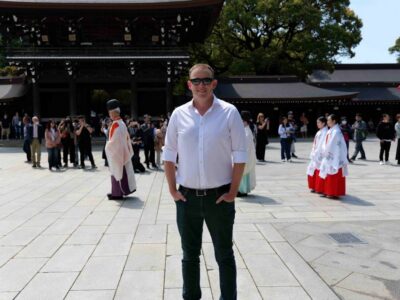
Two highlights in this section are Ote-Mon Gate and Ninomaru Garden. You’ll pause for photos at Ote-Mon Gate and then move into the garden space with guided context. The result is you don’t just take pictures—you get a reason for the structure, layout, and placement.
One practical note: the inner palace is not part of this tour. That’s not a deal-breaker because the public grounds are still impressive, but it does mean you should not count on seeing interior buildings.
Seeing Edo Castle in the details: walls, gardens, and scale
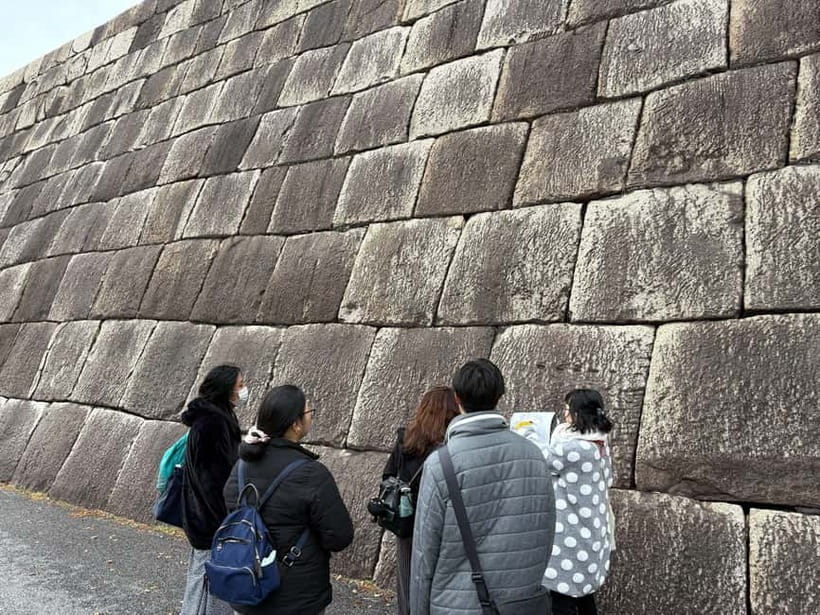
Here’s where the tour earns its keep. All the areas you walk through on this route were once part of the vast Edo Castle grounds. The guide connects the dots between the landscape you can still see and the political center the Tokugawa shogunate ran from.
As you move from stop to stop—photo pauses and guided segments—the story helps you interpret what would otherwise feel like random walls and paths. You get a sense of the scale, which is the whole point. Edo Castle wasn’t small or decorative; it was the backbone of power and daily administration.
You’ll also spend time at key points like the Ninomaru Garden and the Edo Castle Ruins area (with guided explanation). Even though ruins can sound less exciting than a fully restored site, this one works because the guide keeps tying each viewpoint back to what the castle system was built to do.
Nippon Budokan: the brief detour that still matters
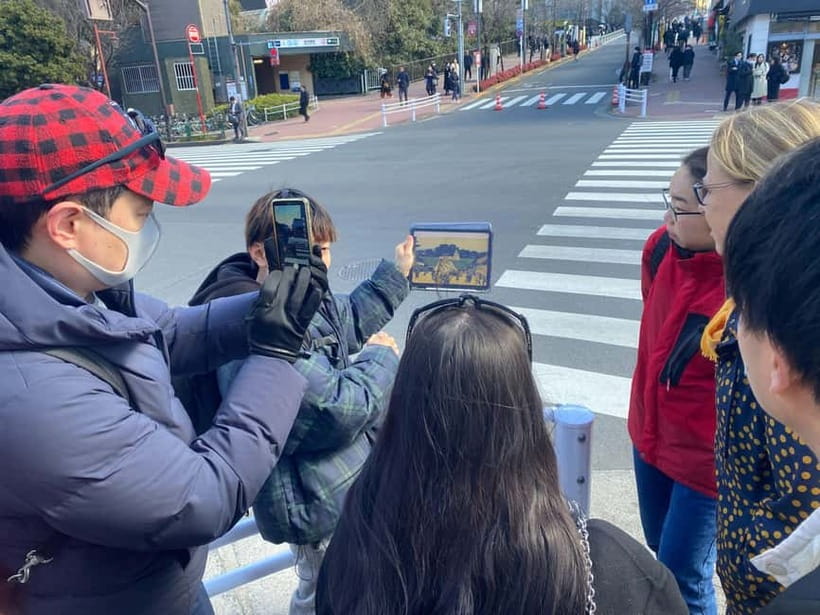
This stop is short—just a photo pause with guided context for about five minutes at Nippon Budokan—but it’s not there just for the photo. It gives you a quick “Tokyo modern layer” before the tour shifts deeper into older neighborhoods.
It’s a nice reset. After walking through the historical atmosphere of the Imperial Palace grounds, Budokan helps you remember you’re still in Tokyo now, not a museum time capsule.
The Aomi Coffee Kudanshita break: fuel before Kagurazaka
After the history-heavy early stretch, you get a real break: coffee or tea plus a scheduled rest time of about 25 minutes at Aomi Coffee Kudanshita.
This matters more than you’d think. You’re on your feet through Tokyo, and the tour includes multiple back-street walking segments later. A planned pause means you can keep going without feeling rushed or snack-cranky.
And yes, you’ll still be learning during the day, not just eating. The guide usually uses the break rhythm to set expectations for what’s next—especially when the streets start shrinking and the atmosphere turns more local.






Tokyo Daijingū and the love-relationships shrine stop
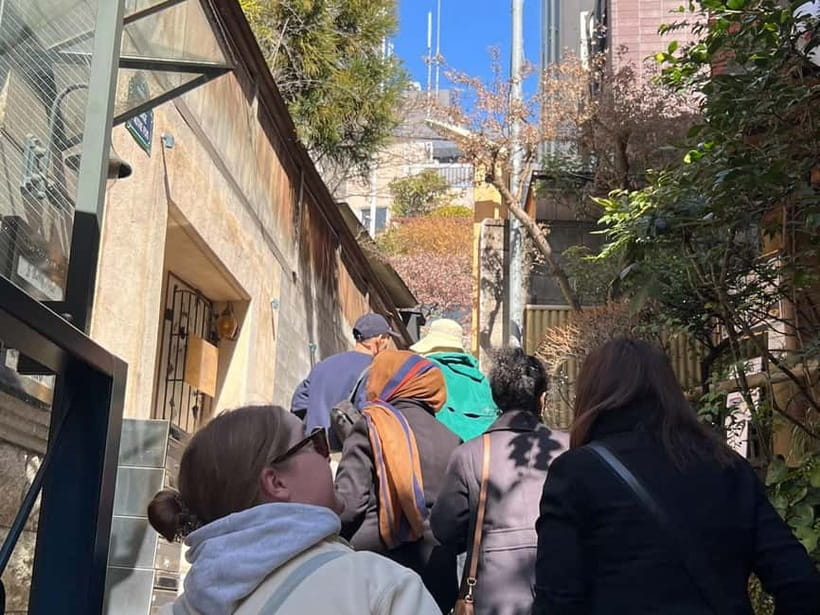
From the coffee break, the tour moves to Tokyo Daijingū, with about 20 minutes of guided time. This is one of the stops designed to give you a different kind of meaning than castle walls.
The tour highlights a shrine tied to love and relationships. When you’re guided here, you’re not just reading plaques—you’re learning how worship connects to everyday hopes, not only grand historical narratives.
If you like shrines because they feel personal and human-scale, this is a good match. The guided portion helps you look for the right things at the right time: where attention goes, what people tend to notice, and how the space is used.
Remains of Ushigome Gate: history that still has edges
Next you reach the Remains of Ushigome Gate, another guided stop. Gate remains can sound like a minor footnote, but they do something important on this route: they reinforce the castle layout and the castle’s movement logic.
Gates tell you where people entered, how access worked, and how the system controlled flow. Seeing the ruins while the guide explains their role is the difference between “I saw a stone” and “I understand why it mattered.”
This is also a good place to slow your pace a bit, because your brain is connecting earlier palace points to what you’re seeing now.
Kagurazaka comes into focus: from old red-light district to today’s streets
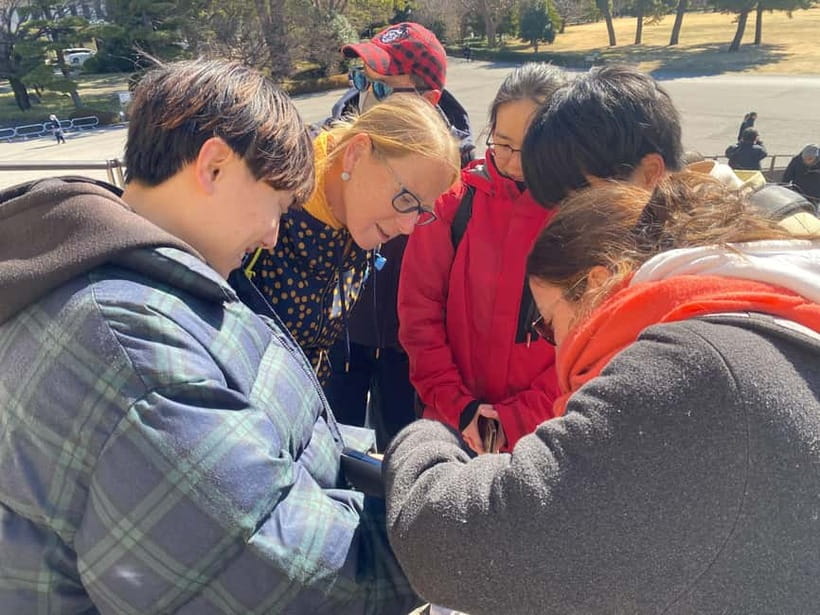
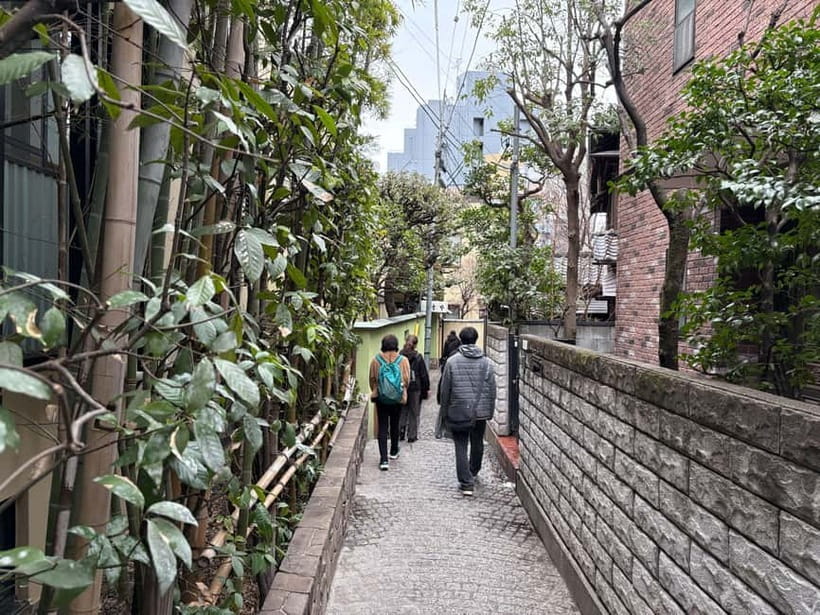
Then you get to the part many people skip. The tour shifts toward Kagurazaka, where the vibe changes from official landmark to neighborhood texture.
Kagurazaka has history. Around 200 years ago, it was known as a red-light district, with tea houses where maiko and geisha performed. Today, it’s not a replica of the past, but you can still feel the older side of town through traditional storefronts and long-lived local businesses.
This is why the tour route feels different from a standard “Imperial Palace photo then done” day. You’re walking through streets where you’re more likely to see daily life than tour groups marching in unison.
The alley-photo sequence: Geisya Komichi, Hyogo Yokocho, and かくれんぼ横丁
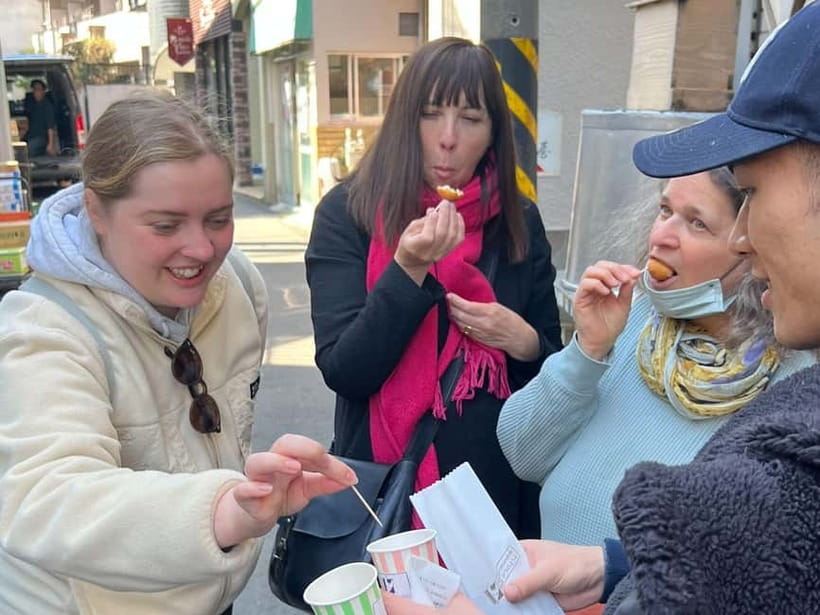
The tour ends with a series of smaller lanes and alley atmospheres, each with built-in photo pauses and guided context. These are the parts that make the day feel like a Tokyo you can actually picture later.
You’ll visit:
- Geisya Komichi Alley for a guided photo stop
- Hyogo Yokocho Alley for another photo stop
- かくれんぼ横丁 for the final guided photo stop before wrapping up
This is also where the snack element comes in more strongly. The tour includes time to enjoy culture and history in quieter alley settings, with a snack experience as part of the route. Even without knowing the exact bite in advance, the structure is clear: you’ll get a break earlier, then you’ll finish by tasting and looking while the streets are at their most atmospheric.
And because it’s a small group, you’ll be able to pause, look around, and take photos without constant interference. That’s a big deal in narrow lanes.
How much is $51 really buying you for 210 minutes
At $51 per person for about 210 minutes, you’re paying for guide time, a planned route, and included food/drink. You’re not just “buying entry fees,” because the inner palace isn’t included. What you are buying is:
- A guided way to cover multiple Imperial Palace and Edo-related points
- Coffee or tea at Aomi Coffee Kudanshita
- A snack experience during the day
- Photo stops that keep you from missing key angles
For Tokyo, where private sightseeing guidance can get pricey fast, this feels like solid value—especially with a group limited to 8 participants. The difference between a big-group tour and a small-group walk is often how much you can ask and how well the guide adapts to your pace.
Who this tour is best for (and who should skip it)
This tour fits best if you want a mix of classic Tokyo history and a neighborhood walk you can’t easily recreate from a map alone. If you like learning while you walk—especially Edo and shogun connections—this is a good fit.
It’s less ideal if you want strict museum-style interiors, because the inner palace isn’t part of the itinerary. It’s also not suitable for pregnant women.
Also plan for comfort. You’ll want comfortable shoes and clothes because you’re moving across several areas, including narrow back streets.
What I’d watch for on the day
A few practical things to keep your expectations right:
- The tour does a lot outdoors, so be ready for city walking in real conditions.
- The schedule can run a bit late. The finish time may be delayed about 15 minutes due to traffic or other courses.
- The snack stop depends on shop operation days, so the exact place can vary.
There are also basic rules: no smoking, no drones, and no alcohol or drugs. Weapons or sharp objects aren’t allowed either.
Book it or skip it: my honest take
I’d book this tour if you have limited time and want your Tokyo day to make sense. The route links Imperial Palace areas to Edo Castle scale, then hands you off to Kagurazaka’s older neighborhood character with a shrine stop and alley snack moments.
Skip it if your priority is only the inner palace interiors or if you can’t do several segments of walking. And if you dislike structured routes, note that this one is built as a guided path with photo pauses—helpful for most people, less so for free-roam types.
If your plans are still flexible, this tour also offers free cancellation up to 24 hours in advance and a reserve-now option where you don’t pay immediately.
FAQ
Where is the meeting point for the tour?
You meet outside Shin-Marunouchi Building in front of STAND T. There’s a BEAMS sign on the second floor. The Marunouchi Central Exit of Tokyo Station is the closest exit, and it’s about a 2-minute walk.
Where does the tour end?
The tour finishes at FamilyMart Kagurazaka San-chome.
How long is the experience?
The tour duration is 210 minutes (about 3.5 hours).
Does this tour include visiting the inner palace?
No. The tour does not include entry into the inner palace because it is not open to the public.
What’s included in the price?
Included items are a snack, coffee or tea for a short break, great photo spots, and a local tour guide.
Is the tour offered in English?
Yes. The live tour guide is English.
How big is the group?
It’s a small group limited to 8 participants.
Are there rules about food, smoking, or drones?
Smoking isn’t allowed, and drones are not allowed. Alcohol and drugs are also not allowed.