REVIEW · TOKYO
Tokyo: Akihabara, Shibuya, Karaoke & City Lights Night Tour
Book on GetYourGuide →Operated by AMIGO TOURS JAPAN GK · Bookable on GetYourGuide
Neon Tokyo feels different after dark. This guided night loop strings together Ueno Park, Akihabara, Shibuya Crossing, and a Shinjuku karaoke stop with included train rides and a bilingual guide in English and Spanish.
I especially like the built-in Shibuya Crossing photo moment and the chance to get real free time in Akihabara to browse electronics, anime, and game shops at your own pace.
One caution: it’s a walking-heavy evening in crowded areas, so bring comfortable shoes, and note it is not suitable for wheelchair users.
In This Review
- Key highlights you’ll feel during this Tokyo night tour
- Neon Night Loop: how this tour fits together
- Ueno Park at dusk: cherry blossoms and an easy first step
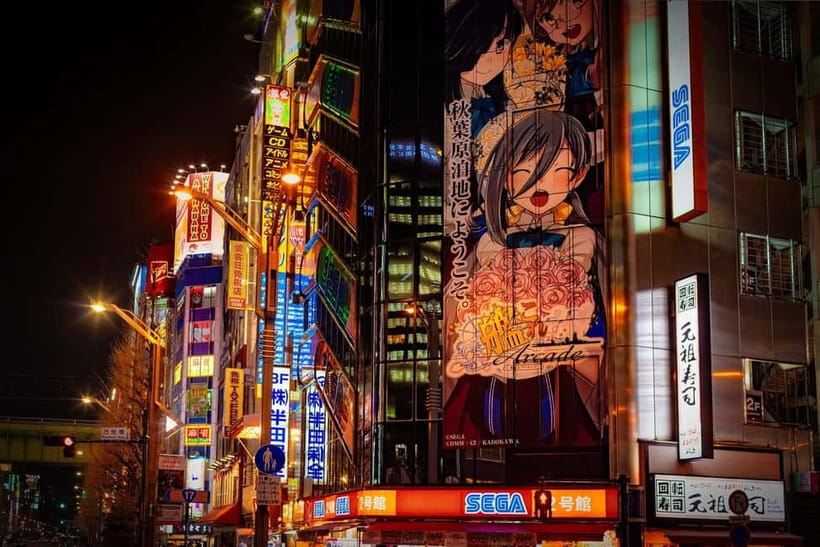
- Akihabara after dark: electronics, anime, and real browsing time
- Shibuya Crossing: the iconic photo moment without losing your bearings
- Shinjuku and Kabukichō: street lights, entertainment district energy, and a change of pace
- Karaoke in Shinjuku: what to expect from the booth time
- Price and value for $79: what you’re really paying for
- Who should book this Tokyo night tour
- Tips that make the night smoother (and more fun)
- Should you book this Tokyo night tour?
- FAQ
- Where do we meet for the Tokyo night tour?
- Is karaoke included in the price?
- What does the tour price include for transfers?
- Are snacks and drinks included?
- What language is the guide?
- Is the tour wheelchair accessible?
- What should I bring?
- Can I cancel for a full refund?
Key highlights you’ll feel during this Tokyo night tour
- Ueno Park at dusk with a relaxed start that matches the city’s evening shift
- Akihabara free time where you can wander electronics and anime streets without feeling rushed
- Shibuya Crossing photos timed for that iconic, first-see reaction
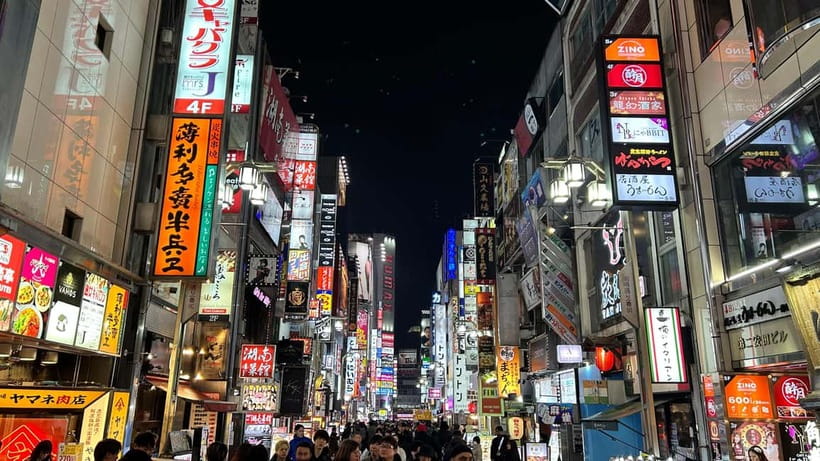
- Kabukichō stroll in Shinjuku through one of Tokyo’s most famous entertainment districts
- Karaoke in Shinjuku with entry included so you’re not scrambling to find a booth
Neon Night Loop: how this tour fits together
This isn’t a museum-style night tour. It’s a fast-moving city sampler, built around the neighborhoods that define modern Tokyo. You start in Ueno, move to Akihabara by included train ride, hit Shibuya Crossing for photos, then finish in Shinjuku/Kabukichō with karaoke.
The guide matters here. You’re working with someone bilingual in English and Spanish, and groups often comment on guides who explain without rushing and keep things friendly. Names you might hear in past groups include Ethan, Erik, Erick, Hiro, and pairs like Pastor and Oliver, depending on your departure.
Practical takeaway: you’re paying for direction and time. The route connects multiple districts in one evening, and the train tickets and karaoke entrance are handled for you, so you spend less time figuring out transit and more time doing the fun parts.
You can also read our reviews of more city tours in Tokyo


Ueno Park at dusk: cherry blossoms and an easy first step
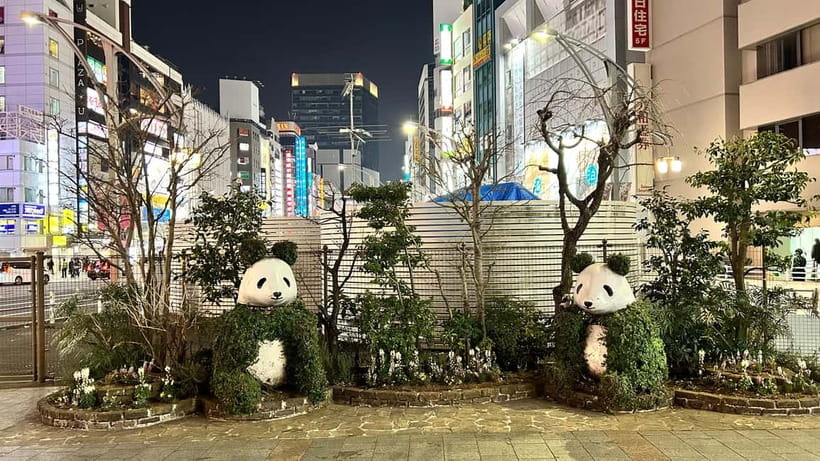
You meet your guide at Seven Eleven next to the pandas at Ueno Station (Exit C7), and you’ll want to arrive about 10 minutes early for check-in. From there, the tour begins with a leisurely walk through Ueno Park.
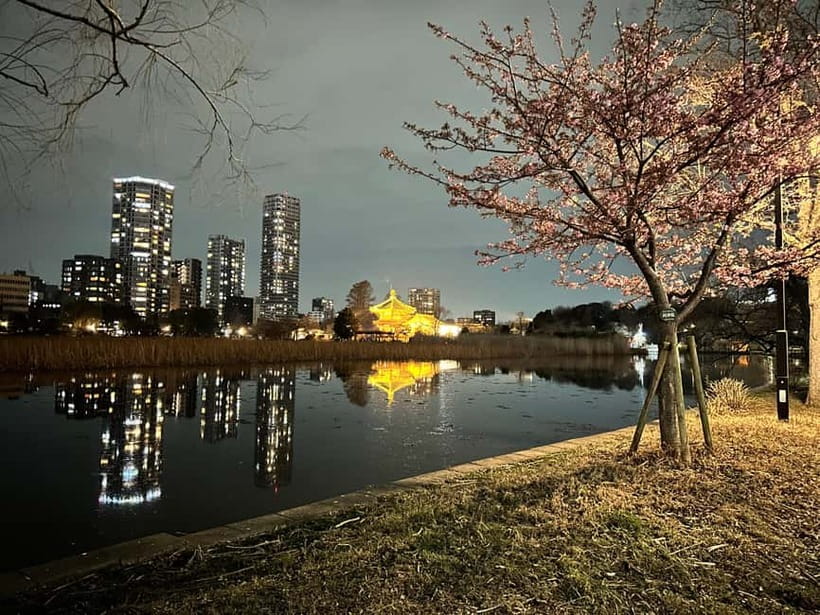
Why this opening works: Ueno Park gives you a calmer entry point before the neon hits. You get a chance to enjoy the park’s evening atmosphere, and if you’re traveling during cherry blossom season, you’ll see why Ueno is so famous at that time of year. Even outside peak bloom, the walk helps you get oriented with the area and settle into Tokyo’s night tempo.
What to watch for: your camera. The lighting shifts quickly around dusk, and a smartphone camera on a charged battery is key. Bring it out early so you don’t end up scrambling later when the group gets moving.
Akihabara after dark: electronics, anime, and real browsing time
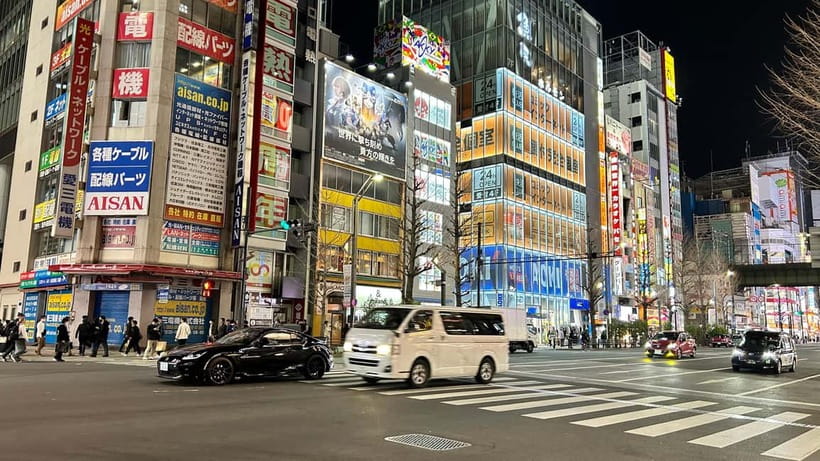
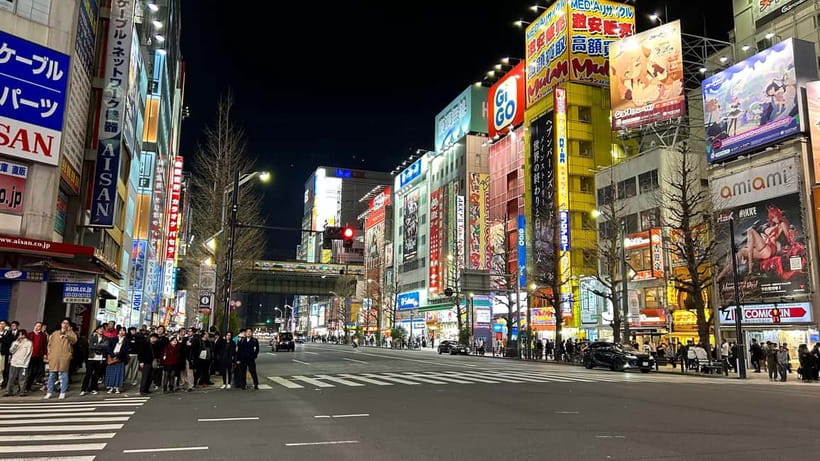
Next comes Akihabara, Tokyo’s best-known zone for electronics, video games, and anime culture. You’ll ride there on an included train transfer, and along the way you get a brief orientation to what you’re about to see.
Once you arrive, you get free time. This is the part I think most visitors will love: you can wander shop streets and themed spots without a strict “follow me only” pace. If you want to compare gadgets, browse niche anime merchandise, or just people-watch the shopfronts, this block is for you.
A few practical notes for Akihabara:
- Go in with a plan for what you want to photograph. The signage and store displays are the easiest wins.
- Expect lots of stimuli. If you get overstimulated in big shopping areas, take short breaks and step aside between bursts of foot traffic.
- If you’re shopping for souvenirs, keep your phone’s battery healthy and hold onto receipts you might need later.
This is also where guide pacing matters. The guides are described as taking their time and explaining clearly, which helps if you’re trying to understand what you’re looking at—especially in a neighborhood where the details are the whole point.
Shibuya Crossing: the iconic photo moment without losing your bearings
When the tour reaches Shibuya, you’ll see the famous Shibuya Crossing where many streams of people move at once. This is the scene most people imagine when they think Tokyo at night, and in person it’s louder, brighter, and more visual than photos can fully capture.
The tour gives you a chance to stop and take photos. That sounds simple, but it’s actually valuable. Without a guide, you can end up with a limited view if you pick a bad spot or get carried away by the crowd. Here, you’re guided to the moment and given time to shoot properly.
Photo tip that helps everywhere in Shibuya: use your phone’s 2x/3x zoom carefully and tap to focus. Night lights can bloom, so it’s often better to lock focus on signage or faces than to chase everything at once.
Also, keep your expectations realistic. This crossing is busy. If you get stressed in crowd situations, treat the stop as a quick mission: find an angle, take your photos, and then rejoin the group calmly.
Shinjuku and Kabukichō: street lights, entertainment district energy, and a change of pace
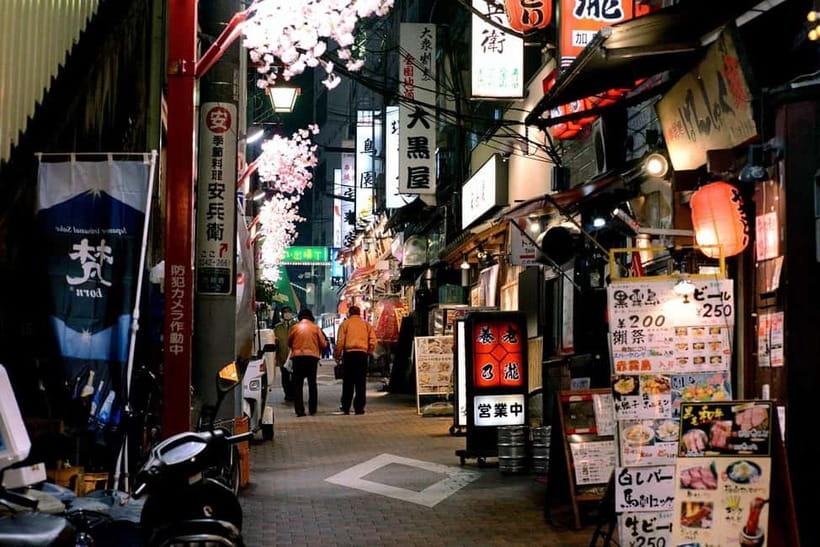
The final leg heads to Shinjuku, and specifically the Kabukichō entertainment area. You’ll do a walking tour here, moving through streets known for nightlife lighting, neon signs, and constant motion.
This shift is important. After the neon intensity of Akihabara and the landmark spectacle of Shibuya, Kabukichō feels more like an ongoing party scene—more streets, more vertical signs, and more “Tokyo at night” mood. It’s also a place where you can feel Tokyo’s different personality from one block to the next.
A practical caution: Kabukichō is not a place to wander off slowly and get lost. Stick with the guide and the group flow. If you want to take extra photos, do it quickly and then move back into the walk.
By now, you’ll likely appreciate the tour’s structure: you’ve gotten the “must-see” scenes, and the walk through Kabukichō gives you atmosphere without turning the evening into a maze.
You can also read our reviews of more evening experiences in Tokyo


Karaoke in Shinjuku: what to expect from the booth time
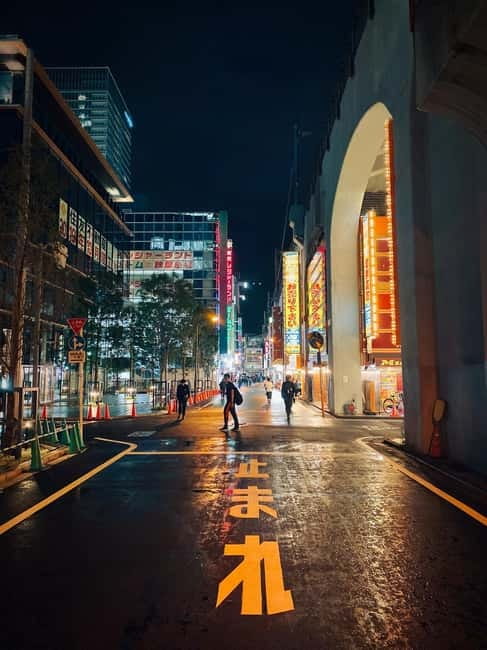
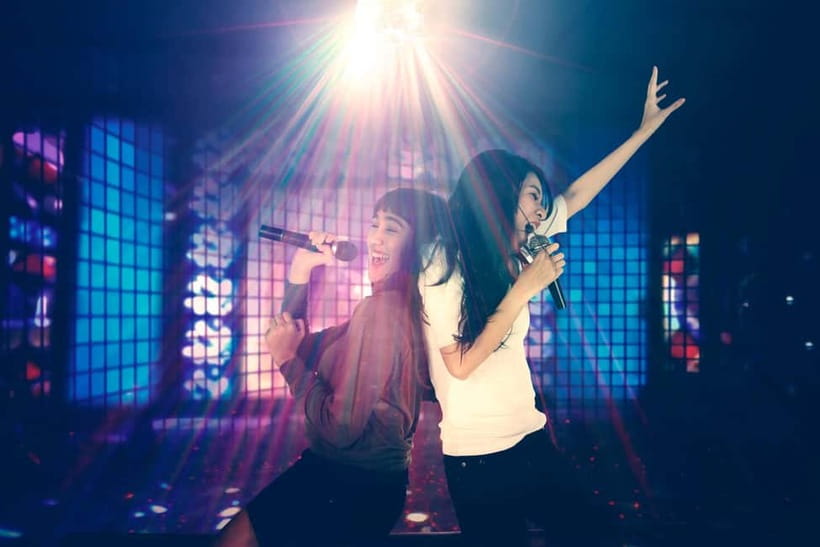
The night ends with karaoke in a Shinjuku venue, and the karaoke entrance fee is included. This is the part where Tokyo becomes personal. You’re not just looking at the city—you’re participating in it.
One past group described a karaoke setup with a private room, lights, comfy seating, and lots of song choices, with everyone jumping in by the second song. That kind of energy is exactly what makes this stop worth it. It turns a sight-focused tour into a memory you carry home.
A few things to keep in mind:
- If you don’t sing much, you can still enjoy it as a social activity. The point is the laughs and shared experience.
- Bring a charged smartphone for photos or song selection support, but be mindful of how much screen time you use once the singing starts.
- Snacks and drinks depend on your option. The tour includes snacks and drinks only if you select that option. Karaoke entry itself is included, so you’re not paying for the core experience on the spot.
If you’re traveling as a couple, karaoke can be a sweet shared moment. If you’re traveling solo, it’s one of the easiest ways to bond with the group without needing to plan anything extra.
Price and value for $79: what you’re really paying for
At $79 per person, this tour is priced for people who want a guided, connected evening. The value isn’t just the sightseeing. It’s what’s wrapped into the price:
- A bilingual guide in English and Spanish
- Train tickets included for transfers between stops
- Karaoke entrance included
- Snacks and drinks only if you choose the option
So you’re paying to avoid the time sink of figuring out how to link Ueno, Akihabara, Shibuya, and Shinjuku efficiently in one night. You also get somebody who can explain what you’re seeing and help you hit the photo moments without guesswork.
What costs extra: food and drinks are not included unless you select that add-on option. If you like to eat at your own pace in each neighborhood, you’ll still need to budget for it.
From a traveler’s perspective, this price makes the most sense if:
- You want karaoke but don’t want to spend time searching for a venue and getting there
- You’d rather let a guide handle the “how do we get there” part
- You enjoy a mix of landmarks and free time browsing
Who should book this Tokyo night tour
This is a strong match for:
- First-time Tokyo visitors who want Akihabara + Shibuya Crossing + Shinjuku karaoke in one evening
- Travelers who like a guided start but still want free time in Akihabara
- Groups who enjoy fun activities like karaoke and are okay with a night that includes photos and walking
It’s not a great match for:
- Anyone who needs wheelchair accessibility, since it’s listed as not suitable for wheelchair users
- People who dislike crowds and prefer quiet, low-footprint sightseeing
Language note: the guide is bilingual in English and Spanish, so it can feel more comfortable if you’re more confident speaking Spanish. Some groups specifically mention tours being in Spanish and guides who explain in detail without dragging things out.
Tips that make the night smoother (and more fun)
These small prep steps matter more than people think in Tokyo at night:
- Wear comfortable shoes. You’ll be walking through multiple districts, including Kabukichō.
- Charge your smartphone fully. Night photos drain batteries fast.
- Bring a camera if you use one. The Shibuya lights are made for photos.
- Keep your pace with the group. It’s easier to take photos when you’re not constantly stopping to regroup.
If you care about karaoke song choice, think in advance about a couple of songs you’d want to sing. Even if you don’t choose the first ones, having ideas helps you jump in quickly when the room gets lively.
Should you book this Tokyo night tour?
Book it if you want a structured Tokyo night that covers the big-name neighborhoods and ends with karaoke. The combination of included train rides, guided photo moments, and karaoke entry makes it a practical deal, especially if you don’t want to plan the route yourself.
Skip it if you’re expecting a quiet evening, or if you want lots of time sitting down and eating. This is a “see and do” tour, not a slow cultural stroll.
If you like neon streets, electronics and anime browsing, and a goofy, fun ending, this is one of the easier ways to turn Tokyo into an evening you’ll remember.
FAQ
Where do we meet for the Tokyo night tour?
Meet your guide at the Seven Eleven next to the pandas at Ueno Station. Use Exit C7, and look for the guide sign for Amigo Tours.
Is karaoke included in the price?
Yes. The karaoke entrance fee is included.
What does the tour price include for transfers?
Train tickets are included for all transfers between the itinerary points.
Are snacks and drinks included?
Snacks and drinks are included only if you choose the option that includes them. Food and drinks are not included otherwise.
What language is the guide?
The guide is bilingual in English and Spanish.
Is the tour wheelchair accessible?
No. The tour is not suitable for wheelchair users.
What should I bring?
Bring comfortable shoes, a camera, and a charged smartphone.
Can I cancel for a full refund?
Yes. You can cancel up to 24 hours in advance for a full refund.