REVIEW · TOKYO
Tokyo 6 hour Tour : English Speaking Driver Only, No Guide
Book on Viator →Operated by Japan Guide Agency · Bookable on Viator
Tokyo can feel like a magic trick that runs on crowds. This driver-led tour helps you plan a tight day. You choose 3 to 4 sights, then your own chauffeur shuttles you with hotel pickup and drop-off, so you spend less time figuring out trains and more time seeing Tokyo.
I especially like the freedom to shape the route. You can fit in classics like Meiji Jingu Shrine, Harajuku, or Tokyo Tower, plus a shopping stop. One thing to watch: it is driver-only, so English ability can vary and entrance details are specific for certain stops.
For a short, efficient day, the value is strongest when you already know what you want to see. If you need a licensed guide to explain every detail and translate deeply, you may feel the limits of a chauffeur service.
In This Review
- Quick hits: what makes this Tokyo 6-hour tour work
- A driver-only private tour in Tokyo: good idea or risky?
- Your 6 hours, your choices: building a smart mini-itinerary
- Hotel pickup and drop-off: why this matters more than you think
- Kappabashi Street: shop like you run a restaurant (for 30 minutes)
- Imperial Palace grounds: a big park stop, but not the interior
- Meiji Jingu Shrine: a calm reset after city energy
- Tokyo Tower: what you get from main deck access
- Harajuku and Takeshita Street: fashion energy in a short burst
- Shibuya Crossing and Hachiko: choose your moment wisely
- English expectations: how driver communication can shape your day
- Parking, tolls, and what to watch for
- Walking load: small distances can still add up
- Price and value: what $311.36 per group actually buys
- Who this tour suits best (and who should look elsewhere)
- How to get the best day out of your driver
- Should you book the Tokyo 6-hour driver-only tour?
- FAQ
- Is this tour a licensed guide experience?
- Can I enter the Imperial Palace interior?
- Does Tokyo Tower top deck access come with the tour?
- What’s included in the price?
- How big is the group, and how many people fit in the van?
- Are kids’ seats available?
- Is it easy to cancel if plans change?
Quick hits: what makes this Tokyo 6-hour tour work
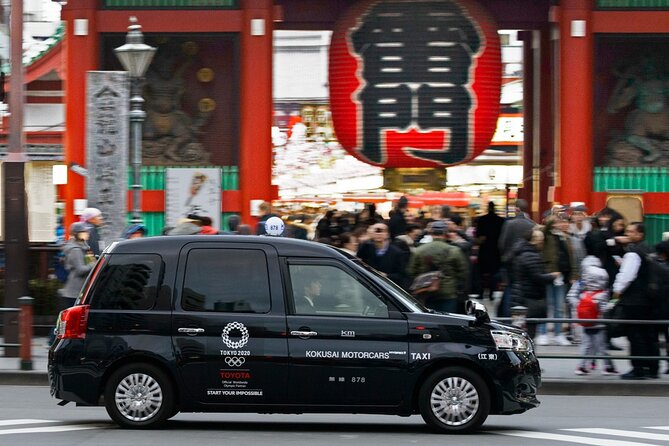
- You design the day with 3 to 4 chosen sights, rather than following a fixed bus route.
- Hotel pickup and drop-off save time, especially if your Tokyo base isn’t near a major station.
- Driver-only service means less cost than a full guide, but English may be uneven.
- Up to 8 in the vehicle can make this a smart group option, even though pricing is per group up to 5.
- Clear entry limits: Imperial Palace interior is not included; Tokyo Tower only reaches the main deck.
- Shopping + sightseeing balance is built in with stops like Kappabashi Street and Harajuku.
A driver-only private tour in Tokyo: good idea or risky?
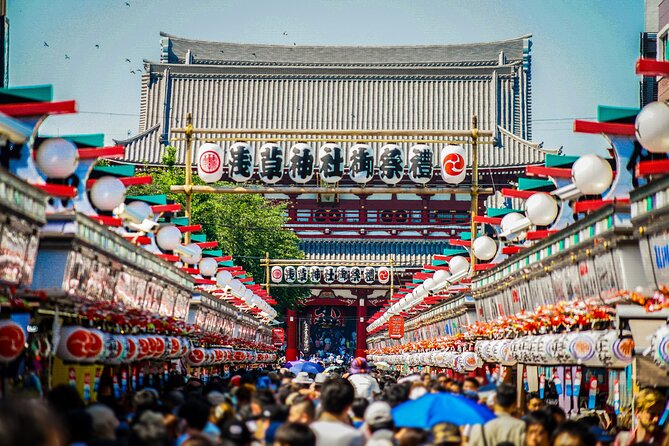
Tokyo is easy to ride, but hard to master in one day. A private vehicle solves the big problem: you can move fast between neighborhoods without constantly switching trains, backtracking, or scanning maps at street level.
The trade-off here is that you’re not hiring a licensed local guide. You have an English-speaking driver, which is great for logistics and basic context, and it can also mean you get extra help navigating. In the best cases, you’ll get more than just driving.
In past experiences, some drivers were praised for being friendly and helpful, with names like Kim showing up in standout feedback. Other reviews pointed out that English skill can be limited, so communication may require extra patience.
You can also read our reviews of more guided tours in Tokyo
Your 6 hours, your choices: building a smart mini-itinerary
This tour is designed to be flexible. You’ll meet at your hotel, then you can head to your chosen sights for the day. The schedule described typically works best as a mix of one calm nature stop, one viewpoint, one culture site, and one fun neighborhood stop.
I like thinking of it as a “greatest hits with guardrails” plan. Your driver can get you there, but you still decide what matters most to you.
A practical strategy: pick one neighborhood anchor where you’ll tolerate crowds or walking. Then use the car for the jumps between areas. That keeps your day from turning into a constant scramble.
Also note the tour aims for 3 to 4 stops. If you cram in extra walking-heavy detours, you’ll feel it fast. One review mentioned difficulty with walking in spots that required more on-foot time, which can throw off a 6-hour day even when the driver is doing their best.
Hotel pickup and drop-off: why this matters more than you think
Hotel pickup sounds small until you try to do Tokyo without it. Many key areas are close together, but transfers and entrances can still eat an hour without warning.
With pickup and drop-off included, you can start your day without figuring out which train line is fastest from your specific hotel. You also avoid the awkward moment of deciding whether it’s worth taking one more train when you already feel tired.
This setup is especially useful if your itinerary includes places that are spread across the city, like Asakusa/Ueno side shopping, Shibuya area shrines, and a Tokyo landmark viewpoint.
Kappabashi Street: shop like you run a restaurant (for 30 minutes)
The tour often starts with Kappabashi Street (Kappabashi Dogugai), a shopping lane between Ueno and Asakusa. This is where you’ll find stores selling tools and supplies used by restaurant operators—so it’s a hit if you love practical Japanese goods.
In just about 30 minutes, you can do a quick sweep: check displays, compare prices, and grab the kind of kitchenware souvenirs that feel useful rather than decorative. If you’re shopping for knives, ceramics, or service items, this is one of the most direct places to focus.
One caution: Kappabashi is a shopping street, which often means narrow aisles. If you need extra space for mobility, keep your pacing realistic for the time window.
Imperial Palace grounds: a big park stop, but not the interior
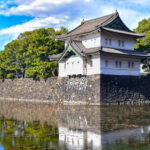
The Imperial Palace stop is about the grounds, not a full inside visit. You’ll spend around an hour, and you should expect that access to the inside of the Imperial Palace is not included.
Even without the interior, the grounds are still a major Tokyo experience because the area functions like a large park-like setting in the center of the city. It’s a nice contrast if your day started in busy shopping streets.
If your goal is photos and a calm reset, this works well. If your goal is history-focused interior access, you’ll need separate plans beyond this tour.
You can also read our reviews of more tours and experiences in Tokyo



Meiji Jingu Shrine: a calm reset after city energy
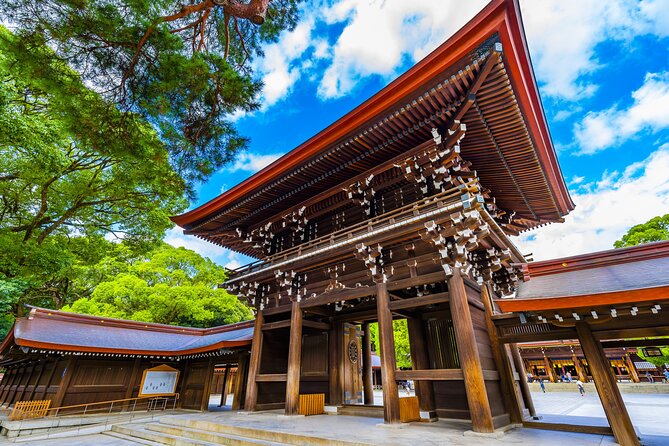
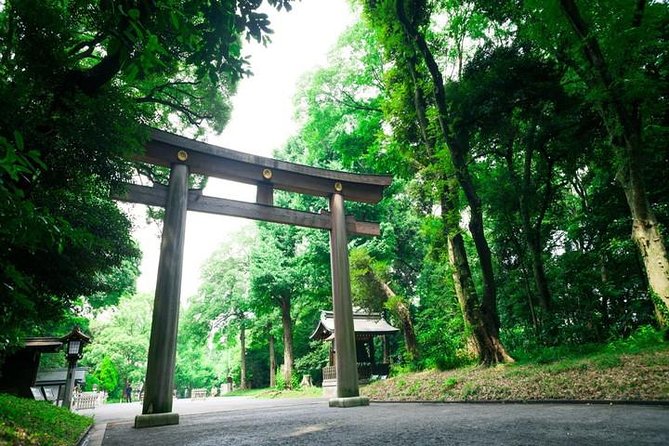
Meiji Jingu Shrine is one of those places where the city noise drops when you enter. The shrine is dedicated to the deified spirits of Emperor Meiji and his wife, Empress Shōken, and it’s known for a peaceful atmosphere.
You’ll have about 1 hour, and admission here is free. In practical terms, that’s enough time to walk the approach, pause for a moment, and see the key areas without rushing.
One helpful detail to know: the shrine does not contain the emperor’s grave. His burial is located elsewhere, so if you’re doing a “read every sign” type of visit, keep your expectations aligned with what’s actually on-site.
Tokyo Tower: what you get from main deck access
The tour includes a Tokyo Tower stop, with an important limit: you can visit up to the main deck, while the top deck is not included.
Tokyo Tower is 333 meters high and is a self-supported steel tower. For many people, main deck is enough to appreciate the height and city views, especially in a 6-hour program where time is tight.
Since you’re only going to the main deck, plan your expectations around a strong viewpoint rather than a full layered skyline experience. Also remember that viewpoint time can expand if there’s a line, so arrive with the mindset that this is your “anchor” stop.
Harajuku and Takeshita Street: fashion energy in a short burst
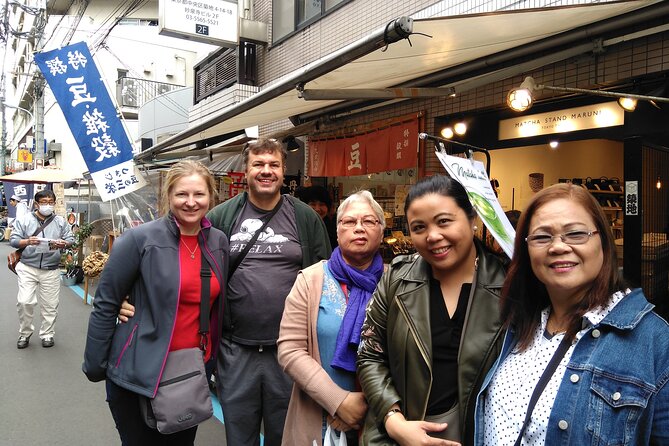
Next up is Harajuku, often timed around Takeshita Street for roughly 30 minutes, with free admission. This is the area around Harajuku Station, between Shinjuku and Shibuya, and it’s a center for youth fashion and trend culture.
A short slot makes sense. The street is compact, and it can get crowded quickly. In 30 minutes, you can still see the range of styles, pop into a few shops, and find a souvenir or two without turning it into a half-day commitment.
If you hate crowds, you may want to keep your activity to the edges and treat it as a quick visual stop. If you love street fashion, use the time to browse before you feel hungry or decide to call it.
Shibuya Crossing and Hachiko: choose your moment wisely
Many versions of this day include a stop for Shibuya Crossing, where locals call it the Shibuya scramble. It’s one of the busiest crossings in the world, and it also connects to the statue of Hachiko the dog.
This is a high-energy photo and people-watching stop. If you’re sensitive to crowd crush or long waits, pick a plan that gives you a defined target: see the crossing, find the Hachiko statue area, and then move on.
In a 6-hour tour, Shibuya is best as a “see it, enjoy it, don’t overstay it” moment. It’s not the place to get lost in random side streets when you only have a few hours total.
English expectations: how driver communication can shape your day
Because this is English-speaking driver only, your experience can vary based on the driver’s comfort level. Some drivers are warm and communicative, and you’ll get more than just point A to point B. One standout example was a driver named Kim, praised for friendliness, being informative, and making the day feel easy.
Other feedback described English as barely functional, turning navigation and decision-making into a struggle. If you’re the type who wants deep explanations—why a shrine looks the way it does, what each neighborhood represents—you’ll likely want to add a licensed guide or supplement with apps and written materials.
Here’s how to make it smoother:
- Share your must-sees in advance, in a short list.
- Have your “walk tolerance” clearly stated so the driver can adjust where needed.
- If you have questions, expect simpler answers and follow up with your own reading.
Parking, tolls, and what to watch for
In most cases, you’ll pay for what’s expected. But one review described a situation where the driver charged parking fees and tolls, and later reimbursement happened through the booking platform.
That doesn’t mean it will happen to you. It does mean you should stay alert: if you see an unexpected charge during the day, ask what it covers and keep any receipt or proof of payment.
Also consider that Tokyo traffic can create extra decisions in real time. A good driver will still keep the schedule moving. A less communicative driver might handle small logistics in ways that feel confusing later. Staying calm and clarifying helps.
Walking load: small distances can still add up
This tour is not only “driving,” it’s also about how long you’re on foot at each stop. The itinerary mix includes shrine walks, shopping lanes, palace grounds, and neighborhood crossings.
The time buffers are relatively generous for some stops (like 1 hour at Meiji Jingu), and shorter for others (like 30 minutes at Takeshita and Kappabashi). But your day can still feel busy if you add stairs, crowds, or long transfers on foot between photo points.
If you or your group has mobility limits, tell the driver during pickup. You’re better off aiming for fewer “deep walks” and more “quick highlights.”
Price and value: what $311.36 per group actually buys
At $311.36 per group (up to 5) for about 6 hours, you’re paying for privacy, flexibility, and a vehicle with an English-speaking driver. That cost can look high until you compare it to the alternative: multiple taxis for cross-city jumps, plus time wasted planning routes.
This is where the value gets interesting:
- If you’re traveling as a small group, private transport can cost less than you’d think once you price taxis for each leg.
- The tour can replace a long day of navigation stress, especially if you want to visit areas like Harajuku and Shibuya plus a shrine and palace grounds in one run.
- You’re not paying for a licensed guide, so you’re buying logistics and driving rather than full-on narration.
One more value point: you get to choose your 3 to 4 sights. That can help you avoid paying for experiences you’d skip anyway.
Who this tour suits best (and who should look elsewhere)
This tour fits best if you:
- Want a private, efficient day and you already have a shortlist of sights.
- Prefer control over pacing rather than listening to a structured group program.
- Are comfortable using a phone for extra details if the driver’s English isn’t perfect.
It may be less ideal if you:
- Need a licensed local guide for historical depth and constant translation.
- Have a strict agenda with very specific access needs (like Imperial Palace interior or Tokyo Tower top deck), since those parts are not included.
- Expect a fully guided museum-style experience at every stop.
How to get the best day out of your driver
Your biggest “hack” is communication before you move. Go into the pickup with a clear plan and let the driver know what you care about most.
It also helps to set a boundary around lunch. One review described a driver joining for lunch without being invited and trying to steer the group to a specific sushi place. That kind of situation can be uncomfortable, even if the driver means well. If you want to stay in control, confirm your lunch plan up front.
Finally, keep a flexible mindset. Tokyo changes fast—walk times, crowds, and transit friction happen. A good driver can help adjust, but you’ll get better results when you’re ready to swap details without panicking.
Should you book the Tokyo 6-hour driver-only tour?
Book it if you want a private day with hotel pickup and you’re happy to let your driver handle the driving while you steer the highlights. It’s a solid way to pack in major sights across different neighborhoods without turning the day into a logistics project.
Think twice if your top priority is flawless English explanations or fully guided admissions. The tour is built for flexibility, and that flexibility can depend on the driver’s communication comfort.
If you’re traveling with a small group, this format can feel like a smart shortcut through Tokyo. If you want maximum interpretation at every stop, consider pairing it with an actual licensed guide for at least one key experience.
FAQ
Is this tour a licensed guide experience?
No. This is English-speaking driver service. A licensed local English-speaking guide is not included.
Can I enter the Imperial Palace interior?
No. You can explore the Imperial Palace area, but access to the inside is not included.
Does Tokyo Tower top deck access come with the tour?
No. The tour includes access up to the main deck, while the top deck is not included.
What’s included in the price?
You get an English-speaking driver, a private vehicle, and a customizable tour based on 3 to 4 sites you choose from the available options. Entrance fees, lunch, and personal expenses are not included.
How big is the group, and how many people fit in the van?
The tour price is per group up to 5, and the vehicle can accommodate groups of up to eight people.
Are kids’ seats available?
There are a limited number of car seats and booster seats. Rear-facing car seats are not available, and you must contact the provider directly if you need them.
Is it easy to cancel if plans change?
Yes. Free cancellation is offered up to 24 hours before the experience’s start time for a full refund.
If you’d like, tell me your hotel neighborhood and which 3–4 sights you’re considering, and I’ll help you build a realistic 6-hour route with the least stress and walking.