REVIEW · TOKYO
Small-Group Architecture Tour in Ginza, Tokyo
Book on Viator →Operated by Showcase Tokyo Architecture Tour · Bookable on Viator
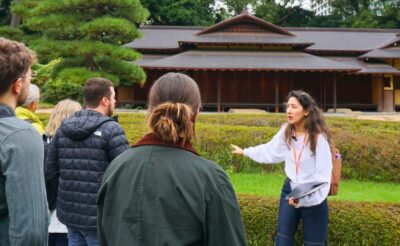
Ginza looks different on foot. This small-group architecture tour lets you slow down in Tokyo’s glitzy Ginza, with regular photo stops and an on-the-ground guide who explains what you’re actually looking at. I especially liked the mix of major landmarks and brand-name architecture, plus the way the guide ties design choices to Japan’s past, including the Shogun era and lessons learned from natural disasters.
Two guide-led highlights really stuck with me: the chance to go inside iconic places like Tsukiji Hongwanji Temple and Kabukiza Theater, and the smooth pacing that keeps the walking manageable for a tour length of about 3 hours 30 minutes. One thing to consider: this is a walking-focused experience with moderate fitness needs, so it’s best if you’re comfortable being on your feet for the full route.
In This Review
- Key things you’ll notice on this Ginza architecture tour
- A Ginza walking tour built for seeing details
- What you get for the price: inside stops, expert guiding, and less rushing
- Start at Tsukiji, end at Ginza 4-chome: how the route works
- The walking time: how much effort you should plan for
- Stop 1 in Ginza: orient yourself before the inside moments
- Stop 2, Tsukiji Hongwanji Temple: architecture with a calm center
- Stop 3, Kabukiza Theater: performance architecture you can feel
- Stop 4, Nicolas G. Hayek Center: modern design with a strong identity
- Stop 5, Toyoiwa Inari Shrine: small stop, clear architectural mood
- Stop 6, Ginza Maison Hermes Le Forum: luxury architecture you can step into
- Stop 7, Mikimoto Boutique Ginza 2-chome: a flex stop if you have time
- Stop 8, UNIQLO Tokyo: everyday architecture in a premium district
- Stop 9, Mikimoto Ginza 4-chome Honten: view it, compare it, learn
- Stop 10, Wako Ginza: a classic Ginza landmark from the street
- Stop 11, Okuno Building: wrap up with a final indoor look
- The guides: what you’ll gain from Hal and Taka’s style
- The drink pause: a small break that keeps the day enjoyable
- Who this tour fits best
- Practical tips before you go
- Should you book this Ginza small-group architecture tour?
- FAQ
- How long is the Ginza small-group architecture tour?
- What is the group size?
- Where does the tour start?
- Where does the tour finish?
- What time does the tour begin?
- Is hotel pickup included?
- Are admission tickets included for the stops?
- Does the tour include time to go inside buildings?
- Is there any walking involved?
- What if weather is poor?
Key things you’ll notice on this Ginza architecture tour
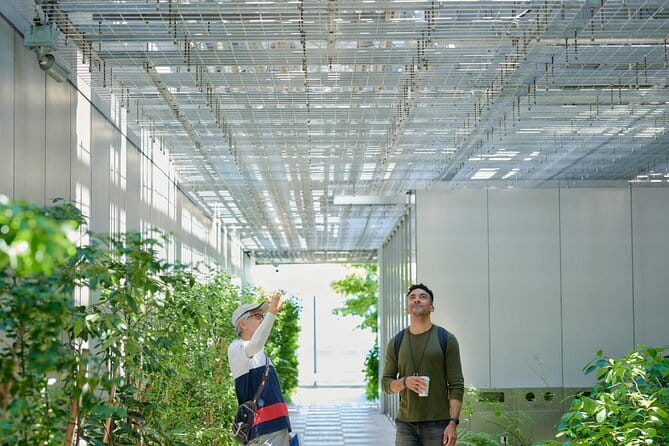
- Small group (max 6): more time to ask questions and get real answers, not one-way explanations
- Photo-first pacing: you stop often, so you can actually frame buildings instead of sprinting between corners
- Inside access at multiple stops: temples, theatres, and more brand and design spaces are part of the plan
- A licensed local guide: guides like Hal and Taka bring detailed architectural and planning context to what looks flashy from outside
- A built-in comfort break: you get a cozy drink pause along the way without losing the thread of the tour
A Ginza walking tour built for seeing details
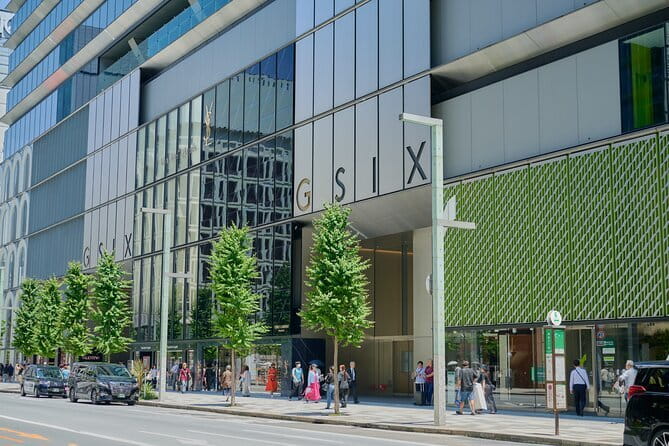
Ginza can feel like one long, polished runway. This tour changes that by treating the streets like an architecture gallery where you’re meant to pause, look up, and notice material, shape, and street-level design choices.
For me, the value is how the guide helps you “read” what you’re seeing. Ginza is famous for high-end commercial projects, including eye-catching luxury buildings like the Louis Vuitton Namiki-dori area, but you’ll also be guided toward the quieter logic behind the district’s look.
I also like that the experience is guided as a conversation. Instead of marching past sights, you’ll stop regularly and ask the guide for more local architectural recommendations while you’re already in the right neighborhood.
You can also read our reviews of more tours and experiences in Tokyo.



What you get for the price: inside stops, expert guiding, and less rushing
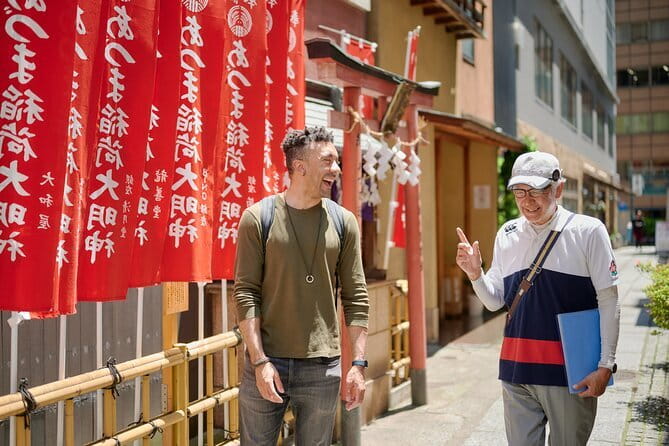
At $84.70 per person for about 3 hours 30 minutes, the cost makes sense when you look at what’s actually included. Many city walks are just a route plus commentary, but here you get a licensed local tour guide, a drink pause, and multiple moments where you go inside buildings to see details up close.
Another hidden value point: admission for the listed stops is free, so you’re not juggling extra ticket costs mid-walk. That matters in Tokyo, where convenience can sometimes come with a fee.
It’s also a tour that books steadily. On average, it’s reserved about 31 days ahead, which is a good sign if you’re trying to line it up with your Tokyo days without last-minute stress.
Start at Tsukiji, end at Ginza 4-chome: how the route works
You begin near Tsukiji Station at Tsukiji 3-chome, close to Exit 1. That’s a smart setup because it gets you away from the immediate Ginza crowds while you warm up with context and an easy start.
The finish is at the Ginza 4-chome intersection, in front of Mitsukoshi. You’ll land in one of Ginza’s main cross-street hubs, which makes it easier to continue your day with shopping, food, or quick transit.
No hotel pickup or drop-off is included, so plan on using the public transportation you’ll already be using in Tokyo. The tour is also clearly designed for good weather, so if rain hits hard you may need to switch dates.
The walking time: how much effort you should plan for
This experience totals about 40 minutes of walking between site to site within the overall 3.5-hour window. That doesn’t mean it’s a long, slow stroll all the time, but it does suggest a pace built around short blocks, frequent stops, and frequent transitions.
The operator notes you should have a moderate fitness level. In practical terms, you should be ready for a few short in-and-out moments and some sidewalk time while staying close together as a group of up to 6.
Stop 1 in Ginza: orient yourself before the inside moments
You start with Ginza itself, using the first stretch as orientation. This matters because once you’ve got a few visual landmarks in your head, every later stop feels more meaningful.
I like that the tour emphasizes photos here. It’s not just for fun—it’s how you learn. When you take a moment to frame a building façade or a street view, you start noticing patterns the rest of the route highlights later.






Stop 2, Tsukiji Hongwanji Temple: architecture with a calm center
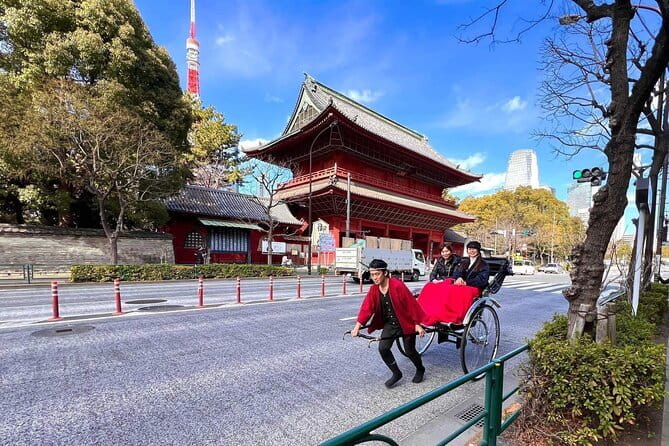
You head to Tsukiji Hongwanji Temple and go inside. Even if you’re not a history buff, temple architecture teaches you a lot about how Japanese design handles space—how an entry feels different from the street, and how the building manages movement.
This stop is short, around 10 minutes, but it’s enough time to shift your perspective from Ginza’s luxury signals to something slower and more grounded. I found that contrast helpful. It prevents the rest of the tour from feeling like one long run of upscale storefronts.
Stop 3, Kabukiza Theater: performance architecture you can feel
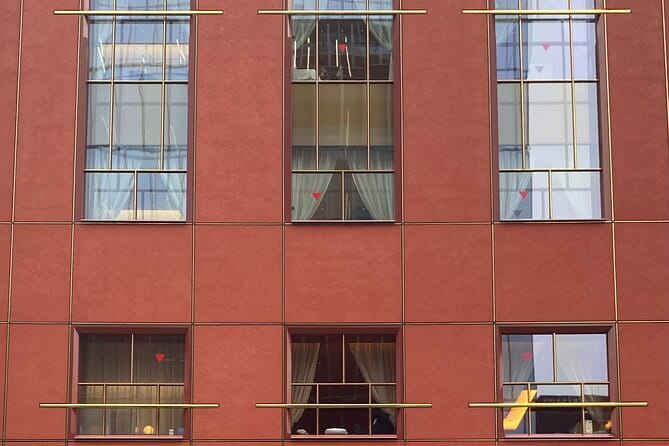
Next up is Kabukiza Theater, where you’ll go inside for about 20 minutes. A theatre is architecture with a job: it shapes sightlines, sound, and crowd flow. Even without getting too technical, you can usually spot the logic quickly—how the interior supports watching.
This is the kind of stop that changes your listening. The guide can connect what you’re seeing to the wider story of how past periods shaped today’s visual language. If you’re the type who likes how buildings work, not just how they look, you’ll probably enjoy this one.
Stop 4, Nicolas G. Hayek Center: modern design with a strong identity
After that, you visit the Nicolas G. Hayek Center for about 15 minutes, going inside. This is a good counterpoint to older forms you may have just seen, because it shows how modern architecture and branding can combine into a recognizable, built identity.
In my experience with architecture tours, this is often the turning point where the tour stops being about sightseeing and starts being about design thinking. The guide’s technical bent becomes more obvious here, especially with guides like Taka, who has a background tied to urban planning and architecture.
Stop 5, Toyoiwa Inari Shrine: small stop, clear architectural mood
You then spend about 5 minutes at Toyoiwa Inari Shrine and go enjoy its features. Short stops are easy to underestimate, but shrines often work like a visual reset: they’re compact, symbolic, and usually designed to feel intimate even in dense neighborhoods.
This is a quick moment in the day, but it helps you keep your attention sharp on structure and detail, not just big-name buildings.
Stop 6, Ginza Maison Hermes Le Forum: luxury architecture you can step into
At Ginza Maison Hermes Le Forum, you go inside for around 15 minutes. Luxury architecture tends to make bold choices: entrances, materials, and lighting are often designed to guide your movement and attention.
What I like about including a high-end brand stop on an architecture tour is that it gives you permission to analyze. You’re not just shopping; you’re studying how a building communicates value, comfort, and identity.
If you’re curious, ask your guide what they notice in the design language. Guides like Hal tend to share technical insight about why certain projects become instantly recognizable.
Stop 7, Mikimoto Boutique Ginza 2-chome: a flex stop if you have time
You’ll also have a stop at Mikimoto Boutique Ginza 2-chome for about 5 minutes, and you’ll go inside if there’s time. That conditional timing is useful because it helps the group stay on pace without cutting the most important parts.
I treat these “if time” stops as bonus time. They’re short enough that you’ll still see something fresh, but not long enough to risk rushing the rest of the route.
Stop 8, UNIQLO Tokyo: everyday architecture in a premium district
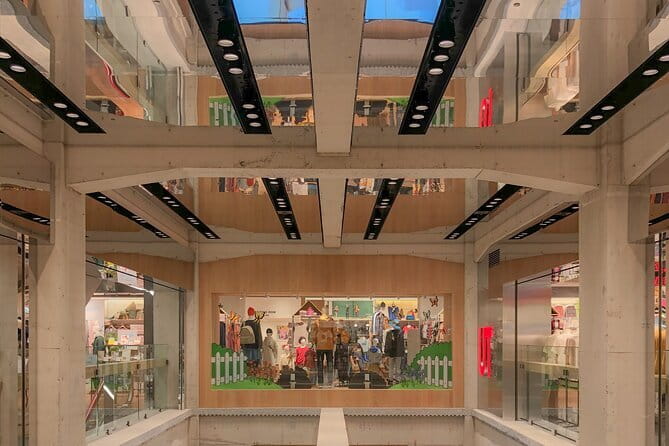
You view UNIQLO Tokyo from the outside for about 10 minutes. This is a smart choice, because it shows you that Ginza isn’t only glass towers and luxury façades—it’s also where major everyday retail meets a high-prestige setting.
Even from outside, your guide can help you see how storefront scale, signage, and entrance layout shape how the building performs on the street.
Stop 9, Mikimoto Ginza 4-chome Honten: view it, compare it, learn
Another Mikimoto stop follows: Mikimoto Ginza 4-chome Honten, viewed from outside for around 5 minutes. Seeing it from a distance (instead of just stepping in) lets you focus on façade design and street-level rhythm.
I liked the comparison angle. When you’ve already seen other luxury brand spaces, the exterior view becomes more than a snapshot—it becomes a way to compare how different designers handle similar goals.
Stop 10, Wako Ginza: a classic Ginza landmark from the street
You’ll view Wako Ginza from outside for about 10 minutes. This is a traditional Ginza anchor, and it’s useful to have a landmark like this near the end of the route.
By then, you’re not just asking what it looks like. You’re more likely to ask why this particular silhouette, frontage, or presence fits the district. That’s the real payoff of a guided architecture walk.
Stop 11, Okuno Building: wrap up with a final indoor look
Finally, you go to the Okuno Building for about 10 minutes and go inside. Ending with an indoor stop is a nice way to finish because you get to close the loop: street view to interior feel, and back again.
This last stretch is also when your guide’s storytelling on architecture shaped by eras and disasters often feels most tangible. You start seeing how rebuilding, adaptation, and design decisions ripple forward over time.
The guides: what you’ll gain from Hal and Taka’s style
The biggest reason this tour earns strong scores is the guidance quality. The guides—people like Hal and Taka—bring a technical mindset without turning the walk into a lecture.
Hal’s strength seems to be weaving explanations that make each project feel intentionally designed, not just randomly famous. Taka’s background in urban planning and architecture shows in how he connects form to function and explains why specific modern buildings in Ginza feel iconic.
Either way, you’ll feel comfortable asking questions. That’s one reason the tour caps at 6 travelers. You don’t get lost in a crowd.
The drink pause: a small break that keeps the day enjoyable
You also get a cozy pause with drinks along the way. This isn’t just a perk. It’s a pacing tool that helps you recharge before the next cluster of inside stops.
In a tour like this, you’ll be looking at details and absorbing context. That small reset makes it easier to stay engaged instead of mentally checking out halfway through.
Who this tour fits best
This is a strong choice if you love architecture but don’t want to spend hours researching alone. It’s also ideal if you like contrast: luxury brand buildings, public-cultural spaces like theatres, and religious architecture all in one route.
If you’re traveling with friends who only half care about architecture, this tour can still work because it mixes recognizably famous names with real design discussion. It’s not just theory. It’s about what you can see and why it matters.
Practical tips before you go
Wear shoes you trust. You’ll have short stops and indoor moments, but it’s still a walking day in a dense area.
Bring your camera or phone ready for photo-first stops. The route is paced so you can take pictures without turning it into a full-time photo shoot.
If you’re sensitive to crowds, consider arriving a little early to the meeting point near Tsukiji. The tour starts at 10:00 am, and you’ll want a relaxed start.
If you want to maximize value, have two or three questions ready before the tour begins—about what you’re seeing on façades, why certain designs feel so “Ginza,” or how past eras influenced modern-looking architecture.
Should you book this Ginza small-group architecture tour?
Book it if you want a guided walk that actually helps you see Ginza, not just pass through it. The combination of inside access, free admissions for stops, frequent photo pauses, and a small group (max 6) makes it feel like a hands-on architecture lesson.
Skip it only if you hate walking or want a long, detailed museum-style itinerary. This tour is compact and paced for visual learning, so it won’t feel like a slow, sit-down deep study.
If your plan includes time for shopping afterward, the finish near Mitsukoshi and Ginza 4-chome is a convenient landing spot. It’s an efficient way to spend a half-day while still leaving room to explore on your own.
FAQ
How long is the Ginza small-group architecture tour?
It lasts about 3 hours 30 minutes.
What is the group size?
The maximum group size is 6 travelers.
Where does the tour start?
It starts at the Tsukiji meeting place near Tsukiji Station, Exit 1.
Where does the tour finish?
It finishes at the Ginza 4-chome intersection, in front of Mitsukoshi department store.
What time does the tour begin?
The start time is 10:00 am.
Is hotel pickup included?
No, hotel pickup and drop-off are not included.
Are admission tickets included for the stops?
Yes. Admission ticket is listed as free for the stops during the tour.
Does the tour include time to go inside buildings?
Yes. Several stops include going inside, including Tsukiji Hongwanji Temple, Kabukiza Theater, Nicolas G. Hayek Center, and other listed locations.
Is there any walking involved?
Yes. The total walking between sites is listed as 40 minutes, and the tour requires moderate physical fitness.
What if weather is poor?
This experience requires good weather. If it’s canceled due to poor weather, you’ll be offered a different date or a full refund.