REVIEW · TOKYO
Privately visit local home for relax tea ceremony &music, Tokyo
Book on Viator →Operated by 和 WA Japan at Home · Bookable on Viator
Tea, music, and zero formality. This private Tokyo-area visit pairs a relaxed matcha tea ceremony with hands-on time with the koto, all in a real home near Shin-Urayasu Station. I love how informal it feels: Noriko welcomes you warmly, and you can ask questions without the usual stiff etiquette anxiety.
My second favorite is that you don’t just watch. You help prepare your own bowl of matcha, then you get a turn after Noriko plays koto pieces. The only drawback to plan around is time: it’s about 2 hours, and the optional yukata adds extra minutes for dressing and photos.
In This Review
- Key things I’d mark on your mental map
- Entering Noriko’s home near Shin-Urayasu Station
- Matcha tea ceremony: calm rules, clear steps
- Koto music: listen closely, then try playing a melody
- Optional yukata in a home setting: photos and extra time
- What you’re really paying for: private time plus hands-on culture
- Getting there without stress: Tokyo Station to Shin-Urayasu
- Who this experience suits best (and who might want something else)
- Should you book this tea and koto home visit?
- FAQ
- How long is the private tea ceremony and koto experience?
- Where does the experience start?
- Is this a private experience?
- What happens during the tea ceremony?
- Do I get to try playing the koto?
- Can I add a yukata experience, and what does it cost?
- How does the yukata affect the timing?
- Is the cancellation refundable?
Key things I’d mark on your mental map
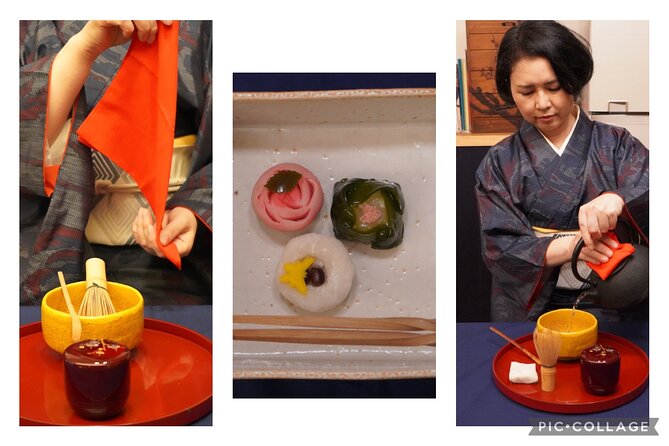
- Noriko meets you at Shin-Urayasu Station (JE08), about 20 minutes from Tokyo Station, then you take a short walk
- A hands-on tea ceremony where you make the second bowl yourself
- Tea comes with sweets, including two small ones plus a seasonal sweet
- Live koto, then you try playing a melody (after Noriko performs two pieces)
- Optional cotton yukata for 3,500 yen, with dressing time and simple hair for women
- Private group time in a home setting, not a busy showroom
Entering Noriko’s home near Shin-Urayasu Station
This is the kind of experience that starts before you even sit down. Noriko greets you at Shin-Urayasu Station (JE08), which is about 20 minutes from Tokyo Station, and then it’s a short walk to her place—think a few minutes on foot, not a long trek. That matters because you arrive relaxed, not flustered. If you’re building a Tokyo day, this location is practical: you get a local feel without sacrificing transit ease.
Once you’re inside, the tone is calm and welcoming. There’s an important difference between a “culture show” and a home visit like this. You’re not competing for space. You’re not trying to decipher what the guide is doing while a crowd moves around you. Instead, Noriko sets the pace, and the whole thing feels like a conversation plus a couple of hands-on activities.
Also, because it’s private, the questions you’re curious about can actually get answers. If you wonder why tea rituals look the way they do, how koto music fits into everyday Japanese culture, or what things you see on TV are based on real life, this format gives you room to ask.
You can also read our reviews of more tours and experiences in Tokyo.



Matcha tea ceremony: calm rules, clear steps
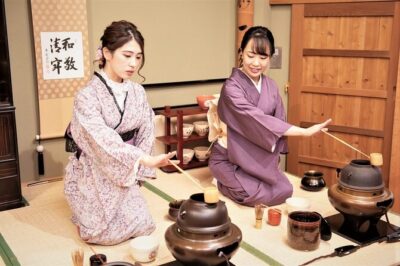
The tea ceremony part is structured enough that you’ll feel guided, but relaxed enough that it doesn’t feel like you’re taking a test. Noriko starts with a bit of context—she shares the history of tea ceremony and what you’re about to experience—then she prepares the first bowl of matcha.
Here’s what I like about that order. You get a model bowl first, so when it’s your turn, you’re not guessing. Then you make the second bowl yourself, step by step. That hands-on moment is usually where the meaning clicks. Matcha isn’t just a drink; you feel the process—how the ritual slows things down and how attention becomes part of the flavor.
With your tea, you’ll also get sweets. You’ll have two small sweets plus one seasonal sweet. That’s a small detail that helps the experience land. You taste something timed to the season, then you connect that to why Japanese hospitality often mixes beauty, timing, and comfort instead of going for big spectacle.
One more thing: the experience is described as having no strict rules. That’s a big deal if you’re the kind of person who worries about doing things “wrong.” In this setting, the tone is warm and forgiving, so you can focus on learning rather than performing.
Planning thought: you’ll likely finish tea feeling pleasantly slowed down—good if you’re pairing this with another nearby activity later, but not ideal if you’re trying to cram it between high-energy plans.
Koto music: listen closely, then try playing a melody
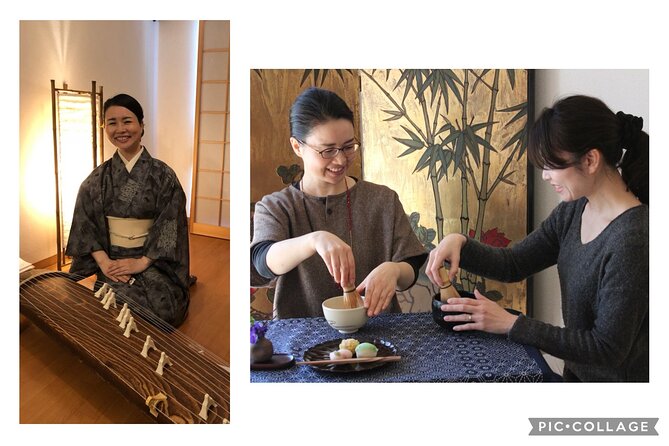
After tea, the koto takes over. This is where the evening-or-evening-adjacent quiet becomes something more playful. Noriko performs two pieces for you first. Listening comes first because koto music is different from many Western instruments. It’s string music, but it behaves like something more conversational—light touches, clear lines, and a sound that sits right at the center of the room.
Then it’s your turn. You may be surprised how quickly you can play a melody. The point here isn’t turning you into a koto virtuoso in 20 minutes. It’s more practical and satisfying: you learn the basic idea of producing a sound and carrying a simple tune, with Noriko guiding you so you actually succeed.
I love this teaching style for visitors. If you only watch, you’ll enjoy the music but keep wondering what you’re missing. If you only try without context, it can feel random. Here you get both: two performed pieces to understand the sound, then a guided try so you leave with something tangible in your hands (even if it’s a short melody).
If you enjoy music, this part alone is worth the visit. If you’re not a music person, it still works because you’re actively participating. It turns cultural learning into a lived memory.
Optional yukata in a home setting: photos and extra time
Want the full traditional look? You can add an optional yukata (cotton kimono-style) experience for 3,500 yen. You request it when booking, because it extends the overall time.
The dressing timeline is clearly set: it takes about 10 minutes for men, and 20 to 30 minutes for women (including selecting the yukata). Women also receive a simple hairstyle. After dressing, Noriko helps you take memorable photos. This is the part that often makes visitors happiest—not because you get “a costume,” but because you get a quiet, personal photo moment in a real local setting.
A practical note: the yukata option extends the experience time. So if you’re working with train schedules or a tight dinner reservation, build in slack. Yukata is fun, but it’s also a small production.
If you’re on the fence, consider this rule of thumb: if you want photos that feel like part of the day (not a quick stop), the yukata helps. If you just want the tea and koto with minimal fuss, skip it and keep the pacing simple.
What you’re really paying for: private time plus hands-on culture
At $81 per person for about 2 hours, this isn’t priced like a big group museum ticket. It’s priced like something more personal: a private host in a home, with multiple activities built in.
Here’s the value breakdown that matters:
- You get a guided matcha tea ceremony plus step-by-step instruction to make your own bowl
- You get live koto performance plus time to try the instrument yourself
- You get sweets with your tea, including a seasonal component
- You can add the yukata experience and photos if you want the extra cultural styling
- You’re not competing with strangers in a staged room; it’s just your group
There’s also a practical benefit: group discounts exist, so if you’re coming with friends or family, the “per person” value can improve. And the tour offers a mobile ticket, which is one less thing to manage.
One more factor: this is booked about 20 days in advance on average. That doesn’t mean it’s hard to get, but it does mean popular time slots can fill. If you’re planning around peak days, book sooner rather than later.





Getting there without stress: Tokyo Station to Shin-Urayasu
For many Tokyo visitors, the biggest worry with “near Tokyo” experiences is whether it’s a pain to reach. Here, the route is simple. You start at Shin-Urayasu Station (JE08), which is about 20 minutes from Tokyo Station. Then you take a short walk—roughly a few minutes—to reach Noriko’s home.
This is ideal if you’re staying in central Tokyo or you want to do something culturally focused without spending half your day on transfers. You’re also back where you started at the end of the experience, so you’re not stranded across town.
If you’re the type who likes to arrive early, you’ll be fine. The meeting point is straightforward, and the walk is short. Wear comfortable shoes because you’ll be on your feet for the walk and the door-to-door flow of a home visit.
Who this experience suits best (and who might want something else)
This works especially well if you want an authentic Tokyo-area taste of Japanese culture without the pressure of a formal class. It fits:
- Couples who want a calmer, more personal activity
- Small groups who want to talk and ask questions (private setting helps)
- Music lovers who like learning by trying, not just listening
- Visitors who want a tea ceremony that feels welcoming rather than strict
It may feel less ideal if you’re the kind of person who wants action packed sightseeing. This is not a “see 20 things” day. It’s slower, focused, and home-based. If your idea of travel is constant motion, you might find it too quiet. But if you want a real cultural moment, that quiet is the point.
Also, if you’re strongly into planning from start to finish, you’ll appreciate the clear structure: welcome, tea history and ceremony, tea making, sweets, koto performance, koto try, optional yukata and photos.
Should you book this tea and koto home visit?
I’d book it if you want a private, hands-on cultural experience near Tokyo Station with a friendly host named Noriko. The matcha ceremony isn’t just a demo—you make the second bowl. And the koto portion isn’t just background music—you get a chance to play a melody after hearing two pieces.
Choose a different option only if you want big-city spectacle or you’re allergic to anything that runs at a slower, more personal pace. Otherwise, this hits a sweet spot: it’s practical to get to, easy to fit into a day, and it gives you memories you can’t get from a standard ticketed stop.
FAQ
How long is the private tea ceremony and koto experience?
It runs about 2 hours.
Where does the experience start?
You meet at Shin-Urayasu Station (JE08). The exact start point is listed near 1 Chome-1 Irifune, Urayasu, Chiba 279-0012, Japan.
Is this a private experience?
Yes. It’s private, meaning only your group participates.
What happens during the tea ceremony?
You’ll get a relaxed tea ceremony with some history from Noriko. She prepares the first bowl of matcha, then you make the second bowl yourself, with sweets served alongside your tea.
Do I get to try playing the koto?
Yes. Noriko performs two koto pieces, and then you get a chance to try playing a melody.
Can I add a yukata experience, and what does it cost?
Yes. The optional yukata (cotton kimono) costs 3,500 yen. You can pay with cash, card, or PayPal.
How does the yukata affect the timing?
It extends the experience time because it includes dressing time (about 10 minutes for men and 20–30 minutes for women including selection) and, for women, a simple hairstyle. Photos are included afterward.
Is the cancellation refundable?
Yes. You can cancel up to 24 hours in advance for a full refund.