REVIEW · TOKYO
Japanese Sake Tasting and Masu Crafting Experience in Tokyo
Book on Viator →Operated by Manga lesson by Professional Manga artists · Bookable on Viator
Tokyo can be overwhelming. This small-group sake lesson makes it simple and fun. You’ll taste 5–6 kinds of Japanese sake (including a warm pour) with an English-speaking host, plus light snacks that show you how flavor shifts with temperature. I especially like that it’s taught in an easy, practical way, not in a stuffy lecture tone.
My favorite part is the hands-on masu cup decorating. You use Japanese brush pens to personalize a traditional wooden sake cup, and you keep it as a real souvenir (not just a photo).
One consideration: there’s no vegetarian or vegan option listed, though allergy-friendly choices are available if you tell them in advance. Also, alcohol is prohibited for anyone under 20 in Japan, so plan accordingly.
In This Review
- Key highlights at a glance
- A cozy Ikebukuro night: sake tasting meets manga-style creativity
- The 1.5-hour flow: what happens from hello to take-home masu
- Learning sake basics in plain English (and why styles taste different)
- Hot sake (kanzake) isn’t just warm—it changes the whole flavor
- Snack pairings that teach you flavor logic (yes, curry bread)
- Decorating your masu with Japanese brush pens: a souvenir with meaning
- Manga Dojo Tokyo’s location: near Ikebukuro, easy to fit into your evening
- Is it worth $60? The value is in the guided comparison
- Who should book this sake and masu experience
- Should you book this experience?
- FAQ
- Do I need to speak Japanese for this experience?
- How long is the sake tasting and masu crafting experience?
- Where do I meet for the tour?
- What time does the session start?
- What will I taste during the sake tasting?
- Do you provide snacks during the tasting?
- What will I make and take home?
- Is the group size large?
- Are vegetarian or vegan options available?
- What if I have a food allergy?
- Is alcohol served to everyone?
Key highlights at a glance
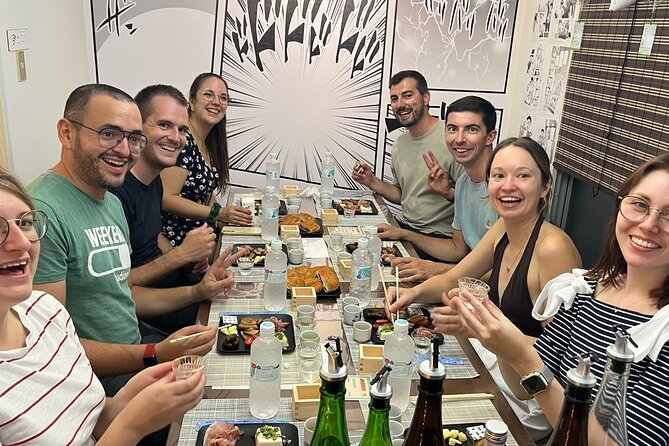
- 5–6 sake tastings in one cozy session, including a hot sake (kanzake) so you can taste temperature changes
- English explanation from the host, including how to taste and how sake styles differ
- Snack pairings that help you understand why certain flavors work with each sake
- Masu crafting with Japanese brush pens and a souvenir cup you’ll take home
- Manga Dojo Tokyo atmosphere in an intimate, creative room near Ikebukuro Station
- Small group size (max 8), which keeps the night conversational
A cozy Ikebukuro night: sake tasting meets manga-style creativity
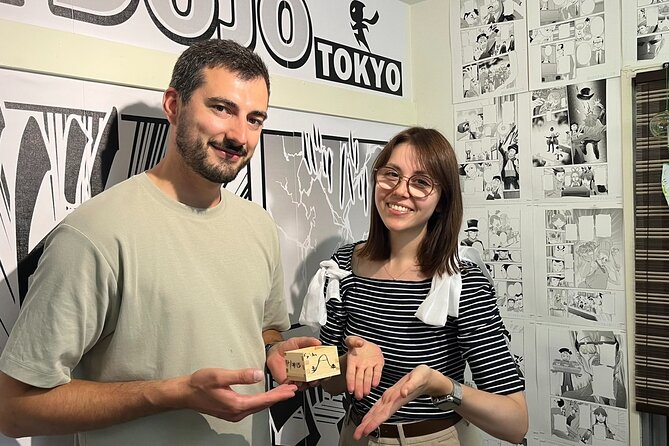
If you’re trying to understand Japanese culture in a way that actually sticks, this is a smart choice. It’s not just about drinking. You get a guided explanation of sake basics, you taste multiple styles back-to-back, and you pair them with snacks so your brain can connect aroma, flavor, and food.
The setting helps too. The experience runs in the Manga Dojo Tokyo space near Ikebukuro Station, and it’s creative and small—more like hanging out in a comfortable room than standing in a loud showroom. The host, Aki-san, brings the same energy you’d expect from someone running a manga workshop, and that makes the whole thing feel relaxed.
For me, the best part of a lesson like this is that it gives you vocabulary you can reuse later. By the end of the night, you’re not just thinking sake tastes good—you’re thinking why.
You can also read our reviews of more food & drink experiences in Tokyo



The 1.5-hour flow: what happens from hello to take-home masu
The session is about 1 hour 30 minutes, starting at 6:00 pm at Manga Dojo Tokyo in Higashiikebukuro (Toshima City). You meet in person, and it ends back at the same spot. A mobile ticket is used, so you’ll want your phone ready.
You’ll go through a straightforward rhythm:
- A warm welcome and an introduction to sake
- A guide to tasting (how to notice aroma and flavor)
- Sampling 5–6 sake varieties, including one served hot (kanzake)
- Light snacks that pair with what you’re drinking
- A short hands-on break where you decorate your masu cup with Japanese brush pens
- Time to enjoy the group atmosphere as you go
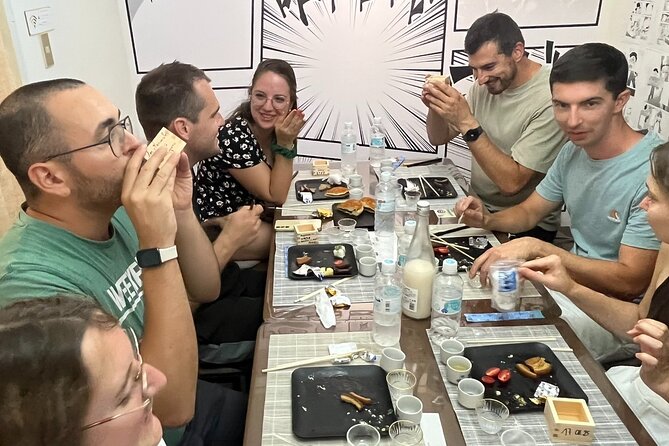
Because it’s a max of 8 people, you’ll get more of a conversation feel. You’re more likely to ask questions than you would in a big group tasting.
Learning sake basics in plain English (and why styles taste different)
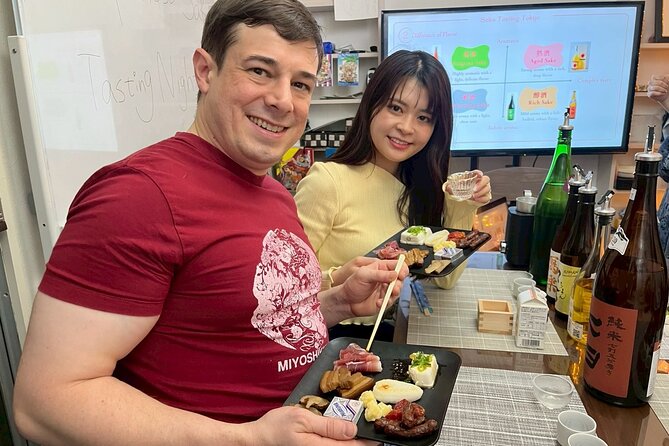
The tasting starts with a quick foundation: how sake is made, what to look for when tasting, and what makes styles unique. The goal isn’t to turn you into a brewer. It’s to help you taste with purpose.
You’ll be guided through the process in English, and the host’s explanations are aimed at making differences clear. If you’ve heard names like ginjo and daiginjo, this is the kind of setting where those terms start to make sense. You’re tasting, not just memorizing.
Practical tip: when you try each sake, slow down for the first few seconds. Aroma does a lot of the work. Then notice how the flavor lands—does it feel light and clean, or more rounded? Does it seem dry, fruity, or mellow? The session structure—moving through different bottles—makes it easier to compare without overthinking.
Also, by being served in the same order as the explanation, it’s easier to connect “what the host said” with “what you’re tasting right now.” That’s where a lot of the learning sticks.
Hot sake (kanzake) isn’t just warm—it changes the whole flavor
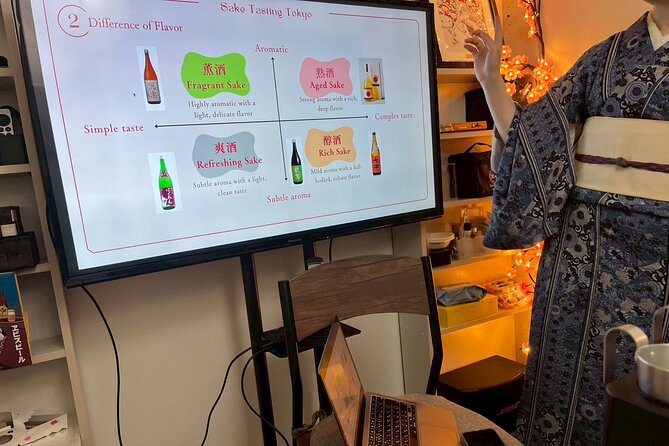
One of the smartest parts of this experience is that they include a hot sake option (kanzake). Temperature is more than comfort. It changes how aromas come through and how the palate reads sweetness, texture, and balance.
What this means for you during the tasting: you’ll have a built-in “before and after” effect. Even if two sakes were made from similar ingredients, warming one can make it taste more fragrant or round, and it can soften sharper edges. That’s hard to learn from a description alone.
If you usually think of sake as something you either like cold or don’t, this is a good way to revise that. A hot pour is also a very Japan-at-night kind of experience—especially in a session held in the evening.
Snack pairings that teach you flavor logic (yes, curry bread)
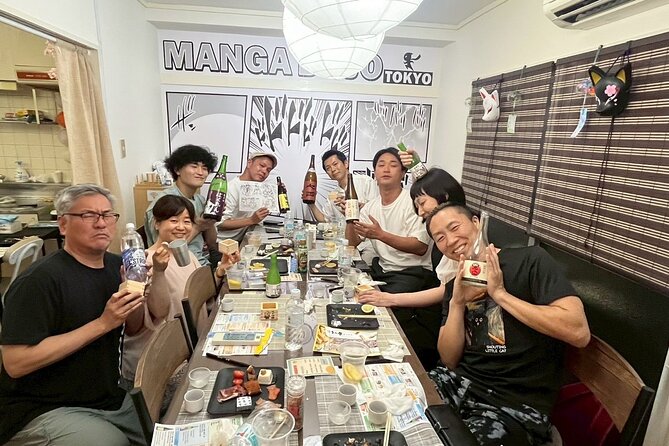
You don’t just drink plain sake. You eat small snacks designed to match what you’re tasting. This is key, because sake is often judged by how well it works with food.
You may be surprised by what shows up. One example from the experience’s chatter is a pairing like curry bread with sake—something that sounds odd until you taste it. That’s the point: the pairing helps you understand how savory spices and bready richness can interact with the drink’s aroma and finish.
A practical way to use this part: as you take a bite, notice how the sake changes. Sometimes food makes sake taste smoother. Other times it makes certain notes pop more. If you’re the type who likes to experiment, this is a low-pressure, guided version of that.
And because the menu can vary with the season, don’t assume you’ll get the same snacks every time. But you can count on the snack element being part of the learning—not an afterthought.
You can also read our reviews of more drinking tours in Tokyo


Decorating your masu with Japanese brush pens: a souvenir with meaning
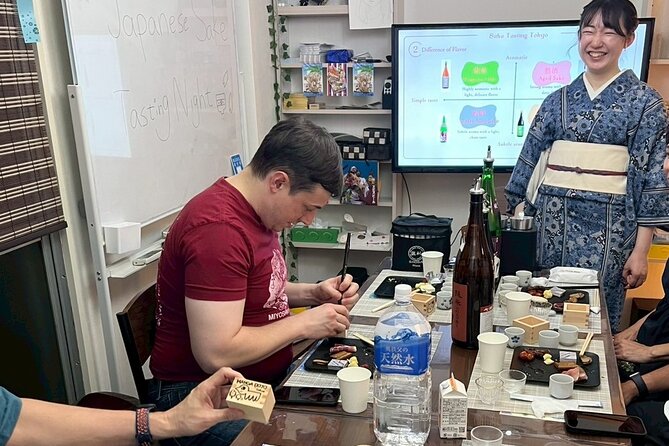
The craft portion is more than a desk activity. Your masu is traditional, and decorating it turns the whole evening into something personal.
You’ll use Japanese brush pens to decorate your wooden cup. It’s a hands-on way to take a piece of the experience home. Unlike a postcard or a mass-market souvenir, this one is functional in the sense that it represents your own design and your night’s learning.
What to expect practically: you’ll be shown the basics and then given time to decorate. Don’t worry if you’re not artsy—these sessions are built for participation. Also, since it’s a takeaway item, you’re more likely to pay attention to details during the session, especially when you’re tasting.
If you like gifts that feel personal, this is the part you’ll remember when you’re back in your own apartment.
Manga Dojo Tokyo’s location: near Ikebukuro, easy to fit into your evening
This experience is near Ikebukuro Station, and it’s only a few minutes away. It’s a convenient pick if you’re already exploring the Ikebukuro area or if you want a night activity that doesn’t require long transit.
The meeting point is:
- Manga Dojo Tokyo, 170-0013 Tokyo, Toshima City, Higashiikebukuro, 1-chōme 316 三昌ビル 602
You’ll start at 6:00 pm and return to the same place afterward. That makes planning easier, especially if you’re trying to keep your Tokyo evenings organized.
One more atmosphere detail that matters: this isn’t a sterile tasting room. It’s an apartment-like interior with manga-themed elements, which fits the “Manga Dojo Tokyo” concept. If you’re curious about modern Japan as well as tradition, that mix is part of the charm.
Is it worth $60? The value is in the guided comparison
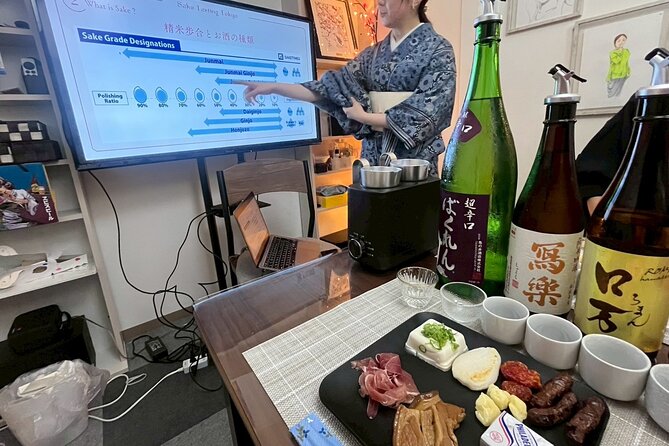
At $60 per person, the value comes from three things you don’t get in a typical casual bar stop:
- You taste 5–6 varieties rather than just one or two
- You get guided explanation in English so comparisons make sense
- You pair sake with snacks, which trains your palate faster than drinking alone
The small group size (max 8) also matters. It keeps the pacing reasonable and helps the host interact with you, rather than talking over a crowd.
If you’re a sake beginner, this can feel like a shortcut to real taste understanding. If you’re already a fan, the hot sake element and the structured comparisons can still give you useful new angles for how to order when you’re out later.
For your future self: think of the lesson as “training wheels.” After this, you’ll be able to ask better questions at a shop or restaurant, because you’ll recognize how temperature and style shift flavor.
Who should book this sake and masu experience
This works especially well if you:
- Want an English-guided cultural activity in Tokyo that’s not overly complicated
- Like hands-on activities and want a take-home souvenir you made
- Enjoy small-group settings where you can actually talk
- Prefer a focused experience (about 1.5 hours) rather than a long day tour
It may be less ideal if you:
- Need vegetarian or vegan options (none are offered)
- Have food allergies and you haven’t informed the organizer in advance (allergy-friendly options exist, but you must tell them)
Should you book this experience?
If you want a Tokyo night that’s equal parts learning, tasting, and making something, I think this is a strong yes. The combo of hot and cold sake tasting, guided instruction from a host like Aki-san, and the chance to decorate a masu cup gives you more than a one-time drink.
I’d book it especially if you’re staying near Ikebukuro and want an evening plan that feels like you’re stepping into Japanese everyday culture, not just checking a box. Just double-check dietary needs first, since no vegetarian or vegan option is listed, and remember the Japan alcohol age rule (20+).
FAQ
Do I need to speak Japanese for this experience?
It’s conducted in English, so you don’t need Japanese language skills to participate.
How long is the sake tasting and masu crafting experience?
The duration is about 1 hour 30 minutes.
Where do I meet for the tour?
The meeting point is Manga Dojo Tokyo at 170-0013 Tokyo, Toshima City, Higashiikebukuro, 1-chōme316 三昌ビル 602.
What time does the session start?
The start time is 6:00 pm.
What will I taste during the sake tasting?
You’ll sample 5–6 different sake varieties, including a hot sake (kanzake).
Do you provide snacks during the tasting?
Yes. You’ll be served light snacks that pair with the sake.
What will I make and take home?
You’ll decorate your own traditional wooden masu cup using Japanese brush pens, and you can take it home.
Is the group size large?
No. The experience has a maximum of 8 travelers.
Are vegetarian or vegan options available?
No vegetarian or vegan options are offered, based on the provided details.
What if I have a food allergy?
Allergy-friendly options are available, but you should inform them in advance.
Is alcohol served to everyone?
Alcohol is prohibited for anyone under 20 under Japanese law, so participants need to meet the age requirement.
If you want, tell me your travel dates and whether you eat vegetarian/vegan or have allergies. I can help you decide if this fits cleanly with your plans near Ikebukuro.