REVIEW · TOKYO
Furoshiki Cloth Wrapping
Book on Viator →Operated by True Japan Tour · Bookable on Viator
One twist of cloth and suddenly you get Japan. In this 90-minute workshop, I like the fact you’ll learn seven practical furoshiki techniques in one session, and that you take home a souvenir furoshiki to keep practicing. The only real catch is that it is hands-on learning, so if you want zero mess and zero effort, this may feel like homework.
You meet in Minato City and spend the time making usable wraps (think bags, covers, and wearable-style cloth accessories). It’s a small group—up to 28—so you can actually get questions answered, not just watch a demonstration.
In This Review
- Key highlights you’ll care about
- Furoshiki in Tokyo: a craft with real-world use
- Where the workshop happens (and how to plan your time)
- The 90-minute flow: basics first, then seven techniques
- 1) Getting your cloth moving (basic folds and knots)
- 2) Learning seven techniques you can remix later
- 3) Turning techniques into real items
- 4) Cultural context while you work
- What’s included: your take-home practice kit
- The best part: friendly, clear coaching
- Sustainability, but practical: why cloth wrapping catches on
- Price and value: is $77.26 reasonable for 1.5 hours?
- Who this workshop is best for (and who might not enjoy it)
- Final verdict: should you book the furoshiki workshop?
- FAQ
- How long is the furoshiki cloth wrapping workshop?
- How much does the workshop cost?
- Is the furoshiki cloth included?
- What is included in the class besides the cloth?
- What is not included?
- How many techniques will I learn?
- What’s the group size limit?
- How does ticketing work?
- Can I cancel for a full refund?
- Where do I meet for the workshop?
Key highlights you’ll care about
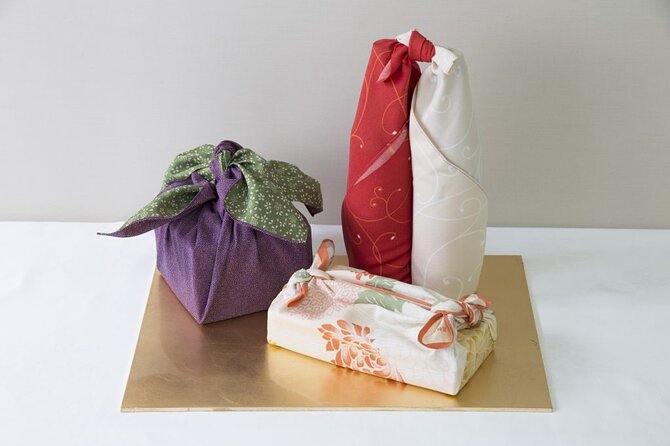
- Seven techniques in one: you leave with multiple ways to tie, fold, and wrap
- Take-home furoshiki cloth: practice at home without hunting for supplies
- Eco-friendly practical craft: cloth wrapping as a reusable alternative to disposable packaging
- Small group size (max 28): better attention and less standing around
- Instructor-led learning: nationally accredited guidance, not guesswork
Furoshiki in Tokyo: a craft with real-world use
Furoshiki is one of those Japanese traditions that feels simple—until you try it. This workshop keeps things practical from the first minute. You’re not just copying fancy knots for show. You’re learning folds and knots that help you wrap gifts, carry small items, and make cloth accessories you can actually use.
What I like most is that the class treats furoshiki as a skill set. You start with basics and then build upward. That matters because cloth wrapping looks easy in photos, but the tension, angle, and where you tuck the ends are what make the difference. When you learn the logic in order, everything clicks faster.
And because it’s cloth, it comes with a built-in sustainability message. Instead of paper and tape that get tossed, you use fabric again and again. The workshop also shares the modern-day eco significance of this craft in Japan, which helps you understand why it still matters—not just as nostalgia.
You can also read our reviews of more tours and experiences in Tokyo.



Where the workshop happens (and how to plan your time)
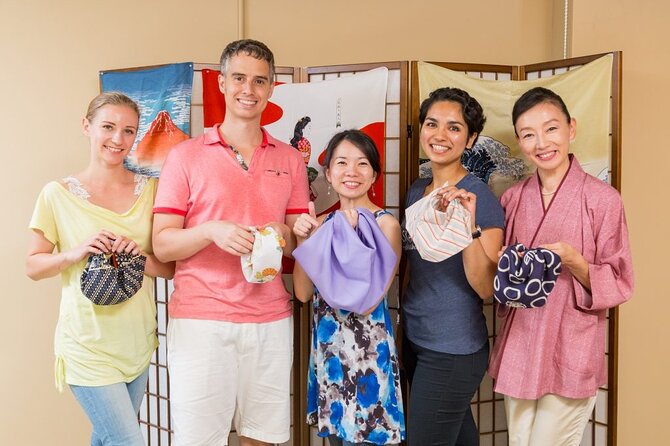
You’ll meet at Kikai Shinkō Kaikan, 3-chōme-5-8 Shibakōen, Minato City, Tokyo 105-0011. The session runs about 1 hour 30 minutes, and it ends back at the meeting point.
Tokyo timing matters, because an hour and a half is short. This is the kind of activity you schedule when you want something focused instead of a long sightseeing day. If you’re stacking plans, build in a little breathing room so you’re not sprinting between stops—especially since transportation to the venue is not included.
The good news: it’s near public transportation, so you shouldn’t need a complex route. Also, the class uses a mobile ticket, so you can handle check-in smoothly on your phone once you’re confirmed (confirmation comes within 48 hours of booking, subject to availability).
The 90-minute flow: basics first, then seven techniques
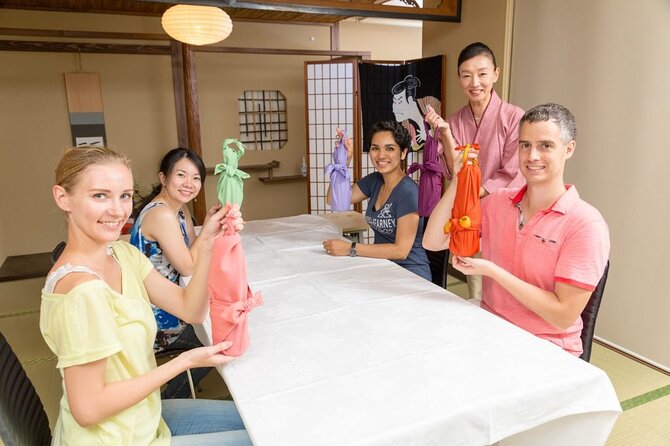
Even without a long formal “tour,” you still get a clear learning arc. Expect the workshop to move from simple foundations to more advanced wrapping choices. Here’s the kind of progression you’ll experience.
1) Getting your cloth moving (basic folds and knots)
You begin with the groundwork: basic folds and knots used in furoshiki. This part is where you learn the rules of how the cloth behaves—how to fold without overthinking it, and how knots stay secure without looking bulky.
This is also where most people pick up their first confidence boost. Once you understand how the instructor wants the fabric placed, you stop fighting the cloth and start using it.
2) Learning seven techniques you can remix later
The workshop’s centerpiece is learning seven different furoshiki techniques. You’ll practice enough to understand when each method works best—like whether you need a flat wrap for a gift, a carry-friendly configuration for an item, or a shape that holds its form.
The key benefit is variety. One technique is fine for one scenario. Seven techniques give you options, so you can match the method to the item rather than forcing the item into a single wrap style.






3) Turning techniques into real items
As you build skill, the workshop covers practical applications. The program description specifically calls out making items such as bags, hats, covers, and other useful cloth accessories.
This is important for value. A craft class can be interesting but still feel like it ends when you walk out. Here, you’re learning shapes and purposes, so your wraps have a job. That makes it easier to use later for presents, small storage, or even wearable-style cloth pieces for friends and family.
4) Cultural context while you work
While your hands are busy, you’re also learning the cultural and historical angle of furoshiki. You get insight into the craft’s background and its modern-day eco significance in Japan—basically, why cloth wrapping survived long enough to become a sustainable habit.
I appreciate this mix because it keeps the class from feeling like a standalone craft trick. It’s not just how to tie; it’s what the tradition is doing in everyday life.
What’s included: your take-home practice kit
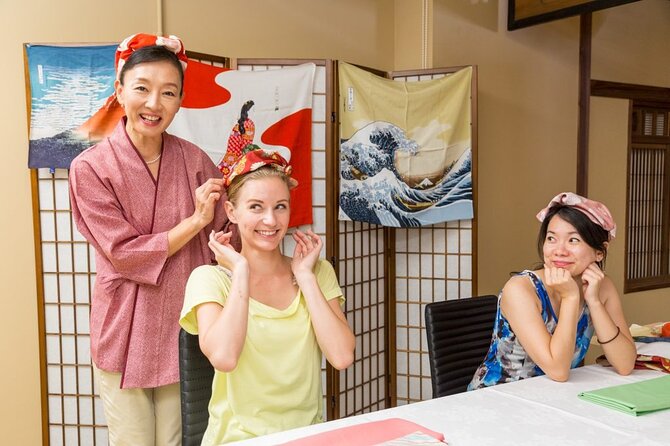
Included in the workshop are:
- A souvenir furoshiki cloth
- Instruction from a nationally accredited furoshiki instructor
That take-home cloth is more than a cute souvenir. It’s your practice material. You won’t need to buy fabric or find a size that happens to work. The class hands you the tool and encourages you to keep going after the workshop—so the learning doesn’t fade after one afternoon.
You also get the structure of instructor-led training, which is often the difference between learning a technique that falls apart versus one that stays neat.
The best part: friendly, clear coaching
The strongest praise in the feedback centers on the teaching. People consistently highlight that the instruction was friendly and knowledgeable, and that they learned a lot in the time allotted.
That matters more than it might sound. Furoshiki has small “hidden rules” that aren’t obvious from a video. A good instructor corrects your hand position, where you tuck, and how you tighten. You’re also more likely to leave with wraps that look good because someone is guiding the details while you’re still learning.
For families, there’s an extra win here too: the craft is accessible. One review mentioned a parent and a teen having fun practicing the knots and learning multiple useful wraps. That’s exactly the kind of class where curiosity beats experience level.
Sustainability, but practical: why cloth wrapping catches on
The workshop doesn’t treat sustainability like a lecture. It frames furoshiki as an eco-friendly alternative to household disposables. The basic idea is simple: cloth is reusable, and a well-tied wrap can be used again instead of throwing away packaging.
You’ll also hear why furoshiki has modern relevance in Japan. Even if you’re not living a zero-waste life, the method is still useful. You can use it for birthdays, small gifts, and everyday carry needs without buying more wrapping paper.
And since you learn both wraps and accessory-style outcomes, you can keep the craft going beyond gifts. That turns sustainability from a one-time activity into a repeatable habit.
Price and value: is $77.26 reasonable for 1.5 hours?
At $77.26 per person for about 1 hour 30 minutes, the price may look like “just a class” at first. But the value math changes because you’re getting more than instruction:
- A take-home furoshiki (supplies included)
- A nationally accredited instructor
- Practice with seven techniques
- A small-group format (max 28)
For Tokyo, where short workshops can add up, I’d call this a fair deal if you enjoy hands-on learning or want something more personal than a typical ticketed attraction. It’s also great if you like taking a skill home—something you’ll actually use, rather than something you’ll store in a drawer.
Who this workshop is best for (and who might not enjoy it)
This is a strong match if you:
- Enjoy learning new crafts with your hands
- Want a practical cultural experience, not just photos
- Prefer reusable, eco-friendly alternatives for gifts
- Travel with teens or family members who like doing instead of watching
You might consider skipping if:
- You’re hoping for a sightseeing-style tour with lots of background walking and landmarks
- You want a quick passive experience rather than practicing folds and knots
- You don’t think you’ll use cloth wrapping after you leave
Final verdict: should you book the furoshiki workshop?
If you want a Tokyo activity that’s both cultural and genuinely useful afterward, I’d book this. The biggest reason: you learn seven techniques and leave with the cloth to practice, so the experience doesn’t end when the workshop ends.
Choose it especially if you like small-group instruction and you want a sustainable skill that travels well into real life. Just go in knowing it’s active, and plan your time so you’re not rushing in and out.
FAQ
How long is the furoshiki cloth wrapping workshop?
It lasts about 1 hour 30 minutes (approx.).
How much does the workshop cost?
The price is $77.26 per person.
Is the furoshiki cloth included?
Yes. You receive a souvenir furoshiki cloth to practice at home.
What is included in the class besides the cloth?
You also get instruction from a nationally accredited furoshiki instructor.
What is not included?
Transportation to the venue and any food or beverages are not included.
How many techniques will I learn?
You’ll master 7 furoshiki wrapping techniques in the workshop.
What’s the group size limit?
The maximum group size is 28 travelers.
How does ticketing work?
You receive a mobile ticket, and confirmation is sent within 48 hours of booking, subject to availability.
Can I cancel for a full refund?
Yes, free cancellation is available. You can cancel up to 24 hours in advance for a full refund.
Where do I meet for the workshop?
The meeting point is Kikai Shinkō Kaikan, 3-chōme-5-8 Shibakōen, Minato City, Tokyo 105-0011, Japan.