REVIEW · TOKYO
Discover the Secrets of Pachinko, Japan’s Traditional Game
Book on Viator →Operated by Discover the Secrets of Pachinko, Japan's Most Popular Game with Professional Pachinko Instructor · Bookable on Viator
Pachinko looks chaotic, but it rewards control. This short Tokyo lesson at BB station turns the noise and color into a clear game flow, from loading credits on an IC card to launching balls with a practiced handle flick. I especially like how quickly you go from theory to actually playing in a real parlor.
Two things I really appreciate: the setup is beginner-friendly, and the coaching is focused on what changes your odds—like handle position and getting your aim toward the center pocket. You’re not just watching; you’re learning the rhythm and the “why” behind each step.
One thing to consider: the tour price doesn’t include the token/ball rental fee (4,000 JPY per person), so your total out-of-pocket will be a bit higher than the headline price. Also, winning depends on chance, so think of this as a skill lesson, not a guaranteed payday.
In This Review
- Key Takeaways Before You Go
- Pachinko in 75 Minutes: What You’ll Learn (and Why It Matters)
- Getting to BB Station From Nippori Without Turning It Into a Project
- A Quick Parlor Rules Moment (5–10 Minutes) That Saves You Stress
- The Game Flow: IC Card Credits to First Ball Launch
- The Handle Position Tip: Your Shot at Aiming for the Center Pocket
- What the Expert Instructor Actually Does for You
- Group Size, Flow, and Timing: Why 1 Hour 15 Minutes Works
- Cost and Value: What $70.73 Covers (and What It Doesn’t)
- The Style of Fun You Should Expect (So You’re Not Surprised)
- Who This Pachinko Lesson Is Best For
- Quick Practical FAQ (Before You Book)
- FAQ
- Where is the meeting point?
- Where does the experience take place?
- How long does the tour last?
- Is the ticket delivered on mobile?
- How much does it cost?
- What’s included in the price?
- What is not included?
- How many people are in the group?
- Do I get confirmation after booking?
- What is the cancellation policy?
- Should You Book This Pachinko Secrets Tour?
Key Takeaways Before You Go
- 75 minutes that actually covers the flow of pachinko, not just a demo
- IC card credits start-to-finish, so you don’t feel lost in the parlor
- Handle aiming tips geared toward hitting the center pocket
- A real parlor practice session with a professional pachinko instructor
- Small group limit of up to 10 for better attention and guidance
Pachinko in 75 Minutes: What You’ll Learn (and Why It Matters)
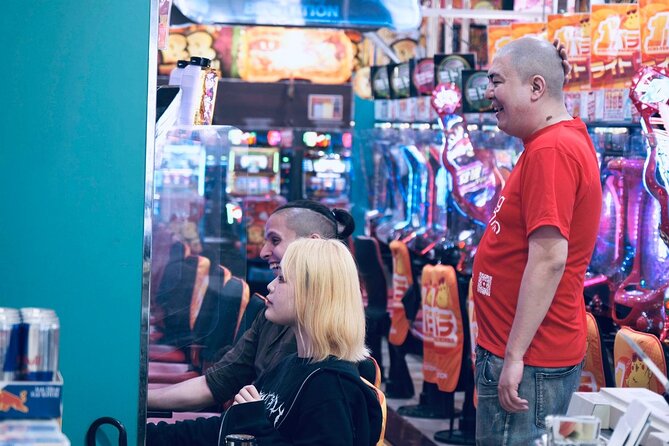
Pachinko is one of those Japanese things that looks simple from the outside: you shoot balls, the machine does the rest. The catch is that the machine isn’t just randomness. Your setup—how you control the handle—affects where your ball lands, how often it finds better scoring paths, and how comfortable you feel under the pressure of flashing lights.
This tour is built around getting you functional fast. In about an hour and a quarter, you cover the whole loop: how you purchase credits, how you launch balls, and how you move through the parlor without getting stuck. That’s a big deal, because pachinko parlors can feel like a maze before you understand the basics.
What’s also useful is that you learn in the environment you’ll actually be playing in. You’re not memorizing rules from a screen; you’re learning the mechanics where you’ll need them. That’s the difference between a “cool story” and a real takeaway.
You can also read our reviews of more tours and experiences in Tokyo.



Getting to BB Station From Nippori Without Turning It Into a Project

You meet at Nippori Station (2 Chome-19 Nishinippori, Arakawa City, Tokyo 116-0013). From there, you head to a nearby pachinko parlor named BB station. The location is close to public transportation, which matters because you’ll want to spend your energy learning, not figuring out trains and transfers.
Since the group size tops out at 10 travelers, you’ll move together as a unit. That helps a beginner feel steady right at the start. It also keeps the session on track for the full 1 hour 15 minutes.
One more practical note: this experience uses a mobile ticket. That’s handy in Tokyo—less paper, less fuss, and less time spent checking details right before you walk in.
A Quick Parlor Rules Moment (5–10 Minutes) That Saves You Stress
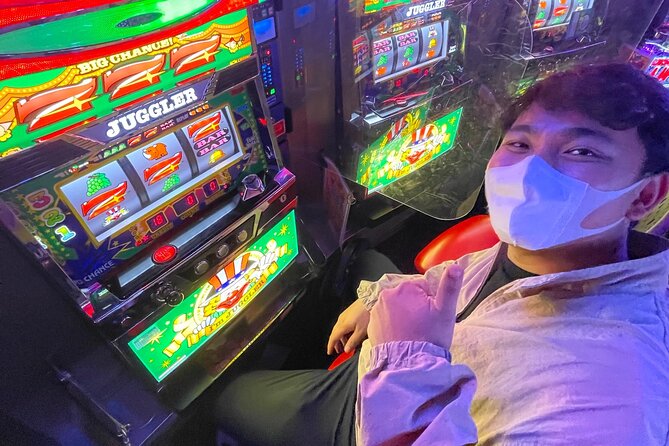
Before you play, you get a short rules and etiquette briefing—about 5 to 10 minutes. This portion is small on purpose, but it’s exactly what beginners need: the basics that prevent awkward moments and help you follow what staff and the parlor system expect.
In a pachinko setting, you’ll often see people moving fast between machines, watching screens, and repeating the same physical motion over and over. Without a quick orientation, it’s easy to think you’re behind when you’re actually just new. A brief primer helps you feel oriented before you touch the machine.
The goal here isn’t to make you an expert. It’s to make you comfortable enough to start playing well.
The Game Flow: IC Card Credits to First Ball Launch
The heart of the lesson is the game flow. You start by purchasing credits using an IC card—a setup that lets you avoid the constant confusion of finding the right payment step while you’re also trying to learn the machine.
Once credits are loaded, you learn how the ball-launch works: it’s controlled by a flick of the handle. That single physical action is the centerpiece of pachinko play, and it’s the part that separates “pressing buttons” from feeling like you’re actually participating.
What I like about how this tour is structured is that it treats the mechanics as learnable. You’re not thrown into random machines; you’re coached on how to operate the system.
The Handle Position Tip: Your Shot at Aiming for the Center Pocket
Here’s the useful stuff: the guide shares tips for adjusting the handle’s position, with the aim of targeting the center pocket more precisely. That’s not just a cute trick. In pachinko, where the ball starts and how it enters the machine matters, and small changes in how you operate the handle can change your results.
You’ll also learn the right feel for the motion. Even if you’ve played other arcade games, pachinko has its own rhythm. The guide’s job is to help you avoid the common beginner pattern—either over-correcting or rushing the handle movement.
And based on the kind of outcomes people report, this is the portion that really sticks. When the coaching is clear, it’s easier to relax, repeat, and let the machine’s patterns start making sense.






What the Expert Instructor Actually Does for You
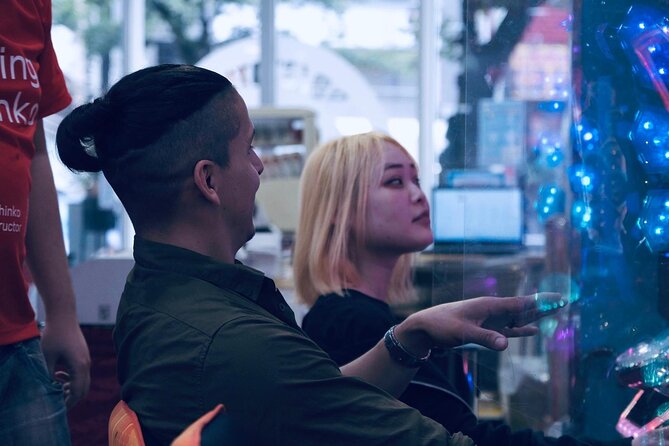
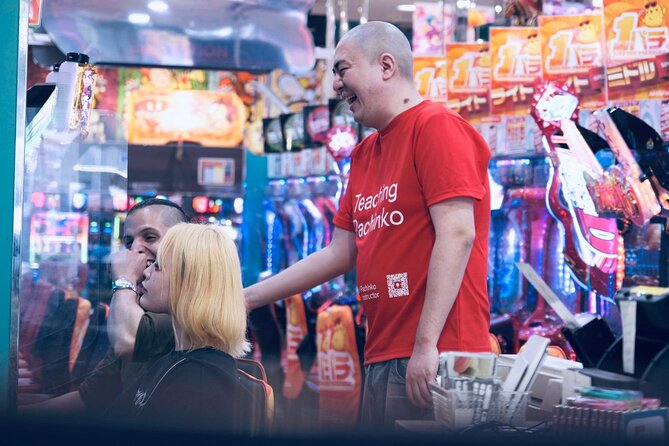
You get a professional pachinko instructor who walks you through how to play and then trains you during the practice. That matters because pachinko parlors have their own pace. Even understanding what a button does can be tougher when you’re standing in front of a wall of machines.
This lesson is built to reduce “parlor overwhelm.” You’re guided to machines, shown how to operate, and supported while you try it for yourself. In the strongest versions of this experience, the guide doesn’t just explain and disappear. People report that the instruction is so helpful that you keep learning even after the hour is up—especially when a machine is running well.
Just keep expectations balanced: winning isn’t guaranteed. The instruction helps you understand play and improves your control, but the game still has chance baked in.
Group Size, Flow, and Timing: Why 1 Hour 15 Minutes Works
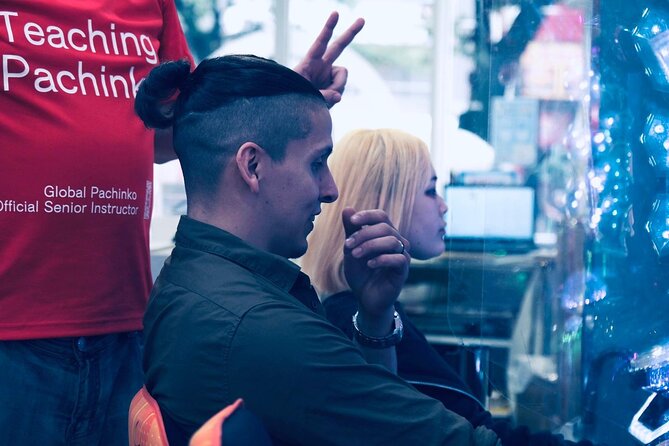
At up to 10 travelers, the session stays manageable. You don’t need to worry about being one person lost in a crowd, and the guide can keep an eye on what you’re doing at the machine.
The timing also makes sense. The tour starts at Nippori Station and ends back at the meeting point, so it’s a tight loop. That’s convenient if you’re also exploring Tokyo that day. You get a focused experience without losing half your itinerary to logistics.
Also, this is typically booked about 25 days in advance on average. If you want a specific day and time window, you’ll be smart to reserve earlier rather than later.
Cost and Value: What $70.73 Covers (and What It Doesn’t)
The price is $70.73 per person, and it includes gratuities. That’s a nice value touch because tips are often one of those small costs that add friction at the end of a tour.
But the big cost item to plan for is the token/ball rental fee: 4,000 JPY per person, which is not included. The tour price covers the lesson and guide support; the rental is what fuels the actual play session.
If you’re trying to decide whether it’s worth it, here’s the honest way to think about it:
- If you want to understand pachinko fast and play with guidance, the lesson time is valuable.
- If you mainly just want to gamble on your own without instruction, you might feel like you could spend less by skipping the class.
- If you’re the kind of person who likes learning a real skill (not just watching), this price-to-time ratio can feel fair.
Also note: bottled water is not included, so bring your own or budget a small purchase before or after.
The Style of Fun You Should Expect (So You’re Not Surprised)
Pachinko fun comes in two forms: the excitement of the machines and the satisfaction of getting the technique right. This tour leans hard on the second one. You’ll spend time learning how the credits and ball-launch work, then practicing so you can play without guessing.
One reported highlight: people feel like they finally understand what’s happening, and even when they don’t fully master everything, they still come away with the confidence to try different machines. Another strong takeaway: you can win some money, but the real win is learning the game flow well enough to keep playing with less confusion.
If your idea of fun is a “show up and get entertained” activity, you might find that it’s more hands-on coaching than performance. If your idea of fun is learning a quirky Tokyo tradition step-by-step, you’ll probably enjoy this a lot.
Who This Pachinko Lesson Is Best For
This experience is described as suitable for most travelers, and it’s easy to fit into a Tokyo day because it’s close to public transportation.
It’s a great fit if:
- You’re a beginner who wants structure instead of wandering a parlor alone
- You like hands-on instruction where the guide corrects your approach
- You want a small-group Tokyo activity with up to 10 people
It may be less ideal if you only want to spend money on entertainment and you hate any learning curve. Pachinko is part arcade, part mechanical skill, and this tour makes you practice the basics.
Quick Practical FAQ (Before You Book)
FAQ
Where is the meeting point?
The tour meets at Nippori Station, 2 Chome-19 Nishinippori, Arakawa City, Tokyo 116-0013, Japan.
Where does the experience take place?
The group goes to a nearby pachinko parlor named BB station.
How long does the tour last?
The duration is about 1 hour 15 minutes.
Is the ticket delivered on mobile?
Yes. The experience includes a mobile ticket.
How much does it cost?
The price is $70.73 per person.
What’s included in the price?
Gratuities are included.
What is not included?
Bottled water is not included, and there is a token/ball rental fee of 4,000 JPY per person.
How many people are in the group?
The tour has a maximum of 10 travelers.
Do I get confirmation after booking?
Yes. Confirmation will be received at the time of booking.
What is the cancellation policy?
Free cancellation is available. You can cancel up to 24 hours in advance for a full refund.
Should You Book This Pachinko Secrets Tour?
If you’re curious about pachinko and want to leave with more than a vague impression, I’d book it. The big advantage is that you get the practical game flow—IC card credits, operating the handle, and aiming concepts aimed at the center pocket—in a real parlor like BB station, not in theory.
Skip it only if you strongly dislike structured practice or you don’t want to pay the extra 4,000 JPY token/ball rental fee. Otherwise, this is a fun, skill-focused way to experience one of Tokyo’s most traditional games while keeping your time plan tight.