REVIEW · TOKYO
Daikoku Car meet: Tokyo Drift Car Club membership
Book on Viator →Operated by G A I J I N T U N E D · Bookable on Viator
If you love Japanese car culture, this is a rare chance to spend an evening where the action is already happening. I like that you’re not stuck researching logistics across Tokyo—you get a guided car-club route with transport—and I also love the centerpiece time at Daikoku Parking Area, where the scene is constant and photos practically write themselves.
There’s one catch to keep in mind: the exact car you ride in depends on the guide, and communication can be uneven if language is limited. Still, the overall value comes from the route, the stops, and being part of a small group of people who care about the same cars.
In This Review
- Key takeaways before you go
- What a Daikoku Car Meet membership day really gives you
- Akihabara start: neon electronics and an easy meetup
- Riding the Wangan-sen bayshore road: the famous Tokyo vibe
- Rainbow Bridge views without the photo-stop pressure
- A-PIT Super Autobacs: parts shopping plus real car-nerd energy
- Daikoku Parking Area: why this is the real reason to book
- Tokyo Tower photo time: iconic skyline without paying for entry
- The car ride: what you can expect in practice
- Group size, time on the clock, and how comfortable it feels
- Price and value: what $171.93 buys you in the real world
- Should you book this Daikoku car meet experience?
- FAQ
- How long is the Tokyo Daikoku car meet experience?
- Where do we meet for the tour?
- What’s included during the tour?
- Do you go inside Tokyo Tower?
- What is the group size?
- Do I get a ticket on my phone?
- What if the tour is canceled due to weather?
Key takeaways before you go
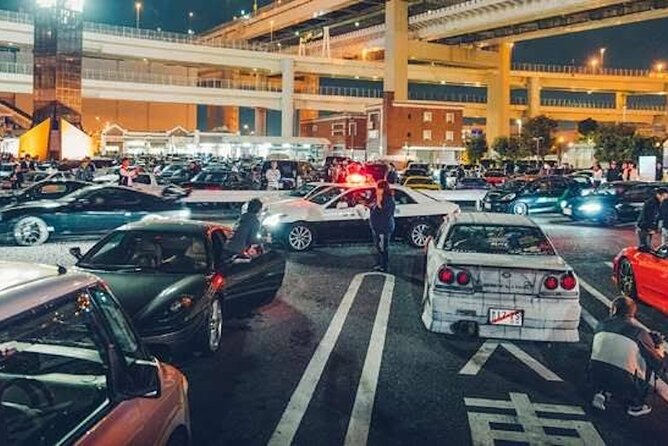
- Daikoku PA for about two hours: long enough to walk the lot, watch arrivals, and grab real photos.
- Super Autobacs A-PIT stop: a proper auto-parts and accessories shopping break (plus car-mag hunting).
- Wangan-sen bayshore drive: the famous road that fits the whole Tokyo car-culture mood.
- Tokyo Tower is photo stop only: tickets aren’t included, but the skyline shot time is built in.
- Small group size (up to 12): you’ll spend less time herding people, more time enjoying the ride.
What a Daikoku Car Meet membership day really gives you
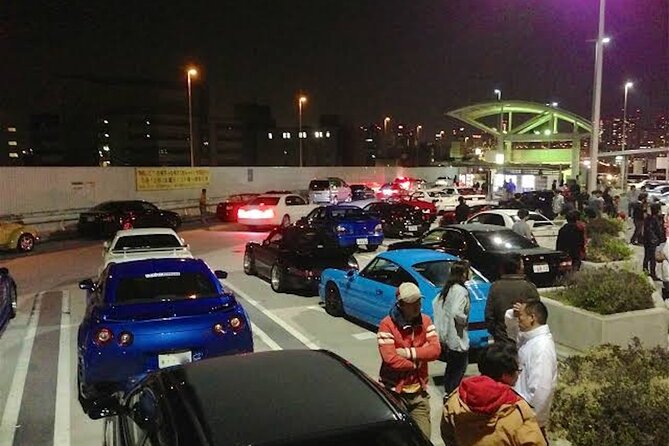
This experience is built around one big idea: Tokyo car culture is easiest to enjoy when you show up with the right people and the right timing. You start in Akihabara, then you move through the kind of city scenery that feels connected to the car world—bay roads, Tokyo’s famous skyline landmarks, and finally Daikoku, one of the best-known car-gathering spots in the Greater Tokyo area.
The key value isn’t just that you see famous places. It’s that the night is structured like a car enthusiast circuit. You’re not spending your time figuring out where to stand, when to go, or which stop is worth it. The day is planned so you can focus on the point: cars, community, and the feeling of rolling through Tokyo together.
And because this is part of the Tokyo Drift Car Club membership concept, you get that “members evening” vibe. You’ll meet fellow car fans, see a steady flow of vehicles at Daikoku, and have time at a major parts store where people actually come to shop and maintain their cars.
You can also read our reviews of more tours and experiences in Tokyo.



Akihabara start: neon electronics and an easy meetup
Your meeting point is Tully’s Coffee inside Akihabara UDX (Akihabara UDX1F). It’s a smart choice because Akihabara is a “everyone knows where it is” area, and it’s packed with electronics, anime, and collectibles right from the first minute.
Before you head out, you can use the area to get your bearings fast. If you like browsing, this neighborhood can keep you occupied even while you’re waiting for departure. It also sets the tone: Tokyo doesn’t start with a bland briefing room. It starts in a place where pop culture and gadgets live on the same streets as car passion.
Practical note: the tour ends back at the meeting point. That’s helpful if you want to continue exploring on your own after the car time is done.
Riding the Wangan-sen bayshore road: the famous Tokyo vibe
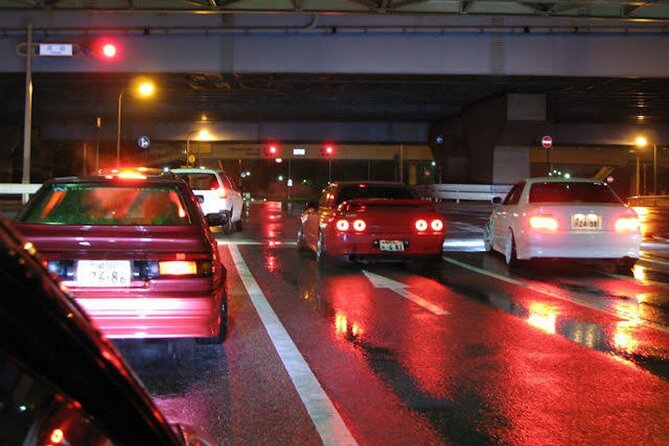
One of the most interesting segments is the drive on 湾岸線 (Wangan-sen), the Bayshore route. On paper, it sounds simple: it’s a highway stretch. In practice, it’s iconic because it’s tied to the story of Japan’s most famous street-racing culture and the cars-and-nightlife atmosphere that grew around it.
You don’t need to be a racing historian to feel why this matters. The whole point of the evening is that Tokyo’s car scene isn’t just “cars parked in one place.” It’s also the idea of motion—being out on the roads where the culture is associated with real nights and real fandom.
Expect the route to be timed for the evening mood. The experience lasts about 4 to 5 hours total, and that includes travel time, so you’ll spend enough time moving through the city to make the evening feel like a complete loop, not just a two-stop errand.
Rainbow Bridge views without the photo-stop pressure
You’ll pass Rainbow Bridge as part of the route. Rainbow Bridge is a suspension bridge connecting Odaiba to central Tokyo, and it’s one of the city’s most recognizable nighttime landmarks thanks to its bright lights. It opened in 1993, and it shows up constantly in TV dramas and movies—so even if you’ve seen it on screen a dozen times, seeing it in motion is a different feeling.
Here’s the key detail for planning: you get the sights, but it’s not a dedicated stop where you’re guaranteed time to hop out for photos. The experience includes passing Rainbow Bridge, and the flow is designed to keep you on track for the next car-centric stop.
If you want balcony-style skyline shots, don’t count on Rainbow Bridge being a full photo session. The tour’s biggest photo focus is Tokyo Tower outside photos and the time on the Daikoku lot.
A-PIT Super Autobacs: parts shopping plus real car-nerd energy
Super Autobacs at the A-PIT location is the kind of place that turns casual visitors into car shop people. It’s described as Japan’s largest auto parts and accessories shop, and it’s also known as a sports car hangout in Tokyo. You’ll see the culture aspect immediately: owners of JDM cars come to wash cars and handle maintenance-related shopping.
What makes this stop valuable for you is that it’s not a “look at a store window and leave” moment. You get a break for browsing and shopping, typically around 30 minutes, and it’s built into the evening rather than squeezed in at the very end.
This is also where souvenir ideas turn into something more specific. You can browse accessories like key chains, stickers, and magnets. Car magazines are a big deal too. One detail I’d call out: Japanese car magazines sold overseas can be scarce and expensive, so a short stop here can be one of the best chances you’ll get to find items that actually feel local and specific to the scene. Some people even buy books in bulk, which tells you how much variety exists inside.
If you’re not into shopping, you can still use the stop for context. The store is a “car culture snapshot” you can walk through quickly—then you’re back on the road for the main event.





Daikoku Parking Area: why this is the real reason to book
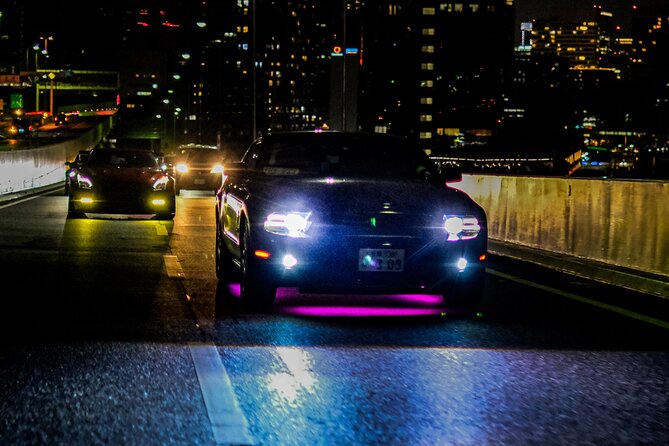
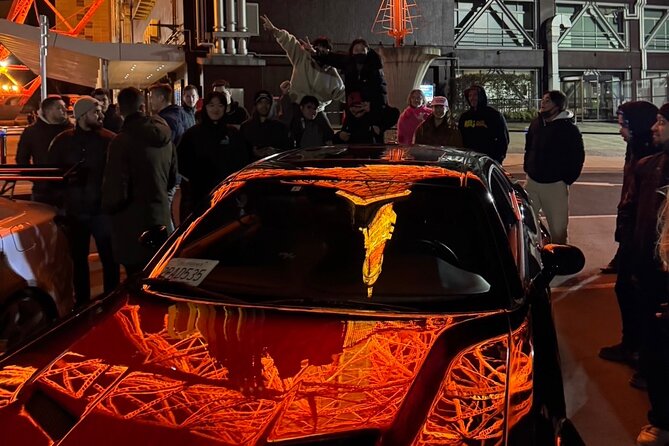
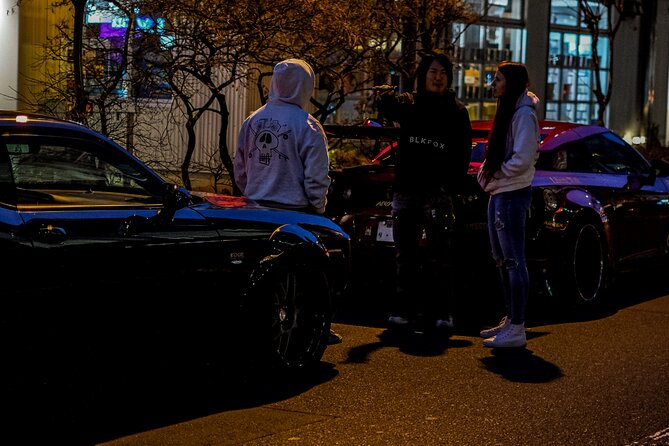
Daikoku Parking Area is the centerpiece. This is where car fans gather from across the Greater Tokyo Metropolitan area, and it feels like the scene never fully cools down. The vibe is heavy on cars and community—vehicles rolling in, people walking around with phones and cameras, and a constant stream that keeps the place lively.
You’re allotted about two hours here, and that timing matters. Daikoku isn’t a “five-minute check” location. Two hours gives you time to:
- Walk around and get angles on different cars
- Watch arrivals and departures instead of only seeing what’s already parked
- Take photos at a pace that doesn’t feel like you’re on a strict schedule
The experience also includes the Daikoku admission ticket, so you’re not dealing with extra entry costs once you’re there. That’s a small detail, but it improves value and keeps the evening smoother.
What I like about a stop like this is that it’s authentic in a way city sightseeing usually isn’t. You’re not chasing a landmark because it’s famous. You’re entering a gathering space because that’s what it is. Even if you don’t know every model name, you’ll still understand what’s going on the moment you arrive.
One more thing: this is usually a lively spot, and weather matters. The experience is described as requiring good weather. If it’s poor weather, your day may be rescheduled or you’ll get a refund option—so it’s worth checking conditions when your date gets close.
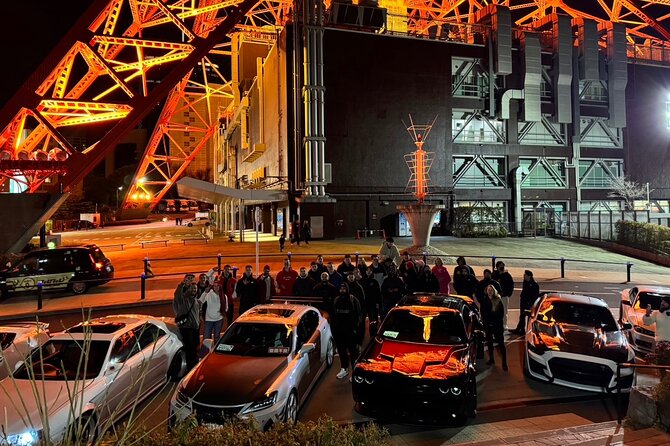
Tokyo Tower photo time: iconic skyline without paying for entry
Tokyo Tower is the kind of landmark that needs almost no explanation. It stands 333 meters tall, is a self-supported steel tower, and is about 3 meters taller than its Eiffel Tower model. It was also Tokyo’s tallest structure for decades before Tokyo Skytree surpassed it.
In the evening, it’s a perfect match for a car-culture tour because it’s tall, unmistakable, and photogenic from lots of angles. It also functions as a broadcast antenna, so it’s not just decorative.
The important practical detail: you get a photo stop outside Tokyo Tower, and tickets aren’t included. The scheduled time is around 20 minutes, which is enough for quick skyline shots and a final “we made it” moment, but not enough for an indoor visit.
So if you’re hoping to ride elevators or see exhibits, plan that separately. This portion is about the outside view and quick photos.
The car ride: what you can expect in practice
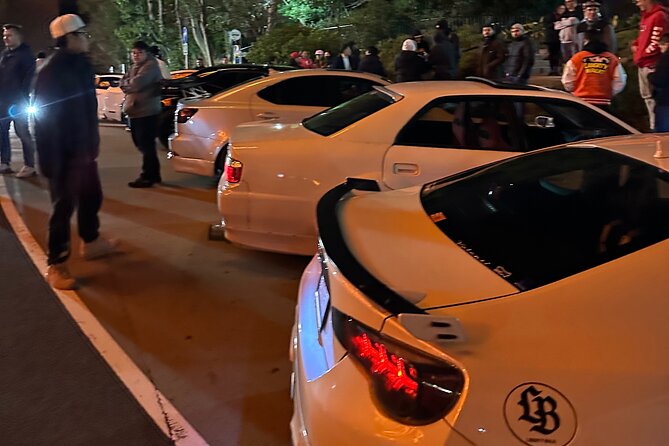
The experience includes transport, and it’s positioned as a fun ride in a cool, sporty vehicle. The car options are described as examples like a Silvia S15 or a Toyota Chaser, depending on the guide. The reality is that the specific vehicle can vary by night and by group, which matters because your expectations should match the flexibility.
One review detail I found especially useful: at least some rides may involve cars like a V8 Mustang. That’s a reminder that the vehicle type can change. Don’t book expecting a guaranteed exact make/model. Do book expecting you’ll ride with a car enthusiast team and be in vehicles that fit the theme.
Also consider the guide communication factor. One downside that shows up is a language barrier—so if you’re counting on a long, conversational commentary through the drive, you might not get it. The good news is that the evening still has plenty going on: city views, the road, the stops, and the constant energy around Daikoku.
One bonus you can plan for: because this is a group car-style evening, you’ll likely get better photo opportunities than if you were just hopping between points on your own. The pacing and the group dynamic help.
Group size, time on the clock, and how comfortable it feels
This is capped at a maximum of 12 travelers. That small size is a real advantage in Tokyo, where big tours can feel like commuter trains. With a smaller group, you spend less time waiting and more time enjoying each stop.
The total duration is about 4 to 5 hours, including travel time. That’s long enough to feel like an event, but short enough that you don’t lose an entire evening to transit and slow pacing.
You’ll also want moderate physical fitness. That likely means some walking and standing during the stops, especially at Daikoku and around the Tokyo Tower photo time. Bring comfortable shoes. You’ll thank yourself when you’re scanning cars for the best angle.
The tour uses a mobile ticket, and the meeting point is near public transportation. That makes it easier to plug into your wider Tokyo plans.
Price and value: what $171.93 buys you in the real world
At $171.93 per person, the price is basically paying for three things at once:
- Transport included across Tokyo for a structured car-culture route
- Dedicated stop time at places that would be harder to access or time perfectly on your own
- Admission/ticket support for key moments, like the Daikoku visit and the store time built into the plan
If you tried to do this independently, you’d spend time solving puzzles: how to get to Daikoku at the right time, where to park, how to time the skyline stops, and how to find a car-focused crowd instead of wandering around alone. This experience replaces that with a guided flow and group energy.
Is it a bargain? It’s not priced like a casual city bus tour. But for what you get—two-plus hours at a legendary car lot, a major parts store stop, and iconic Tokyo sights—the value stacks up, especially if car culture is the reason you’re visiting Japan.
The best way to judge it: think about what you want most from your trip. If you want car culture with built-in access and time in the right places, this is a strong use of an evening. If you’re mainly chasing generic sightseeing, you might find it more satisfying to do landmarks only.
Should you book this Daikoku car meet experience?
I’d book it if you’re one of these people:
- You come to Tokyo for car culture, not just postcard landmarks
- You want to meet other enthusiasts and see Daikoku as a planned stop, not an uncertain detour
- You like a mix of driving + structured breaks for shopping and photos
- You’re okay with the idea that the exact car can vary and the guide’s conversation style may depend on language comfort
I’d hesitate if you need a guaranteed indoor Tokyo Tower ticket experience, or if you’re expecting nonstop commentary through the drive. This is a “ride and arrive” night. The center of gravity is Daikoku PA and the car scene energy there.
If the weather is a big deal for you, keep an eye on conditions close to departure. The experience requires good weather, and if it can’t run properly, you’ll be offered a different date or a full refund.
FAQ
How long is the Tokyo Daikoku car meet experience?
It runs about 4 to 5 hours total, and that includes traveling time between stops.
Where do we meet for the tour?
The start point is Tully’s Coffee at Akihabara UDX (Akihabara UDX1F). The activity ends back at the meeting point.
What’s included during the tour?
You’re getting transport, you pass Rainbow Bridge, and you have a shopping/coffee break at Super Autobacs. The Daikoku Parking Area admission ticket is included as well.
Do you go inside Tokyo Tower?
No. You only get a photo stop outside Tokyo Tower. Tickets are not included.
What is the group size?
This activity has a maximum of 12 travelers.
Do I get a ticket on my phone?
Yes, it’s listed as a mobile ticket.
What if the tour is canceled due to weather?
The experience requires good weather. If it’s canceled due to poor weather, you’ll be offered a different date or a full refund.
![[Seasonal Limited] Mt. Fuji 5th Station &Hot Spring Day Tour - Your day on the road: pickup, drive time, and what to expect from the guide](https://e.thetokyoexplorer.com/wp-content/uploads/seasonal-limited-mt-fuji-5th-station-hot-spring-day-tour-400x225.jpg)