REVIEW · TOKYO
Tokyo:Sea of Mount Fuji, Hakone Ropeway, Ōwakudani, Enoshima
Book on GetYourGuide →Operated by Japan Visionary Tour · Bookable on GetYourGuide
Mt Fuji has three perfect vantage points today. You’ll get it from the lake on a pirate ship, from the volcano zone via the Hakone Ropeway, and finally from the coast at Enoshima. It’s a rare one-day combo that mixes big views with real Japanese places, not just photo stops.
I love how the day keeps moving while still giving you a chance to wander. The kuro-tamago black eggs at Owakudani are weird in the best way, and the Enoshima shrine area gives you calm moments plus street-food time. You’ll like the pace if you enjoy seeing several iconic regions without planning your own route.
One consideration: Mt. Fuji visibility depends on the weather. When clouds roll in, you might miss the full payoff, even if you’re in the right spots.
In This Review
- Key points to know before you go
- A 10-hour day that hits Hakone, Fuji, and the sea
- Where you start in Tokyo (and why it matters)
- Lake Ashi: the Fuji-and-torii photo you came for
- Pirate-ship cruise across Lake Ashi
- Hakone Ropeway: steam and suspension views
- Ōwakudani: steam vents and the kuro-tamago legend
- Enoshima: shrines, sea breezes, and Sea-Mount Fuji moments
- Sagami Bay photo stop: the ocean wrap-up
- Price and value: what you get for about $50
- Guide style: why clear timing makes this route work
- Who should book this day trip (and who should skip it)
- What to pack so the day feels easy
- Should you book this tour?
- FAQ
- How long is the Tokyo to Hakone and Enoshima day trip?
- What languages does the tour guide speak?
- What is included in the price, and what costs extra?
- What are the main stops during the day?
- Is Mt. Fuji guaranteed to be visible?
- Can I cancel for a full refund?
- Is the tour suitable for wheelchair users or people with altitude sickness?
Key points to know before you go
- Three Fuji angles in one day: volcano (Owakudani), lake (Lake Ashi), and coast (Enoshima/Sagami Bay)
- Pirate-ship cruise energy on Lake Ashi, with open-deck views and classic Hakone scenery
- Hakone Ropeway + steam vents: watch active geothermal areas from above
- Owakudani kuro-tamago black eggs with local longevity legend
- Enoshima Sea-Mount Fuji views when skies cooperate, plus shrine steps and food alleys
A 10-hour day that hits Hakone, Fuji, and the sea
This is the kind of day trip that feels built for people who want variety. You’re leaving Tokyo for Hakone first, getting that famous Fuji-and-lake feeling, then shifting from geothermal steam to coastal shrines.
The timing works because each stop has a clear job:
- Lake Ashi gives you the classic wide panorama.
- The pirate ship and ropeway do the heavy lifting for views.
- Owakudani brings the volcano drama and the black eggs.
- Enoshima finishes with a different mood—stone steps, shrines, and coastal scenery toward Sagami Bay.
Even if you don’t get a perfect Fuji day, the mix still makes sense. Lake Ashi and Enoshima are worth it on their own.
You can also read our reviews of more tours and experiences in Tokyo.



Where you start in Tokyo (and why it matters)
Pick your Tokyo meet-up option when you book. The common meeting point in this offering is Tokyo Mode Gakuen, 1f, 1-chōme-5-1 Marunouchi, STAND T. Drop-off returns you to Tokyo at the same area.
Why I care about this detail: it affects how easily you can get to the start point without burning time near your hotel. Also, the meeting place can’t be changed on the day of the trip. If you have special needs like strollers or large luggage, flag that at booking so the team can prepare.
Lake Ashi: the Fuji-and-torii photo you came for
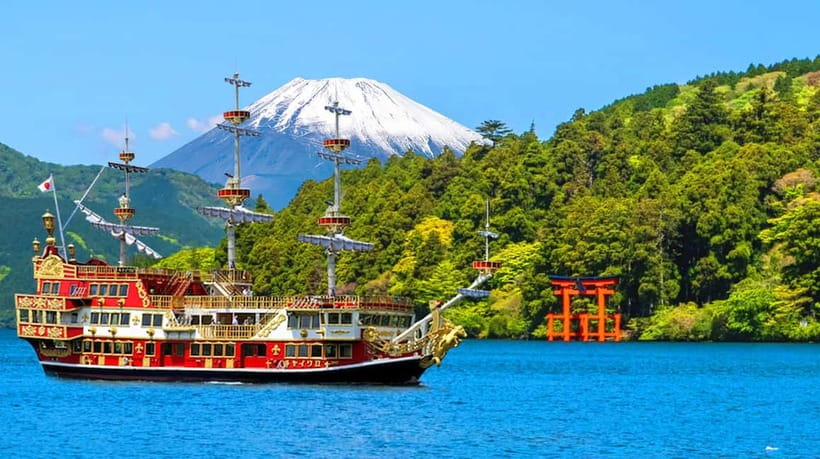
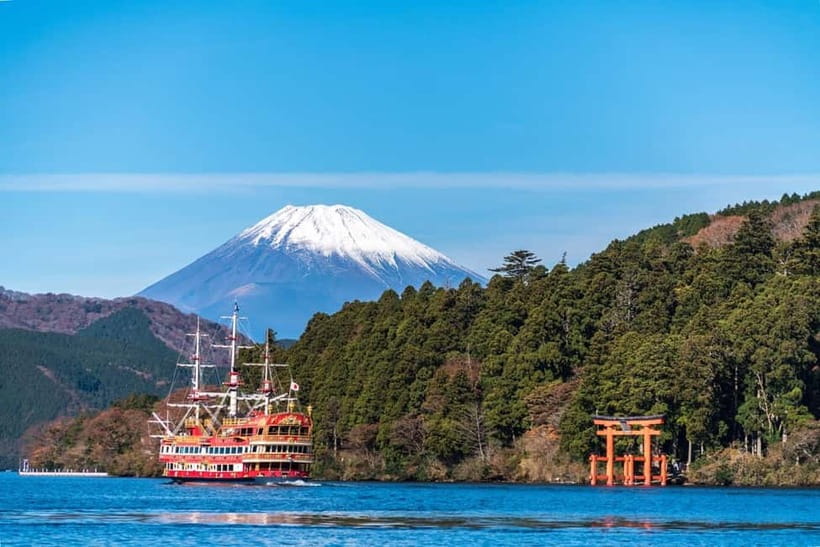
Lake Ashi is the visual hook of the day. Expect a short photo stop (about 20 minutes) with that famous postcard setup: mountains lining the water and a red torii gate standing in the shallows.
This is the moment to check two things:
- Cloud cover. If Fuji shows even a bit, you’re likely in for a better day.
- Lighting. Early in the morning or on bright days, the water reflections can look especially clean from the shoreline viewpoint.
Then you head straight into the cruise portion—so you’re not waiting around too long.
Pirate-ship cruise across Lake Ashi
Next up is the Hakone sightseeing cruise on a vintage-style pirate ship (around 25 minutes). The open deck is the point. You’re not stuck watching through windows the whole time.
This segment is popular because it changes the geometry of the day. From the water, Mt Fuji (when visible) lines up differently with the shoreline, and the torii gate becomes part of the wider scene instead of just a distant landmark.
You’ll also feel the pace of the lake. It’s calmer than big-city sightseeing. In the feedback, this is one of the parts people call out most, including how good the timing felt and how smooth everything ran.
Tip I’d give you: dress for wind. Lake breezes can feel cooler than you expect, especially when the boat is moving.
Hakone Ropeway: steam and suspension views
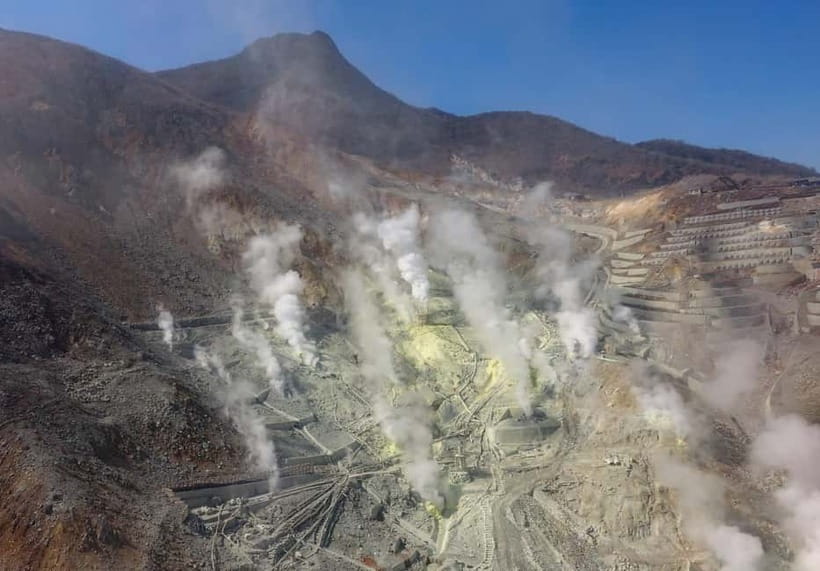
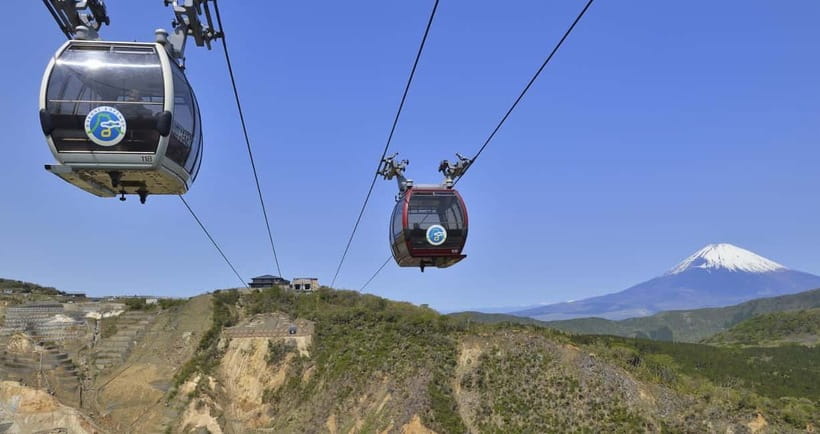
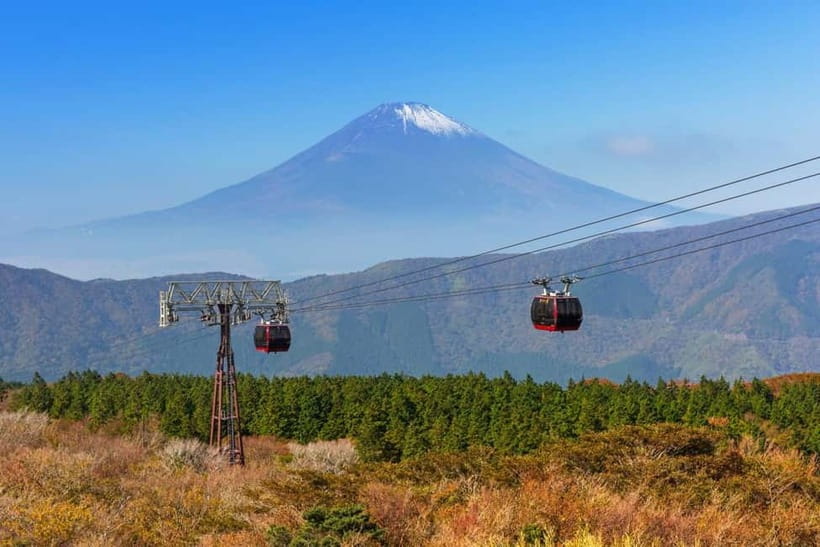
After the cruise, you move to the Hakone Ropeway (about 25 minutes). The big payoff here is getting above the valley to see geothermal activity around Ōwakudani.
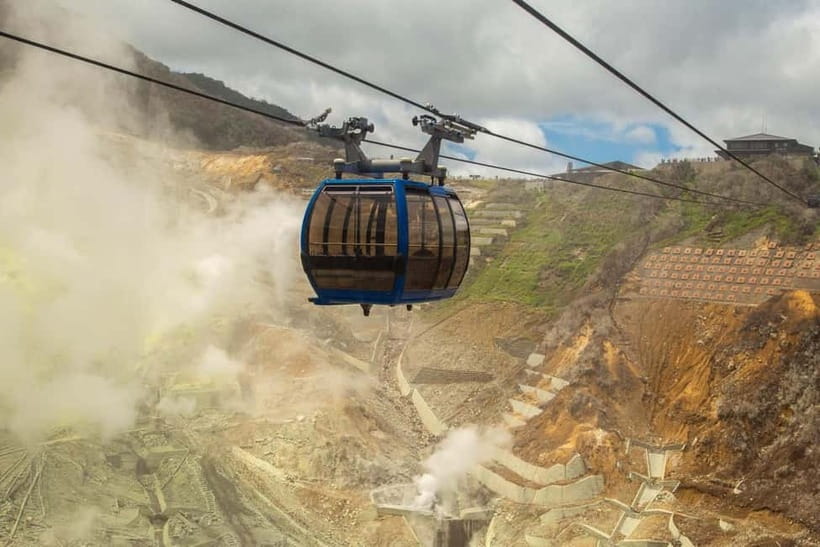
Expect steam rising from cracks in the earth and a dramatic, warm-toned volcanic setting below. The air can smell strongly in this area due to the minerals from the vents. If you’re sensitive to strong smells, plan on spending less time lingering right where the steam is thickest.
Why the ropeway matters: it’s one of the only ways to see this area from a “wow” height without climbing stairs for hours. For many people, it’s the fastest route from view to wow.
In a few cases, the day shifts to a bus option if you can’t take the boat or the cable car. That flexibility is useful, but the core view experience is still built around boat + ropeway.




Ōwakudani: steam vents and the kuro-tamago legend
Ōwakudani is your volcanic stop, with around 30 minutes for photos and wandering. This is the area where the ground feels active. You’ll see sulfur-like smoke and hear the constant reminder that this isn’t a theme park—it’s a real geothermal zone.
Then comes the signature bite: kuro-tamago, the black eggs. They’re hard-boiled in sulfur springs, which is what turns them jet black. The local legend says eating one adds seven years to your life. Even if you treat the legend as just that, the eggs are a fun, distinctly Hakone food moment.
Practical advice:
- If you’re going to eat one, do it sooner rather than later so you don’t lose time to queues.
- Have cash ready if you end up buying snacks or drinks on your own. Credit cards aren’t guaranteed everywhere, and the guide can help you with purchasing cruise and ropeway tickets if needed.
Enoshima: shrines, sea breezes, and Sea-Mount Fuji moments
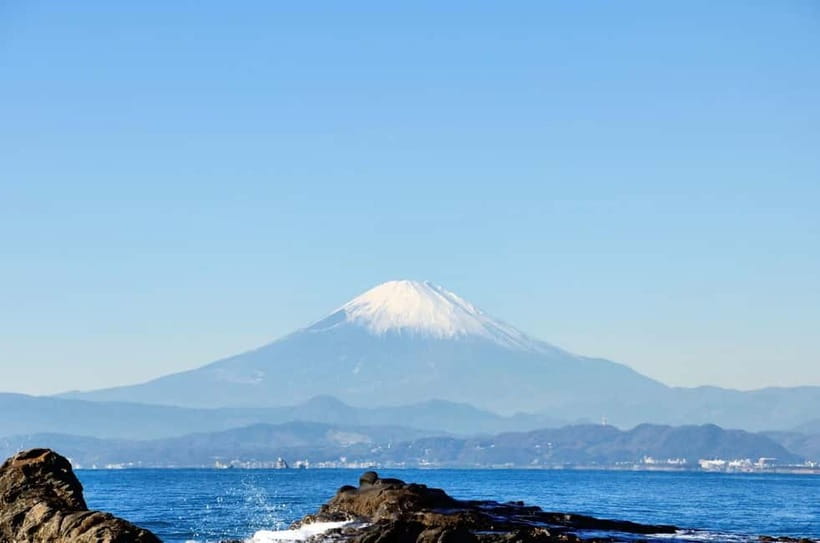
Then the day changes direction—toward the coast. Enoshima Island is where you shift from geothermal steam to ocean air.
You get about 30 minutes on the island for free time and photo stops, plus additional structured shrine sightseeing:
- Enoshima Shrine – Hetsunomiya (around 20 minutes)
- Enoshima Benzaiten Nakamise Dori (around 30 minutes)
- Bronze Torii of Enoshima Shrine (around 10 minutes)
- Zuishinmon Gate (around 10 minutes)
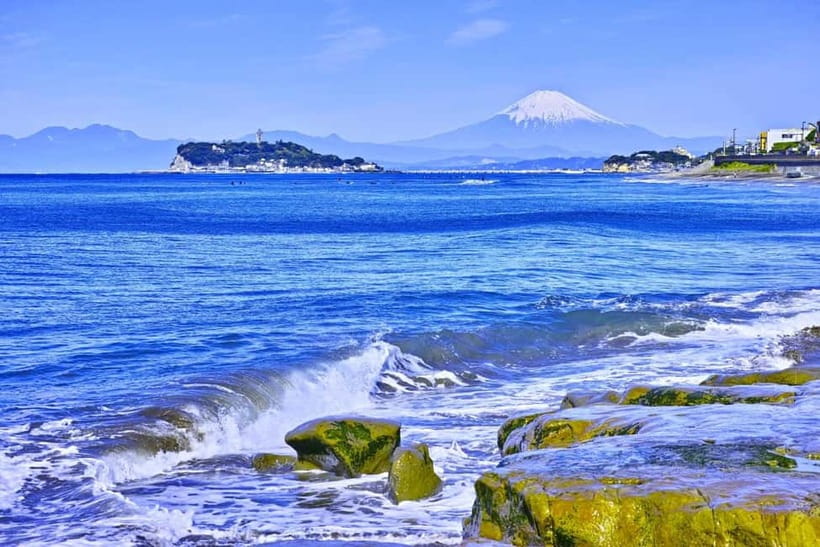
The famous part is the view. On clear days, you can see the world-famous Sea-Mount Fuji look, where Mt Fuji appears like it’s floating above the sea line from the island lookout.
Even if Fuji is hidden, Enoshima still works because it’s a walking island with temples and shopping streets that feel local. In the food alleys, you’ll find items like anchovy-based snacks, seaweed rolls, and Shonan milk ice cream. It’s the kind of place where you can eat lightly and keep moving.
Comfort note: Enoshima has steps and uneven stone paths. Wear shoes that grip, especially if the ground is damp.
Sagami Bay photo stop: the ocean wrap-up
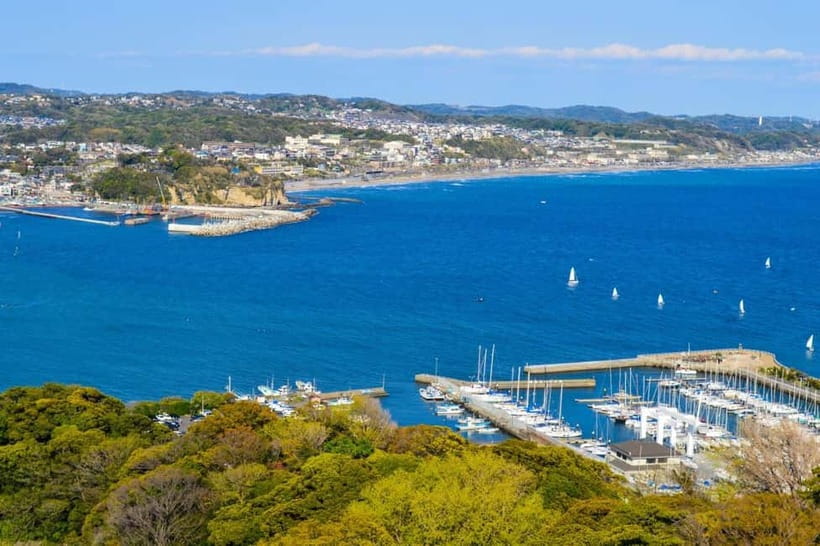
You end with a photo stop near Sagami Bay (around 20 minutes). Think of this as the visual closing chapter: a final stretch of water views to balance the morning’s volcanic energy.
It’s also a good last chance to compare your earlier Fuji sightings. If you saw even a sliver of the mountain earlier, you can often judge whether the clouds were clearing or thickening.
Price and value: what you get for about $50
At around $50 per person, this day trip is positioned as good value for a jam-packed route. The included pieces that drive the value are:
- A professional English & Chinese-speaking tour guide
- A comfortable A/C vehicle
- Round-trip transfers from the meeting point
- Taxes, parking, toll fees, gas fees, and environmental fees
What’s not always included:
- Meals and beverages
- Personal expenses
- Admission to the Hakone sightseeing cruise (unless you choose the option that includes it)
- Admission to the Hakone Ropeway (unless you choose the option that includes it)
So here’s my honest way to think about it: the $50 is mainly paying for the guide + transportation + access to a route that would be hard to assemble quickly on your own. If you also select the options that cover the cruise and ropeway admissions, the day becomes much closer to a true all-in-one package.
Guide style: why clear timing makes this route work
This route has multiple moving parts. That’s why the guide matters.
From the guide names popping up in real-world experience—people like Brewski, Kishida, Pin, Joey, Jimmy, Belle, Augustine, Fukuzawa, and others—the recurring theme is simple: people felt kept together, on time, and informed. Aki is one example of a guide known for sending detailed meeting updates ahead of the day, which helps you avoid that I’m-not-sure-where-to-go stress.
In practice, what you want from a guide here is:
- Clear instructions before each boarding and station
- Photo timing tips so you don’t miss the best angle
- Help buying any tickets you need on the ground
Who should book this day trip (and who should skip it)
This is a solid choice if you:
- Want Fuji from multiple viewpoints in one day
- Like scenic transport experiences (boat + ropeway) instead of only bus rides
- Don’t want to manage tickets and connections yourself
It’s not a fit if you:
- Are pregnant
- Use a wheelchair
- Have altitude sickness issues
- Are over 70 (and note: 70+ participants are asked to sign a travel waiver on arrival)
If you’re in any of those categories, you’ll want a different plan that’s safer and more comfortable.
What to pack so the day feels easy
A few practical reminders that match how the day is set up:
- Bring a light layer for the boat and ropeway areas. Wind off Lake Ashi can be chilly.
- Wear supportive shoes for Enoshima’s steps.
- Carry cash for small purchases. Some local shops may not accept credit cards.
- Keep your evening plans flexible. Traffic congestion is common on peak seasons and weekends, and the schedule can shift with weather.
And yes, keep an eye on the forecast. Mt Fuji visibility depends on conditions, so planning around weather increases your odds of seeing it clearly.
Should you book this tour?
If your goal is a high-value day that squeezes Lake Ashi, Hakone geothermal views, Owakudani black eggs, and Enoshima Sea-Mount Fuji into one organized outing, I’d book it. The boat + ropeway combo is the core strength, and the rest of the day is designed to complement that.
I would only hesitate if Mt Fuji is the sole reason you’re going and you’re traveling on a day when clouds are likely. Even then, you’ll still get meaningful places—just not the perfect mountain reveal you’re hoping for.
If you want, tell me what month you’re going and whether Fuji visibility matters most to you. I’ll help you decide if this is the right day to schedule in your trip.
FAQ
How long is the Tokyo to Hakone and Enoshima day trip?
The experience runs for about 10 hours.
What languages does the tour guide speak?
The live tour guide speaks English and Chinese.
What is included in the price, and what costs extra?
Included are the professional English & Chinese speaking guide, A/C vehicle, round-trip transfers, and all taxes/fees listed. Meals and beverages are not included. Admission to the pirate cruise and the Hakone Ropeway may also be extra unless the option you choose includes them.
What are the main stops during the day?
You’ll visit Lake Ashi, ride the Hakone sightseeing cruise on Lake Ashi, take the Hakone Ropeway, see Ōwakudani, spend time on Enoshima Island (including Enoshima Shrine – Hetsunomiya, Benzaiten Nakamise Dori, Bronze Torii, and Zuishinmon Gate), and make a Sagami Bay photo stop.
Is Mt. Fuji guaranteed to be visible?
No. Visibility of Mt. Fuji can be affected by weather conditions, so you might not see it clearly on every day.
Can I cancel for a full refund?
Yes. Free cancellation is available up to 24 hours in advance for a full refund.
Is the tour suitable for wheelchair users or people with altitude sickness?
No. It is not suitable for wheelchair users or people with altitude sickness, and it’s also listed as not suitable for pregnant women and people over 70.