REVIEW · TOKYO
TOKYO OishiPark, Oshino & KoedoKawagoe, Fuji Mount
Book on Viator →Operated by S.A. Tour · Bookable on Viator
Fuji views plus Edo charm in one long day. This trip strings together Lake Kawaguchi viewpoints and Oshino Hakkai ponds, then caps it with Koedo Kawagoe’s nostalgic old-town feel. You also get a big seasonal factor, since the route is picked for changing colors and flowers.
I like the included round-trip transport and the guidance from a professional English/Chinese-speaking team. The tour leader is listed as Elli Wan, and the small-coach setup (max 45 people) means you usually aren’t crammed shoulder-to-shoulder for the full drive.
One possible drawback: you spend a lot of time on the road, so traffic can cut into your time at each stop. One group feedback also flagged motion-sickness help as a late add—so if you’re sensitive, plan for it before you go.
In This Review
- Key things to know before you go
- From Shinjuku to Fuji Lakes: how this 10-hour day actually runs
- Oishi Park on Lake Kawaguchi: Fuji views in every season
- Oshino Hakkai’s eight spring ponds: water, mythology, and UNESCO status
- Koedo Kawagoe’s Little Edo streets: temples, castle views, and sweet potato snacks
- Price and value: what $85.02 buys you (and what it doesn’t)
- The bus reality: traffic delays and motion-sickness planning
- Group size, comfort, and why it still can be fun
- Who should book this Fuji + Little Edo combo?
- Should you book this day trip?
- FAQ
- FAQ
- What time does the tour start, and where do I meet it?
- How long is the day trip?
- Which languages are covered by the guide?
- Are admission tickets included for all stops?
- What’s included in the tour price?
- What happens if the weather is bad?
Key things to know before you go
- Shinjuku L Tower pick-up at 8:00am, using Shinjuku Station Exit 20 from Sept 1, 2024
- Oishi Park is chosen for Fuji views and seasonal displays like cherry blossoms, lavender, red leaves, and pink broom grass
- Oshino Hakkai features eight spring water ponds fed by Mount Fuji snowmelt, plus a traditional thatched-roof village
- Koedo Kawagoe is Edo-period style streets and landmarks like Kawagoe Castle (16th century) and Kitain Temple with 500+ wooden Buddha statues
- Admissions aren’t all included: Oishi Park and Oshino Hakkai tickets are not included, while the Koedo Kawagoe stop is listed as free
From Shinjuku to Fuji Lakes: how this 10-hour day actually runs
This is a single-day coach tour out of Tokyo with a start time of 8:00am and a total duration around 10 hours. The meeting point is Shinjuku L Tower, 1-chōme-6-1 Nishishinjuku, and the pickup setup is explicitly Shinjuku Station Exit 20 (starting Sept 1, 2024).
You’ll have an air-conditioned vehicle, round-trip transportation, and a guide who works in English and Chinese. The tour uses a mobile ticket, and you’ll receive confirmation at booking time.
The key thing to understand: most of your day is spent traveling. That can be a deal-maker if you want convenience, but a deal-breaker if you prefer independent pacing.
You can also read our reviews of more tours and experiences in Tokyo.



Oishi Park on Lake Kawaguchi: Fuji views in every season
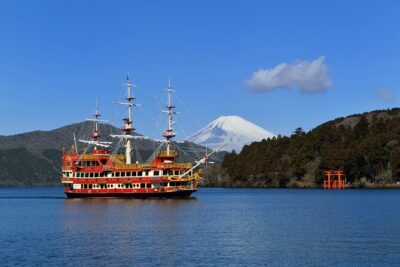
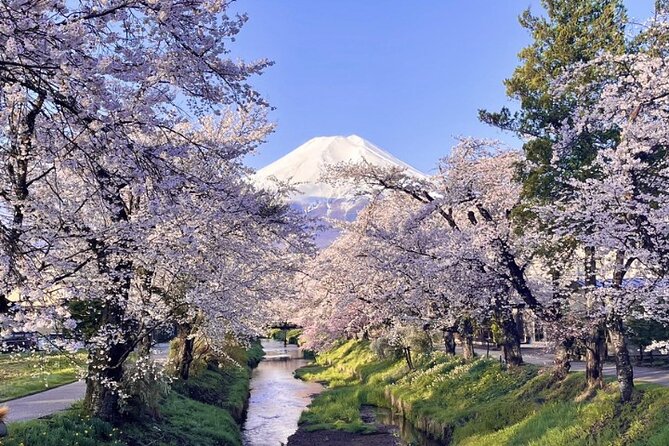
Oishi Park sits on the northern shore of Lake Kawaguchiko, one of the Fuji Five Lakes. The big draw is the view: you’re looking for that classic Fuji backdrop with the lake and countryside around it.
What makes this stop especially good for different months is the park’s seasonal programming. The tour highlights changing seasons such as cherry blossoms, lavender, red leaves, and pink broom grass. In practice, that means you’re not just going for one postcard moment—you’re going for a view that changes as Japan’s calendar changes.
One practical consideration: the tour lists Oishi Park admission tickets are not included. So plan on a bit of extra spending on the day, and keep your expectations realistic about time—this is only about 1 hour at Oishi Park.
Oshino Hakkai’s eight spring ponds: water, mythology, and UNESCO status
Next comes Oshino Hakkai, a village area in Yamanashi Prefecture known for eight natural spring water ponds. These ponds are fed by snowmelt from nearby Mount Fuji, and the tour frames them as one of Japan’s most picturesque natural spots.
Each pond connects to Japanese mythology: the ponds are named after an eight-headed dragon. Even if you don’t care about the legends, the layout helps you slow down and look closely. The water is described as crystal clear, and the tour notes that visitors can even drink the water directly from the ponds.
This stop also ties nature to culture. Oshino Hakkai includes a traditional village with thatched-roof houses, plus restaurants and souvenir shops where you can take a break without leaving the area. The tour also specifically calls out that Oshino Hakkai is a World Cultural Heritage site and includes designated natural monument elements.
Time matters here too: you get about 2 hours, and admission tickets are not included. If you’re the type who likes taking photos from multiple angles, use your time early. The best light can shift quickly, especially around late morning.
Koedo Kawagoe’s Little Edo streets: temples, castle views, and sweet potato snacks
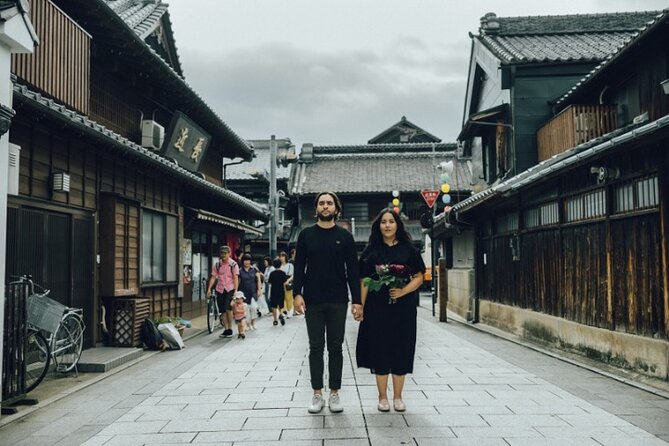
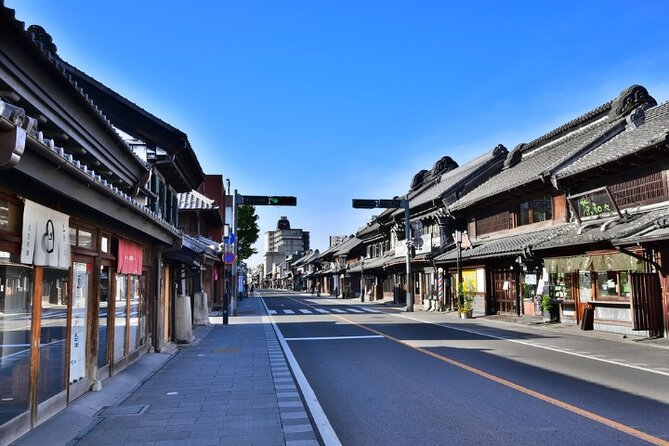
Koedo Kawagoe is the old-town contrast to the Fuji lakes. It’s in Saitama Prefecture, about 30 kilometers north of Tokyo, and the nickname Little Edo fits because of the preserved Edo-period atmosphere.
This is also the stop with the most straightforward “walk and wander” energy. You’ll find narrow streets and alleys lined with traditional wooden buildings, shops, and places to eat. The tour also mentions classic sights:
- Kawagoe Castle, built in the 16th century
- Kitain Temple, known for a collection of over 500 wooden statues of Buddha
- Local treats, especially Kawagoe yaki (traditional sweet potato snacks)
The tour lists this Koedo Kawagoe segment as 3 hours, and it says admission for that part is free. That combination—time plus freedom plus low friction on entry—makes it a great place to buy a snack, take your time browsing, and actually feel like you’re outside the coach bubble.
If you’re sensitive to crowded streets, go slow. The charm can be popular, and narrow lanes can funnel groups fast. Take a breather in side streets when you need space.
Price and value: what $85.02 buys you (and what it doesn’t)
At $85.02 per person, this day trip can feel like a bargain if your priority is logistics: pickup from Shinjuku, round-trip bus travel, and a professional English/Chinese guide. A full day covering Fuji-area highlights plus Koedo Kawagoe usually costs more if you piece it together on your own.
But the fine print affects value. Meals and beverages are not included, and you should assume you’ll spend money along the way. Also, Oishi Park and Oshino Hakkai tickets are not included. The Koedo Kawagoe stop is listed as admission free, which helps offset costs.
So the smart way to judge value is this: you’re paying mostly for time-saving transportation and interpretation across multiple areas. If you enjoy seeing a region with context—why ponds are famous, what landmarks mean, and what you should pay attention to—this kind of guided structure is worth it.
If you’re already comfortable planning your own day out of Tokyo, the bus cost isn’t “free value.” In that case, the decision hinges on whether you hate traffic and schedules.






The bus reality: traffic delays and motion-sickness planning
This tour is designed around a coach ride, and that’s where the feedback swings. The negative comments focus on two issues: not much visit time at each stop and traffic.
One group described being stuck in traffic for about 2.5 hours, which pushed visiting time down while they were still stuck on the bus. Another comment said the day felt long on the coach, and they didn’t spend enough time at each stop.
So here’s the practical takeaway. If you book this, accept that your day is “timed by roads,” not by attractions. You can still have a great day, but you’re choosing convenience over perfect pacing.
Also plan for motion sickness. The tour feedback said the company didn’t tell people to buy motion-sickness medicine until the day before. That’s not something you want to gamble on. If you get queasy on winding roads, bring help from home or buy what you need in Tokyo before you go.
Group size, comfort, and why it still can be fun
There’s a max group size of 45 travelers and a minimum of 8 travelers for the tour to depart. That matters because it influences how the guide can manage time and how crowded it feels during walks.
The positive feedback also mentioned a competent driver and that the mini-coach can feel a bit small. That sounds like the trade-off: smaller feels manageable, but it can also mean less personal space. If you’re tall or hate tight seating, it’s worth having a comfortable day plan (water bottle, light layers, and a posture-friendly travel pillow if you use one).
Despite the coach limitations, the tour is rated fairly well (3.8 overall based on 4 ratings). The strongest praise focused on the tour being well-planned at a reasonable price and on the guide team working smoothly. That’s exactly what you want when your schedule is fixed.
Who should book this Fuji + Little Edo combo?
This fits best if you want:
- A one-day overview of Fuji Five Lakes area highlights and Koedo Kawagoe
- A guide to help you spot what matters at Oishi Park and Oshino Hakkai
- A low-stress way to get out of Tokyo without wrestling with connections
It might not fit if you:
- Want long, slow stays at each site
- Get cranky when traffic steals time
- Prefer taking trains and controlling every minute
The tour also runs only with good weather. The provider notes that if it’s canceled due to weather, you’ll be offered a different date or a full refund. In Fuji-lake regions, weather can shift quickly, so keep your expectations flexible.
Should you book this day trip?
I’d book this if you’re the type who values guidance, timing that’s already organized, and a full day that hits multiple “must-see” areas without extra planning stress. The guide team (including Elli Wan on the listing) and the reasonable price for transport make the structure feel practical.
I’d skip or rethink it if you’re very sensitive to bus time, motion sickness, or traffic delays. This route is road-dependent, and the visits are relatively short at 1 hour and 2 hours for the Fuji-area stops.
If you do book, go in with the right mindset: treat Oishi Park and Oshino Hakkai as focused photo-and-feel stops, then use your longer 3-hour Koedo Kawagoe window to slow down and enjoy the streets.
FAQ
FAQ
What time does the tour start, and where do I meet it?
The tour starts at 8:00am at Shinjuku L Tower, 1-chōme-6-1 Nishishinjuku, Shinjuku City. The pickup location is set to Shinjuku Station Exit 20 (starting Sept 1, 2024).
How long is the day trip?
The duration is listed as 10 hours (approx.).
Which languages are covered by the guide?
The tour includes a professional English/Chinese-speaking guide.
Are admission tickets included for all stops?
No. Oishi Park and Oshino Hakkai are listed as admission ticket not included. The Koedo Kawagoe part is listed as admission ticket free.
What’s included in the tour price?
The tour includes an air-conditioned vehicle, round-trip traffic, and a professional English/Chinese-speaking guide. Beverages and meals are not included.
What happens if the weather is bad?
The tour requires good weather. If it’s canceled due to poor weather, you’ll be offered a different date or a full refund.